 Add to Chrome
 Add to Firefox
 Add to Edge
Mind the map! Accounting for existing map information when estimating online HDMaps from sensor data
Nov 17, 2023
Online High Definition Map (HDMap) estimation from sensors offers a low-cost alternative to manually acquired HDMaps. As such, it promises to lighten costs for already HDMap-reliant Autonomous Driving systems, and potentially even spread their use to new systems. In this paper, we propose to improve online HDMap estimation by accounting for already existing maps. We identify 3 reasonable types of useful existing maps (minimalist, noisy, and outdated). We also introduce MapEX, a novel online HDMap estimation framework that accounts for existing maps. MapEX achieves this by encoding map elements into query tokens and by refining the matching algorithm used to train classic query based map estimation models. We demonstrate that MapEX brings significant improvements on the nuScenes dataset. For instance, MapEX - given noisy maps - improves by 38% over the MapTRv2 detector it is based on and by 16% over the current SOTA.

In-Context Learning for Knowledge Base Question Answering for Unmanned Systems based on Large Language Models
Nov 06, 2023Knowledge Base Question Answering (KBQA) aims to answer factoid questions based on knowledge bases. However, generating the most appropriate knowledge base query code based on Natural Language Questions (NLQ) poses a significant challenge in KBQA. In this work, we focus on the CCKS2023 Competition of Question Answering with Knowledge Graph Inference for Unmanned Systems. Inspired by the recent success of large language models (LLMs) like ChatGPT and GPT-3 in many QA tasks, we propose a ChatGPT-based Cypher Query Language (CQL) generation framework to generate the most appropriate CQL based on the given NLQ. Our generative framework contains six parts: an auxiliary model predicting the syntax-related information of CQL based on the given NLQ, a proper noun matcher extracting proper nouns from the given NLQ, a demonstration example selector retrieving similar examples of the input sample, a prompt constructor designing the input template of ChatGPT, a ChatGPT-based generation model generating the CQL, and an ensemble model to obtain the final answers from diversified outputs. With our ChatGPT-based CQL generation framework, we achieved the second place in the CCKS 2023 Question Answering with Knowledge Graph Inference for Unmanned Systems competition, achieving an F1-score of 0.92676.
ChatRadio-Valuer: A Chat Large Language Model for Generalizable Radiology Report Generation Based on Multi-institution and Multi-system Data
Oct 10, 2023


Radiology report generation, as a key step in medical image analysis, is critical to the quantitative analysis of clinically informed decision-making levels. However, complex and diverse radiology reports with cross-source heterogeneity pose a huge generalizability challenge to the current methods under massive data volume, mainly because the style and normativity of radiology reports are obviously distinctive among institutions, body regions inspected and radiologists. Recently, the advent of large language models (LLM) offers great potential for recognizing signs of health conditions. To resolve the above problem, we collaborate with the Second Xiangya Hospital in China and propose ChatRadio-Valuer based on the LLM, a tailored model for automatic radiology report generation that learns generalizable representations and provides a basis pattern for model adaptation in sophisticated analysts' cases. Specifically, ChatRadio-Valuer is trained based on the radiology reports from a single institution by means of supervised fine-tuning, and then adapted to disease diagnosis tasks for human multi-system evaluation (i.e., chest, abdomen, muscle-skeleton, head, and maxillofacial $\&$ neck) from six different institutions in clinical-level events. The clinical dataset utilized in this study encompasses a remarkable total of \textbf{332,673} observations. From the comprehensive results on engineering indicators, clinical efficacy and deployment cost metrics, it can be shown that ChatRadio-Valuer consistently outperforms state-of-the-art models, especially ChatGPT (GPT-3.5-Turbo) and GPT-4 et al., in terms of the diseases diagnosis from radiology reports. ChatRadio-Valuer provides an effective avenue to boost model generalization performance and alleviate the annotation workload of experts to enable the promotion of clinical AI applications in radiology reports.
LLaMA-Reviewer: Advancing Code Review Automation with Large Language Models through Parameter-Efficient Fine-Tuning
Sep 05, 2023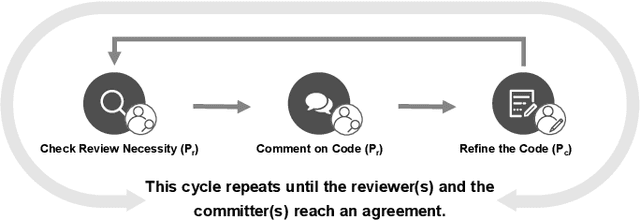
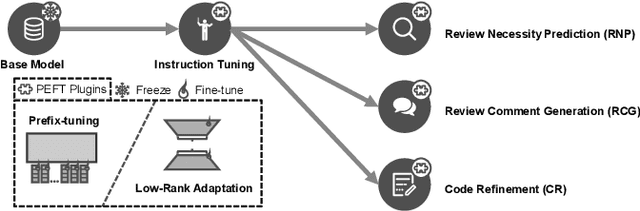
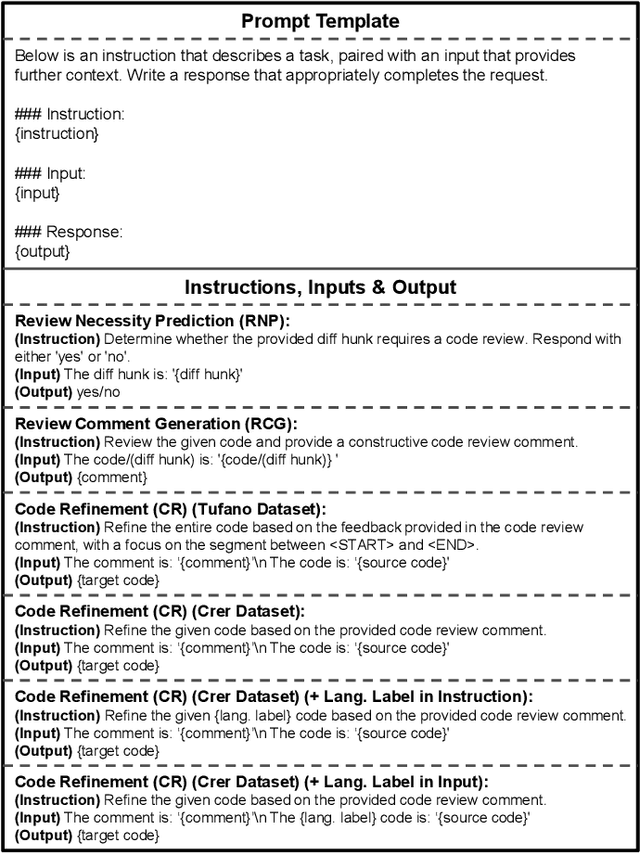

The automation of code review activities, a long-standing pursuit in software engineering, has been primarily addressed by numerous domain-specific pre-trained models. Despite their success, these models frequently demand extensive resources for pre-training from scratch. In contrast, Large Language Models (LLMs) provide an intriguing alternative, given their remarkable capabilities when supplemented with domain-specific knowledge. However, their potential for automating code review tasks remains largely unexplored. In response to this research gap, we present LLaMA-Reviewer, an innovative framework that leverages the capabilities of LLaMA, a popular LLM, in the realm of code review. Mindful of resource constraints, this framework employs parameter-efficient fine-tuning (PEFT) methods, delivering high performance while using less than 1% of trainable parameters. An extensive evaluation of LLaMA-Reviewer is conducted on two diverse, publicly available datasets. Notably, even with the smallest LLaMA base model consisting of 6.7B parameters and a limited number of tuning epochs, LLaMA-Reviewer equals the performance of existing code-review-focused models. The ablation experiments provide insights into the influence of various fine-tuning process components, including input representation, instruction tuning, and different PEFT methods. To foster continuous progress in this field, the code and all PEFT-weight plugins have been made open-source.
Forensic Data Analytics for Anomaly Detection in Evolving Networks
Aug 17, 2023In the prevailing convergence of traditional infrastructure-based deployment (i.e., Telco and industry operational networks) towards evolving deployments enabled by 5G and virtualization, there is a keen interest in elaborating effective security controls to protect these deployments in-depth. By considering key enabling technologies like 5G and virtualization, evolving networks are democratized, facilitating the establishment of point presences integrating different business models ranging from media, dynamic web content, gaming, and a plethora of IoT use cases. Despite the increasing services provided by evolving networks, many cybercrimes and attacks have been launched in evolving networks to perform malicious activities. Due to the limitations of traditional security artifacts (e.g., firewalls and intrusion detection systems), the research on digital forensic data analytics has attracted more attention. Digital forensic analytics enables people to derive detailed information and comprehensive conclusions from different perspectives of cybercrimes to assist in convicting criminals and preventing future crimes. This chapter presents a digital analytics framework for network anomaly detection, including multi-perspective feature engineering, unsupervised anomaly detection, and comprehensive result correction procedures. Experiments on real-world evolving network data show the effectiveness of the proposed forensic data analytics solution.
SMC-UDA: Structure-Modal Constraint for Unsupervised Cross-Domain Renal Segmentation
Jun 14, 2023Medical image segmentation based on deep learning often fails when deployed on images from a different domain. The domain adaptation methods aim to solve domain-shift challenges, but still face some problems. The transfer learning methods require annotation on the target domain, and the generative unsupervised domain adaptation (UDA) models ignore domain-specific representations, whose generated quality highly restricts segmentation performance. In this study, we propose a novel Structure-Modal Constrained (SMC) UDA framework based on a discriminative paradigm and introduce edge structure as a bridge between domains. The proposed multi-modal learning backbone distills structure information from image texture to distinguish domain-invariant edge structure. With the structure-constrained self-learning and progressive ROI, our methods segment the kidney by locating the 3D spatial structure of the edge. We evaluated SMC-UDA on public renal segmentation datasets, adapting from the labeled source domain (CT) to the unlabeled target domain (CT/MRI). The experiments show that our proposed SMC-UDA has a strong generalization and outperforms generative UDA methods.
MF-NeRF: Memory Efficient NeRF with Mixed-Feature Hash Table
Apr 27, 2023Neural radiance field (NeRF) has shown remarkable performance in generating photo-realistic novel views. Since the emergence of NeRF, many studies have been conducted, among which managing features with explicit structures such as grids has achieved exceptionally fast training by reducing the complexity of multilayer perceptron (MLP) networks. However, storing features in dense grids requires significantly large memory space, which leads to memory bottleneck in computer systems and thus large training time. To address this issue, in this work, we propose MF-NeRF, a memory-efficient NeRF framework that employs a mixed-feature hash table to improve memory efficiency and reduce training time while maintaining reconstruction quality. We first design a mixed-feature hash table to adaptively mix part of multi-level feature grids into one and map it to a single hash table. Following that, in order to obtain the correct index of a grid point, we further design an index transformation method that transforms indices of an arbitrary level grid to those of a canonical grid. Extensive experiments benchmarking with state-of-the-art Instant-NGP, TensoRF, and DVGO, indicate our MF-NeRF could achieve the fastest training time on the same GPU hardware with similar or even higher reconstruction quality. Source code is available at https://github.com/nfyfamr/MF-NeRF.
ChatABL: Abductive Learning via Natural Language Interaction with ChatGPT
Apr 21, 2023Large language models (LLMs) such as ChatGPT have recently demonstrated significant potential in mathematical abilities, providing valuable reasoning paradigm consistent with human natural language. However, LLMs currently have difficulty in bridging perception, language understanding and reasoning capabilities due to incompatibility of the underlying information flow among them, making it challenging to accomplish tasks autonomously. On the other hand, abductive learning (ABL) frameworks for integrating the two abilities of perception and reasoning has seen significant success in inverse decipherment of incomplete facts, but it is limited by the lack of semantic understanding of logical reasoning rules and the dependence on complicated domain knowledge representation. This paper presents a novel method (ChatABL) for integrating LLMs into the ABL framework, aiming at unifying the three abilities in a more user-friendly and understandable manner. The proposed method uses the strengths of LLMs' understanding and logical reasoning to correct the incomplete logical facts for optimizing the performance of perceptual module, by summarizing and reorganizing reasoning rules represented in natural language format. Similarly, perceptual module provides necessary reasoning examples for LLMs in natural language format. The variable-length handwritten equation deciphering task, an abstract expression of the Mayan calendar decoding, is used as a testbed to demonstrate that ChatABL has reasoning ability beyond most existing state-of-the-art methods, which has been well supported by comparative studies. To our best knowledge, the proposed ChatABL is the first attempt to explore a new pattern for further approaching human-level cognitive ability via natural language interaction with ChatGPT.
Efficient Self-supervised Continual Learning with Progressive Task-correlated Layer Freezing
Mar 13, 2023Inspired by the success of Self-supervised learning (SSL) in learning visual representations from unlabeled data, a few recent works have studied SSL in the context of continual learning (CL), where multiple tasks are learned sequentially, giving rise to a new paradigm, namely self-supervised continual learning (SSCL). It has been shown that the SSCL outperforms supervised continual learning (SCL) as the learned representations are more informative and robust to catastrophic forgetting. However, if not designed intelligently, the training complexity of SSCL may be prohibitively high due to the inherent training cost of SSL. In this work, by investigating the task correlations in SSCL setup first, we discover an interesting phenomenon that, with the SSL-learned background model, the intermediate features are highly correlated between tasks. Based on this new finding, we propose a new SSCL method with layer-wise freezing which progressively freezes partial layers with the highest correlation ratios for each task to improve training computation efficiency and memory efficiency. Extensive experiments across multiple datasets are performed, where our proposed method shows superior performance against the SoTA SSCL methods under various SSL frameworks. For example, compared to LUMP, our method achieves 12\%/14\%/12\% GPU training time reduction, 23\%/26\%/24\% memory reduction, 35\%/34\%/33\% backward FLOPs reduction, and 1.31\%/1.98\%/1.21\% forgetting reduction without accuracy degradation on three datasets, respectively.
Model Extraction Attacks on Split Federated Learning
Mar 13, 2023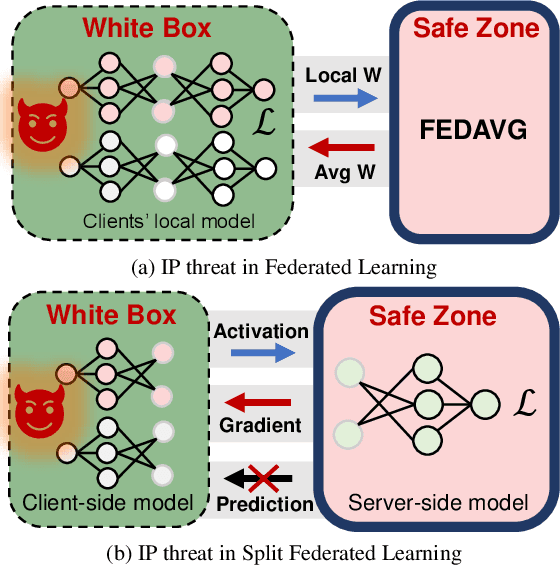
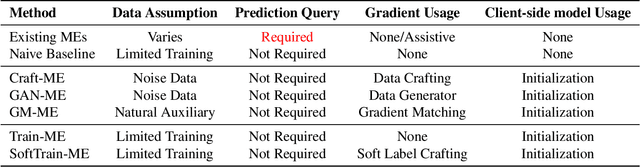
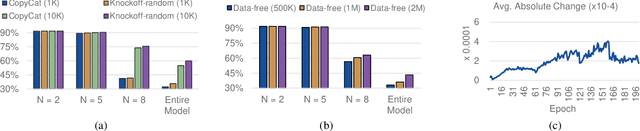
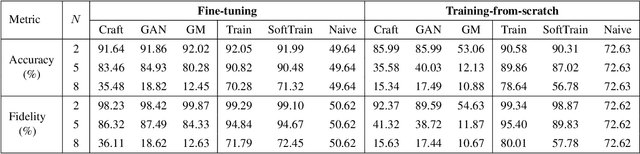
Federated Learning (FL) is a popular collaborative learning scheme involving multiple clients and a server. FL focuses on protecting clients' data but turns out to be highly vulnerable to Intellectual Property (IP) threats. Since FL periodically collects and distributes the model parameters, a free-rider can download the latest model and thus steal model IP. Split Federated Learning (SFL), a recent variant of FL that supports training with resource-constrained clients, splits the model into two, giving one part of the model to clients (client-side model), and the remaining part to the server (server-side model). Thus SFL prevents model leakage by design. Moreover, by blocking prediction queries, it can be made resistant to advanced IP threats such as traditional Model Extraction (ME) attacks. While SFL is better than FL in terms of providing IP protection, it is still vulnerable. In this paper, we expose the vulnerability of SFL and show how malicious clients can launch ME attacks by querying the gradient information from the server side. We propose five variants of ME attack which differs in the gradient usage as well as in the data assumptions. We show that under practical cases, the proposed ME attacks work exceptionally well for SFL. For instance, when the server-side model has five layers, our proposed ME attack can achieve over 90% accuracy with less than 2% accuracy degradation with VGG-11 on CIFAR-10.