 Add to Chrome
 Add to Firefox
 Add to Edge
ResoFilter: Fine-grained Synthetic Data Filtering for Large Language Models through Data-Parameter Resonance Analysis
Dec 20, 2024

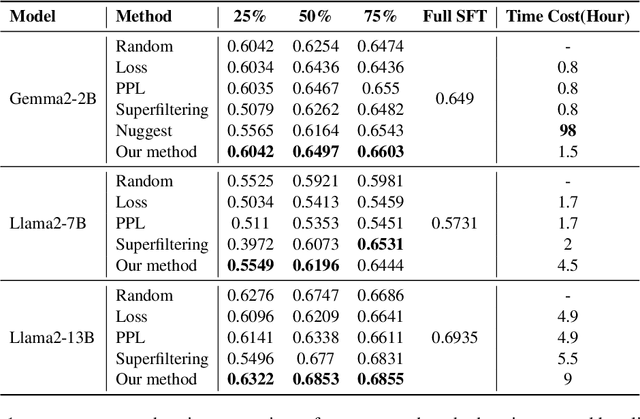
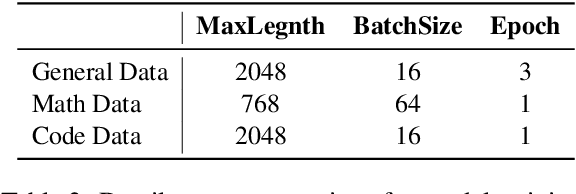
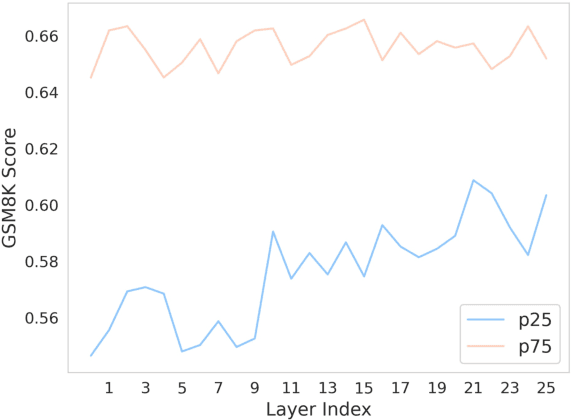
Large language models (LLMs) have shown remarkable effectiveness across various domains, with data augmentation methods utilizing GPT for synthetic data generation becoming prevalent. However, the quality and utility of augmented data remain questionable, and current methods lack clear metrics for evaluating data characteristics. To address these challenges, we propose ResoFilter, a novel method that integrates models, data, and tasks to refine datasets. ResoFilter leverages the fine-tuning process to obtain Data-Parameter features for data selection, offering improved interpretability by representing data characteristics through model weights. Our experiments demonstrate that ResoFilter achieves comparable results to full-scale fine-tuning using only half the data in mathematical tasks and exhibits strong generalization across different models and domains. This method provides valuable insights for constructing synthetic datasets and evaluating high-quality data, offering a promising solution for enhancing data augmentation techniques and improving training dataset quality for LLMs. For reproducibility, we will release our code and data upon acceptance.

ResoFilter: Rine-grained Synthetic Data Filtering for Large Language Models through Data-Parameter Resonance Analysis
Dec 19, 2024Large language models (LLMs) have shown remarkable effectiveness across various domains, with data augmentation methods utilizing GPT for synthetic data generation becoming prevalent. However, the quality and utility of augmented data remain questionable, and current methods lack clear metrics for evaluating data characteristics. To address these challenges, we propose ResoFilter, a novel method that integrates models, data, and tasks to refine datasets. ResoFilter leverages the fine-tuning process to obtain Data-Parameter features for data selection, offering improved interpretability by representing data characteristics through model weights. Our experiments demonstrate that ResoFilter achieves comparable results to full-scale fine-tuning using only half the data in mathematical tasks and exhibits strong generalization across different models and domains. This method provides valuable insights for constructing synthetic datasets and evaluating high-quality data, offering a promising solution for enhancing data augmentation techniques and improving training dataset quality for LLMs. For reproducibility, we will release our code and data upon acceptance.
A Review of Multimodal Explainable Artificial Intelligence: Past, Present and Future
Dec 18, 2024
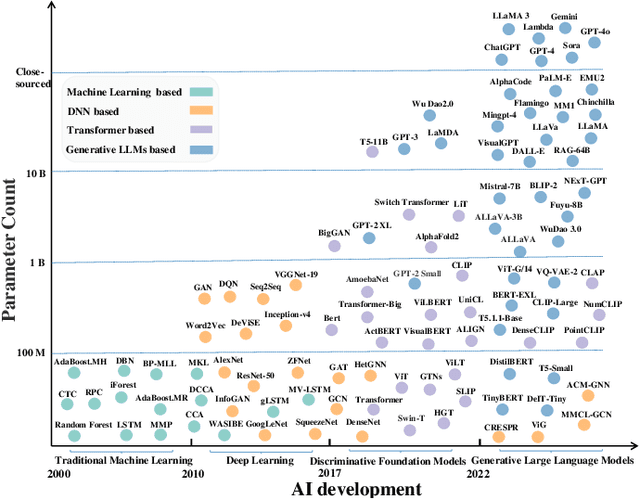

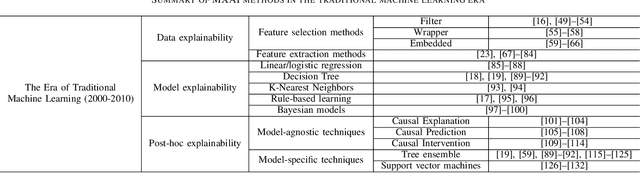
Artificial intelligence (AI) has rapidly developed through advancements in computational power and the growth of massive datasets. However, this progress has also heightened challenges in interpreting the "black-box" nature of AI models. To address these concerns, eXplainable AI (XAI) has emerged with a focus on transparency and interpretability to enhance human understanding and trust in AI decision-making processes. In the context of multimodal data fusion and complex reasoning scenarios, the proposal of Multimodal eXplainable AI (MXAI) integrates multiple modalities for prediction and explanation tasks. Meanwhile, the advent of Large Language Models (LLMs) has led to remarkable breakthroughs in natural language processing, yet their complexity has further exacerbated the issue of MXAI. To gain key insights into the development of MXAI methods and provide crucial guidance for building more transparent, fair, and trustworthy AI systems, we review the MXAI methods from a historical perspective and categorize them across four eras: traditional machine learning, deep learning, discriminative foundation models, and generative LLMs. We also review evaluation metrics and datasets used in MXAI research, concluding with a discussion of future challenges and directions. A project related to this review has been created at https://github.com/ShilinSun/mxai_review.
Urban Air Temperature Prediction using Conditional Diffusion Models
Dec 18, 2024Urbanization as a global trend has led to many environmental challenges, including the urban heat island (UHI) effect. The increase in temperature has a significant impact on the well-being of urban residents. Air temperature ($T_a$) at 2m above the surface is a key indicator of the UHI effect. How land use land cover (LULC) affects $T_a$ is a critical research question which requires high-resolution (HR) $T_a$ data at neighborhood scale. However, weather stations providing $T_a$ measurements are sparsely distributed e.g. more than 10km apart; and numerical models are impractically slow and computationally expensive. In this work, we propose a novel method to predict HR $T_a$ at 100m ground separation distance (gsd) using land surface temperature (LST) and other LULC related features which can be easily obtained from satellite imagery. Our method leverages diffusion models for the first time to generate accurate and visually realistic HR $T_a$ maps, which outperforms prior methods. We pave the way for meteorological research using computer vision techniques by providing a dataset of an extended spatial and temporal coverage, and a high spatial resolution as a benchmark for future research. Furthermore, we show that our model can be applied to urban planning by simulating the impact of different urban designs on $T_a$.
SceneLLM: Implicit Language Reasoning in LLM for Dynamic Scene Graph Generation
Dec 15, 2024Dynamic scenes contain intricate spatio-temporal information, crucial for mobile robots, UAVs, and autonomous driving systems to make informed decisions. Parsing these scenes into semantic triplets <Subject-Predicate-Object> for accurate Scene Graph Generation (SGG) is highly challenging due to the fluctuating spatio-temporal complexity. Inspired by the reasoning capabilities of Large Language Models (LLMs), we propose SceneLLM, a novel framework that leverages LLMs as powerful scene analyzers for dynamic SGG. Our framework introduces a Video-to-Language (V2L) mapping module that transforms video frames into linguistic signals (scene tokens), making the input more comprehensible for LLMs. To better encode spatial information, we devise a Spatial Information Aggregation (SIA) scheme, inspired by the structure of Chinese characters, which encodes spatial data into tokens. Using Optimal Transport (OT), we generate an implicit language signal from the frame-level token sequence that captures the video's spatio-temporal information. To further improve the LLM's ability to process this implicit linguistic input, we apply Low-Rank Adaptation (LoRA) to fine-tune the model. Finally, we use a transformer-based SGG predictor to decode the LLM's reasoning and predict semantic triplets. Our method achieves state-of-the-art results on the Action Genome (AG) benchmark, and extensive experiments show the effectiveness of SceneLLM in understanding and generating accurate dynamic scene graphs.
Brain-inspired AI Agent: The Way Towards AGI
Dec 12, 2024Artificial General Intelligence (AGI), widely regarded as the fundamental goal of artificial intelligence, represents the realization of cognitive capabilities that enable the handling of general tasks with human-like proficiency. Researchers in brain-inspired AI seek inspiration from the operational mechanisms of the human brain, aiming to replicate its functional rules in intelligent models. Moreover, with the rapid development of large-scale models in recent years, the concept of agents has garnered increasing attention, with researchers widely recognizing it as a necessary pathway toward achieving AGI. In this article, we propose the concept of a brain-inspired AI agent and analyze how to extract relatively feasible and agent-compatible cortical region functionalities and their associated functional connectivity networks from the complex mechanisms of the human brain. Implementing these structures within an agent enables it to achieve basic cognitive intelligence akin to human capabilities. Finally, we explore the limitations and challenges for realizing brain-inspired agents and discuss their future development.
Exploring What Why and How: A Multifaceted Benchmark for Causation Understanding of Video Anomaly
Dec 10, 2024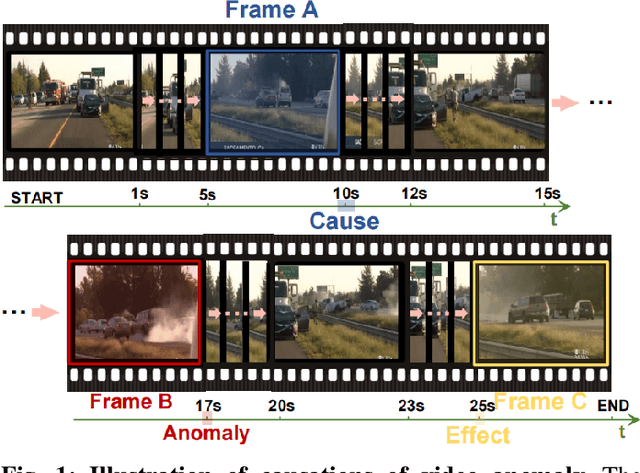

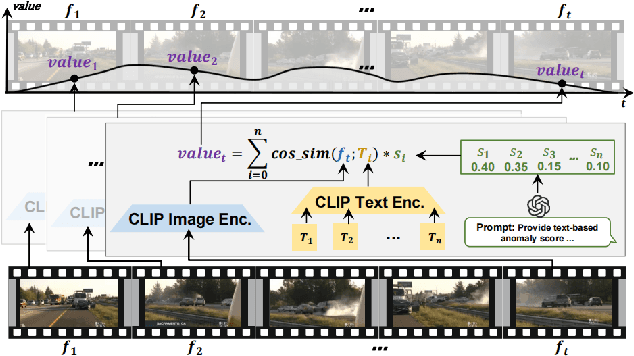

Recent advancements in video anomaly understanding (VAU) have opened the door to groundbreaking applications in various fields, such as traffic monitoring and industrial automation. While the current benchmarks in VAU predominantly emphasize the detection and localization of anomalies. Here, we endeavor to delve deeper into the practical aspects of VAU by addressing the essential questions: "what anomaly occurred?", "why did it happen?", and "how severe is this abnormal event?". In pursuit of these answers, we introduce a comprehensive benchmark for Exploring the Causation of Video Anomalies (ECVA). Our benchmark is meticulously designed, with each video accompanied by detailed human annotations. Specifically, each instance of our ECVA involves three sets of human annotations to indicate "what", "why" and "how" of an anomaly, including 1) anomaly type, start and end times, and event descriptions, 2) natural language explanations for the cause of an anomaly, and 3) free text reflecting the effect of the abnormality. Building upon this foundation, we propose a novel prompt-based methodology that serves as a baseline for tackling the intricate challenges posed by ECVA. We utilize "hard prompt" to guide the model to focus on the critical parts related to video anomaly segments, and "soft prompt" to establish temporal and spatial relationships within these anomaly segments. Furthermore, we propose AnomEval, a specialized evaluation metric crafted to align closely with human judgment criteria for ECVA. This metric leverages the unique features of the ECVA dataset to provide a more comprehensive and reliable assessment of various video large language models. We demonstrate the efficacy of our approach through rigorous experimental analysis and delineate possible avenues for further investigation into the comprehension of video anomaly causation.
Learning Koopman-based Stability Certificates for Unknown Nonlinear Systems
Dec 03, 2024Koopman operator theory has gained significant attention in recent years for identifying discrete-time nonlinear systems by embedding them into an infinite-dimensional linear vector space. However, providing stability guarantees while learning the continuous-time dynamics, especially under conditions of relatively low observation frequency, remains a challenge within the existing Koopman-based learning frameworks. To address this challenge, we propose an algorithmic framework to simultaneously learn the vector field and Lyapunov functions for unknown nonlinear systems, using a limited amount of data sampled across the state space and along the trajectories at a relatively low sampling frequency. The proposed framework builds upon recently developed high-accuracy Koopman generator learning for capturing transient system transitions and physics-informed neural networks for training Lyapunov functions. We show that the learned Lyapunov functions can be formally verified using a satisfiability modulo theories (SMT) solver and provide less conservative estimates of the region of attraction compared to existing methods.
Precise Facial Landmark Detection by Dynamic Semantic Aggregation Transformer
Dec 01, 2024

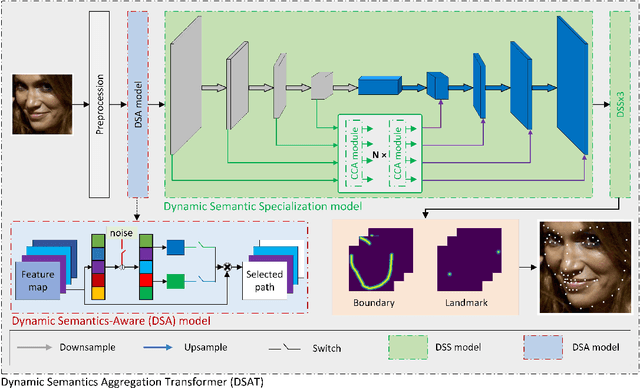

At present, deep neural network methods have played a dominant role in face alignment field. However, they generally use predefined network structures to predict landmarks, which tends to learn general features and leads to mediocre performance, e.g., they perform well on neutral samples but struggle with faces exhibiting large poses or occlusions. Moreover, they cannot effectively deal with semantic gaps and ambiguities among features at different scales, which may hinder them from learning efficient features. To address the above issues, in this paper, we propose a Dynamic Semantic-Aggregation Transformer (DSAT) for more discriminative and representative feature (i.e., specialized feature) learning. Specifically, a Dynamic Semantic-Aware (DSA) model is first proposed to partition samples into subsets and activate the specific pathways for them by estimating the semantic correlations of feature channels, making it possible to learn specialized features from each subset. Then, a novel Dynamic Semantic Specialization (DSS) model is designed to mine the homogeneous information from features at different scales for eliminating the semantic gap and ambiguities and enhancing the representation ability. Finally, by integrating the DSA model and DSS model into our proposed DSAT in both dynamic architecture and dynamic parameter manners, more specialized features can be learned for achieving more precise face alignment. It is interesting to show that harder samples can be handled by activating more feature channels. Extensive experiments on popular face alignment datasets demonstrate that our proposed DSAT outperforms state-of-the-art models in the literature.Our code is available at https://github.com/GERMINO-LiuHe/DSAT.
Exploring Visual Vulnerabilities via Multi-Loss Adversarial Search for Jailbreaking Vision-Language Models
Nov 27, 2024Despite inheriting security measures from underlying language models, Vision-Language Models (VLMs) may still be vulnerable to safety alignment issues. Through empirical analysis, we uncover two critical findings: scenario-matched images can significantly amplify harmful outputs, and contrary to common assumptions in gradient-based attacks, minimal loss values do not guarantee optimal attack effectiveness. Building on these insights, we introduce MLAI (Multi-Loss Adversarial Images), a novel jailbreak framework that leverages scenario-aware image generation for semantic alignment, exploits flat minima theory for robust adversarial image selection, and employs multi-image collaborative attacks for enhanced effectiveness. Extensive experiments demonstrate MLAI's significant impact, achieving attack success rates of 77.75% on MiniGPT-4 and 82.80% on LLaVA-2, substantially outperforming existing methods by margins of 34.37% and 12.77% respectively. Furthermore, MLAI shows considerable transferability to commercial black-box VLMs, achieving up to 60.11% success rate. Our work reveals fundamental visual vulnerabilities in current VLMs safety mechanisms and underscores the need for stronger defenses. Warning: This paper contains potentially harmful example text.