 Add to Chrome
 Add to Firefox
 Add to Edge
CloudCons: A Comprehensive End-to-End Benchmark for Cloud Resource Consolidation
Jun 11, 2026
Driven by conservative over-provisioning to guarantee service reliability, resource utilization in cloud data centers remains at low levels. To mitigate this, the forecast-then-optimize paradigm has emerged to optimize consolidation by anticipating future demands. While emerging time series foundation models promise to enhance this paradigm through zero-shot generalization, existing benchmarks focus solely on prediction error metrics. The actual decision utility of these advanced models remains unverified, rendering their practical value for downstream tasks uncertain. To bridge this gap, we propose CloudCons, a comprehensive end-to-end benchmark designed to evaluate forecasting models within the specific context of cloud resource consolidation. We build high-quality datasets that cover diverse workloads from Huawei Cloud, Microsoft Azure, and Google Borg, capturing distinct service characteristics ranging from synchronized diurnal rhythms to stochastic, pulse-like bursts and high-frequency noise. We conduct an extensive evaluation of statistical, deep learning, and foundation models. Our experiments reveal a pivotal finding: while foundation models demonstrate superior zero-shot forecasting accuracy, this advantage does not inherently translate into better decision utility. Of practical significance, we systematically analyze how the selection of predictive quantiles acts as a critical lever. We provide actionable guidelines for calibrating these selections to balance the trade-off between resource efficiency and service reliability, offering vital insights for real-world deployment decisions.

TSFMAudit: Data Contamination Auditing in Forecasting Time Series Foundation Models
May 24, 2026Time series foundation models (TSFMs) are increasingly pretrained on large corpora, raising concerns that evaluation datasets may have been exposed during pretraining and thus yield overly optimistic performance estimates. Auditing such contamination is challenging in time series because signals are continuous and heterogeneous, and often lack corpus documentation. To the best of our knowledge, this is the first work to study pretraining contamination auditing for TSFMs. We formalize the problem of pretraining contamination auditing for TSFMs and propose TSFMAudit, a method based on probe adaptation dynamics. Our key intuition is that contamination manifests as unusually efficient adaptation: after a fine tuning probe, contaminated datasets tend to exhibit faster loss reduction with smaller backbone movement. We evaluate TSFMAudit on 6 TSFMs and 187 datasets using documented training source evidence as supervision, and compare against 10 competitive baselines adapted from the LLM literature.
SWE-Universe: Scale Real-World Verifiable Environments to Millions
Feb 02, 2026We propose SWE-Universe, a scalable and efficient framework for automatically constructing real-world software engineering (SWE) verifiable environments from GitHub pull requests (PRs). To overcome the prevalent challenges of automatic building, such as low production yield, weak verifiers, and prohibitive cost, our framework utilizes a building agent powered by an efficient custom-trained model. This agent employs iterative self-verification and in-loop hacking detection to ensure the reliable generation of high-fidelity, verifiable tasks. Using this method, we scale the number of real-world multilingual SWE environments to a million scale (807,693). We demonstrate the profound value of our environments through large-scale agentic mid-training and reinforcement learning. Finally, we applied this technique to Qwen3-Max-Thinking and achieved a score of 75.3% on SWE-Bench Verified. Our work provides both a critical resource and a robust methodology to advance the next generation of coding agents.
The Power of Architecture: Deep Dive into Transformer Architectures for Long-Term Time Series Forecasting
Jul 17, 2025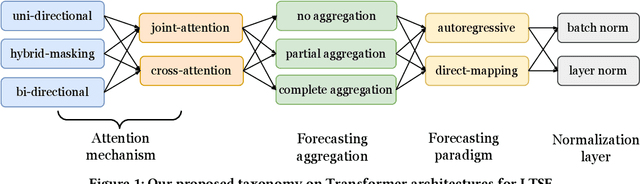
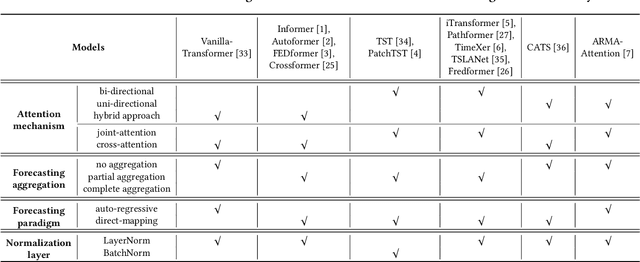
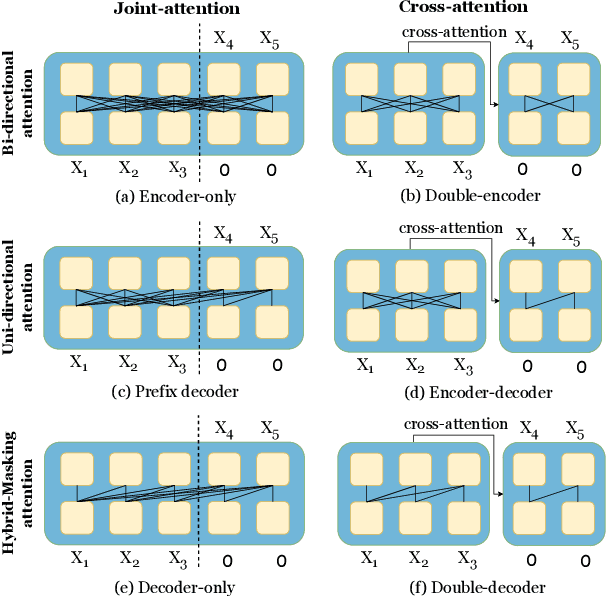
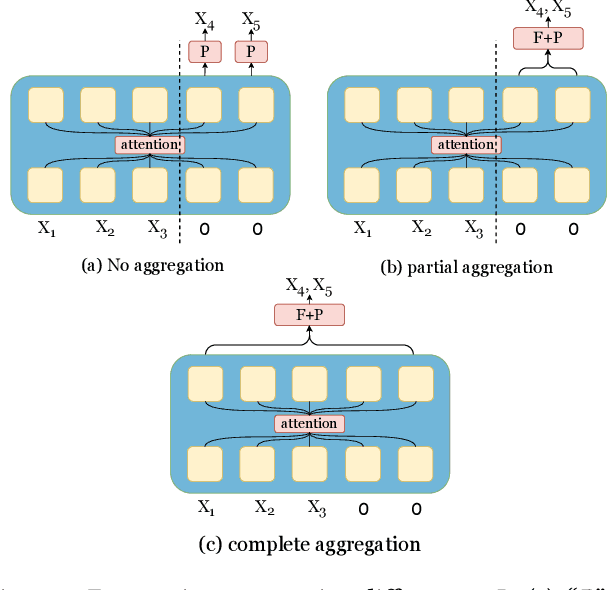
Transformer-based models have recently become dominant in Long-term Time Series Forecasting (LTSF), yet the variations in their architecture, such as encoder-only, encoder-decoder, and decoder-only designs, raise a crucial question: What Transformer architecture works best for LTSF tasks? However, existing models are often tightly coupled with various time-series-specific designs, making it difficult to isolate the impact of the architecture itself. To address this, we propose a novel taxonomy that disentangles these designs, enabling clearer and more unified comparisons of Transformer architectures. Our taxonomy considers key aspects such as attention mechanisms, forecasting aggregations, forecasting paradigms, and normalization layers. Through extensive experiments, we uncover several key insights: bi-directional attention with joint-attention is most effective; more complete forecasting aggregation improves performance; and the direct-mapping paradigm outperforms autoregressive approaches. Furthermore, our combined model, utilizing optimal architectural choices, consistently outperforms several existing models, reinforcing the validity of our conclusions. We hope these findings offer valuable guidance for future research on Transformer architectural designs in LTSF. Our code is available at https://github.com/HALF111/TSF_architecture.
Parallel Scaling Law for Language Models
May 15, 2025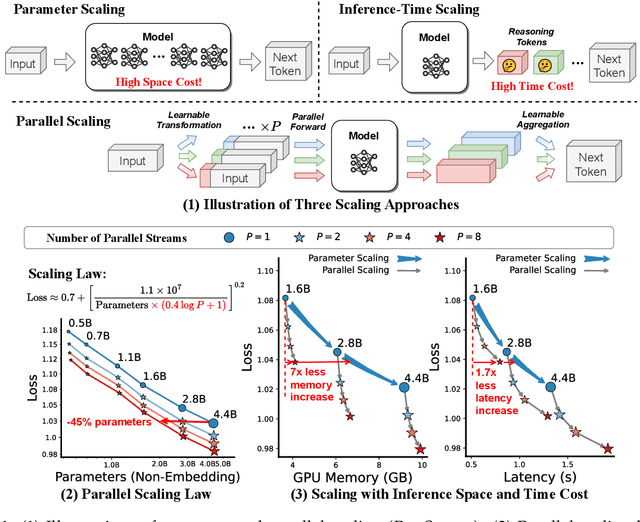

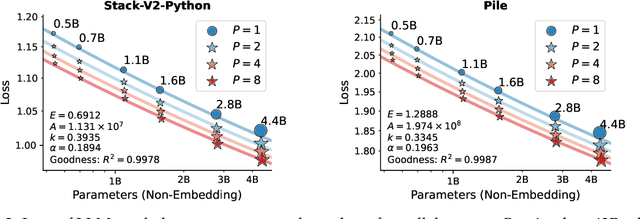

It is commonly believed that scaling language models should commit a significant space or time cost, by increasing the parameters (parameter scaling) or output tokens (inference-time scaling). We introduce the third and more inference-efficient scaling paradigm: increasing the model's parallel computation during both training and inference time. We apply $P$ diverse and learnable transformations to the input, execute forward passes of the model in parallel, and dynamically aggregate the $P$ outputs. This method, namely parallel scaling (ParScale), scales parallel computation by reusing existing parameters and can be applied to any model structure, optimization procedure, data, or task. We theoretically propose a new scaling law and validate it through large-scale pre-training, which shows that a model with $P$ parallel streams is similar to scaling the parameters by $O(\log P)$ while showing superior inference efficiency. For example, ParScale can use up to 22$\times$ less memory increase and 6$\times$ less latency increase compared to parameter scaling that achieves the same performance improvement. It can also recycle an off-the-shelf pre-trained model into a parallelly scaled one by post-training on a small amount of tokens, further reducing the training budget. The new scaling law we discovered potentially facilitates the deployment of more powerful models in low-resource scenarios, and provides an alternative perspective for the role of computation in machine learning.
B4: Towards Optimal Assessment of Plausible Code Solutions with Plausible Tests
Sep 13, 2024
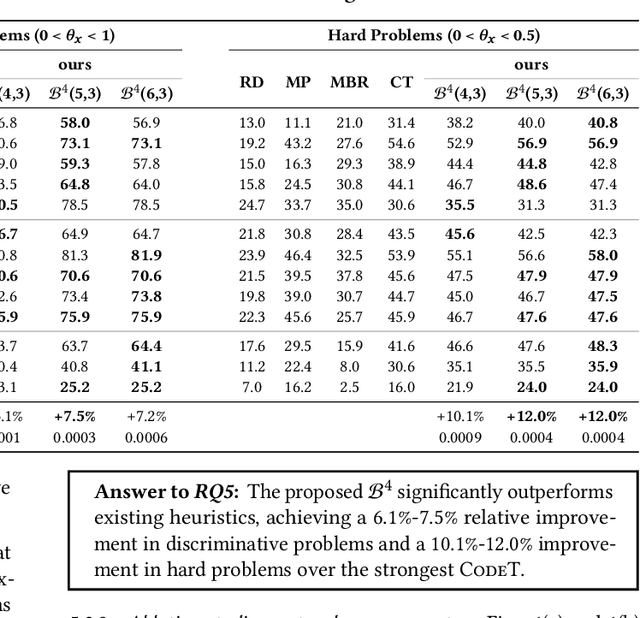

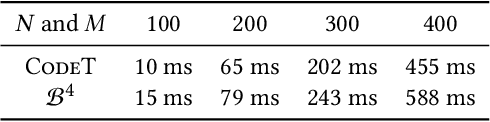
Selecting the best code solution from multiple generated ones is an essential task in code generation, which can be achieved by using some reliable validators (e.g., developer-written test cases) for assistance. Since reliable test cases are not always available and can be expensive to build in practice, researchers propose to automatically generate test cases to assess code solutions. However, when both code solutions and test cases are plausible and not reliable, selecting the best solution becomes challenging. Although some heuristic strategies have been proposed to tackle this problem, they lack a strong theoretical guarantee and it is still an open question whether an optimal selection strategy exists. Our work contributes in two ways. First, we show that within a Bayesian framework, the optimal selection strategy can be defined based on the posterior probability of the observed passing states between solutions and tests. The problem of identifying the best solution is then framed as an integer programming problem. Second, we propose an efficient approach for approximating this optimal (yet uncomputable) strategy, where the approximation error is bounded by the correctness of prior knowledge. We then incorporate effective prior knowledge to tailor code generation tasks. Both theoretical and empirical studies confirm that existing heuristics are limited in selecting the best solutions with plausible test cases. Our proposed approximated optimal strategy B4 significantly surpasses existing heuristics in selecting code solutions generated by large language models (LLMs) with LLM-generated tests, achieving a relative performance improvement by up to 50% over the strongest heuristic and 246% over the random selection in the most challenging scenarios. Our code is publicly available at https://github.com/ZJU-CTAG/B4.
VisionTS: Visual Masked Autoencoders Are Free-Lunch Zero-Shot Time Series Forecasters
Aug 30, 2024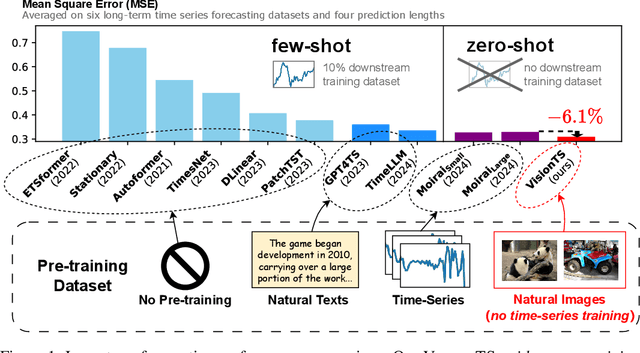
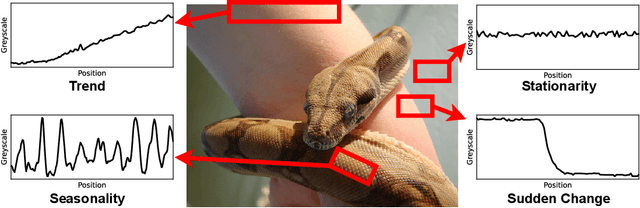
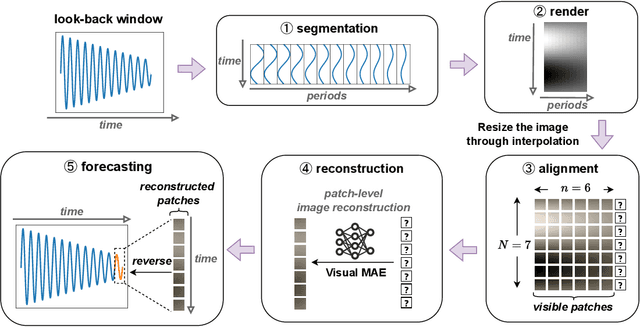
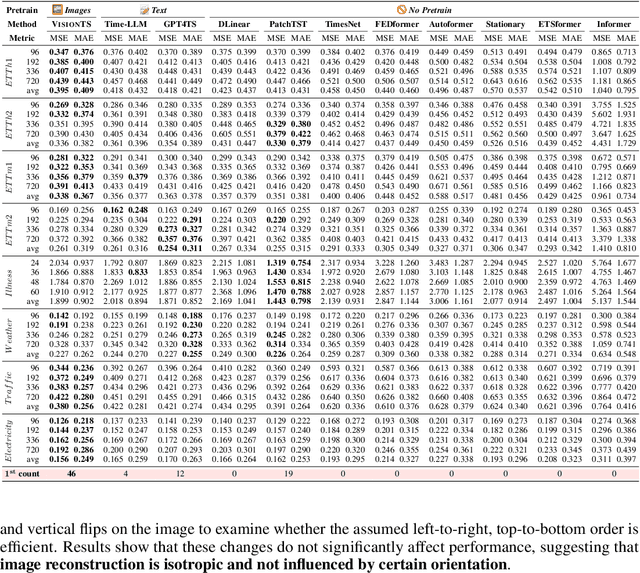
Foundation models have emerged as a promising approach in time series forecasting (TSF). Existing approaches either fine-tune large language models (LLMs) or build large-scale time-series datasets to develop TSF foundation models. However, these methods face challenges due to the severe cross-domain gap or in-domain heterogeneity. In this paper, we explore a new road to building a TSF foundation model from rich and high-quality natural images, based on the intrinsic similarities between images and time series. To bridge the gap between the two domains, we reformulate the TSF task as an image reconstruction task, which is further processed by a visual masked autoencoder (MAE) self-supervised pre-trained on the ImageNet dataset. Surprisingly, without further adaptation in the time-series domain, the proposed VisionTS could achieve superior zero-shot forecasting performance compared to existing TSF foundation models. With minimal fine-tuning, VisionTS could further improve the forecasting and achieve state-of-the-art performance in most cases. These findings suggest that visual models could be a free lunch for TSF and highlight the potential for future cross-domain research between computer vision and TSF. Our code is publicly available at https://github.com/Keytoyze/VisionTS.
PEMT: Multi-Task Correlation Guided Mixture-of-Experts Enables Parameter-Efficient Transfer Learning
Feb 23, 2024
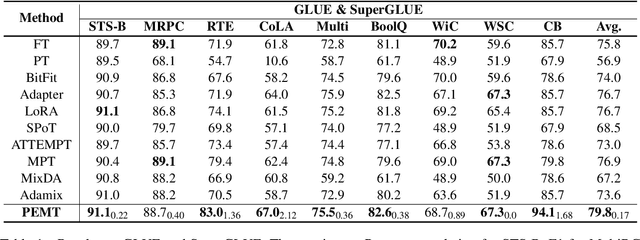
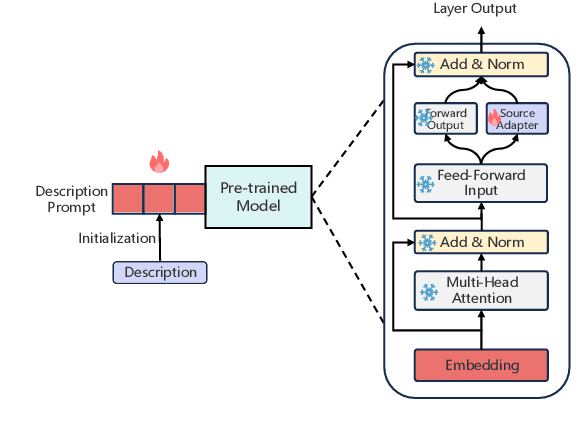
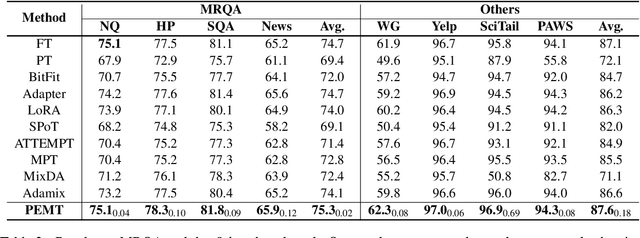
Parameter-efficient fine-tuning (PEFT) has emerged as an effective method for adapting pre-trained language models to various tasks efficiently. Recently, there has been a growing interest in transferring knowledge from one or multiple tasks to the downstream target task to achieve performance improvements. However, current approaches typically either train adapters on individual tasks or distill shared knowledge from source tasks, failing to fully exploit task-specific knowledge and the correlation between source and target tasks. To overcome these limitations, we propose PEMT, a novel parameter-efficient fine-tuning framework based on multi-task transfer learning. PEMT extends the mixture-of-experts (MoE) framework to capture the transferable knowledge as a weighted combination of adapters trained on source tasks. These weights are determined by a gated unit, measuring the correlation between the target and each source task using task description prompt vectors. To fully exploit the task-specific knowledge, we also propose the Task Sparsity Loss to improve the sparsity of the gated unit. We conduct experiments on a broad range of tasks over 17 datasets. The experimental results demonstrate our PEMT yields stable improvements over full fine-tuning, and state-of-the-art PEFT and knowledge transferring methods on various tasks. The results highlight the effectiveness of our method which is capable of sufficiently exploiting the knowledge and correlation features across multiple tasks.
Advancing Graph Representation Learning with Large Language Models: A Comprehensive Survey of Techniques
Feb 04, 2024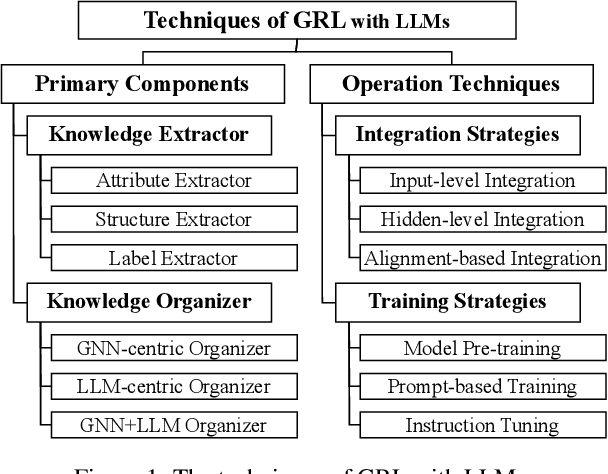
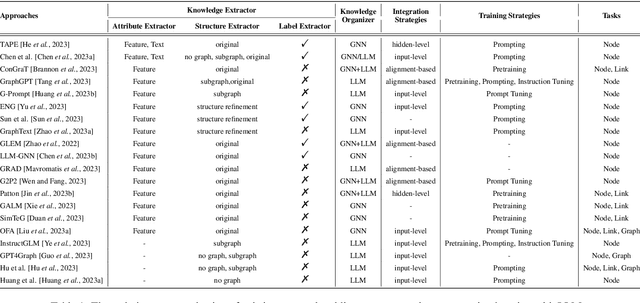
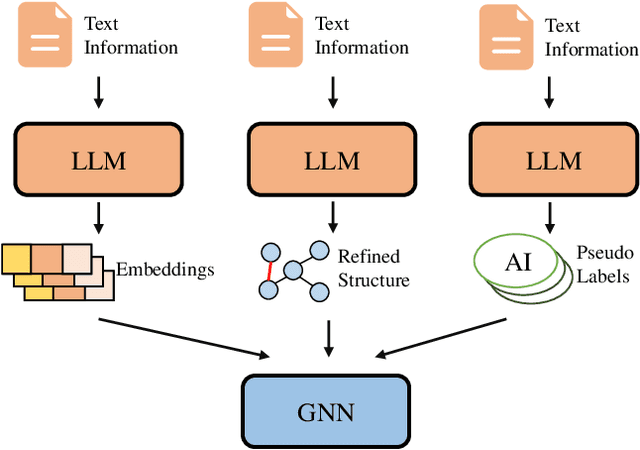
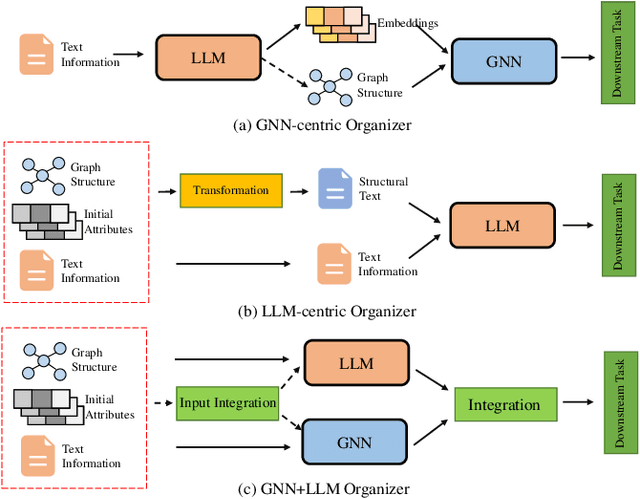
The integration of Large Language Models (LLMs) with Graph Representation Learning (GRL) marks a significant evolution in analyzing complex data structures. This collaboration harnesses the sophisticated linguistic capabilities of LLMs to improve the contextual understanding and adaptability of graph models, thereby broadening the scope and potential of GRL. Despite a growing body of research dedicated to integrating LLMs into the graph domain, a comprehensive review that deeply analyzes the core components and operations within these models is notably lacking. Our survey fills this gap by proposing a novel taxonomy that breaks down these models into primary components and operation techniques from a novel technical perspective. We further dissect recent literature into two primary components including knowledge extractors and organizers, and two operation techniques including integration and training stratigies, shedding light on effective model design and training strategies. Additionally, we identify and explore potential future research avenues in this nascent yet underexplored field, proposing paths for continued progress.
JumpCoder: Go Beyond Autoregressive Coder via Online Modification
Jan 15, 2024


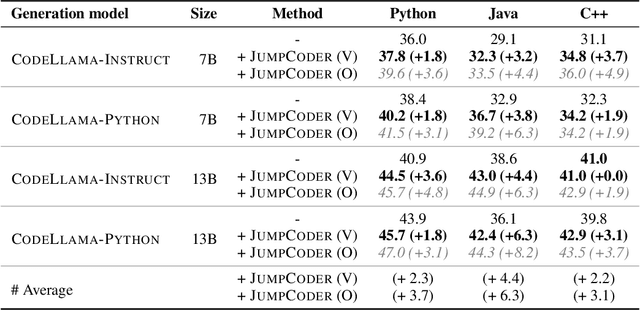
While existing code large language models (code LLMs) exhibit impressive capabilities in code generation, their autoregressive sequential generation inherently lacks reversibility. This limitation hinders them from timely correcting previous missing statements during coding as humans do, often leading to error propagation and suboptimal performance. We introduce JumpCoder, a novel modelagnostic framework that enables online modification and non-sequential generation to augment the code LLMs. The key idea behind JumpCoder is to insert new code into the currently generated code when necessary during generation, which is achieved through an auxiliary infilling model that works in tandem with the code LLM. Since identifying the best infill position beforehand is intractable, we adopt an infill-first, judge-later strategy, which experiments with filling at the $k$ most critical positions following the generation of each line, and uses an Abstract Syntax Tree (AST) parser alongside the Generation Model Scoring to effectively judge the validity of each potential infill. Extensive experiments using six state-of-the-art code LLMs across multiple benchmarks consistently indicate significant improvements over all baselines. Notably, JumpCoder assists code LLMs in achieving up to a 3.6% increase in Pass@1 for Python, 6.3% for Java, and 3.7% for C++ in the multilingual HumanEval benchmarks. Our code is public at https://github.com/Keytoyze/JumpCoder.