 Add to Chrome
 Add to Firefox
 Add to Edge
Hybrid Feedback Sampling for Sample-Efficient Model Predictive Control
Aug 19, 2026
Thanks to its parallelizability and flexibility, sampling-based Model Predictive Control (MPC) has become widely popular for controlling real-world robotic systems. However, for high-dimensional and open-loop unstable dynamical systems, the required number of samples to improve the control sequence will grow exponentially with the horizon, leading to poor sample efficiency and numerical instability. This paper investigates the instability of shooting methods in sampling-based MPC and shows that the optimal sampling proposal distribution can be realized by sampling with an optimized feedback policy. We refer to this algorithm as Feedback Sampling MPC (FS-MPC). FS-MPC involves a hybrid sampling design which balances local and global search based on the system stability and the available computation budget. Our theoretical analysis shows that our hybrid sampling approach achieves faster convergence than standard MPPI and better optimality than standard feedback sampling. Empirically, in diverse contact-rich control tasks like humanoid loco-manipulation and dexterous manipulation, we show that FS-MPC successfully tackles dynamically unstable tasks where standard sample-based approaches struggle, and strictly outperforms feedback policies alone. Finally, we validate our method on humanoid robot locomotion and manipulation tasks in the real world.

Heterogeneous Policy Networks for Composite Robot Team Communication and Coordination
Jun 18, 2026High-performing human-human teams learn intelligent and efficient communication and coordination strategies to maximize their joint utility. These teams implicitly understand the different roles of heterogeneous team members and adapt their communication protocols accordingly. Multi-Agent Reinforcement Learning (MARL) has attempted to develop computational methods for synthesizing such joint coordination-communication strategies, but emulating heterogeneous communication patterns across agents with different state, action, and observation spaces has remained a challenge. Without properly modeling agent heterogeneity, as in prior MARL work that leverages homogeneous graph networks, communication becomes less helpful and can even deteriorate the team's performance. In the past, we proposed Heterogeneous Policy Networks (HetNet) to learn efficient and diverse communication models for coordinating cooperative heterogeneous teams. In this extended work, we extend Heterogeneous Policy Networks (HetNet) to support scaling heterogeneous robot teams. Building on heterogeneous graph-attention networks, we show that HetNet not only facilitates learning heterogeneous collaborative policies but also enables end-to-end training for learning highly efficient binarized messaging. Our empirical evaluation shows that HetNet sets a new state of the art in learning coordination and communication strategies for heterogeneous multi-agent teams by achieving an 5.84% to 707.65% performance improvement over the next-best baseline across multiple domains while simultaneously achieving a 200x reduction in the required communication bandwidth.
Temporally Decoupled Diffusion Planning for Autonomous Driving
Mar 26, 2026Motion planning in dynamic urban environments requires balancing immediate safety with long-term goals. While diffusion models effectively capture multi-modal decision-making, existing approaches treat trajectories as monolithic entities, overlooking heterogeneous temporal dependencies where near-term plans are constrained by instantaneous dynamics and far-term plans by navigational goals. To address this, we propose Temporally Decoupled Diffusion Model (TDDM), which reformulates trajectory generation via a noise-as-mask paradigm. By partitioning trajectories into segments with independent noise levels, we implicitly treat high noise as information voids and weak noise as contextual cues. This compels the model to reconstruct corrupted near-term states by leveraging internal correlations with better-preserved temporal contexts. Architecturally, we introduce a Temporally Decoupled Adaptive Layer Normalization (TD-AdaLN) to inject segment-specific timesteps. During inference, our Asymmetric Temporal Classifier-Free Guidance utilizes weakly noised far-term priors to guide immediate path generation. Evaluations on the nuPlan benchmark show TDDM approaches or exceeds state-of-the-art baselines, particularly excelling in the challenging Test14-hard subset.
Gemini 1.5: Unlocking multimodal understanding across millions of tokens of context
Mar 08, 2024In this report, we present the latest model of the Gemini family, Gemini 1.5 Pro, a highly compute-efficient multimodal mixture-of-experts model capable of recalling and reasoning over fine-grained information from millions of tokens of context, including multiple long documents and hours of video and audio. Gemini 1.5 Pro achieves near-perfect recall on long-context retrieval tasks across modalities, improves the state-of-the-art in long-document QA, long-video QA and long-context ASR, and matches or surpasses Gemini 1.0 Ultra's state-of-the-art performance across a broad set of benchmarks. Studying the limits of Gemini 1.5 Pro's long-context ability, we find continued improvement in next-token prediction and near-perfect retrieval (>99%) up to at least 10M tokens, a generational leap over existing models such as Claude 2.1 (200k) and GPT-4 Turbo (128k). Finally, we highlight surprising new capabilities of large language models at the frontier; when given a grammar manual for Kalamang, a language with fewer than 200 speakers worldwide, the model learns to translate English to Kalamang at a similar level to a person who learned from the same content.
Gemini: A Family of Highly Capable Multimodal Models
Dec 19, 2023This report introduces a new family of multimodal models, Gemini, that exhibit remarkable capabilities across image, audio, video, and text understanding. The Gemini family consists of Ultra, Pro, and Nano sizes, suitable for applications ranging from complex reasoning tasks to on-device memory-constrained use-cases. Evaluation on a broad range of benchmarks shows that our most-capable Gemini Ultra model advances the state of the art in 30 of 32 of these benchmarks - notably being the first model to achieve human-expert performance on the well-studied exam benchmark MMLU, and improving the state of the art in every one of the 20 multimodal benchmarks we examined. We believe that the new capabilities of Gemini models in cross-modal reasoning and language understanding will enable a wide variety of use cases and we discuss our approach toward deploying them responsibly to users.
A Knowledge-Based Decision Support System for In Vitro Fertilization Treatment
Jan 27, 2022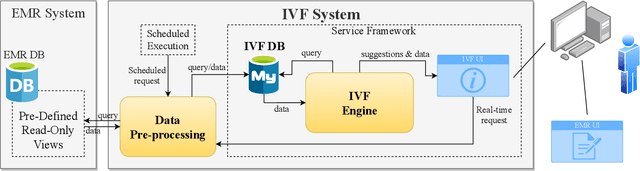
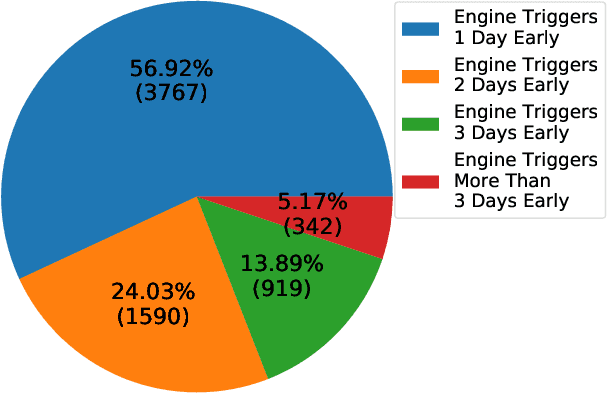
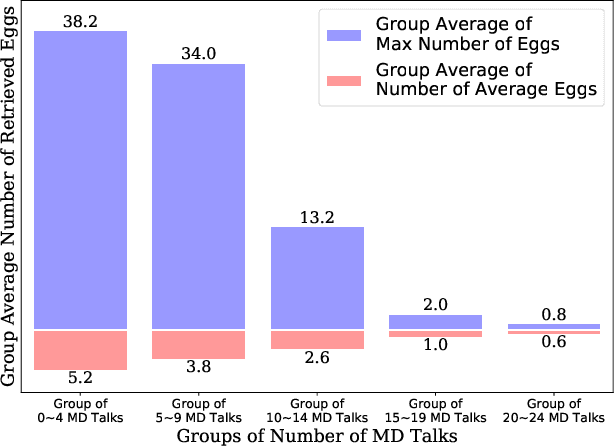
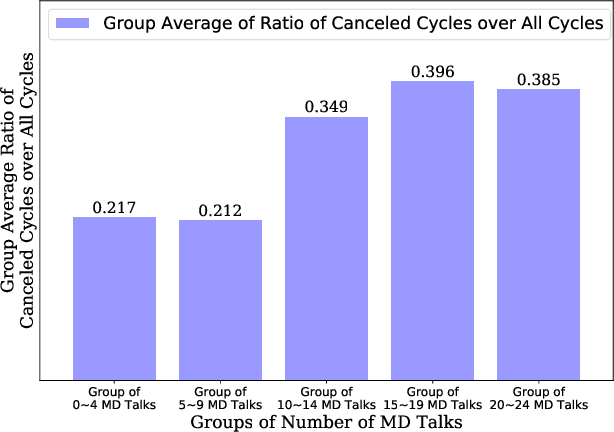
In Vitro Fertilization (IVF) is the most widely used Assisted Reproductive Technology (ART). IVF usually involves controlled ovarian stimulation, oocyte retrieval, fertilization in the laboratory with subsequent embryo transfer. The first two steps correspond with follicular phase of females and ovulation in their menstrual cycle. Therefore, we refer to it as the treatment cycle in our paper. The treatment cycle is crucial because the stimulation medications in IVF treatment are applied directly on patients. In order to optimize the stimulation effects and lower the side effects of the stimulation medications, prompt treatment adjustments are in need. In addition, the quality and quantity of the retrieved oocytes have a significant effect on the outcome of the following procedures. To improve the IVF success rate, we propose a knowledge-based decision support system that can provide medical advice on the treatment protocol and medication adjustment for each patient visit during IVF treatment cycle. Our system is efficient in data processing and light-weighted which can be easily embedded into electronic medical record systems. Moreover, an oocyte retrieval oriented evaluation demonstrates that our system performs well in terms of accuracy of advice for the protocols and medications.