 Add to Chrome
 Add to Firefox
 Add to Edge
Generic Expert Coverage for Pruning SparseMixture-of-Experts Language Models
Jul 02, 2026
Sparsely activated Mixture-of-Experts (MoE) language models contain substantial structured redundancy among routed experts, but pruning them without downstream calibration data remains challenging. Existing expert-pruning methods typically rely on a single aggregated importance score, which can bias the retained set toward experts favored by dominant calibration patterns. We propose \textbf{Generic TB-Coverage}, a coverage-aware expert pruning method that uses only generic text corpora (WikiText2 and C4) for calibration. Instead of collapsing expert utility into one score, our method profiles per-expert utility separately on each corpus and enforces a fixed-budget coverage rule that preserves high-utility experts from each corpus before constructing the final pruning mask. Across Qwen1.5-MoE-A2.7B and DeepSeek-MoE-16B-Base at 25\%, 50\%, and 75\% retention budgets, our method improves average accuracy on six common zero-shot benchmarks over random pruning, REAP, and ExpertSparsity, while also reducing perplexity degradation on WikiText2 and C4. The gains are largest under aggressive pruning (25\% and 50\% retain), suggesting that preserving cross-corpus expert coverage is an effective generic-data prior for MoE pruning. Our improvements hold with fixed pruning budgets and no downstream calibration data.

Mixture-of-Experts Transformer for Automatic Modulation Recognition
Jun 08, 2026Automatic Modulation Recognition (AMR) is a key enabling technology for cognitive radio and intelligent spectrum management in next-generation wireless systems. However, current deep learning-based AMR methods predominantly rely on static multi-scale fusion strategies, which lack the flexibility to adapt to the highly dynamic temporal variations of modulation signals. To address this limitation, we propose MoEformer, an adaptive Multi-Scale Mixture-of-Experts Transformer network that directly processes I/Q signals to preserve their temporal and phase structures. Specifically, MoEformer constructs multi scale expert views through temporal resampling, employs an input-dependent gating mechanism for dynamic expert fusion, and integrates Rotary Position Embeddings (RoPE) within Transformer encoders to capture both local and global tem poral dependencies. Comprehensive evaluations on three widely adopted benchmarks (RadioML2016.10a, RadioML2016.10b, and RadioML2018.01A) demonstrate that MoEformer outperforms the competitive baselines, achieving superior average recognition accuracies of 63.74%, 66.24%, and 64.22%, respectively. In addition, the proposed method strikes an optimal trade-off between recognition performance and model complexity.
SAILRec: Steering LLM Attention to Dual-Side Semantically Aligned Collaborative Embeddings for Recommendation
Jun 03, 2026Recent LLM-based recommenders enhance language models with collaborative embeddings from user-item interactions, but making such embeddings available does not ensure their proper use during inference. Through a diagnostic attention analysis, we find that the utilization of collaborative embeddings is depth-dependent and alignment-sensitive, suggesting that LLMs need to balance their internal semantic knowledge with external collaborative knowledge. To address this issue, we propose SAILRec, an LLM-based recommender that improves this balance through dual-side semantic alignment and hierarchical attention steering. The former aligns item-side embeddings with item-text semantics and user-side embeddings with codebook-based semantic profiles, while the latter suppresses premature shallow-layer collaborative interference and strengthens collaborative evidence in deeper decision layers. Experiments on MovieLens-1M and Amazon-Book show that SAILRec consistently outperforms representative baselines, with ablation and masking analyses validating its key designs.
Halo Separation-guided Underwater Multi-scale Image Restoration
May 11, 2026Underwater images captured by Autonomous Underwater Vehicles (AUVs) are inevitably affected by artificial light sources, which often produce halos in the foreground of the camera and seriously interfere with the quality of the image. The existing underwater image enhancement methods fail to fully consider this key problem, and the robustness of processing images under artificial light scenes is poor. In practical applications, since underwater image enhancement itself is a very challenging task, the influence of artificial light sources will lead to serious degradation of image performance and affect subsequent vision tasks. In order to effectively deal with this problem, this paper designs a single halo image correction method based on an iterative structure. The network is mainly divided into two sub-networks, one is the halo layer separation sub-network which aims to separate the halo by gradient minimization, and the other is the multi-scale recovery sub-network which aims to recover the image information masked by halo. The UIEB and EUVP synthetic datasets are used for training to ensure that the network can fully learn the characteristics and laws of underwater halo images. Then a large number of halo images taken in an underwater environment with real artificial light are collected for testing. In addition, the brightness distribution characteristics of underwater halo images are analyzed and the radial gradient is introduced to constraint eliminate halo to improve the effect of underwater image restoration.
Phoenix-VL 1.5 Medium Technical Report
May 11, 2026We introduce Phoenix-VL 1.5 Medium, a 123B-parameter natively multimodal and multilingual foundation model, adapted to regional languages and the Singapore context. Developed as a sovereign AI asset, it demonstrates that deep domain adaptation can be achieved with minimal degradation to broad-spectrum intelligence and alignment. Continued pretraining was performed on Mistral Medium 3.1 using a localized 1-trillion tokens multimodal corpus, followed by a 250-billion tokens long-context extension phase. Subsequent post-training incorporated a novel human-annotated Singapore multimodal dataset and curated textual corpus on Singapore culture, knowledge, and legislation, totaling 22-billion tokens. An additional 5 billion tokens of model alignment was performed through Online Direct Preference Optimization. Phoenix-VL 1.5 Medium achieves state-of-the-art performance for its size on Singapore multimodal, legal, and government policy benchmarks while remaining globally competitive on general multimodal intelligence, multilingual, and STEM benchmarks. We also introduce a novel evaluation suite encompassing localized knowledge benchmarks and an institutionally aligned model behavior and safety framework. We report the data curation principles, training methodology, and highlight benchmark and inference performance.
QCaption: Video Captioning and Q&A through Fusion of Large Multimodal Models
Jan 10, 2026This paper introduces QCaption, a novel video captioning and Q&A pipeline that enhances video analytics by fusing three models: key frame extraction, a Large Multimodal Model (LMM) for image-text analysis, and a Large Language Model (LLM) for text analysis. This approach enables integrated analysis of text, images, and video, achieving performance improvements over existing video captioning and Q&A models; all while remaining fully self-contained, adept for on-premises deployment. Experimental results using QCaption demonstrated up to 44.2% and 48.9% improvements in video captioning and Q&A tasks, respectively. Ablation studies were also performed to assess the role of LLM on the fusion on the results. Moreover, the paper proposes and evaluates additional video captioning approaches, benchmarking them against QCaption and existing methodologies. QCaption demonstrate the potential of adopting a model fusion approach in advancing video analytics.
QMAVIS: Long Video-Audio Understanding using Fusion of Large Multimodal Models
Jan 10, 2026Large Multimodal Models (LMMs) for video-audio understanding have traditionally been evaluated only on shorter videos of a few minutes long. In this paper, we introduce QMAVIS (Q Team-Multimodal Audio Video Intelligent Sensemaking), a novel long video-audio understanding pipeline built through a late fusion of LMMs, Large Language Models, and speech recognition models. QMAVIS addresses the gap in long-form video analytics, particularly for longer videos of a few minutes to beyond an hour long, opening up new potential applications in sensemaking, video content analysis, embodied AI, etc. Quantitative experiments using QMAVIS demonstrated a 38.75% improvement over state-of-the-art video-audio LMMs like VideoLlaMA2 and InternVL2 on the VideoMME (with subtitles) dataset, which comprises long videos with audio information. Evaluations on other challenging video understanding datasets like PerceptionTest and EgoSchema saw up to 2% improvement, indicating competitive performance. Qualitative experiments also showed that QMAVIS is able to extract the nuances of different scenes in a long video audio content while understanding the overarching narrative. Ablation studies were also conducted to ascertain the impact of each component in the fusion pipeline.
Monte Carlo Diffusion for Generalizable Learning-Based RANSAC
Mar 12, 2025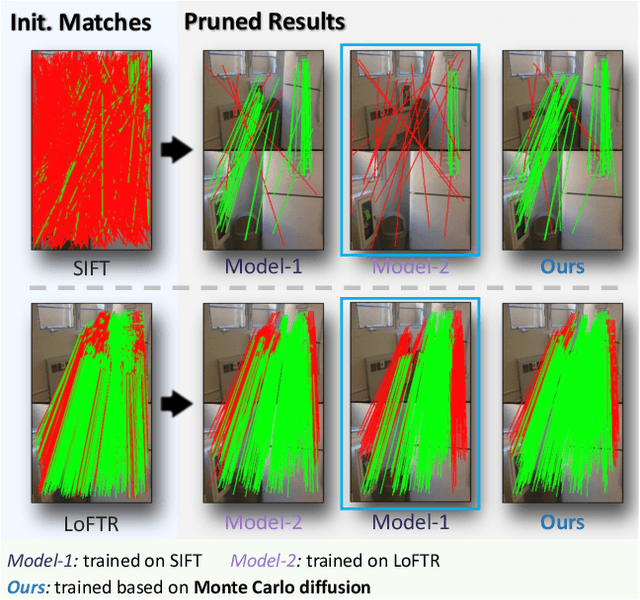
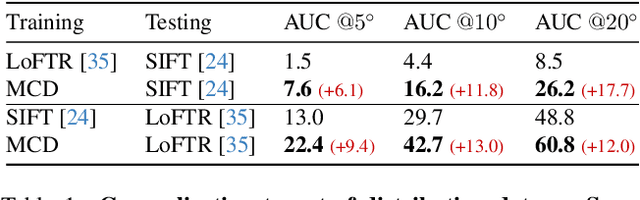
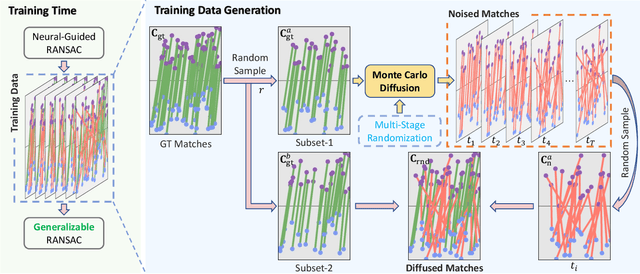
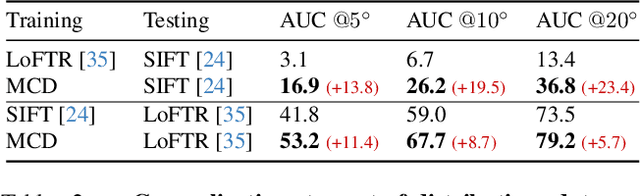
Random Sample Consensus (RANSAC) is a fundamental approach for robustly estimating parametric models from noisy data. Existing learning-based RANSAC methods utilize deep learning to enhance the robustness of RANSAC against outliers. However, these approaches are trained and tested on the data generated by the same algorithms, leading to limited generalization to out-of-distribution data during inference. Therefore, in this paper, we introduce a novel diffusion-based paradigm that progressively injects noise into ground-truth data, simulating the noisy conditions for training learning-based RANSAC. To enhance data diversity, we incorporate Monte Carlo sampling into the diffusion paradigm, approximating diverse data distributions by introducing different types of randomness at multiple stages. We evaluate our approach in the context of feature matching through comprehensive experiments on the ScanNet and MegaDepth datasets. The experimental results demonstrate that our Monte Carlo diffusion mechanism significantly improves the generalization ability of learning-based RANSAC. We also develop extensive ablation studies that highlight the effectiveness of key components in our framework.
Enhancing Complex Formula Recognition with Hierarchical Detail-Focused Network
Sep 18, 2024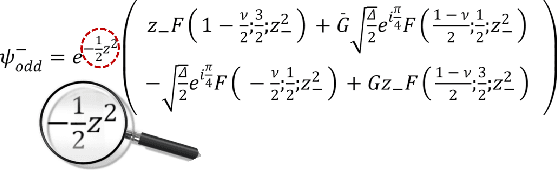
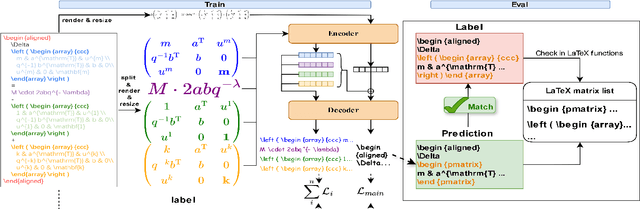
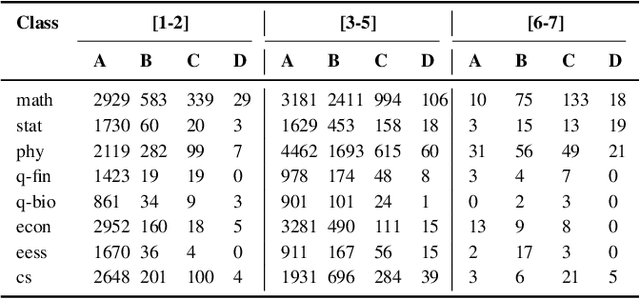
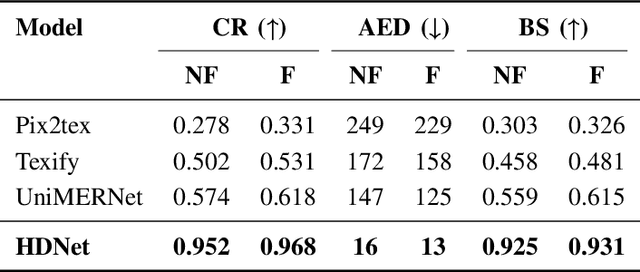
Hierarchical and complex Mathematical Expression Recognition (MER) is challenging due to multiple possible interpretations of a formula, complicating both parsing and evaluation. In this paper, we introduce the Hierarchical Detail-Focused Recognition dataset (HDR), the first dataset specifically designed to address these issues. It consists of a large-scale training set, HDR-100M, offering an unprecedented scale and diversity with one hundred million training instances. And the test set, HDR-Test, includes multiple interpretations of complex hierarchical formulas for comprehensive model performance evaluation. Additionally, the parsing of complex formulas often suffers from errors in fine-grained details. To address this, we propose the Hierarchical Detail-Focused Recognition Network (HDNet), an innovative framework that incorporates a hierarchical sub-formula module, focusing on the precise handling of formula details, thereby significantly enhancing MER performance. Experimental results demonstrate that HDNet outperforms existing MER models across various datasets.
F3T: A soft tactile unit with 3D force and temperature mathematical decoupling ability for robots
Sep 05, 2024


The human skin exhibits remarkable capability to perceive contact forces and environmental temperatures, providing intricate information essential for nuanced manipulation. Despite recent advancements in soft tactile sensors, a significant challenge remains in accurately decoupling signals - specifically, separating force from directional orientation and temperature - resulting in fail to meet the advanced application requirements of robots. This research proposes a multi-layered soft sensor unit (F3T) designed to achieve isolated measurements and mathematical decoupling of normal pressure, omnidirectional tangential forces, and temperature. We developed a circular coaxial magnetic film featuring a floating-mountain multi-layer capacitor, facilitating the physical decoupling of normal and tangential forces in all directions. Additionally, we incorporated an ion gel-based temperature sensing film atop the tactile sensor. This sensor is resilient to external pressure and deformation, enabling it to measure temperature and, crucially, eliminate capacitor errors induced by environmental temperature changes. This innovative design allows for the decoupled measurement of multiple signals, paving the way for advancements in higher-level robot motion control, autonomous decision-making, and task planning.