 Add to Chrome
 Add to Firefox
 Add to Edge
SMOPD: Multi-Reward Reinforcement Learning via Specialize-and-Merge Online Policy Distillation
Aug 04, 2026
We aim to improve model performance in multi-reward reinforcement learning training process. Existing Group reward-Decoupled Normalization Policy Optimization (GDPO) has mitigated the issue of reward signals masking one another during direct scalarization by normalizing each reward dimension separately before aggregation. However, our experiments show that GDPO still struggles to balance reward signals with different granularities. Specifically, in some particular training tasks, the model may receive a dense reward that assigns fine-grained scores ranging from 0.1 to 1.0, together with a sparse reward that provides only binary feedback of either 0 or 1. In such cases, we find that the sparse reward may provide an insufficient optimization signal, preventing its corresponding capability from being effectively reinforced. Therefore, how can we strengthen the optimization signal from the sparse reward without sacrificing the capability already learned from the fine-grained reward? To overcome this limitation, we propose Specialize-and-Merge Online Policy Distillation (SMOPD), a two-stage training method for multi-reward optimization. Stage1-Specialize: SMOPD first employs reward-priority configurations to train multiple reward-specialized teachers, allowing each reward to be learned under conditions where its signal can effectively drive optimization. Stage2-Merge: SMOPD then utilizes online policy distillation to combine the reward-specialized capabilities of these teachers into a single student policy, while maintaining balanced task-level optimization. To validate our method, we conduct experiments on two multi-reward settings: complementary rewards(tool-calling accuracy and format) and conflicting rewards (helpful and harmless rewards). Based on above settings, SMOPD outperforms GDPO across 1.5B, 3B and 7B backbones.

Distill Where the Student Goes: Teacher-Regularized RL for English-Evidence Cross-Lingual RAG
Jul 03, 2026Cross-lingual retrieval-augmented generation (RAG) is often deployed in an English-evidence regime, where users query in diverse languages but retrieved passages remain English. In this setting, generation can fail despite strong base models: English evidence induces language drift (English or code-switching outputs) and models use evidence unreliably when producing non-English answers. We attribute these failures to two post-training challenges: (i) errors are prefix-dependent, so fixed-trajectory supervision suffers from prefix mismatch; and (ii) sequence-level (partly discrete / judge-based) rewards yield noisy credit assignment and high-variance updates. We propose TR-RAG, a teacher-regularized RL recipe that couples reward optimization with on-policy distillation on student-visited prefixes. A compact student samples on-policy answers, while a stronger frozen teacher is queried only on those prefixes and provides a prefix-wise student-to-teacher reverse-KL anchor. We further introduce a reward decomposition for English-evidence multilingual generation, combining language consistency, character 3-gram recall, and an LLM-judge score for evidence-grounded correctness. Across three benchmarks -- BioASQ-ENKB5, Hotpot-ENKB5, and naturally multilingual MKQA -- and two backbones, TR-RAG improves the composite of language adherence and evidence-grounded correctness over strong baselines. Crucially, the teacher anchor acts as a safety net: on in-domain languages it prevents the large language-consistency collapses (up to ~27 percentage points) that reward-only RL can suffer by drifting below even the base model, while on distant out-of-distribution languages -- where reward-only RL stalls at the base model's ceiling -- it still improves evidence grounding; and on character 3-gram recall the compact student sometimes surpasses its 70B teacher.
Truncated Proximal Policy Optimization
Jun 18, 2025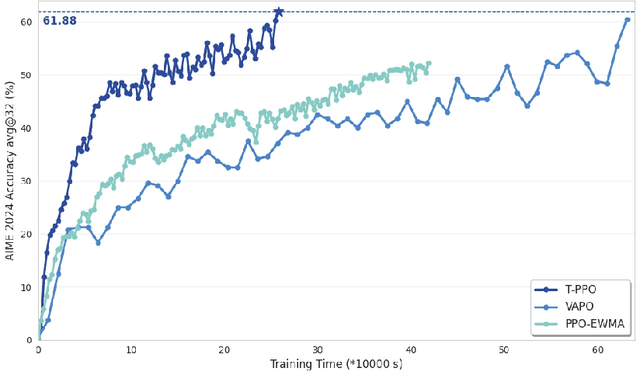
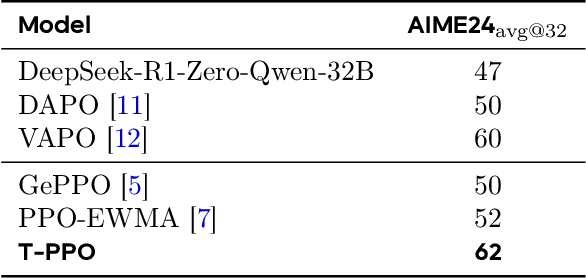
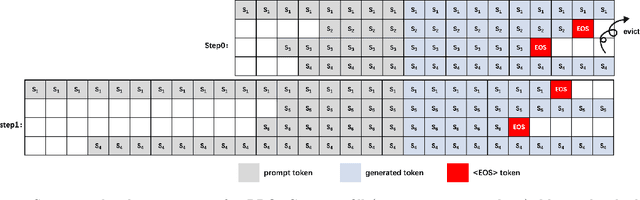
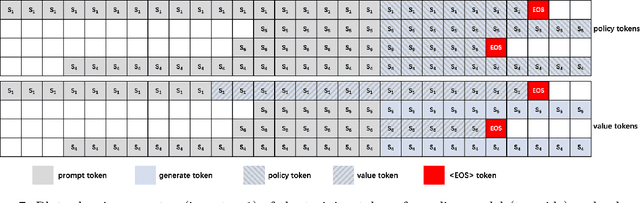
Recently, test-time scaling Large Language Models (LLMs) have demonstrated exceptional reasoning capabilities across scientific and professional tasks by generating long chains-of-thought (CoT). As a crucial component for developing these reasoning models, reinforcement learning (RL), exemplified by Proximal Policy Optimization (PPO) and its variants, allows models to learn through trial and error. However, PPO can be time-consuming due to its inherent on-policy nature, which is further exacerbated by increasing response lengths. In this work, we propose Truncated Proximal Policy Optimization (T-PPO), a novel extension to PPO that improves training efficiency by streamlining policy update and length-restricted response generation. T-PPO mitigates the issue of low hardware utilization, an inherent drawback of fully synchronized long-generation procedures, where resources often sit idle during the waiting periods for complete rollouts. Our contributions are two-folds. First, we propose Extended Generalized Advantage Estimation (EGAE) for advantage estimation derived from incomplete responses while maintaining the integrity of policy learning. Second, we devise a computationally optimized mechanism that allows for the independent optimization of the policy and value models. By selectively filtering prompt and truncated tokens, this mechanism reduces redundant computations and accelerates the training process without sacrificing convergence performance. We demonstrate the effectiveness and efficacy of T-PPO on AIME 2024 with a 32B base model. The experimental results show that T-PPO improves the training efficiency of reasoning LLMs by up to 2.5x and outperforms its existing competitors.
LLM-BT: Performing Robotic Adaptive Tasks based on Large Language Models and Behavior Trees
Apr 08, 2024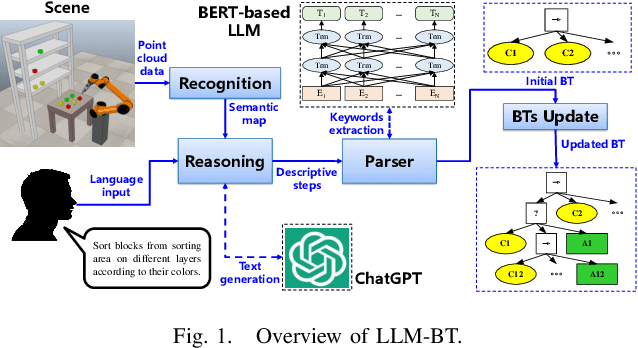
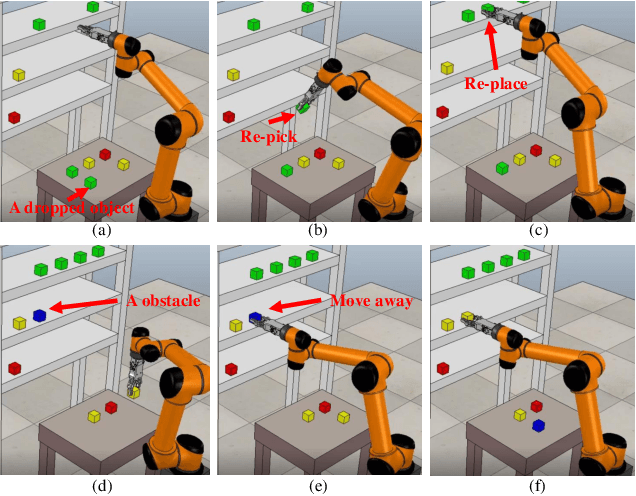
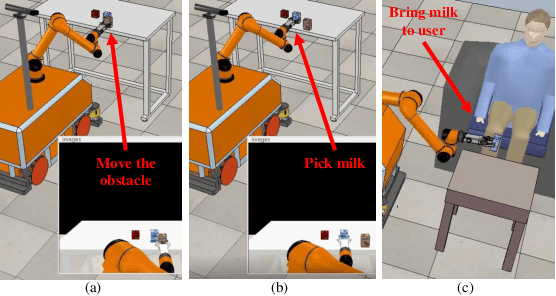
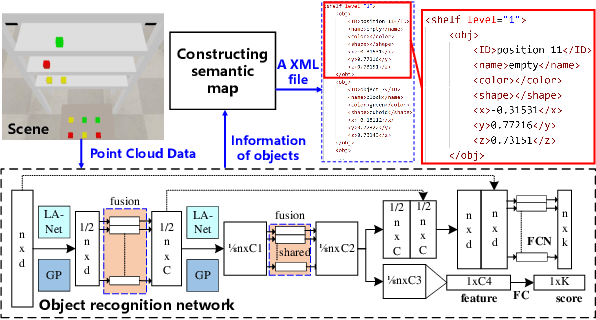
Large Language Models (LLMs) have been widely utilized to perform complex robotic tasks. However, handling external disturbances during tasks is still an open challenge. This paper proposes a novel method to achieve robotic adaptive tasks based on LLMs and Behavior Trees (BTs). It utilizes ChatGPT to reason the descriptive steps of tasks. In order to enable ChatGPT to understand the environment, semantic maps are constructed by an object recognition algorithm. Then, we design a Parser module based on Bidirectional Encoder Representations from Transformers (BERT) to parse these steps into initial BTs. Subsequently, a BTs Update algorithm is proposed to expand the initial BTs dynamically to control robots to perform adaptive tasks. Different from other LLM-based methods for complex robotic tasks, our method outputs variable BTs that can add and execute new actions according to environmental changes, which is robust to external disturbances. Our method is validated with simulation in different practical scenarios.
AutoChunk: Automated Activation Chunk for Memory-Efficient Long Sequence Inference
Jan 19, 2024
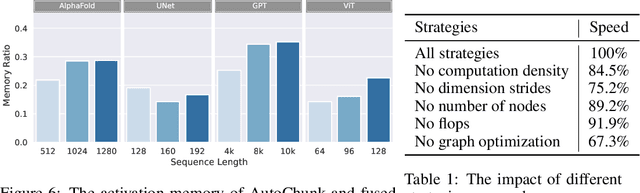
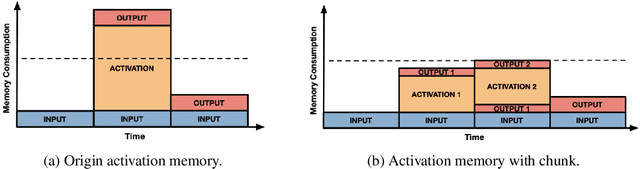
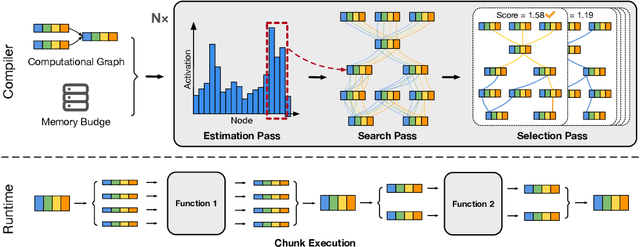
Large deep learning models have achieved impressive performance across a range of applications. However, their large memory requirements, including parameter memory and activation memory, have become a significant challenge for their practical serving. While existing methods mainly address parameter memory, the importance of activation memory has been overlooked. Especially for long input sequences, activation memory is expected to experience a significant exponential growth as the length of sequences increases. In this approach, we propose AutoChunk, an automatic and adaptive compiler system that efficiently reduces activation memory for long sequence inference by chunk strategies. The proposed system generates chunk plans by optimizing through multiple stages. In each stage, the chunk search pass explores all possible chunk candidates and the chunk selection pass identifies the optimal one. At runtime, AutoChunk employs code generation to automatically apply chunk strategies. The experiments demonstrate that AutoChunk can reduce over 80\% of activation memory while maintaining speed loss within 10%, extend max sequence length by 3.2x to 11.7x, and outperform state-of-the-art methods by a large margin.
Let's reward step by step: Step-Level reward model as the Navigators for Reasoning
Oct 16, 2023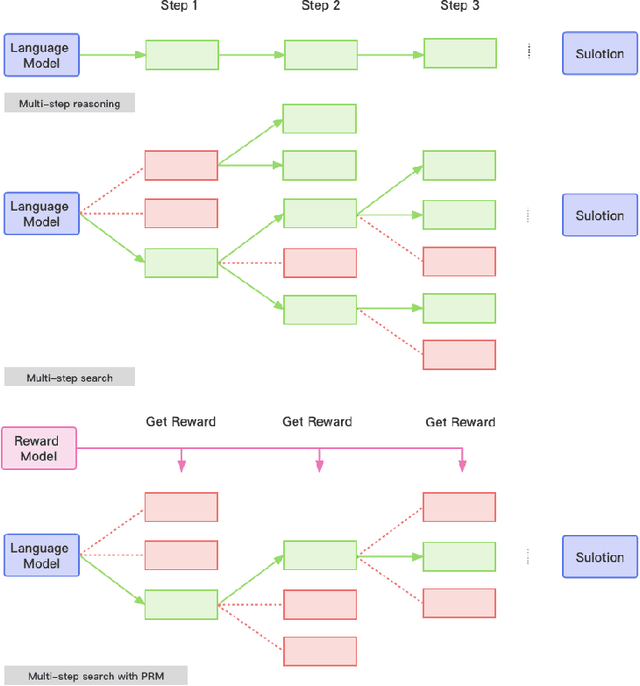
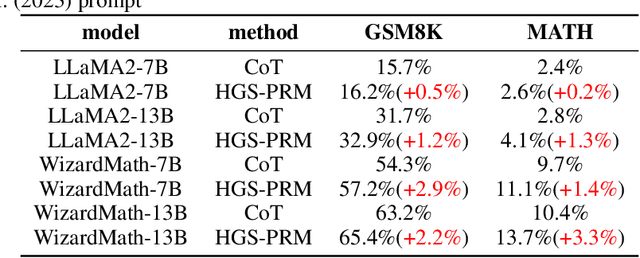

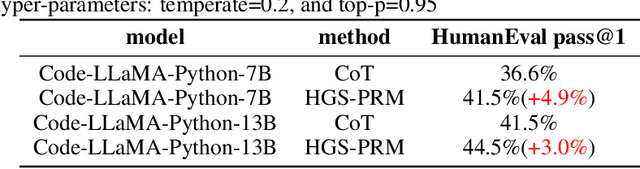
Recent years have seen considerable advancements in multi-step reasoning with Large Language Models (LLMs). The previous studies have elucidated the merits of integrating feedback or search mechanisms during model inference to improve the reasoning accuracy. The Process-Supervised Reward Model (PRM), typically furnishes LLMs with step-by-step feedback during the training phase, akin to Proximal Policy Optimization (PPO) or reject sampling. Our objective is to examine the efficacy of PRM in the inference phase to help discern the optimal solution paths for multi-step tasks such as mathematical reasoning and code generation. To this end, we propose a heuristic greedy search algorithm that employs the step-level feedback from PRM to optimize the reasoning pathways explored by LLMs. This tailored PRM demonstrated enhanced results compared to the Chain of Thought (CoT) on mathematical benchmarks like GSM8K and MATH. Additionally, to explore the versatility of our approach, we develop a novel method to automatically generate step-level reward dataset for coding tasks and observed similar improved performance in the code generation tasks. Thus highlighting the robust nature of our reward-model-based approach to inference for reasoning tasks.
LoBaSS: Gauging Learnability in Supervised Fine-tuning Data
Oct 16, 2023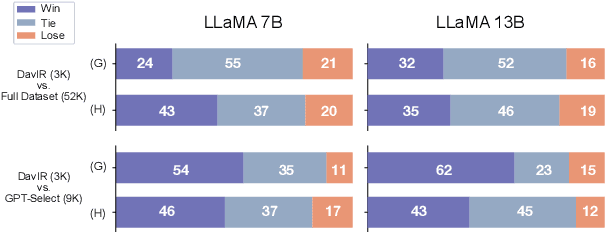
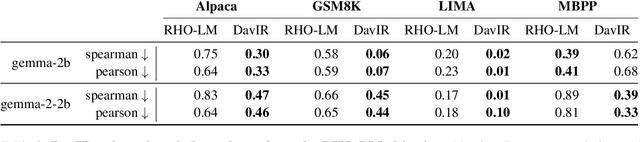
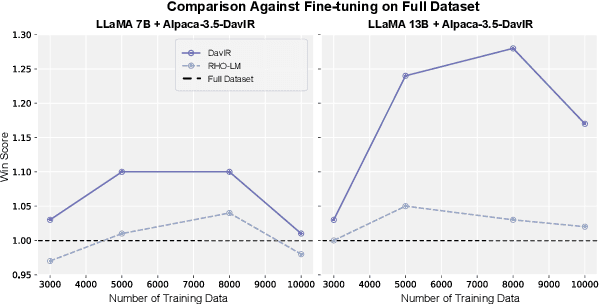
Supervised Fine-Tuning (SFT) serves as a crucial phase in aligning Large Language Models (LLMs) to specific task prerequisites. The selection of fine-tuning data profoundly influences the model's performance, whose principle is traditionally grounded in data quality and distribution. In this paper, we introduce a new dimension in SFT data selection: learnability. This new dimension is motivated by the intuition that SFT unlocks capabilities acquired by a LLM during the pretraining phase. Given that different pretrained models have disparate capabilities, the SFT data appropriate for one may not suit another. Thus, we introduce the term learnability to define the suitability of data for effective learning by the model. We present the Loss Based SFT Data Selection (LoBaSS) method, utilizing data learnability as the principal criterion for the selection SFT data. This method provides a nuanced approach, allowing the alignment of data selection with inherent model capabilities, ensuring optimal compatibility and learning efficiency. In experimental comparisons involving 7B and 13B models, our LoBaSS method is able to surpass full-data fine-tuning at merely 6% of the total training data. When employing 16.7% of the data, LoBaSS harmonizes the model's capabilities across conversational and mathematical domains, proving its efficacy and adaptability.