 Add to Chrome
 Add to Firefox
 Add to Edge
TensorFlow.js: Machine Learning for the Web and Beyond
Jan 16, 2019
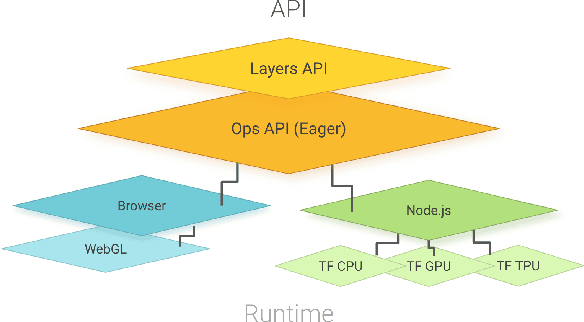
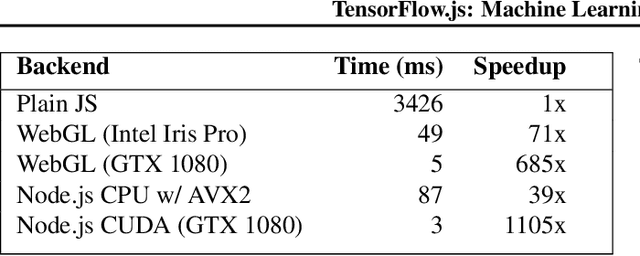
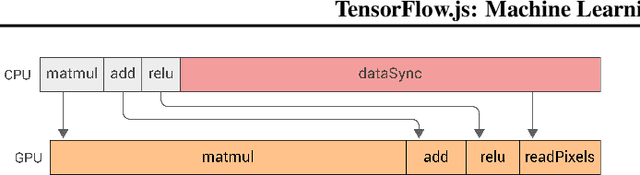

TensorFlow.js is a library for building and executing machine learning algorithms in JavaScript. TensorFlow.js models run in a web browser and in the Node.js environment. The library is part of the TensorFlow ecosystem, providing a set of APIs that are compatible with those in Python, allowing models to be ported between the Python and JavaScript ecosystems. TensorFlow.js has empowered a new set of developers from the extensive JavaScript community to build and deploy machine learning models and enabled new classes of on-device computation. This paper describes the design, API, and implementation of TensorFlow.js, and highlights some of the impactful use cases.

Scalable and accurate deep learning for electronic health records
May 11, 2018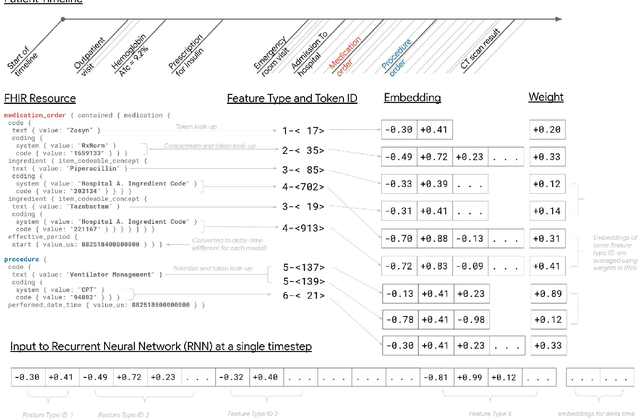
Predictive modeling with electronic health record (EHR) data is anticipated to drive personalized medicine and improve healthcare quality. Constructing predictive statistical models typically requires extraction of curated predictor variables from normalized EHR data, a labor-intensive process that discards the vast majority of information in each patient's record. We propose a representation of patients' entire, raw EHR records based on the Fast Healthcare Interoperability Resources (FHIR) format. We demonstrate that deep learning methods using this representation are capable of accurately predicting multiple medical events from multiple centers without site-specific data harmonization. We validated our approach using de-identified EHR data from two U.S. academic medical centers with 216,221 adult patients hospitalized for at least 24 hours. In the sequential format we propose, this volume of EHR data unrolled into a total of 46,864,534,945 data points, including clinical notes. Deep learning models achieved high accuracy for tasks such as predicting in-hospital mortality (AUROC across sites 0.93-0.94), 30-day unplanned readmission (AUROC 0.75-0.76), prolonged length of stay (AUROC 0.85-0.86), and all of a patient's final discharge diagnoses (frequency-weighted AUROC 0.90). These models outperformed state-of-the-art traditional predictive models in all cases. We also present a case-study of a neural-network attribution system, which illustrates how clinicians can gain some transparency into the predictions. We believe that this approach can be used to create accurate and scalable predictions for a variety of clinical scenarios, complete with explanations that directly highlight evidence in the patient's chart.
* Published version from https://www.nature.com/articles/s41746-018-0029-1
Google's Multilingual Neural Machine Translation System: Enabling Zero-Shot Translation
Aug 21, 2017We propose a simple solution to use a single Neural Machine Translation (NMT) model to translate between multiple languages. Our solution requires no change in the model architecture from our base system but instead introduces an artificial token at the beginning of the input sentence to specify the required target language. The rest of the model, which includes encoder, decoder and attention, remains unchanged and is shared across all languages. Using a shared wordpiece vocabulary, our approach enables Multilingual NMT using a single model without any increase in parameters, which is significantly simpler than previous proposals for Multilingual NMT. Our method often improves the translation quality of all involved language pairs, even while keeping the total number of model parameters constant. On the WMT'14 benchmarks, a single multilingual model achieves comparable performance for English$\rightarrow$French and surpasses state-of-the-art results for English$\rightarrow$German. Similarly, a single multilingual model surpasses state-of-the-art results for French$\rightarrow$English and German$\rightarrow$English on WMT'14 and WMT'15 benchmarks respectively. On production corpora, multilingual models of up to twelve language pairs allow for better translation of many individual pairs. In addition to improving the translation quality of language pairs that the model was trained with, our models can also learn to perform implicit bridging between language pairs never seen explicitly during training, showing that transfer learning and zero-shot translation is possible for neural translation. Finally, we show analyses that hints at a universal interlingua representation in our models and show some interesting examples when mixing languages.
Google's Neural Machine Translation System: Bridging the Gap between Human and Machine Translation
Oct 08, 2016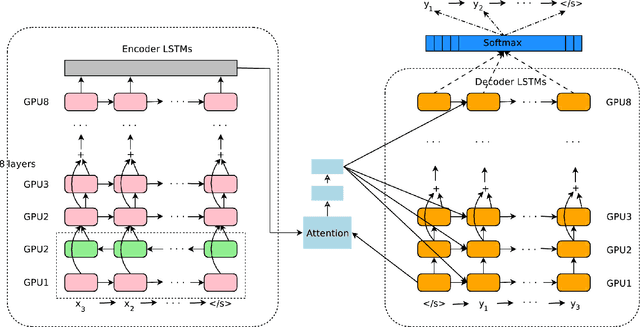
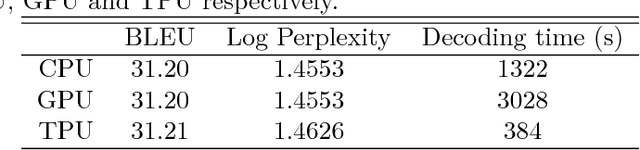
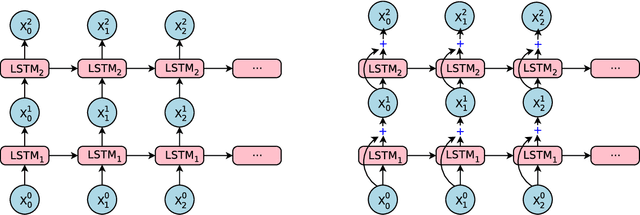
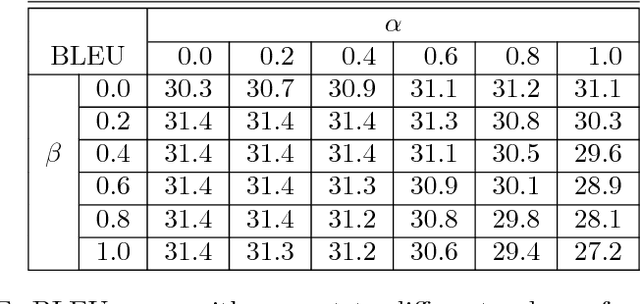
Neural Machine Translation (NMT) is an end-to-end learning approach for automated translation, with the potential to overcome many of the weaknesses of conventional phrase-based translation systems. Unfortunately, NMT systems are known to be computationally expensive both in training and in translation inference. Also, most NMT systems have difficulty with rare words. These issues have hindered NMT's use in practical deployments and services, where both accuracy and speed are essential. In this work, we present GNMT, Google's Neural Machine Translation system, which attempts to address many of these issues. Our model consists of a deep LSTM network with 8 encoder and 8 decoder layers using attention and residual connections. To improve parallelism and therefore decrease training time, our attention mechanism connects the bottom layer of the decoder to the top layer of the encoder. To accelerate the final translation speed, we employ low-precision arithmetic during inference computations. To improve handling of rare words, we divide words into a limited set of common sub-word units ("wordpieces") for both input and output. This method provides a good balance between the flexibility of "character"-delimited models and the efficiency of "word"-delimited models, naturally handles translation of rare words, and ultimately improves the overall accuracy of the system. Our beam search technique employs a length-normalization procedure and uses a coverage penalty, which encourages generation of an output sentence that is most likely to cover all the words in the source sentence. On the WMT'14 English-to-French and English-to-German benchmarks, GNMT achieves competitive results to state-of-the-art. Using a human side-by-side evaluation on a set of isolated simple sentences, it reduces translation errors by an average of 60% compared to Google's phrase-based production system.
Wide & Deep Learning for Recommender Systems
Jun 24, 2016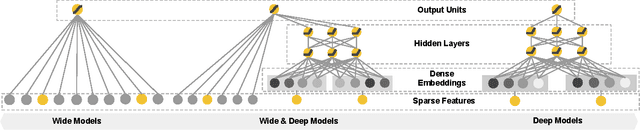
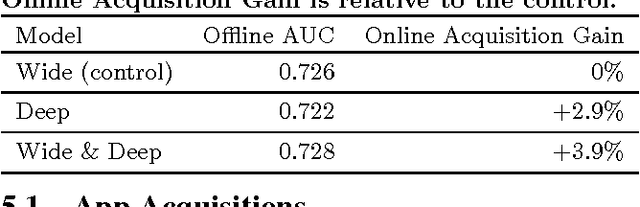
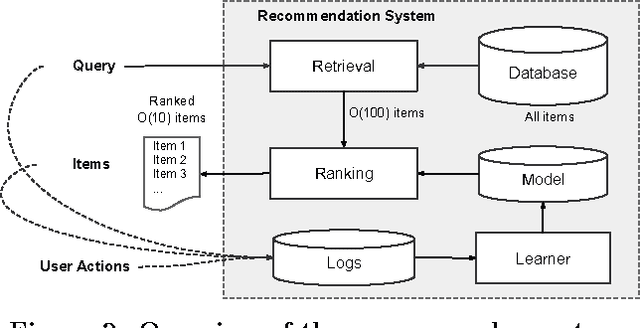
Generalized linear models with nonlinear feature transformations are widely used for large-scale regression and classification problems with sparse inputs. Memorization of feature interactions through a wide set of cross-product feature transformations are effective and interpretable, while generalization requires more feature engineering effort. With less feature engineering, deep neural networks can generalize better to unseen feature combinations through low-dimensional dense embeddings learned for the sparse features. However, deep neural networks with embeddings can over-generalize and recommend less relevant items when the user-item interactions are sparse and high-rank. In this paper, we present Wide & Deep learning---jointly trained wide linear models and deep neural networks---to combine the benefits of memorization and generalization for recommender systems. We productionized and evaluated the system on Google Play, a commercial mobile app store with over one billion active users and over one million apps. Online experiment results show that Wide & Deep significantly increased app acquisitions compared with wide-only and deep-only models. We have also open-sourced our implementation in TensorFlow.
Smart Reply: Automated Response Suggestion for Email
Jun 15, 2016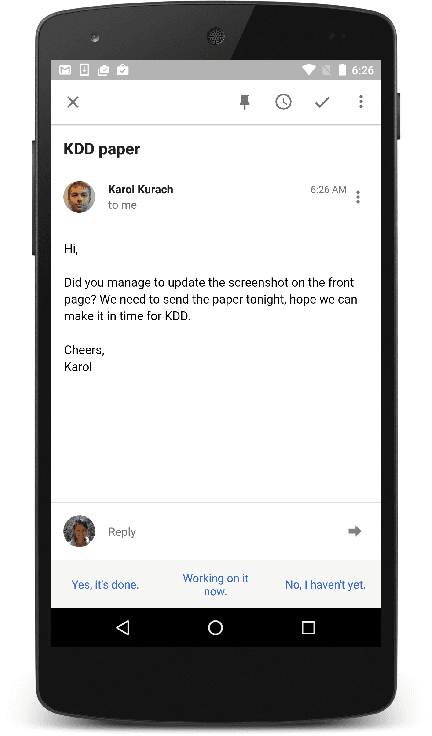
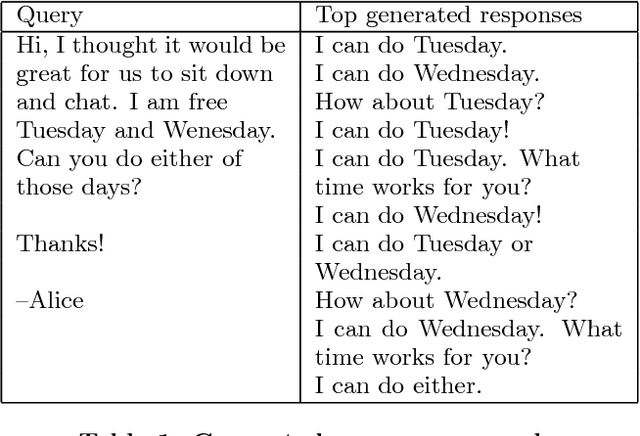
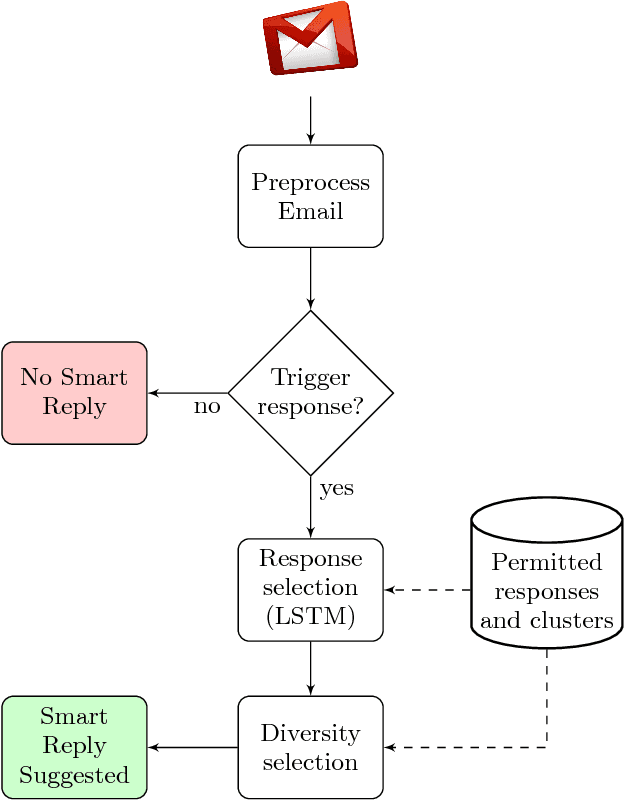
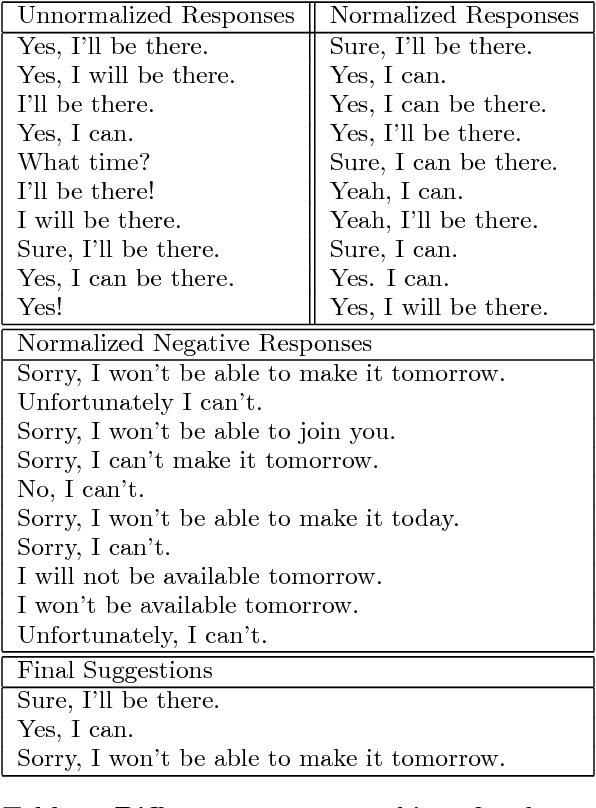
In this paper we propose and investigate a novel end-to-end method for automatically generating short email responses, called Smart Reply. It generates semantically diverse suggestions that can be used as complete email responses with just one tap on mobile. The system is currently used in Inbox by Gmail and is responsible for assisting with 10% of all mobile responses. It is designed to work at very high throughput and process hundreds of millions of messages daily. The system exploits state-of-the-art, large-scale deep learning. We describe the architecture of the system as well as the challenges that we faced while building it, like response diversity and scalability. We also introduce a new method for semantic clustering of user-generated content that requires only a modest amount of explicitly labeled data.
BilBOWA: Fast Bilingual Distributed Representations without Word Alignments
Feb 04, 2016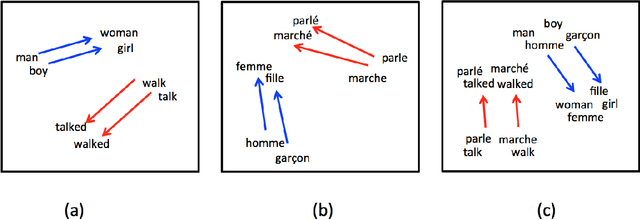
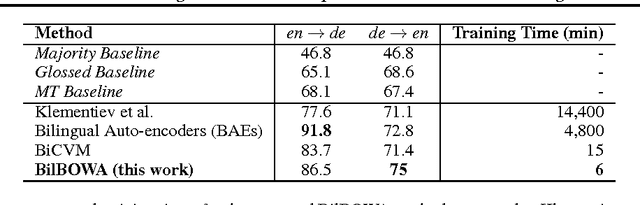
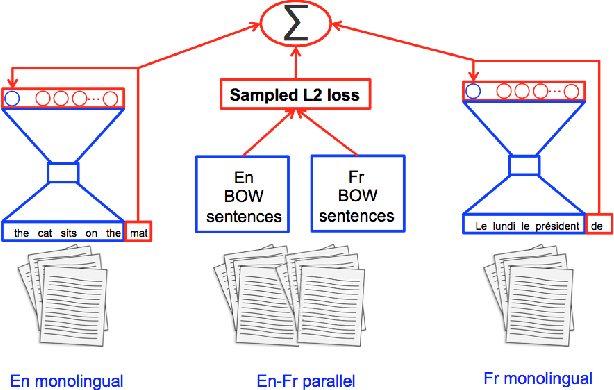

We introduce BilBOWA (Bilingual Bag-of-Words without Alignments), a simple and computationally-efficient model for learning bilingual distributed representations of words which can scale to large monolingual datasets and does not require word-aligned parallel training data. Instead it trains directly on monolingual data and extracts a bilingual signal from a smaller set of raw-text sentence-aligned data. This is achieved using a novel sampled bag-of-words cross-lingual objective, which is used to regularize two noise-contrastive language models for efficient cross-lingual feature learning. We show that bilingual embeddings learned using the proposed model outperform state-of-the-art methods on a cross-lingual document classification task as well as a lexical translation task on WMT11 data.
Distributed Representations of Words and Phrases and their Compositionality
Oct 16, 2013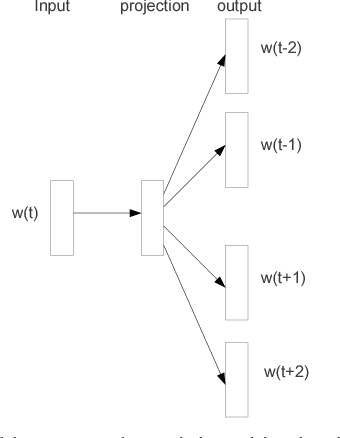
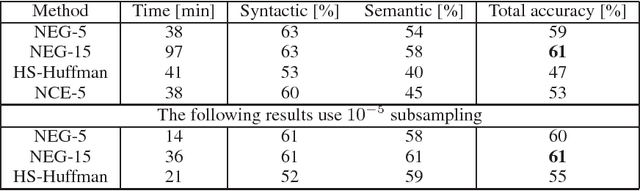
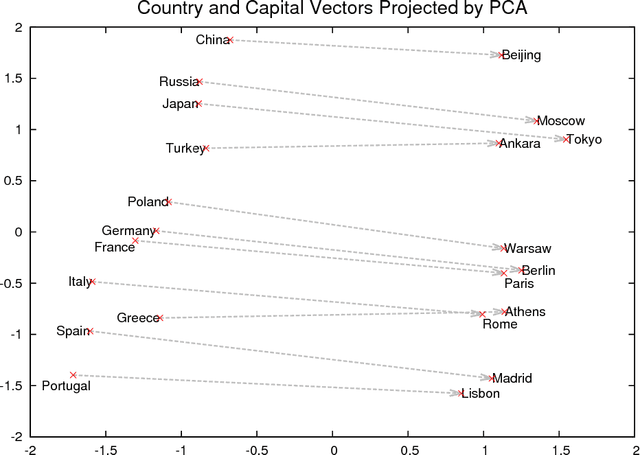
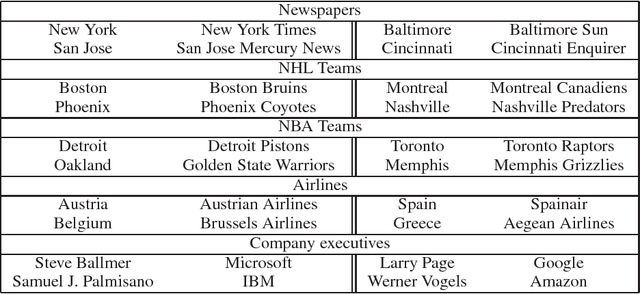
The recently introduced continuous Skip-gram model is an efficient method for learning high-quality distributed vector representations that capture a large number of precise syntactic and semantic word relationships. In this paper we present several extensions that improve both the quality of the vectors and the training speed. By subsampling of the frequent words we obtain significant speedup and also learn more regular word representations. We also describe a simple alternative to the hierarchical softmax called negative sampling. An inherent limitation of word representations is their indifference to word order and their inability to represent idiomatic phrases. For example, the meanings of "Canada" and "Air" cannot be easily combined to obtain "Air Canada". Motivated by this example, we present a simple method for finding phrases in text, and show that learning good vector representations for millions of phrases is possible.
Efficient Estimation of Word Representations in Vector Space
Sep 07, 2013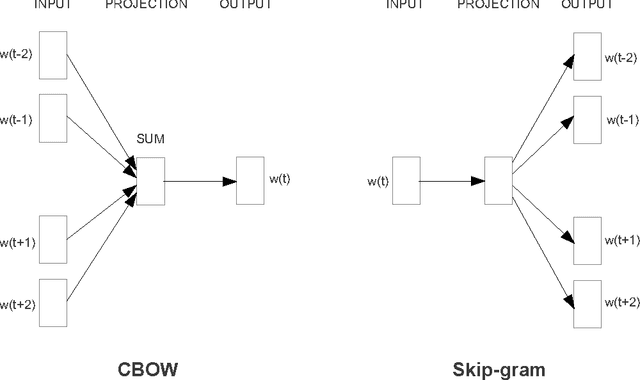
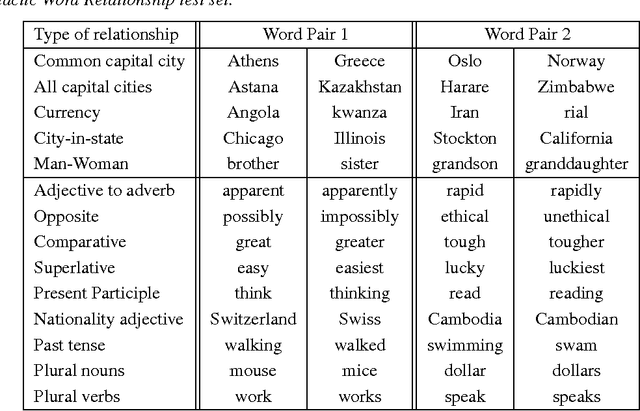
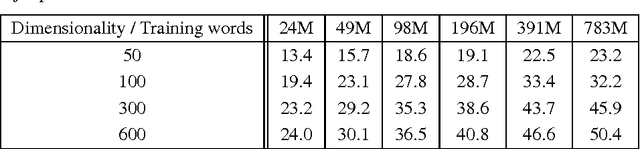
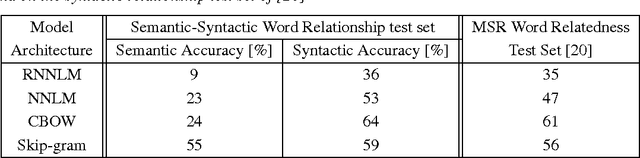
We propose two novel model architectures for computing continuous vector representations of words from very large data sets. The quality of these representations is measured in a word similarity task, and the results are compared to the previously best performing techniques based on different types of neural networks. We observe large improvements in accuracy at much lower computational cost, i.e. it takes less than a day to learn high quality word vectors from a 1.6 billion words data set. Furthermore, we show that these vectors provide state-of-the-art performance on our test set for measuring syntactic and semantic word similarities.