 Add to Chrome
 Add to Firefox
 Add to Edge
Beam Prediction based on Large Language Models
Aug 16, 2024


Millimeter-wave (mmWave) communication is promising for next-generation wireless networks but suffers from significant path loss, requiring extensive antenna arrays and frequent beam training. Traditional deep learning models, such as long short-term memory (LSTM), enhance beam tracking accuracy however are limited by poor robustness and generalization. In this letter, we use large language models (LLMs) to improve the robustness of beam prediction. By converting time series data into text-based representations and employing the Prompt-as-Prefix (PaP) technique for contextual enrichment, our approach unleashes the strength of LLMs for time series forecasting. Simulation results demonstrate that our LLM-based method offers superior robustness and generalization compared to LSTM-based models, showcasing the potential of LLMs in wireless communications.

Machine Learning in Communications: A Road to Intelligent Transmission and Processing
Jul 16, 2024


Prior to the era of artificial intelligence and big data, wireless communications primarily followed a conventional research route involving problem analysis, model building and calibration, algorithm design and tuning, and holistic and empirical verification. However, this methodology often encountered limitations when dealing with large-scale and complex problems and managing dynamic and massive data, resulting in inefficiencies and limited performance of traditional communication systems and methods. As such, wireless communications have embraced the revolutionary impact of artificial intelligence and machine learning, giving birth to more adaptive, efficient, and intelligent systems and algorithms. This technological shift opens a road to intelligent information transmission and processing. This overview article discusses the typical roles of machine learning in intelligent wireless communications, as well as its features, challenges, and practical considerations.
White-Box 3D-OMP-Transformer for ISAC
Jul 02, 2024
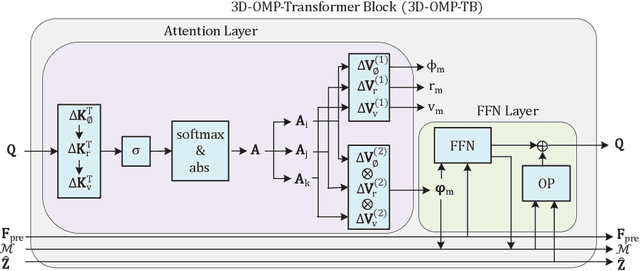

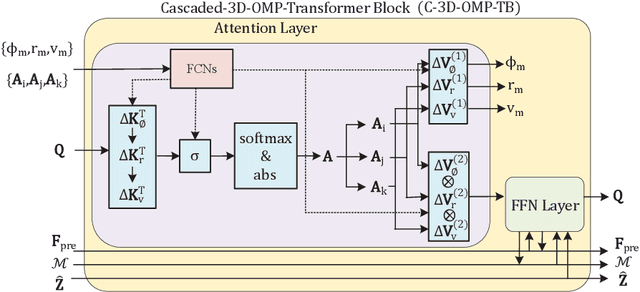
Transformers have found broad applications for their great ability to capture long-range dependency among the inputs using attention mechanisms. The recent success of transformers increases the need for mathematical interpretation of their underlying working mechanisms, leading to the development of a family of white-box transformer-like deep network architectures. However, designing white-box transformers with efficient three-dimensional (3D) attention is still an open challenge. In this work, we revisit the 3D-orthogonal matching pursuit (OMP) algorithm and demonstrate that the operation of 3D-OMP is analogous to a specific kind of transformer with 3D attention. Therefore, we build a white-box 3D-OMP-transformer by introducing additional learnable parameters to 3D-OMP. As a transformer, its 3D-attention can be mathematically interpreted from 3D-OMP; while as a variant of OMP, it can learn to improve the matching pursuit process from data. Besides, a transformer's performance can be improved by stacking more transformer blocks. To simulate this process, we design a cascaded 3D-OMP-Transformer with dynamic small-scale dictionaries, which can improve the performance of the 3D-OMP-Transformer with low costs. We evaluate the designed 3D-OMP-transformer in the multi-target detection task of integrated sensing and communications (ISAC). Experimental results show that the designed 3D-OMP-Transformer can outperform current baselines.
BADM: Batch ADMM for Deep Learning
Jun 30, 2024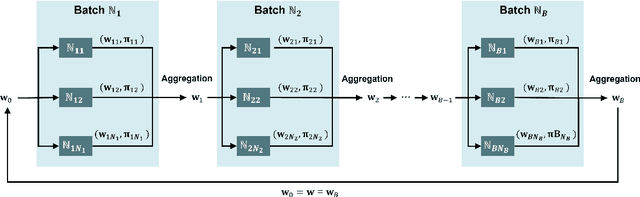
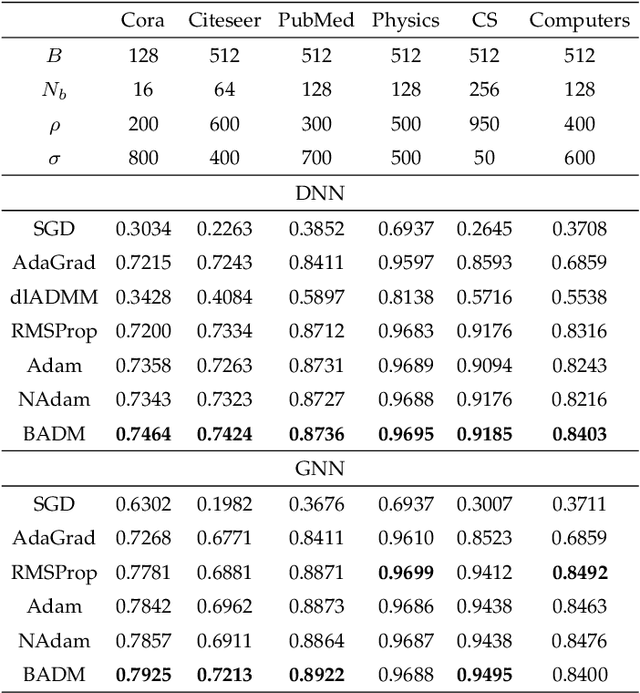
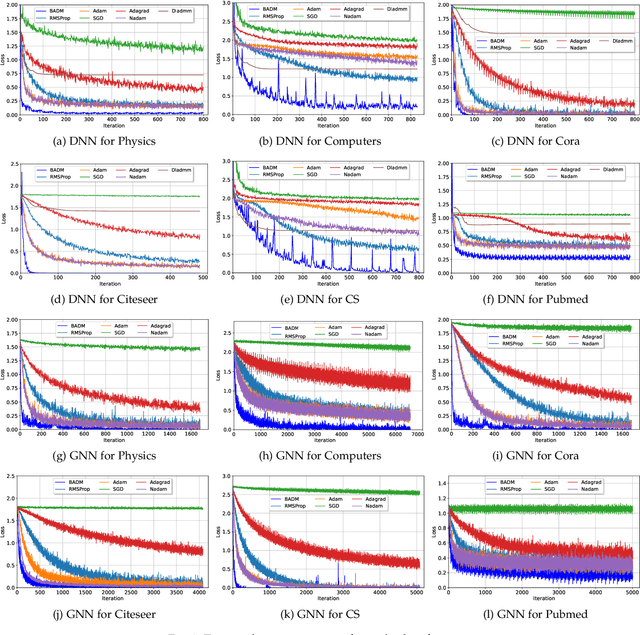
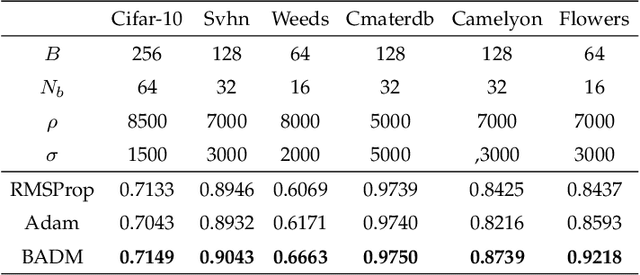
Stochastic gradient descent-based algorithms are widely used for training deep neural networks but often suffer from slow convergence. To address the challenge, we leverage the framework of the alternating direction method of multipliers (ADMM) to develop a novel data-driven algorithm, called batch ADMM (BADM). The fundamental idea of the proposed algorithm is to split the training data into batches, which is further divided into sub-batches where primal and dual variables are updated to generate global parameters through aggregation. We evaluate the performance of BADM across various deep learning tasks, including graph modelling, computer vision, image generation, and natural language processing. Extensive numerical experiments demonstrate that BADM achieves faster convergence and superior testing accuracy compared to other state-of-the-art optimizers.
Near-Field Multiuser Communications based on Sparse Arrays
Jun 13, 2024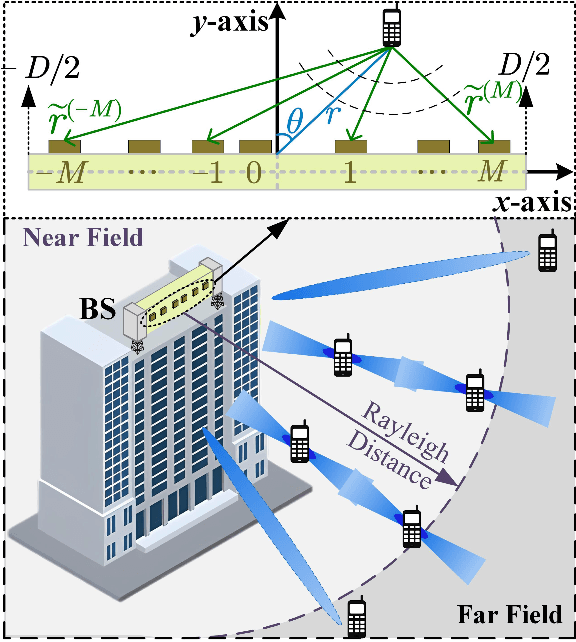
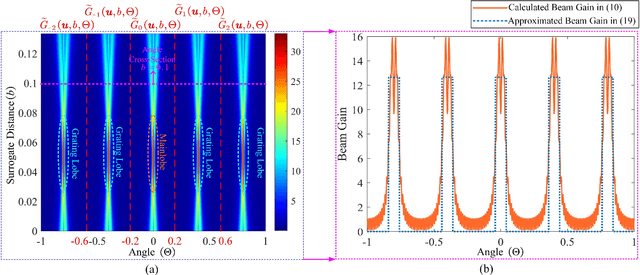

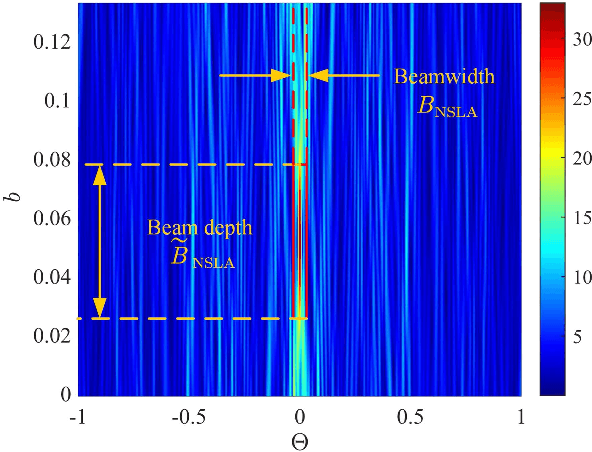
This paper considers near-field multiuser communications based on sparse arrays (SAs). First, for the uniform SAs (USAs), we analyze the beam gains of channel steering vectors, which shows that increasing the antenna spacings can effectively improve the spatial resolution of the antenna arrays to enhance the sum rate of multiuser communications. Then, we investigate nonuniform SAs (NSAs) to mitigate the high multiuser interference from the grating lobes of the USAs. To maximize the sum rate of near-field multiuser communications, we optimize the antenna positions of the NSAs, where a successive convex approximation-based antenna position optimization algorithm is proposed. Moreover, we find that the channels of both the USAs and the NSAs show uniform sparsity in the defined surrogate distance-angle (SD-A) domain. Based on the channel sparsity, an on-grid SD-A-domain orthogonal matching pursuit (SDA-OMP) algorithm is developed to estimate multiuser channels. To further improve the resolution of the SDA-OMP, we also design an off-grid SD-A-domain iterative super-resolution channel estimation algorithm. Simulation results demonstrate the superior performance of the proposed methods.
Rescale-Invariant Federated Reinforcement Learning for Resource Allocation in V2X Networks
May 03, 2024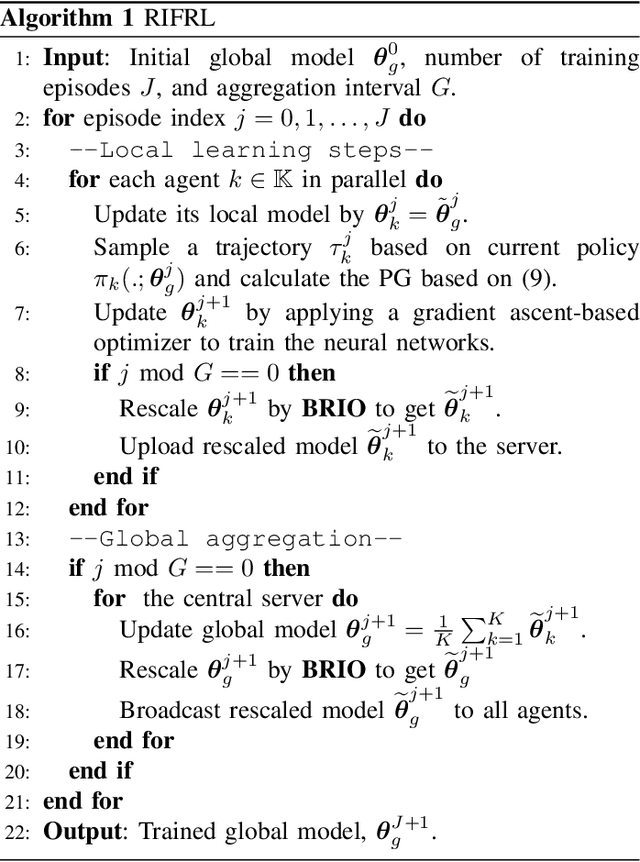
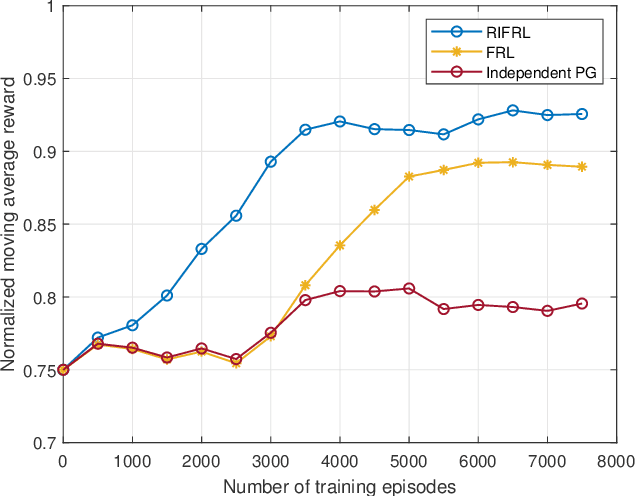
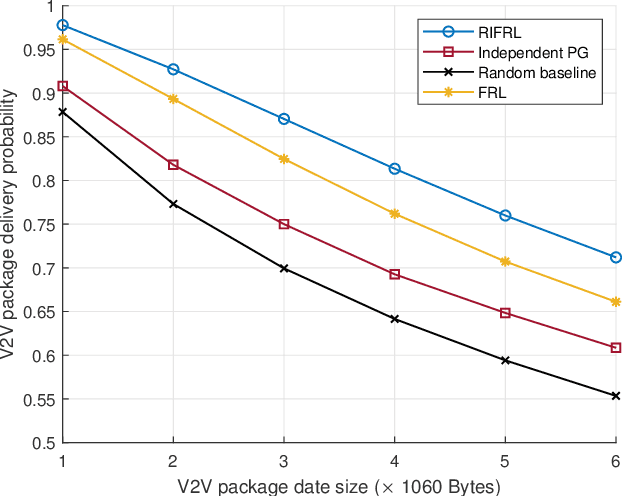
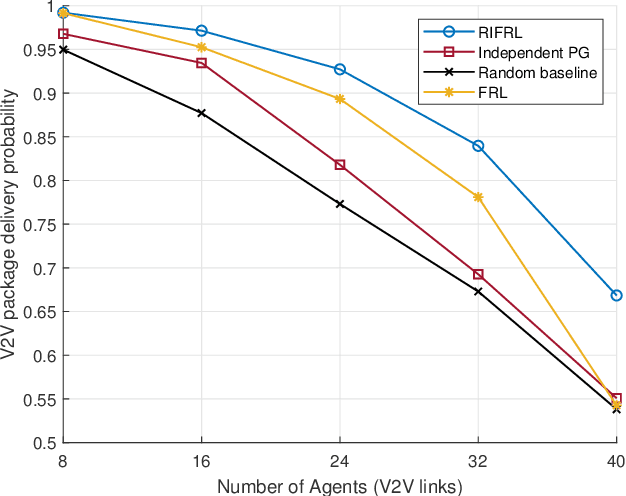
Federated Reinforcement Learning (FRL) offers a promising solution to various practical challenges in resource allocation for vehicle-to-everything (V2X) networks. However, the data discrepancy among individual agents can significantly degrade the performance of FRL-based algorithms. To address this limitation, we exploit the node-wise invariance property of ReLU-activated neural networks, with the aim of reducing data discrepancy to improve learning performance. Based on this property, we introduce a backward rescale-invariant operation to develop a rescale-invariant FRL algorithm. Simulation results demonstrate that the proposed algorithm notably enhances both convergence speed and convergent performance.
Semantic Satellite Communications Based on Generative Foundation Model
Apr 18, 2024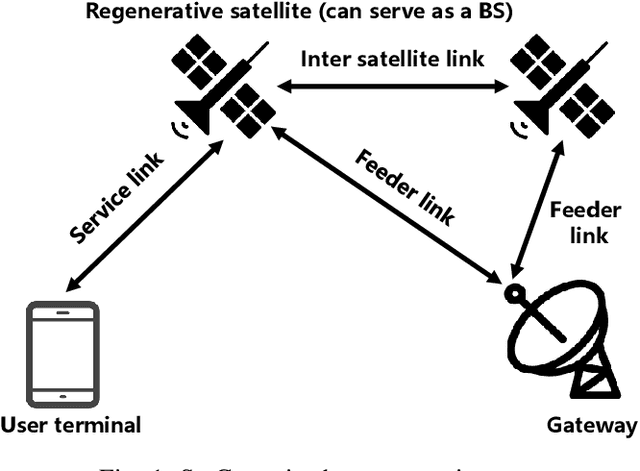
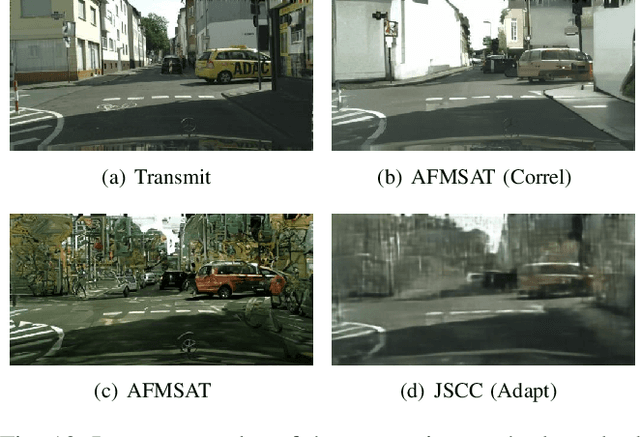
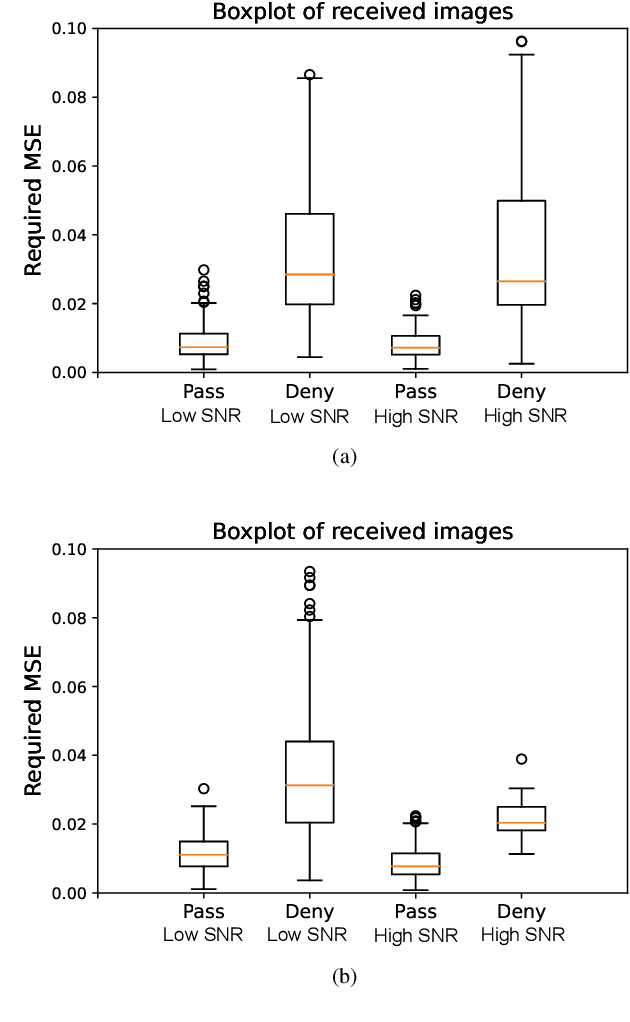
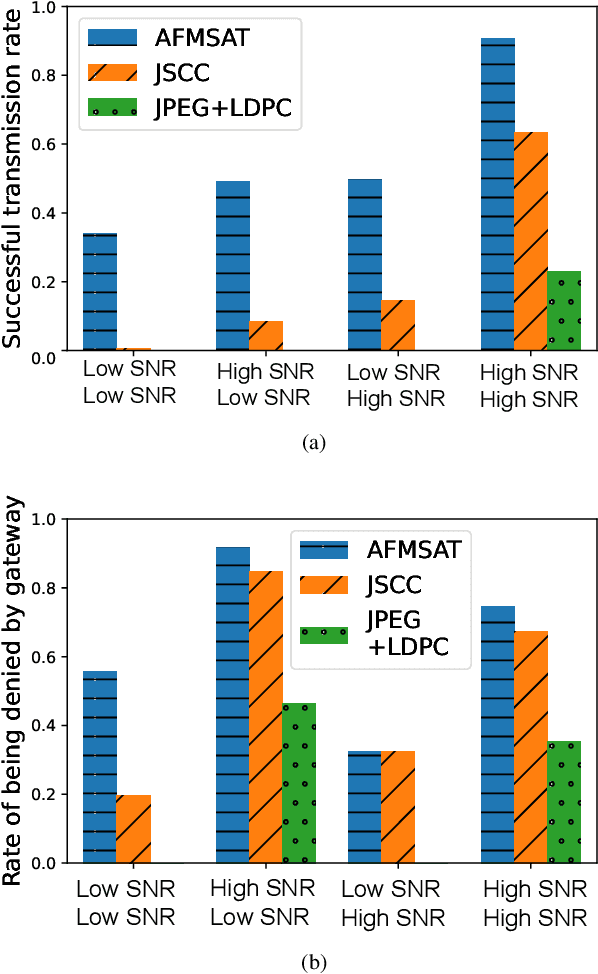
Satellite communications can provide massive connections and seamless coverage, but they also face several challenges, such as rain attenuation, long propagation delays, and co-channel interference. To improve transmission efficiency and address severe scenarios, semantic communication has become a popular choice, particularly when equipped with foundation models (FMs). In this study, we introduce an FM-based semantic satellite communication framework, termed FMSAT. This framework leverages FM-based segmentation and reconstruction to significantly reduce bandwidth requirements and accurately recover semantic features under high noise and interference. Considering the high speed of satellites, an adaptive encoder-decoder is proposed to protect important features and avoid frequent retransmissions. Meanwhile, a well-received image can provide a reference for repairing damaged images under sudden attenuation. Since acknowledgment feedback is subject to long propagation delays when retransmission is unavoidable, a novel error detection method is proposed to roughly detect semantic errors at the regenerative satellite. With the proposed detectors at both the satellite and the gateway, the quality of the received images can be ensured. The simulation results demonstrate that the proposed method can significantly reduce bandwidth requirements, adapt to complex satellite scenarios, and protect semantic information with an acceptable transmission delay.
A Universal Deep Neural Network for Signal Detection in Wireless Communication Systems
Apr 03, 2024Recently, deep learning (DL) has been emerging as a promising approach for channel estimation and signal detection in wireless communications. The majority of the existing studies investigating the use of DL techniques in this domain focus on analysing channel impulse responses that are generated from only one channel distribution such as additive white Gaussian channel noise and Rayleigh channels. In practice, to cope with the dynamic nature of the wireless channel, DL methods must be re-trained on newly non-aged collected data which is costly, inefficient, and impractical. To tackle this challenge, this paper proposes a novel universal deep neural network (Uni-DNN) that can achieve high detection performance in various wireless environments without retraining the model. In particular, our proposed Uni-DNN model consists of a wireless channel classifier and a signal detector which are constructed by using DNNs. The wireless channel classifier enables the signal detector to generalise and perform optimally for multiple wireless channel distributions. In addition, to further improve the signal detection performance of the proposed model, convolutional neural network is employed. Extensive simulations using the orthogonal frequency division multiplexing scheme demonstrate that the bit error rate performance of our proposed solution can outperform conventional DL-based approaches as well as least square and minimum mean square error channel estimators in practical low pilot density scenarios.
Environment Reconstruction based on Multi-User Selection and Multi-Modal Fusion in ISAC
Mar 26, 2024


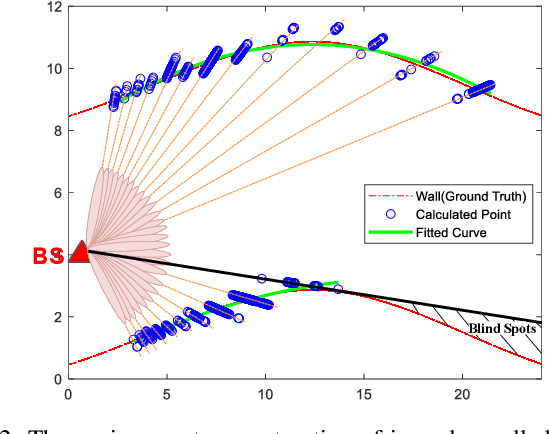
Integrated sensing and communications (ISAC) has been deemed as a key technology for the sixth generation (6G) wireless communications systems. In this paper, we explore the inherent clustered nature of wireless users and design a multi-user based environment reconstruction scheme. Specifically, we first select users based on the estimation precision of channel's multipath, including the line-of-sight (LOS) and the non-line-of-sight (NLOS) paths, to enhance the accuracy of environment reconstruction. Then, we develop a fusion strategy that merges communications signalling with camera image to increase the accuracy and robustness of environment reconstruction. The simulation results demonstrate that the proposed algorithm can achieve a remarkable sensing accuracy of centimeter level, which is about 17 times better than the scheme without user selection. Meanwhile, the fusion of communications data and vision data leads to a threefold accuracy improvement over the image only method, especially under challenging weather conditions like raining and snowing.
Distributionally Robust Beamforming and Estimation of Wireless Signals
Jan 22, 2024
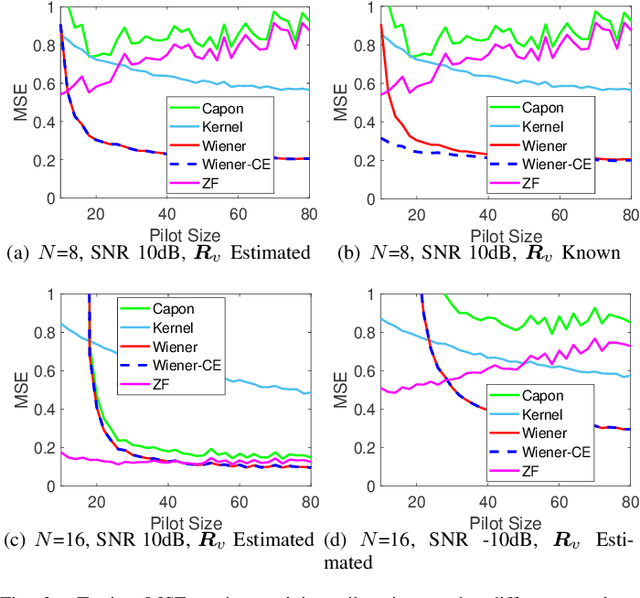
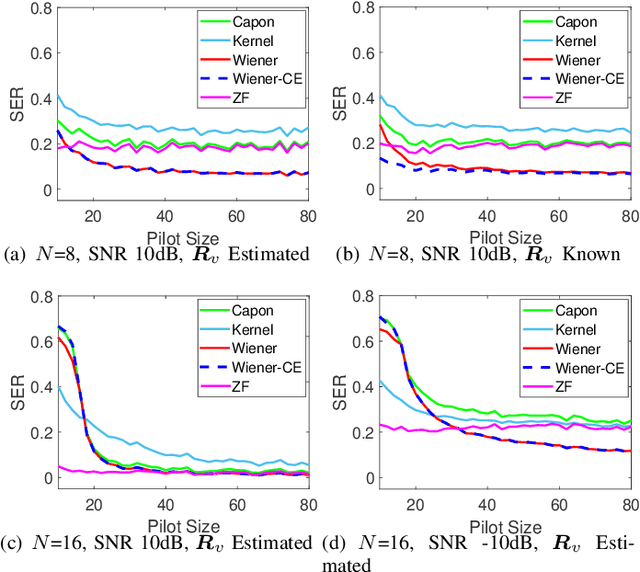
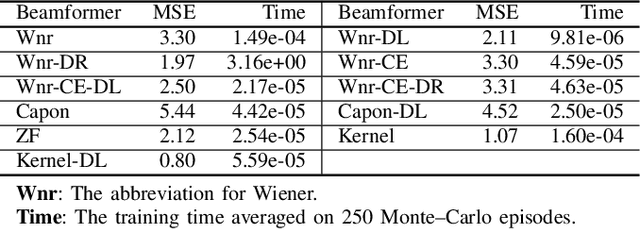
This paper investigates signal estimation in wireless transmission from the perspective of statistical machine learning, where the transmitted signals may be from an integrated sensing and communication system; that is, 1) signals may be not only discrete constellation points but also arbitrary complex values; 2) signals may be spatially correlated. Particular attention is paid to handling various uncertainties such as the uncertainty of the transmitting signal covariance, the uncertainty of the channel matrix, the uncertainty of the channel noise covariance, the existence of channel impulse noises (i.e., outliers), and the limited sample size of pilots. To proceed, a distributionally robust machine learning framework that is insensitive to the above uncertainties is proposed for beamforming (at the receiver) and estimation of wireless signals, which reveals that channel estimation is not a necessary operation. For optimal linear estimation, the proposed framework includes several existing beamformers as special cases such as diagonal loading and eigenvalue thresholding. For optimal nonlinear estimation, estimators are limited in reproducing kernel Hilbert spaces and neural network function spaces, and corresponding uncertainty-aware solutions (e.g., kernelized diagonal loading) are derived. In addition, we prove that the ridge and kernel ridge regression methods in machine learning are distributionally robust against diagonal perturbation in feature covariance.