 Add to Chrome
 Add to Firefox
 Add to Edge
EarlyDx: An Admission-Anchored Benchmark for Open-Ended Generation of Evidence-Supported ED-Encounter Diagnoses
Jul 30, 2026
Clinical diagnosis at hospital admission must be made rapidly from limited, incomplete evidence. Existing diagnosis-prediction benchmarks are poorly suited to this setting: they restrict prediction to closed code sets, exclude free-text notes, and supervise with discharge diagnoses that incorporate the full inpatient course. We introduce EarlyDx, a large-scale benchmark for open-ended early diagnosis, built from 154,834 emergency department encounters in MIMIC-IV. Each encounter is restricted to records available at admission time $t_0$ and supervised by the diagnoses recorded during the ED encounter rather than at discharge. An LLM auditor further verifies every free-text label as supported, partially supported, or unsupported by that evidence; the primary evaluation scores only fully supported labels. Under a semantic LLM-as-judge protocol, no evaluated system --- frontier general, medical-specialized, or in-domain post-trained --- synthesizes admission-time evidence reliably. Zero-shot models score largely by extraction, recovering only 3-31% of diagnoses that must be inferred rather than read from the record; post-training raises inference-dependent recall to 56%, but a sizeable margin remains, and on time-critical conditions no system attains a clinician's balance of sensitivity and precision. We release the full construction and evaluation pipeline at here.

LastAct: Trajectory-Guided Latest-Activity Localization for Real-Time Smart-Home Activity Recognition
May 29, 2026Human Activity Recognition (HAR) from ambient sensors enables smart-home applications such as health monitoring and assisted living. In realistic deployments, however, sensor events arrive as a continuous stream and activity boundaries are unknown. Sliding-window inference therefore produces many windows that straddle transitions and contain mixed activities, creating boundary contamination that violates the pre-segmented instance assumption used by most benchmarks and models. Moreover, many pipelines under-use spatial context by treating sensor IDs as independent tokens. We present LastAct, a trajectory-centric framework for streaming smart-home HAR that targets the most recent activity under mixed windows while explicitly modeling spatial structure. LastAct projects sensor events onto the home floorplan to form a layout-aligned trajectory image sequence that preserves spatial continuity. A lightweight gate identifies contaminated windows, and a boundary localizer estimates the last transition to enable boundary-guided masking that emphasizes post-boundary evidence and suppresses stale context. For efficiency, we reuse a precomputed layout-aligned template cache to avoid repeated rendering. Empirically, across four public smart-home datasets under near-realistic mixed-activity protocols, LastAct achieves competitive or superior performance on pure windows and yields substantial Macro-F1 gains on cross/mixed windows, demonstrating improved robustness under near-realistic sliding-window regimes.
SIGMA: Structure-Invariant Generative Molecular Alignment for Chemical Language Models via Autoregressive Contrastive Learning
Mar 26, 2026Linearized string representations serve as the foundation of scalable autoregressive molecular generation; however, they introduce a fundamental modality mismatch where a single molecular graph maps to multiple distinct sequences. This ambiguity leads to \textit{trajectory divergence}, where the latent representations of structurally equivalent partial graphs drift apart due to differences in linearization history. To resolve this without abandoning the efficient string formulation, we propose Structure-Invariant Generative Molecular Alignment (SIGMA). Rather than altering the linear representation, SIGMA enables the model to strictly recognize geometric symmetries via a token-level contrastive objective, which explicitly aligns the latent states of prefixes that share identical suffixes. Furthermore, we introduce Isomorphic Beam Search (IsoBeam) to eliminate isomorphic redundancy during inference by dynamically pruning equivalent paths. Empirical evaluations on standard benchmarks demonstrate that SIGMA bridges the gap between sequence scalability and graph fidelity, yielding superior sample efficiency and structural diversity in multi-parameter optimization compared to strong baselines.
LARV: Data-Free Layer-wise Adaptive Rescaling Veneer for Model Merging
Feb 10, 2026Model merging aims to combine multiple fine-tuned models into a single multi-task model without access to training data. Existing task-vector merging methods such as TIES, TSV-M, and Iso-C/CTS differ in their aggregation rules but treat all layers nearly uniformly. This assumption overlooks the strong layer-wise heterogeneity in large vision transformers, where shallow layers are sensitive to interference while deeper layers encode stable task-specific features. We introduce LARV, a training-free, data-free, merger-agnostic Layer-wise Adaptive Rescaling Veneer that plugs into any task-vector merger and assigns a per-layer scale to each task vector before aggregation, and show it consistently boosts diverse merging rules. LARV adaptively suppresses shallow-layer interference and amplifies deeper-layer alignment using a simple deterministic schedule, requiring no retraining or modification to existing mergers. To our knowledge, this is the first work to perform layer-aware scaling for task-vector merging. LARV computes simple data-free layer proxies and turns them into scales through a lightweight rule; we study several instantiations within one framework (e.g., tiered two/three-level scaling with fixed values, or continuous mappings) and show that tiered choices offer the best robustness, while continuous mappings remain an ablation. LARV is orthogonal to the base merger and adds negligible cost. On FusionBench with Vision Transformers, LARV consistently improves all task-vector baselines across 8/14/20-task settings; for example, Iso-C + LARV reaches 85.9% on ViT-B/32, 89.2% on ViT-B/16, and 92.6% on ViT-L/14. Layerwise analysis and corruption tests further indicate that LARV suppresses shallow-layer interference while modestly amplifying deeper, task-stable features, turning model merging into a robust, layer-aware procedure rather than a uniform one.
Achieving Fine-grained Cross-modal Understanding through Brain-inspired Hierarchical Representation Learning
Jan 04, 2026Understanding neural responses to visual stimuli remains challenging due to the inherent complexity of brain representations and the modality gap between neural data and visual inputs. Existing methods, mainly based on reducing neural decoding to generation tasks or simple correlations, fail to reflect the hierarchical and temporal processes of visual processing in the brain. To address these limitations, we present NeuroAlign, a novel framework for fine-grained fMRI-video alignment inspired by the hierarchical organization of the human visual system. Our framework implements a two-stage mechanism that mirrors biological visual pathways: global semantic understanding through Neural-Temporal Contrastive Learning (NTCL) and fine-grained pattern matching through enhanced vector quantization. NTCL explicitly models temporal dynamics through bidirectional prediction between modalities, while our DynaSyncMM-EMA approach enables dynamic multi-modal fusion with adaptive weighting. Experiments demonstrate that NeuroAlign significantly outperforms existing methods in cross-modal retrieval tasks, establishing a new paradigm for understanding visual cognitive mechanisms.
MARAuder's Map: Motion-Aware Real-time Activity Recognition with Layout-Based Trajectories
Nov 08, 2025Ambient sensor-based human activity recognition (HAR) in smart homes remains challenging due to the need for real-time inference, spatially grounded reasoning, and context-aware temporal modeling. Existing approaches often rely on pre-segmented, within-activity data and overlook the physical layout of the environment, limiting their robustness in continuous, real-world deployments. In this paper, we propose MARAuder's Map, a novel framework for real-time activity recognition from raw, unsegmented sensor streams. Our method projects sensor activations onto the physical floorplan to generate trajectory-aware, image-like sequences that capture the spatial flow of human movement. These representations are processed by a hybrid deep learning model that jointly captures spatial structure and temporal dependencies. To enhance temporal awareness, we introduce a learnable time embedding module that encodes contextual cues such as hour-of-day and day-of-week. Additionally, an attention-based encoder selectively focuses on informative segments within each observation window, enabling accurate recognition even under cross-activity transitions and temporal ambiguity. Extensive experiments on multiple real-world smart home datasets demonstrate that our method outperforms strong baselines, offering a practical solution for real-time HAR in ambient sensor environments.
ADLGen: Synthesizing Symbolic, Event-Triggered Sensor Sequences for Human Activity Modeling
May 23, 2025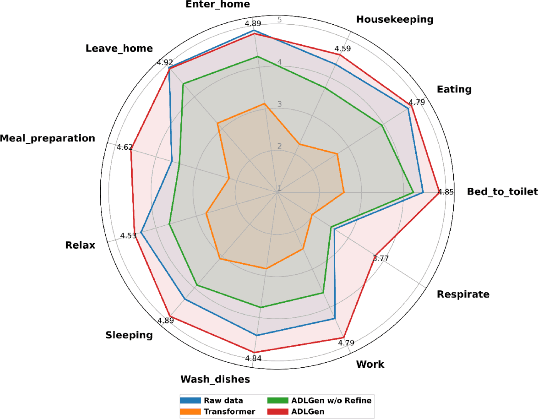

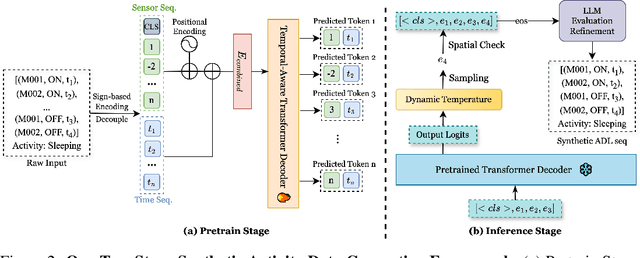
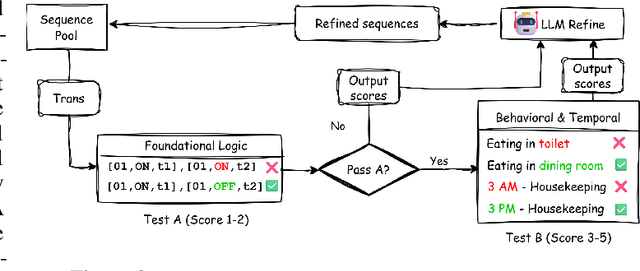
Real world collection of Activities of Daily Living data is challenging due to privacy concerns, costly deployment and labeling, and the inherent sparsity and imbalance of human behavior. We present ADLGen, a generative framework specifically designed to synthesize realistic, event triggered, and symbolic sensor sequences for ambient assistive environments. ADLGen integrates a decoder only Transformer with sign based symbolic temporal encoding, and a context and layout aware sampling mechanism to guide generation toward semantically rich and physically plausible sensor event sequences. To enhance semantic fidelity and correct structural inconsistencies, we further incorporate a large language model into an automatic generate evaluate refine loop, which verifies logical, behavioral, and temporal coherence and generates correction rules without manual intervention or environment specific tuning. Through comprehensive experiments with novel evaluation metrics, ADLGen is shown to outperform baseline generators in statistical fidelity, semantic richness, and downstream activity recognition, offering a scalable and privacy-preserving solution for ADL data synthesis.
HELENE: Hessian Layer-wise Clipping and Gradient Annealing for Accelerating Fine-tuning LLM with Zeroth-order Optimization
Nov 16, 2024


Fine-tuning large language models (LLMs) poses significant memory challenges, as the back-propagation process demands extensive resources, especially with growing model sizes. Recent work, MeZO, addresses this issue using a zeroth-order (ZO) optimization method, which reduces memory consumption by matching the usage to the inference phase. However, MeZO experiences slow convergence due to varying curvatures across model parameters. To overcome this limitation, we introduce HELENE, a novel scalable and memory-efficient optimizer that integrates annealed A-GNB gradients with a diagonal Hessian estimation and layer-wise clipping, serving as a second-order pre-conditioner. This combination allows for faster and more stable convergence. Our theoretical analysis demonstrates that HELENE improves convergence rates, particularly for models with heterogeneous layer dimensions, by reducing the dependency on the total parameter space dimension. Instead, the method scales with the largest layer dimension, making it highly suitable for modern LLM architectures. Experimental results on RoBERTa-large and OPT-1.3B across multiple tasks show that HELENE achieves up to a 20x speedup compared to MeZO, with average accuracy improvements of 1.5%. Furthermore, HELENE remains compatible with both full parameter tuning and parameter-efficient fine-tuning (PEFT), outperforming several state-of-the-art optimizers. The codes will be released after reviewing.
Towards Artificial General Intelligence (AGI) in the Internet of Things (IoT): Opportunities and Challenges
Sep 14, 2023
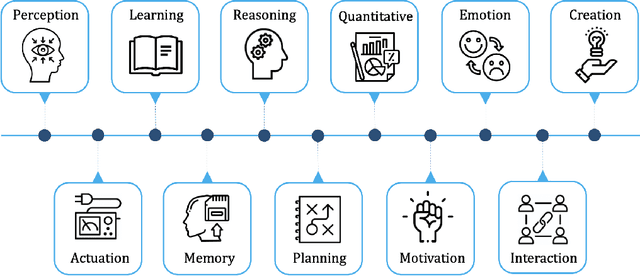
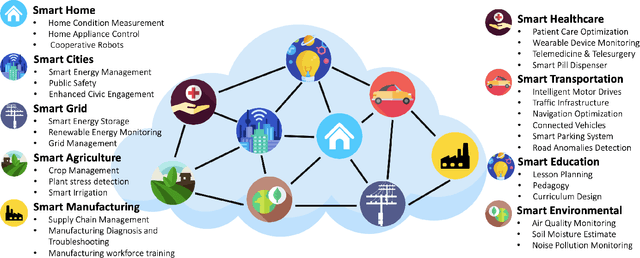
Artificial General Intelligence (AGI), possessing the capacity to comprehend, learn, and execute tasks with human cognitive abilities, engenders significant anticipation and intrigue across scientific, commercial, and societal arenas. This fascination extends particularly to the Internet of Things (IoT), a landscape characterized by the interconnection of countless devices, sensors, and systems, collectively gathering and sharing data to enable intelligent decision-making and automation. This research embarks on an exploration of the opportunities and challenges towards achieving AGI in the context of the IoT. Specifically, it starts by outlining the fundamental principles of IoT and the critical role of Artificial Intelligence (AI) in IoT systems. Subsequently, it delves into AGI fundamentals, culminating in the formulation of a conceptual framework for AGI's seamless integration within IoT. The application spectrum for AGI-infused IoT is broad, encompassing domains ranging from smart grids, residential environments, manufacturing, and transportation to environmental monitoring, agriculture, healthcare, and education. However, adapting AGI to resource-constrained IoT settings necessitates dedicated research efforts. Furthermore, the paper addresses constraints imposed by limited computing resources, intricacies associated with large-scale IoT communication, as well as the critical concerns pertaining to security and privacy.
Mobilizing Personalized Federated Learning via Random Walk Stochastic ADMM
Apr 25, 2023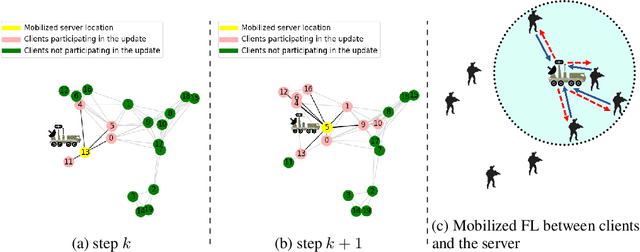
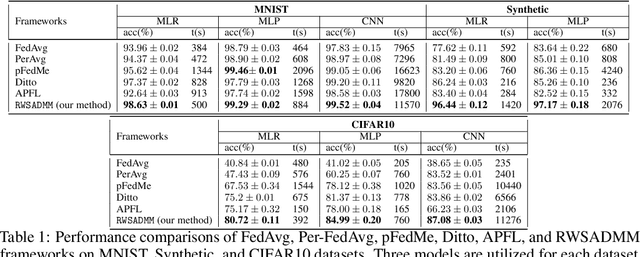
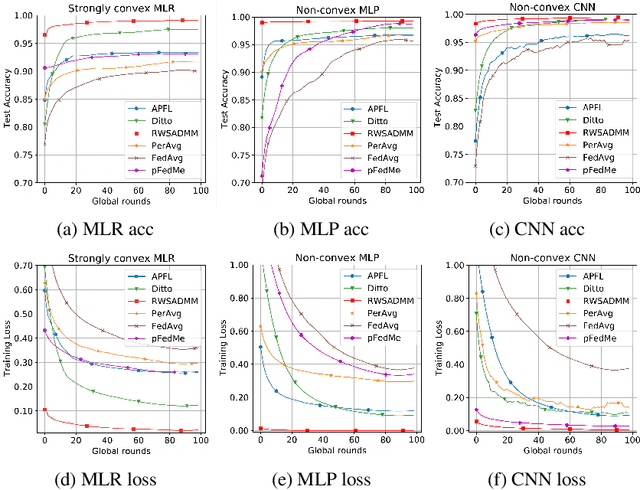
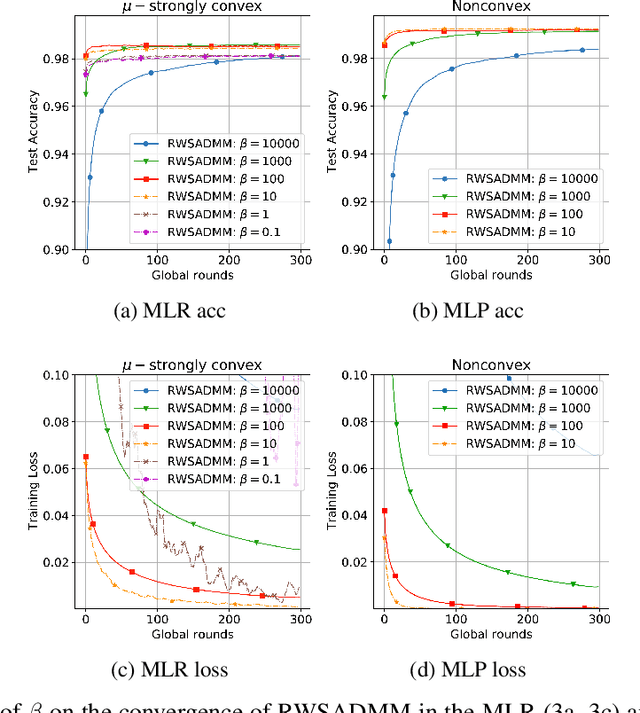
In this research, we investigate the barriers associated with implementing Federated Learning (FL) in real-world scenarios, where a consistent connection between the central server and all clients cannot be maintained, and data distribution is heterogeneous. To address these challenges, we focus on mobilizing the federated setting, where the server moves between groups of adjacent clients to learn local models. Specifically, we propose a new algorithm, Random Walk Stochastic Alternating Direction Method of Multipliers (RWSADMM), capable of adapting to dynamic and ad-hoc network conditions as long as a sufficient number of connected clients are available for model training. In RWSADMM, the server walks randomly toward a group of clients. It formulates local proximity among adjacent clients based on hard inequality constraints instead of consensus updates to address data heterogeneity. Our proposed method is convergent, reduces communication costs, and enhances scalability by reducing the number of clients the central server needs to communicate with.