 Add to Chrome
 Add to Firefox
 Add to Edge
The Ethical Decision Head: Operationalizing Normative Ethics in Autonomous Vehicles via Reinforcement Learning from Human Feedback
Aug 17, 2026
As autonomous vehicles (AVs) approach Level 4 and Level 5 operational capability [SAE International, 2018], their on- board decision systems must handle not only safety-critical locomotion but also their subsequent moral weight. This paper details the Ethical Decision Head (EDH), a deep re- inforcement learning (RL) framework that encodes ethical reasoning as a differentiable reward signal, enabling a pol- icy gradient agent to learn morally-aligned driving behavior in scenarios whose state representation is aligned with the CARLA simulation environment [Dosovitskiy et al., 2017]. Two normative frameworks are instantiated and evaluated: a Utilitarian framework minimizing total casualties and a Kan- tian framework enforcing course maintenance as a categori- cal imperative. The EDH is trained via Proximal Policy Op- timization (PPO) [Schulman et al., 2017] against a Bradley- Terry reward model [Bradley and Terry, 1952] learned from pairwise human preference annotations over 200 collision- imminent scenarios. Results reveal an asymmetry in the learnability of normative ethical frameworks under human su- pervision. The Kantian condition, which reduces to a con- stant prediction task under the codebook, serves as a pipeline control: it confirms training stability and rules out infrastruc- ture failure as an explanation for the utilitarian result. The Utilitarian agent learned something more unsettling: human raters rewarded self-sacrifice over casualty minimization, and the model learned that preference faithfully. This divergence between what humans prescribe in theory and what they re- ward in practice suggests that RLHF does not learn ethics as philosophers define it, but as humans live it.

Do Judges Behave Like Algorithms?
Aug 12, 2026What if judges already behave like algorithms? As artificial intelligence and algorithms are deployed in many settings, including the judicial system, many have debated whether judges should be allowed to rely on them. Instead, we ask whether judges follow predictable, algorithmic-like rules already. If judges already follow consistent, formula-like rules based on discrete and static factors such as criminal history, age, and charge type, then judicial behavior may be improved. However, if judges rely on individualized information that cannot be identified through court data, then standards-based decision-making may be more challenging to understand or improve. This work explores these questions by studying judicial decision-making in misdemeanor bail hearings in Harris County, Texas. Using available court data, we investigate whether magistrate judges follow what resembles an algorithm; whether they consider the same variables in their decision-making; and whether they are consistent with themselves and with each other. To do this, we train machine learning models for each judge, measure variable importance metrics to determine important variables for each judge's decision-making, and analyze outcomes of similar cases for judges. Our results reveal that these judges generally behave algorithmically: their decisions can be captured by small, interpretable formulas. However, in some cases, judges differ substantially, leading to surprising inconsistency and unequal treatment across similar defendants. Identifying cases where algorithms do not explain judicial decision-making can improve the justice system by focusing attention on decisions where individualized standards, rather than rules, better explains outcomes.
DragonCrawl: A Generative, Intent-Based Framework for Scalable Mobile End-to-End Testing
Jul 30, 2026As mobile applications grow in complexity, traditional End-to-End (E2E) testing frameworks struggle with UI volatility, maintenance overhead, and cross-platform scalability. This paper presents DragonCrawl, an AI-driven mobile testing system for continuous regression testing that has evolved from embedding-based similarity matching to generative intent-based reasoning using large language models. Unlike prior LLM-based testing research focused on exploratory testing and crash detection, DragonCrawl validates specific user flows on every code change, blocking commits that break critical functionality. By leveraging GPT-4o's multimodal capabilities, DragonCrawl achieves 91.6% pass rate on iOS and 92.2% on Android across 1,013 automated tests running continuously in CI/CD pipelines. The system reduces test onboarding time from 96-120 hours to under 4 hours and has saved an estimated 27 developer years in test maintenance effort. We present the architectural evolution from V1 (semantic embedding matching) to V2 (generative intent-based reasoning), discuss implementation challenges including token explosion and memory constraints, and report operational experience from production deployment. The integration of multimodal vision for end-state detection and tool calling for backend state transitions enables comprehensive regression testing that bridges UI interactions with system state. Our results demonstrate that AI-driven testing can maintain stability while eliminating the brittleness of traditional automated tests, enabling continuous quality assurance at scale.
Autonomous Search for Sparsely Distributed Visual Phenomena through Environmental Context Modeling
Mar 10, 2026Autonomous underwater vehicles (AUVs) are increasingly used to survey coral reefs, yet efficiently locating specific coral species of interest remains difficult: target species are often sparsely distributed across the reef, and an AUV with limited battery life cannot afford to search everywhere. When detections of the target itself are too sparse to provide directional guidance, the robot benefits from an additional signal to decide where to look next. We propose using the visual environmental context -- the habitat features that tend to co-occur with a target species -- as that signal. Because context features are spatially denser and often vary more smoothly than target detections, we hypothesize that a reward function targeted at broader environmental context will enable adaptive planners to make better decisions on where to go next, even in regions where no target has yet been observed. Starting from a single labeled image, our method uses patch-level DINOv2 embeddings to perform one-shot detections of both the target species and its surrounding context online. We validate our approach using real imagery collected by an AUV at two reef sites in St. John, U.S. Virgin Islands, simulating the robot's motion offline. Our results demonstrate that one-shot detection combined with adaptive context modeling enables efficient autonomous surveying, sampling up to 75$\%$ of the target in roughly half the time required by exhaustive coverage when the target is sparsely distributed, and outperforming search strategies that only use target detections.
Patch-Based Spatial Authorship Attribution in Human-Robot Collaborative Paintings
Feb 19, 2026As agentic AI becomes increasingly involved in creative production, documenting authorship has become critical for artists, collectors, and legal contexts. We present a patch-based framework for spatial authorship attribution within human-robot collaborative painting practice, demonstrated through a forensic case study of one human artist and one robotic system across 15 abstract paintings. Using commodity flatbed scanners and leave-one-painting-out cross-validation, the approach achieves 88.8% patch-level accuracy (86.7% painting-level via majority vote), outperforming texture-based and pretrained-feature baselines (68.0%-84.7%). For collaborative artworks, where ground truth is inherently ambiguous, we use conditional Shannon entropy to quantify stylistic overlap; manually annotated hybrid regions exhibit 64% higher uncertainty than pure paintings (p=0.003), suggesting the model detects mixed authorship rather than classification failure. The trained model is specific to this human-robot pair but provides a methodological grounding for sample-efficient attribution in data-scarce human-AI creative workflows that, in the future, has the potential to extend authorship attribution to any human-robot collaborative painting.
Artists' Views on Robotics Involvement in Painting Productions
Oct 08, 2025
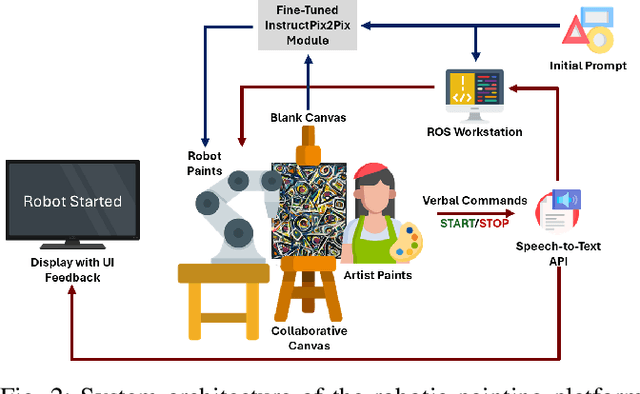
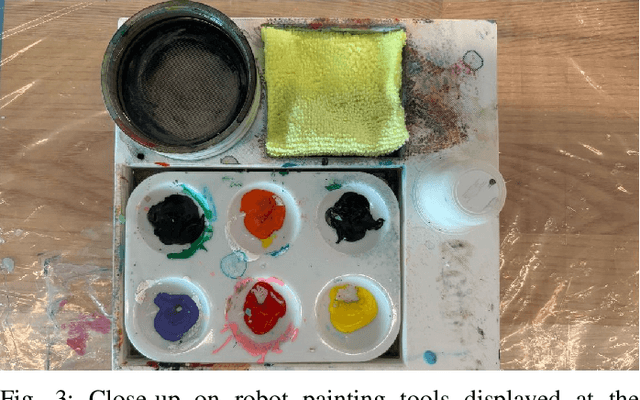
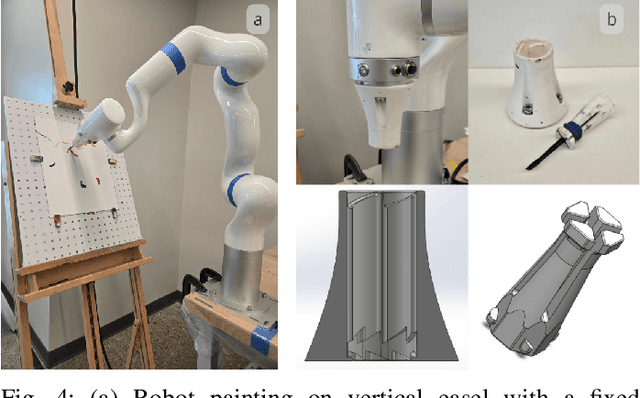
As robotic technologies evolve, their potential in artistic creation becomes an increasingly relevant topic of inquiry. This study explores how professional abstract artists perceive and experience co-creative interactions with an autonomous painting robotic arm. Eight artists engaged in six painting sessions -- three with a human partner, followed by three with the robot -- and subsequently participated in semi-structured interviews analyzed through reflexive thematic analysis. Human-human interactions were described as intuitive, dialogic, and emotionally engaging, whereas human-robot sessions felt more playful and reflective, offering greater autonomy and prompting for novel strategies to overcome the system's limitations. This work offers one of the first empirical investigations into artists' lived experiences with a robot, highlighting the value of long-term engagement and a multidisciplinary approach to human-robot co-creation.
Building Machine Learning Challenges for Anomaly Detection in Science
Mar 03, 2025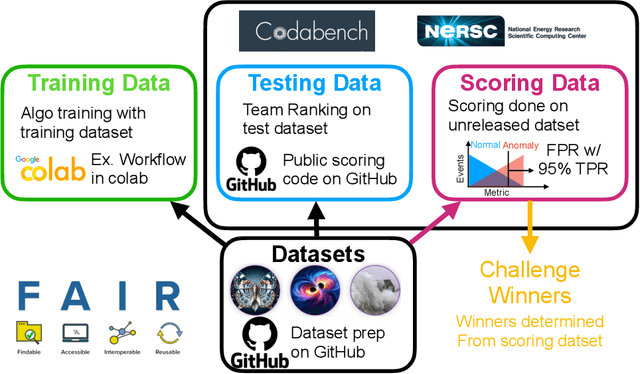
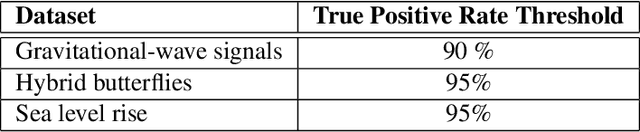
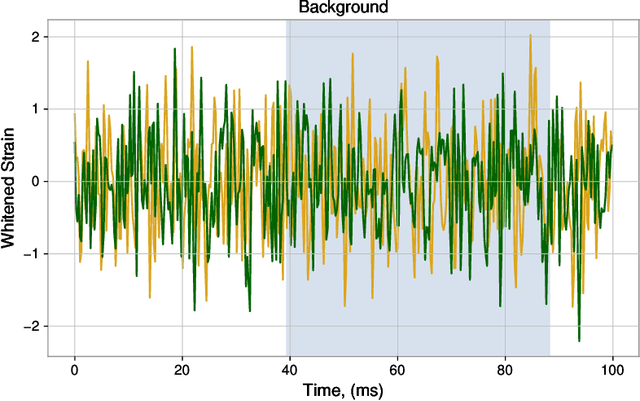
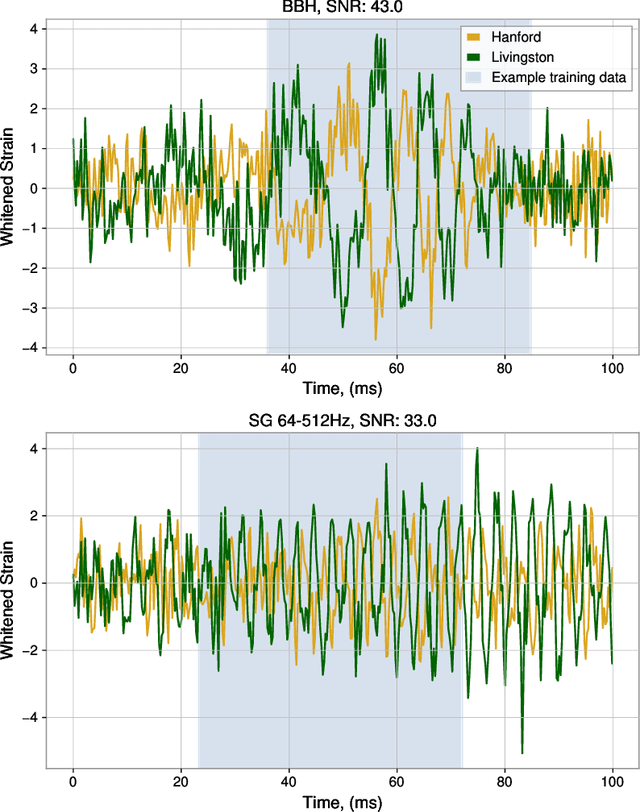
Scientific discoveries are often made by finding a pattern or object that was not predicted by the known rules of science. Oftentimes, these anomalous events or objects that do not conform to the norms are an indication that the rules of science governing the data are incomplete, and something new needs to be present to explain these unexpected outliers. The challenge of finding anomalies can be confounding since it requires codifying a complete knowledge of the known scientific behaviors and then projecting these known behaviors on the data to look for deviations. When utilizing machine learning, this presents a particular challenge since we require that the model not only understands scientific data perfectly but also recognizes when the data is inconsistent and out of the scope of its trained behavior. In this paper, we present three datasets aimed at developing machine learning-based anomaly detection for disparate scientific domains covering astrophysics, genomics, and polar science. We present the different datasets along with a scheme to make machine learning challenges around the three datasets findable, accessible, interoperable, and reusable (FAIR). Furthermore, we present an approach that generalizes to future machine learning challenges, enabling the possibility of large, more compute-intensive challenges that can ultimately lead to scientific discovery.
Comprehensive Examination of Unrolled Networks for Linear Inverse Problems
Jan 08, 2025

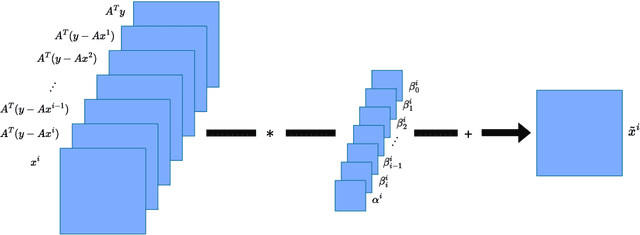

Unrolled networks have become prevalent in various computer vision and imaging tasks. Although they have demonstrated remarkable efficacy in solving specific computer vision and computational imaging tasks, their adaptation to other applications presents considerable challenges. This is primarily due to the multitude of design decisions that practitioners working on new applications must navigate, each potentially affecting the network's overall performance. These decisions include selecting the optimization algorithm, defining the loss function, and determining the number of convolutional layers, among others. Compounding the issue, evaluating each design choice requires time-consuming simulations to train, fine-tune the neural network, and optimize for its performance. As a result, the process of exploring multiple options and identifying the optimal configuration becomes time-consuming and computationally demanding. The main objectives of this paper are (1) to unify some ideas and methodologies used in unrolled networks to reduce the number of design choices a user has to make, and (2) to report a comprehensive ablation study to discuss the impact of each of the choices involved in designing unrolled networks and present practical recommendations based on our findings. We anticipate that this study will help scientists and engineers design unrolled networks for their applications and diagnose problems within their networks efficiently.
How Your Location Relates to Health: Variable Importance and Interpretable Machine Learning for Environmental and Sociodemographic Data
Jan 03, 2025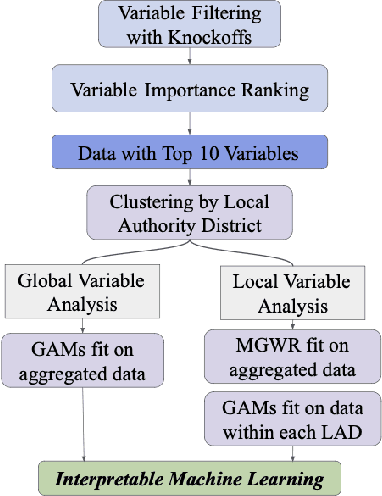


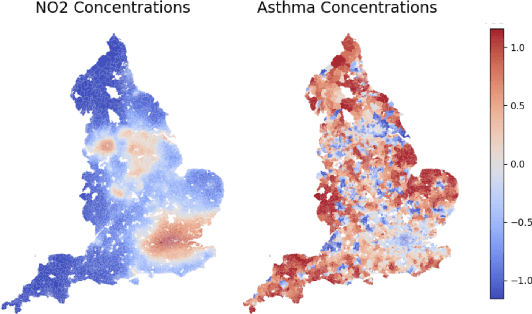
Health outcomes depend on complex environmental and sociodemographic factors whose effects change over location and time. Only recently has fine-grained spatial and temporal data become available to study these effects, namely the MEDSAT dataset of English health, environmental, and sociodemographic information. Leveraging this new resource, we use a variety of variable importance techniques to robustly identify the most informative predictors across multiple health outcomes. We then develop an interpretable machine learning framework based on Generalized Additive Models (GAMs) and Multiscale Geographically Weighted Regression (MGWR) to analyze both local and global spatial dependencies of each variable on various health outcomes. Our findings identify NO2 as a global predictor for asthma, hypertension, and anxiety, alongside other outcome-specific predictors related to occupation, marriage, and vegetation. Regional analyses reveal local variations with air pollution and solar radiation, with notable shifts during COVID. This comprehensive approach provides actionable insights for addressing health disparities, and advocates for the integration of interpretable machine learning in public health.
Vibe-Eval: A hard evaluation suite for measuring progress of multimodal language models
May 03, 2024

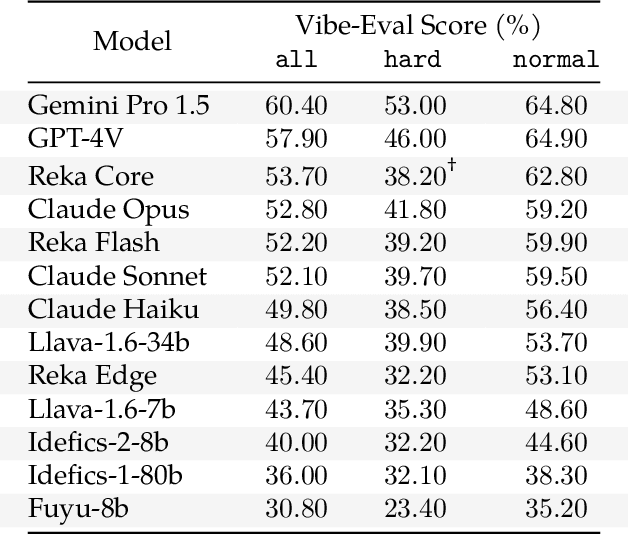

We introduce Vibe-Eval: a new open benchmark and framework for evaluating multimodal chat models. Vibe-Eval consists of 269 visual understanding prompts, including 100 of hard difficulty, complete with gold-standard responses authored by experts. Vibe-Eval is open-ended and challenging with dual objectives: (i) vibe checking multimodal chat models for day-to-day tasks and (ii) rigorously testing and probing the capabilities of present frontier models. Notably, our hard set contains >50% questions that all frontier models answer incorrectly. We explore the nuances of designing, evaluating, and ranking models on ultra challenging prompts. We also discuss trade-offs between human and automatic evaluation, and show that automatic model evaluation using Reka Core roughly correlates to human judgment. We offer free API access for the purpose of lightweight evaluation and plan to conduct formal human evaluations for public models that perform well on the Vibe-Eval's automatic scores. We release the evaluation code and data, see https://github.com/reka-ai/reka-vibe-eval