 Add to Chrome
 Add to Firefox
 Add to Edge
Maximum Likelihood Reconstruction for Multi-Look Digital Holography with Markov-Modeled Speckle Correlation
Apr 22, 2026
Multi-look acquisition is a widely used strategy for reducing speckle noise in coherent imaging systems such as digital holography. By acquiring multiple measurements, speckle can be suppressed through averaging or joint reconstruction, typically under the assumption that speckle realizations across looks are statistically independent. In practice, however, hardware constraints limit measurement diversity, leading to inter-look correlation that degrades the performance of conventional methods. In this work, we study the reconstruction of speckle-free reflectivity from complex-valued multi-look measurements in the presence of correlated speckle. We model the inter-look dependence using a first-order Markov process and derive the corresponding likelihood under a first-order Markov approximation, resulting in a constrained maximum likelihood estimation problem. To solve this problem, we develop an efficient projected gradient descent framework that combines gradient-based updates with implicit regularization via deep image priors, and leverages Monte Carlo approximation and matrix-free operators for scalable computation. Simulation results demonstrate that the proposed approach remains robust under strong inter-look correlation, achieving performance close to the ideal independent-look scenario and consistently outperforming methods that ignore such dependencies. These results highlight the importance of explicitly modeling inter-look correlation and provide a practical framework for multi-look holographic reconstruction under realistic acquisition conditions. Our code is available at: https://github.com/Computational-Imaging-RU/MLE-Holography-Markov.

Shot-Aware Frame Sampling for Video Understanding
Mar 18, 2026Video frame sampling is essential for efficient long-video understanding with Vision-Language Models (VLMs), since dense inputs are costly and often exceed context limits. Yet when only a small number of frames can be retained, existing samplers often fail to balance broad video coverage with brief but critical events, which can lead to unreliable downstream predictions. To address this issue, we present InfoShot, a task-agnostic, shot-aware frame sampler for long-video understanding. InfoShot first partitions a video into semantically consistent shots, and then selects two complementary keyframes from each shot: one to represent the main content and one to capture unusual within-shot changes. This design is guided by an information-theoretic objective that encourages the sampled set to retain high information about both shot structure and sparse within-shot deviations. In this way, it improves the chance of preserving both overall video context and short decision-critical moments without requiring any retraining. To better evaluate such short-lived events, we further introduce SynFlash, a synthetic benchmark with controllable sub-second anomaly patterns and frame-level ground truth, and we also evaluate InfoShot on existing anomaly datasets and general video understanding tasks. Experiments show that InfoShot improves anomaly hit rate and downstream Video-QA accuracy under frame number constraints, while matching or outperforming strong baselines on standard video understanding benchmarks.
Monte Carlo Maximum Likelihood Reconstruction for Digital Holography with Speckle
Feb 10, 2026In coherent imaging, speckle is statistically modeled as multiplicative noise, posing a fundamental challenge for image reconstruction. While maximum likelihood estimation (MLE) provides a principled framework for speckle mitigation, its application to coherent imaging system such as digital holography with finite apertures is hindered by the prohibitive cost of high-dimensional matrix inversion, especially at high resolutions. This computational burden has prevented the use of MLE-based reconstruction with physically accurate aperture modeling. In this work, we propose a randomized linear algebra approach that enables scalable MLE optimization without explicit matrix inversions in gradient computation. By exploiting the structural properties of sensing matrix and using conjugate gradient for likelihood gradient evaluation, the proposed algorithm supports accurate aperture modeling without the simplifying assumptions commonly imposed for tractability. We term the resulting method projected gradient descent with Monte Carlo estimation (PGD-MC). The proposed PGD-MC framework (i) demonstrates robustness to diverse and physically accurate aperture models, (ii) achieves substantial improvements in reconstruction quality and computational efficiency, and (iii) scales effectively to high-resolution digital holography. Extensive experiments incorporating three representative denoisers as regularization show that PGD-MC provides a flexible and effective MLE-based reconstruction framework for digital holography with finite apertures, consistently outperforming prior Plug-and-Play model-based iterative reconstruction methods in both accuracy and speed. Our code is available at: https://github.com/Computational-Imaging-RU/MC_Maximum_Likelihood_Digital_Holography_Speckle.
Zero-shot denoising via neural compression: Theoretical and algorithmic framework
Jun 15, 2025Zero-shot denoising aims to denoise observations without access to training samples or clean reference images. This setting is particularly relevant in practical imaging scenarios involving specialized domains such as medical imaging or biology. In this work, we propose the Zero-Shot Neural Compression Denoiser (ZS-NCD), a novel denoising framework based on neural compression. ZS-NCD treats a neural compression network as an untrained model, optimized directly on patches extracted from a single noisy image. The final reconstruction is then obtained by aggregating the outputs of the trained model over overlapping patches. Thanks to the built-in entropy constraints of compression architectures, our method naturally avoids overfitting and does not require manual regularization or early stopping. Through extensive experiments, we show that ZS-NCD achieves state-of-the-art performance among zero-shot denoisers for both Gaussian and Poisson noise, and generalizes well to both natural and non-natural images. Additionally, we provide new finite-sample theoretical results that characterize upper bounds on the achievable reconstruction error of general maximum-likelihood compression-based denoisers. These results further establish the theoretical foundations of compression-based denoising. Our code is available at: github.com/Computational-Imaging-RU/ZS-NCDenoiser.
Multilook Coherent Imaging: Theoretical Guarantees and Algorithms
May 29, 2025Multilook coherent imaging is a widely used technique in applications such as digital holography, ultrasound imaging, and synthetic aperture radar. A central challenge in these systems is the presence of multiplicative noise, commonly known as speckle, which degrades image quality. Despite the widespread use of coherent imaging systems, their theoretical foundations remain relatively underexplored. In this paper, we study both the theoretical and algorithmic aspects of likelihood-based approaches for multilook coherent imaging, providing a rigorous framework for analysis and method development. Our theoretical contributions include establishing the first theoretical upper bound on the Mean Squared Error (MSE) of the maximum likelihood estimator under the deep image prior hypothesis. Our results capture the dependence of MSE on the number of parameters in the deep image prior, the number of looks, the signal dimension, and the number of measurements per look. On the algorithmic side, we employ projected gradient descent (PGD) as an efficient method for computing the maximum likelihood solution. Furthermore, we introduce two key ideas to enhance the practical performance of PGD. First, we incorporate the Newton-Schulz algorithm to compute matrix inverses within the PGD iterations, significantly reducing computational complexity. Second, we develop a bagging strategy to mitigate projection errors introduced during PGD updates. We demonstrate that combining these techniques with PGD yields state-of-the-art performance. Our code is available at https://github.com/Computational-Imaging-RU/Bagged-DIP-Speckle.
DeCompress: Denoising via Neural Compression
Mar 27, 2025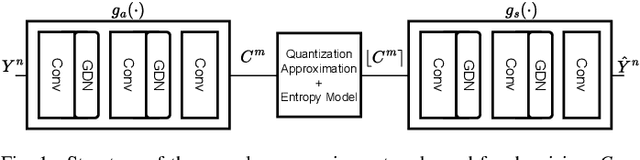

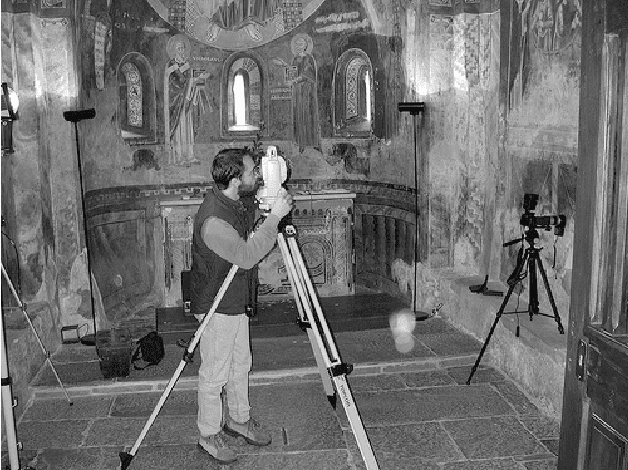
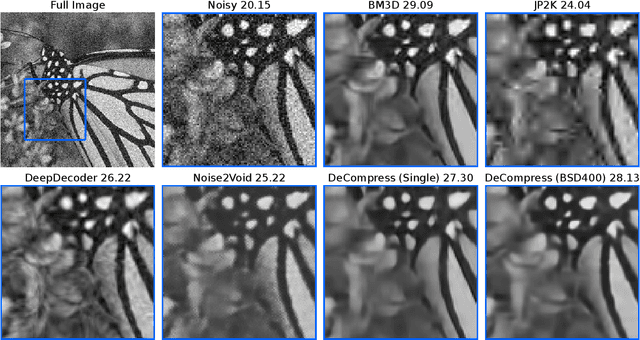
Learning-based denoising algorithms achieve state-of-the-art performance across various denoising tasks. However, training such models relies on access to large training datasets consisting of clean and noisy image pairs. On the other hand, in many imaging applications, such as microscopy, collecting ground truth images is often infeasible. To address this challenge, researchers have recently developed algorithms that can be trained without requiring access to ground truth data. However, training such models remains computationally challenging and still requires access to large noisy training samples. In this work, inspired by compression-based denoising and recent advances in neural compression, we propose a new compression-based denoising algorithm, which we name DeCompress, that i) does not require access to ground truth images, ii) does not require access to large training dataset - only a single noisy image is sufficient, iii) is robust to overfitting, and iv) achieves superior performance compared with zero-shot or unsupervised learning-based denoisers.
Bayesian Despeckling of Structured Sources
Jan 21, 2025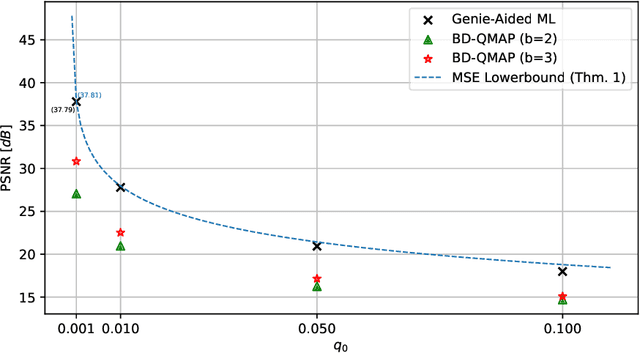
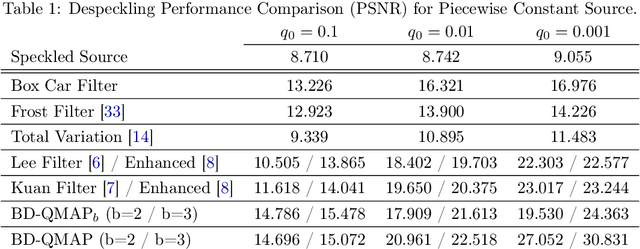
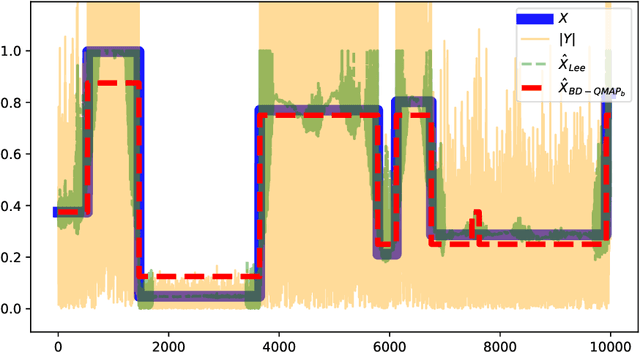
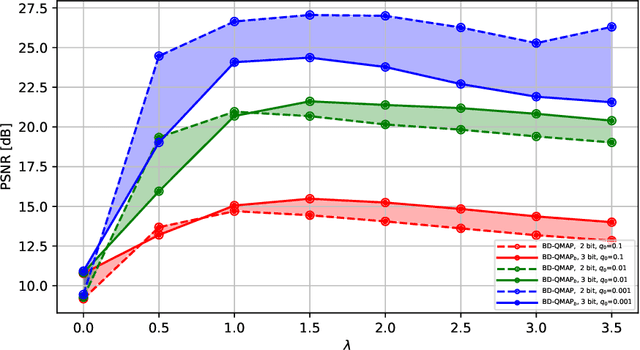
Speckle noise is a fundamental challenge in coherent imaging systems, significantly degrading image quality. Over the past decades, numerous despeckling algorithms have been developed for applications such as Synthetic Aperture Radar (SAR) and digital holography. In this paper, we aim to establish a theoretically grounded approach to despeckling. We propose a method applicable to general structured stationary stochastic sources. We demonstrate the effectiveness of the proposed method on piecewise constant sources. Additionally, we theoretically derive a lower bound on the despeckling performance for such sources. The proposed depseckler applied to the 1-Markov structured sources achieves better reconstruction performance with no strong simplification of the ground truth signal model or speckle noise.
Saturation in Snapshot Compressive Imaging
Jan 21, 2025Snapshot Compressive Imaging (SCI) maps three-dimensional (3D) data cubes, such as videos or hyperspectral images, into two-dimensional (2D) measurements via optical modulation, enabling efficient data acquisition and reconstruction. Recent advances have shown the potential of mask optimization to enhance SCI performance, but most studies overlook nonlinear distortions caused by saturation in practical systems. Saturation occurs when high-intensity measurements exceed the sensor's dynamic range, leading to information loss that standard reconstruction algorithms cannot fully recover. This paper addresses the challenge of optimizing binary masks in SCI under saturation. We theoretically characterize the performance of compression-based SCI recovery in the presence of saturation and leverage these insights to optimize masks for such conditions. Our analysis reveals trade-offs between mask statistics and reconstruction quality in saturated systems. Experimental results using a Plug-and-Play (PnP) style network validate the theory, demonstrating improved recovery performance and robustness to saturation with our optimized binary masks.
Theoretical Characterization of Effect of Masks in Snapshot Compressive Imaging
Jan 11, 2025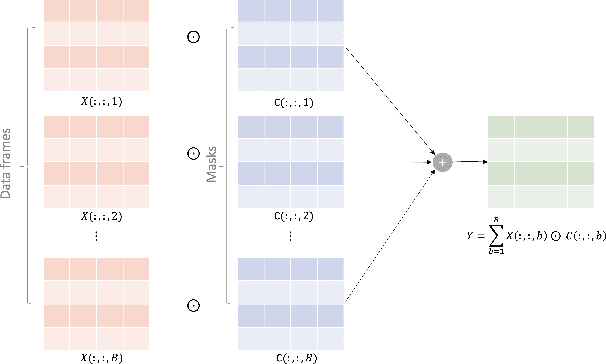
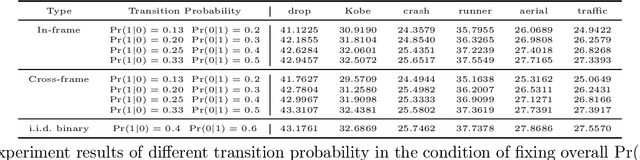
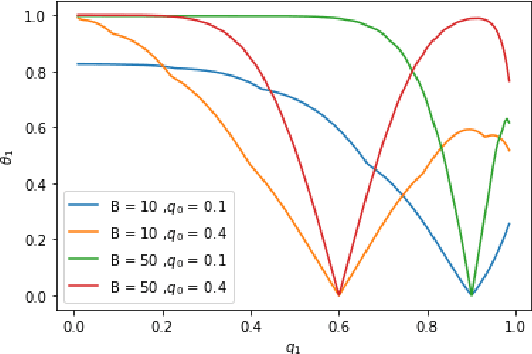
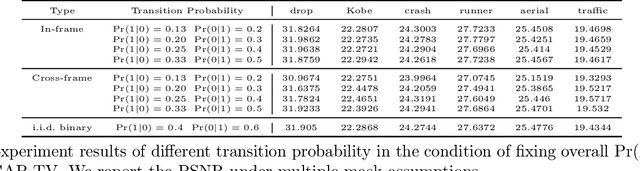
Snapshot compressive imaging (SCI) refers to the recovery of three-dimensional data cubes-such as videos or hyperspectral images-from their two-dimensional projections, which are generated by a special encoding of the data with a mask. SCI systems commonly use binary-valued masks that follow certain physical constraints. Optimizing these masks subject to these constraints is expected to improve system performance. However, prior theoretical work on SCI systems focuses solely on independently and identically distributed (i.i.d.) Gaussian masks, which do not permit such optimization. On the other hand, existing practical mask optimizations rely on computationally intensive joint optimizations that provide limited insight into the role of masks and are expected to be sub-optimal due to the non-convexity and complexity of the optimization. In this paper, we analytically characterize the performance of SCI systems employing binary masks and leverage our analysis to optimize hardware parameters. Our findings provide a comprehensive and fundamental understanding of the role of binary masks - with both independent and dependent elements - and their optimization. We also present simulation results that confirm our theoretical findings and further illuminate different aspects of mask design.
Comprehensive Examination of Unrolled Networks for Linear Inverse Problems
Jan 08, 2025

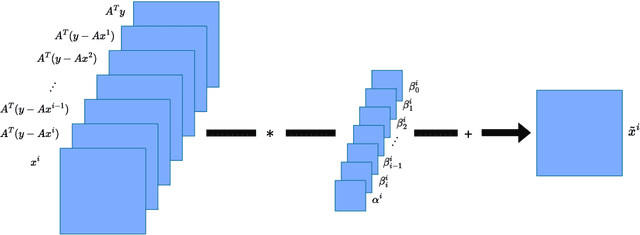

Unrolled networks have become prevalent in various computer vision and imaging tasks. Although they have demonstrated remarkable efficacy in solving specific computer vision and computational imaging tasks, their adaptation to other applications presents considerable challenges. This is primarily due to the multitude of design decisions that practitioners working on new applications must navigate, each potentially affecting the network's overall performance. These decisions include selecting the optimization algorithm, defining the loss function, and determining the number of convolutional layers, among others. Compounding the issue, evaluating each design choice requires time-consuming simulations to train, fine-tune the neural network, and optimize for its performance. As a result, the process of exploring multiple options and identifying the optimal configuration becomes time-consuming and computationally demanding. The main objectives of this paper are (1) to unify some ideas and methodologies used in unrolled networks to reduce the number of design choices a user has to make, and (2) to report a comprehensive ablation study to discuss the impact of each of the choices involved in designing unrolled networks and present practical recommendations based on our findings. We anticipate that this study will help scientists and engineers design unrolled networks for their applications and diagnose problems within their networks efficiently.