 Add to Chrome
 Add to Firefox
 Add to Edge
Concept-Guided Prompt Learning for Generalization in Vision-Language Models
Jan 15, 2024
Contrastive Language-Image Pretraining (CLIP) model has exhibited remarkable efficacy in establishing cross-modal connections between texts and images, yielding impressive performance across a broad spectrum of downstream applications through fine-tuning. However, for generalization tasks, the current fine-tuning methods for CLIP, such as CoOp and CoCoOp, demonstrate relatively low performance on some fine-grained datasets. We recognize the underlying reason is that these previous methods only projected global features into the prompt, neglecting the various visual concepts, such as colors, shapes, and sizes, which are naturally transferable across domains and play a crucial role in generalization tasks. To address this issue, in this work, we propose Concept-Guided Prompt Learning (CPL) for vision-language models. Specifically, we leverage the well-learned knowledge of CLIP to create a visual concept cache to enable concept-guided prompting. In order to refine the text features, we further develop a projector that transforms multi-level visual features into text features. We observe that this concept-guided prompt learning approach is able to achieve enhanced consistency between visual and linguistic modalities. Extensive experimental results demonstrate that our CPL method significantly improves generalization capabilities compared to the current state-of-the-art methods.

A Simple LLM Framework for Long-Range Video Question-Answering
Dec 28, 2023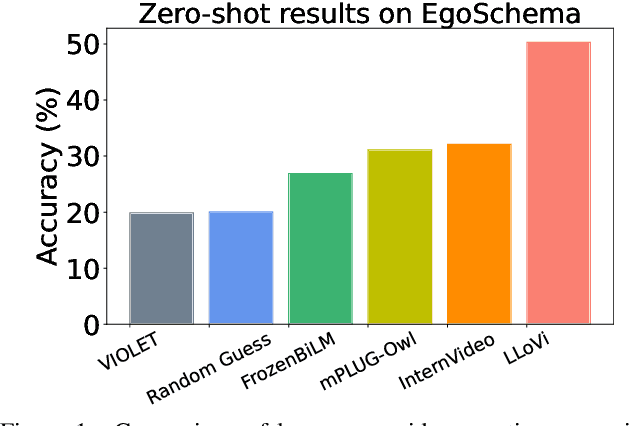
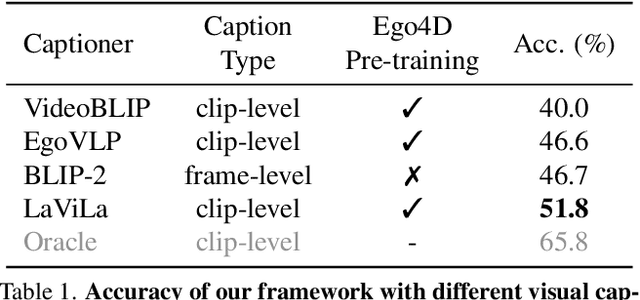
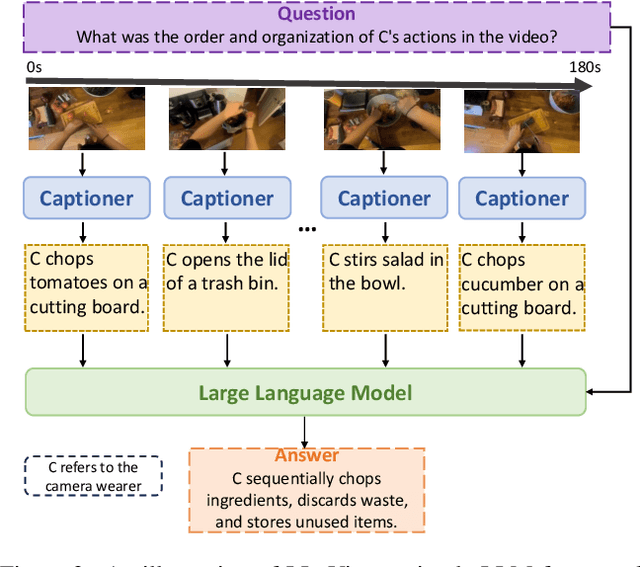
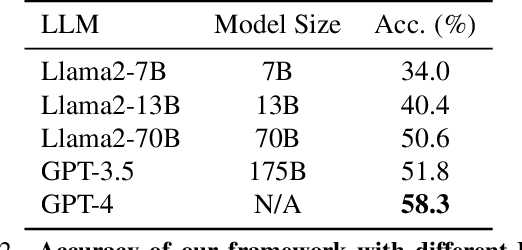
We present LLoVi, a language-based framework for long-range video question-answering (LVQA). Unlike prior long-range video understanding methods, which are often costly and require specialized long-range video modeling design (e.g., memory queues, state-space layers, etc.), our approach uses a frame/clip-level visual captioner (e.g., BLIP2, LaViLa, LLaVA) coupled with a Large Language Model (GPT-3.5, GPT-4) leading to a simple yet surprisingly effective LVQA framework. Specifically, we decompose short and long-range modeling aspects of LVQA into two stages. First, we use a short-term visual captioner to generate textual descriptions of short video clips (0.5-8s in length) densely sampled from a long input video. Afterward, an LLM aggregates the densely extracted short-term captions to perform long-range temporal reasoning needed to understand the whole video and answer a question. To analyze what makes our simple framework so effective, we thoroughly evaluate various components of our system. Our empirical analysis reveals that the choice of the visual captioner and LLM is critical for good LVQA performance. Furthermore, we show that a specialized prompt that asks the LLM first to summarize the noisy short-term visual captions and then answer a given input question leads to a significant LVQA performance boost. On EgoSchema, which is best known as a very long-form video question-answering benchmark, our method achieves 50.3% accuracy, outperforming the previous best-performing approach by 18.1% (absolute gain). In addition, our approach outperforms the previous state-of-the-art by 4.1% and 3.1% on NeXT-QA and IntentQA. We also extend LLoVi to grounded LVQA and show that it outperforms all prior methods on the NeXT-GQA dataset. We will release our code at https://github.com/CeeZh/LLoVi.
WordScape: a Pipeline to extract multilingual, visually rich Documents with Layout Annotations from Web Crawl Data
Dec 15, 2023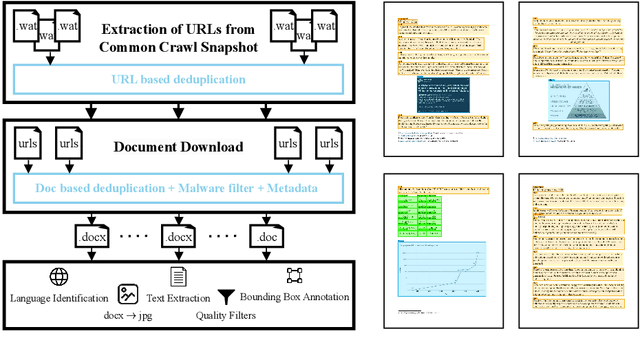
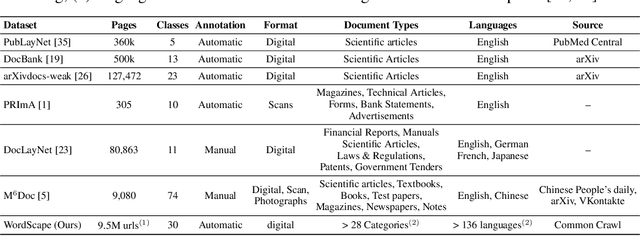
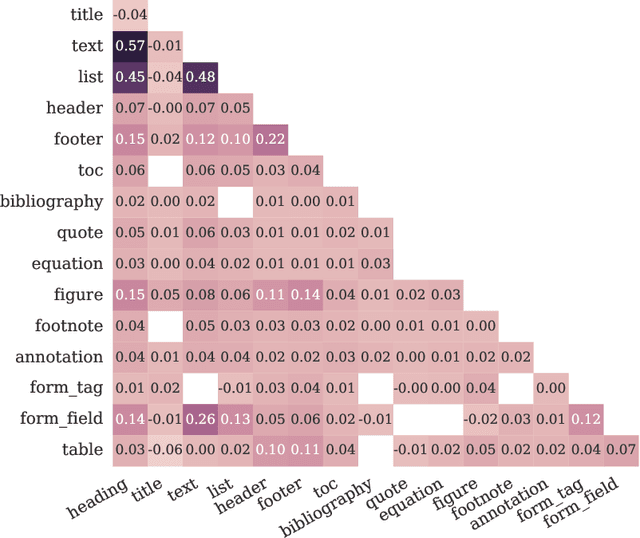
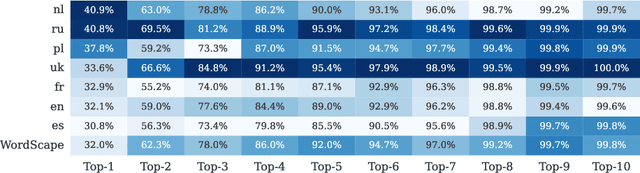
We introduce WordScape, a novel pipeline for the creation of cross-disciplinary, multilingual corpora comprising millions of pages with annotations for document layout detection. Relating visual and textual items on document pages has gained further significance with the advent of multimodal models. Various approaches proved effective for visual question answering or layout segmentation. However, the interplay of text, tables, and visuals remains challenging for a variety of document understanding tasks. In particular, many models fail to generalize well to diverse domains and new languages due to insufficient availability of training data. WordScape addresses these limitations. Our automatic annotation pipeline parses the Open XML structure of Word documents obtained from the web, jointly providing layout-annotated document images and their textual representations. In turn, WordScape offers unique properties as it (1) leverages the ubiquity of the Word file format on the internet, (2) is readily accessible through the Common Crawl web corpus, (3) is adaptive to domain-specific documents, and (4) offers culturally and linguistically diverse document pages with natural semantic structure and high-quality text. Together with the pipeline, we will additionally release 9.5M urls to word documents which can be processed using WordScape to create a dataset of over 40M pages. Finally, we investigate the quality of text and layout annotations extracted by WordScape, assess the impact on document understanding benchmarks, and demonstrate that manual labeling costs can be substantially reduced.
DMLR: Data-centric Machine Learning Research -- Past, Present and Future
Nov 21, 2023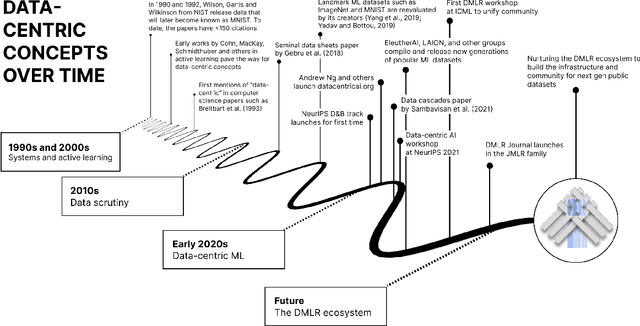
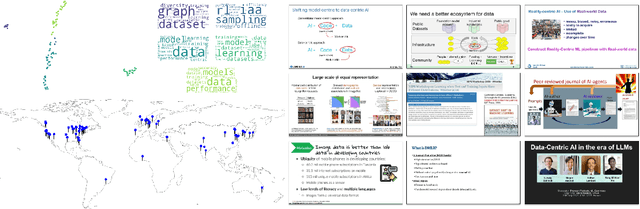

Drawing from discussions at the inaugural DMLR workshop at ICML 2023 and meetings prior, in this report we outline the relevance of community engagement and infrastructure development for the creation of next-generation public datasets that will advance machine learning science. We chart a path forward as a collective effort to sustain the creation and maintenance of these datasets and methods towards positive scientific, societal and business impact.
Learning to Adapt CLIP for Few-Shot Monocular Depth Estimation
Nov 02, 2023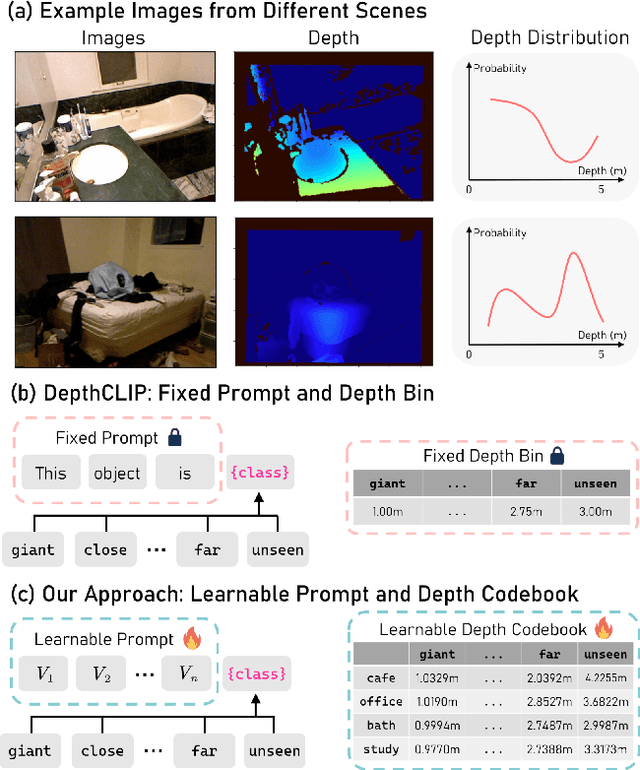

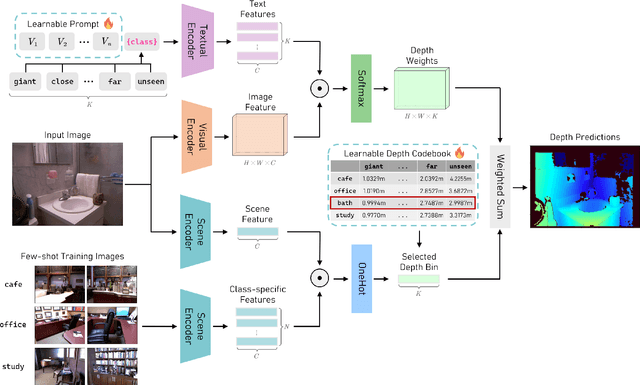

Pre-trained Vision-Language Models (VLMs), such as CLIP, have shown enhanced performance across a range of tasks that involve the integration of visual and linguistic modalities. When CLIP is used for depth estimation tasks, the patches, divided from the input images, can be combined with a series of semantic descriptions of the depth information to obtain similarity results. The coarse estimation of depth is then achieved by weighting and summing the depth values, called depth bins, corresponding to the predefined semantic descriptions. The zero-shot approach circumvents the computational and time-intensive nature of traditional fully-supervised depth estimation methods. However, this method, utilizing fixed depth bins, may not effectively generalize as images from different scenes may exhibit distinct depth distributions. To address this challenge, we propose a few-shot-based method which learns to adapt the VLMs for monocular depth estimation to balance training costs and generalization capabilities. Specifically, it assigns different depth bins for different scenes, which can be selected by the model during inference. Additionally, we incorporate learnable prompts to preprocess the input text to convert the easily human-understood text into easily model-understood vectors and further enhance the performance. With only one image per scene for training, our extensive experiment results on the NYU V2 and KITTI dataset demonstrate that our method outperforms the previous state-of-the-art method by up to 10.6\% in terms of MARE.
Object-centric Video Representation for Long-term Action Anticipation
Oct 31, 2023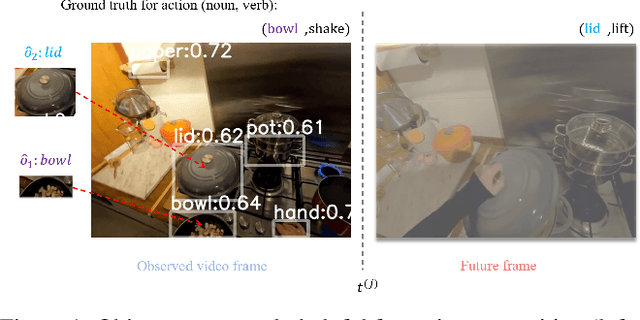
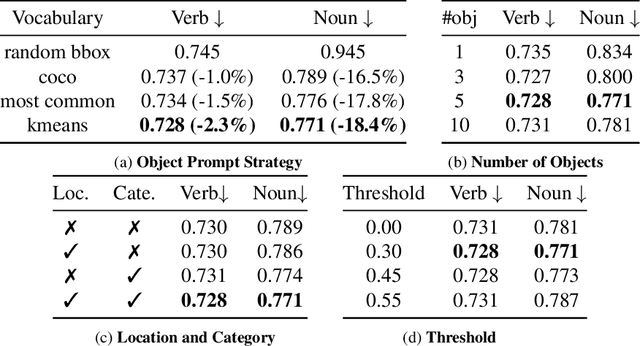
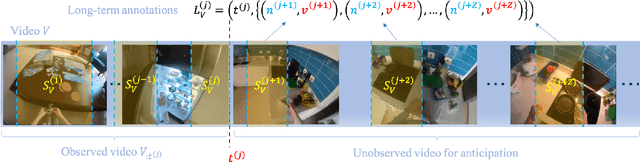
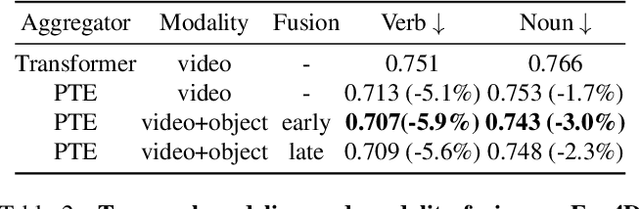
This paper focuses on building object-centric representations for long-term action anticipation in videos. Our key motivation is that objects provide important cues to recognize and predict human-object interactions, especially when the predictions are longer term, as an observed "background" object could be used by the human actor in the future. We observe that existing object-based video recognition frameworks either assume the existence of in-domain supervised object detectors or follow a fully weakly-supervised pipeline to infer object locations from action labels. We propose to build object-centric video representations by leveraging visual-language pretrained models. This is achieved by "object prompts", an approach to extract task-specific object-centric representations from general-purpose pretrained models without finetuning. To recognize and predict human-object interactions, we use a Transformer-based neural architecture which allows the "retrieval" of relevant objects for action anticipation at various time scales. We conduct extensive evaluations on the Ego4D, 50Salads, and EGTEA Gaze+ benchmarks. Both quantitative and qualitative results confirm the effectiveness of our proposed method.
Laughing Hyena Distillery: Extracting Compact Recurrences From Convolutions
Oct 28, 2023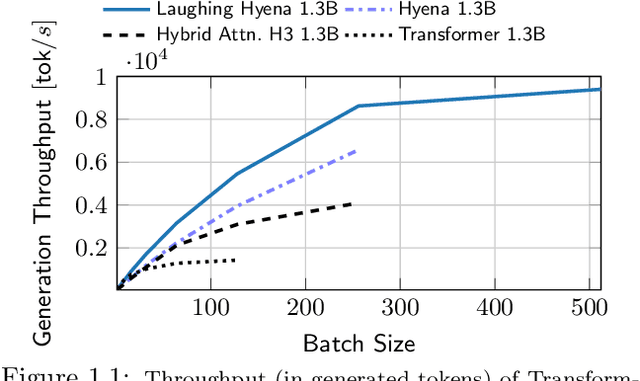
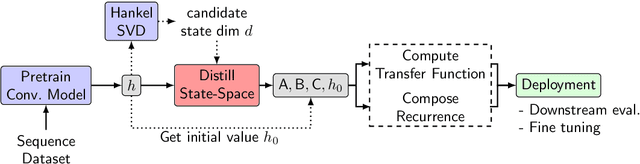
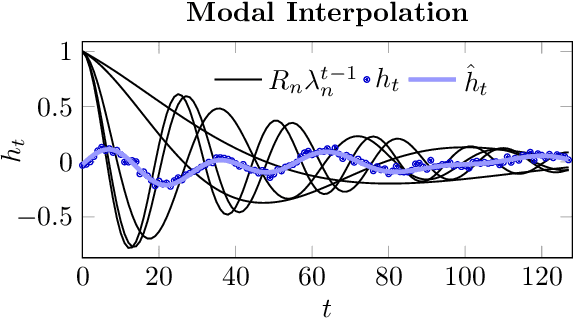
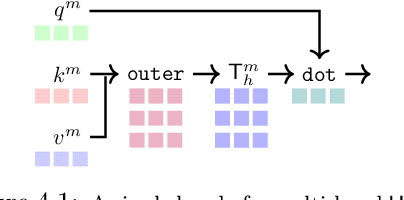
Recent advances in attention-free sequence models rely on convolutions as alternatives to the attention operator at the core of Transformers. In particular, long convolution sequence models have achieved state-of-the-art performance in many domains, but incur a significant cost during auto-regressive inference workloads -- naively requiring a full pass (or caching of activations) over the input sequence for each generated token -- similarly to attention-based models. In this paper, we seek to enable $\mathcal O(1)$ compute and memory cost per token in any pre-trained long convolution architecture to reduce memory footprint and increase throughput during generation. Concretely, our methods consist in extracting low-dimensional linear state-space models from each convolution layer, building upon rational interpolation and model-order reduction techniques. We further introduce architectural improvements to convolution-based layers such as Hyena: by weight-tying the filters across channels into heads, we achieve higher pre-training quality and reduce the number of filters to be distilled. The resulting model achieves 10x higher throughput than Transformers and 1.5x higher than Hyena at 1.3B parameters, without any loss in quality after distillation.
Deja Vu: Contextual Sparsity for Efficient LLMs at Inference Time
Oct 26, 2023Large language models (LLMs) with hundreds of billions of parameters have sparked a new wave of exciting AI applications. However, they are computationally expensive at inference time. Sparsity is a natural approach to reduce this cost, but existing methods either require costly retraining, have to forgo LLM's in-context learning ability, or do not yield wall-clock time speedup on modern hardware. We hypothesize that contextual sparsity, which are small, input-dependent sets of attention heads and MLP parameters that yield approximately the same output as the dense model for a given input, can address these issues. We show that contextual sparsity exists, that it can be accurately predicted, and that we can exploit it to speed up LLM inference in wall-clock time without compromising LLM's quality or in-context learning ability. Based on these insights, we propose DejaVu, a system that uses a low-cost algorithm to predict contextual sparsity on the fly given inputs to each layer, along with an asynchronous and hardware-aware implementation that speeds up LLM inference. We validate that DejaVu can reduce the inference latency of OPT-175B by over 2X compared to the state-of-the-art FasterTransformer, and over 6X compared to the widely used Hugging Face implementation, without compromising model quality. The code is available at https://github.com/FMInference/DejaVu.
Effective and Efficient Federated Tree Learning on Hybrid Data
Oct 18, 2023

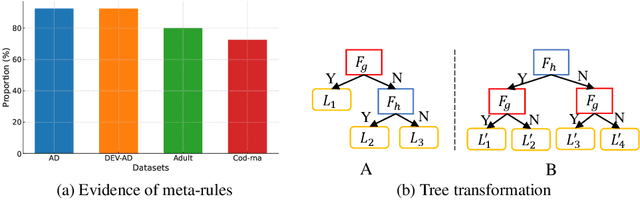
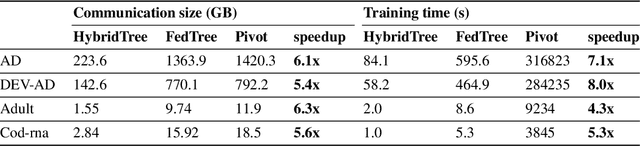
Federated learning has emerged as a promising distributed learning paradigm that facilitates collaborative learning among multiple parties without transferring raw data. However, most existing federated learning studies focus on either horizontal or vertical data settings, where the data of different parties are assumed to be from the same feature or sample space. In practice, a common scenario is the hybrid data setting, where data from different parties may differ both in the features and samples. To address this, we propose HybridTree, a novel federated learning approach that enables federated tree learning on hybrid data. We observe the existence of consistent split rules in trees. With the help of these split rules, we theoretically show that the knowledge of parties can be incorporated into the lower layers of a tree. Based on our theoretical analysis, we propose a layer-level solution that does not need frequent communication traffic to train a tree. Our experiments demonstrate that HybridTree can achieve comparable accuracy to the centralized setting with low computational and communication overhead. HybridTree can achieve up to 8 times speedup compared with the other baselines.
In-Context Few-Shot Relation Extraction via Pre-Trained Language Models
Oct 17, 2023Relation extraction aims at inferring structured human knowledge from textual documents. State-of-the-art methods based on language models commonly have two limitations: (1) they require named entities to be either given as input or infer them, which introduces additional noise, and (2) they require human annotations of documents. As a remedy, we present a novel framework for in-context few-shot relation extraction via pre-trained language models. To the best of our knowledge, we are the first to reformulate the relation extraction task as a tailored in-context few-shot learning paradigm. Thereby, we achieve crucial benefits in that we eliminate the need for both named entity recognition and human annotation of documents. Unlike existing methods based on fine-tuning, our framework is flexible in that it can be easily updated for a new set of relations without re-training. We evaluate our framework using DocRED, the largest publicly available dataset for document-level relation extraction, and demonstrate that our framework achieves state-of-the-art performance. Finally, our framework allows us to identify missing annotations, and we thus show that our framework actually performs much better than the original labels from the development set of DocRED.