 Add to Chrome
 Add to Firefox
 Add to Edge
Traffic Video Object Detection using Motion Prior
Nov 16, 2023
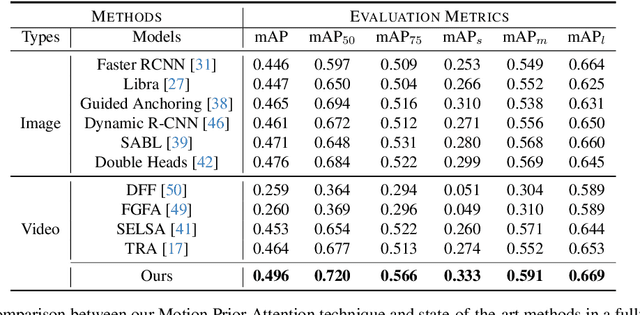
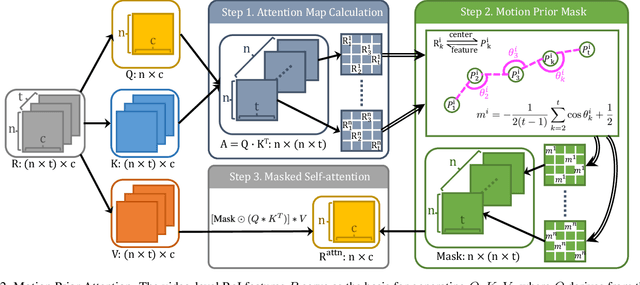
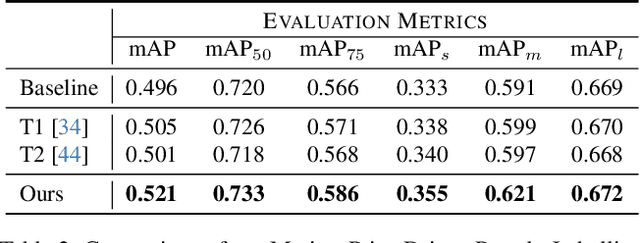
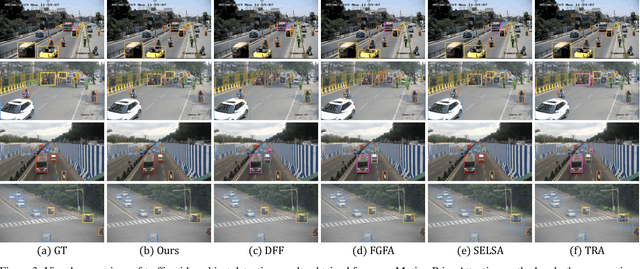
Traffic videos inherently differ from generic videos in their stationary camera setup, thus providing a strong motion prior where objects often move in a specific direction over a short time interval. Existing works predominantly employ generic video object detection framework for traffic video object detection, which yield certain advantages such as broad applicability and robustness to diverse scenarios. However, they fail to harness the strength of motion prior to enhance detection accuracy. In this work, we propose two innovative methods to exploit the motion prior and boost the performance of both fully-supervised and semi-supervised traffic video object detection. Firstly, we introduce a new self-attention module that leverages the motion prior to guide temporal information integration in the fully-supervised setting. Secondly, we utilise the motion prior to develop a pseudo-labelling mechanism to eliminate noisy pseudo labels for the semi-supervised setting. Both of our motion-prior-centred methods consistently demonstrates superior performance, outperforming existing state-of-the-art approaches by a margin of 2% in terms of mAP.

Contractive Systems Improve Graph Neural Networks Against Adversarial Attacks
Nov 12, 2023Graph Neural Networks (GNNs) have established themselves as a key component in addressing diverse graph-based tasks. Despite their notable successes, GNNs remain susceptible to input perturbations in the form of adversarial attacks. This paper introduces an innovative approach to fortify GNNs against adversarial perturbations through the lens of contractive dynamical systems. Our method introduces graph neural layers based on differential equations with contractive properties, which, as we show, improve the robustness of GNNs. A distinctive feature of the proposed approach is the simultaneous learned evolution of both the node features and the adjacency matrix, yielding an intrinsic enhancement of model robustness to perturbations in the input features and the connectivity of the graph. We mathematically derive the underpinnings of our novel architecture and provide theoretical insights to reason about its expected behavior. We demonstrate the efficacy of our method through numerous real-world benchmarks, reading on par or improved performance compared to existing methods.
Provably Convergent Data-Driven Convex-Nonconvex Regularization
Oct 09, 2023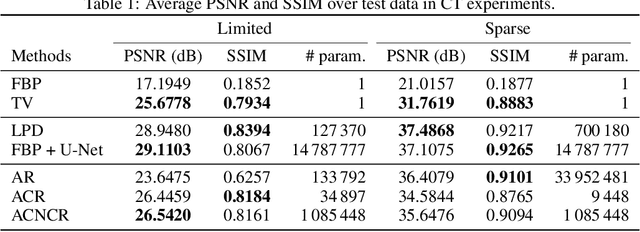
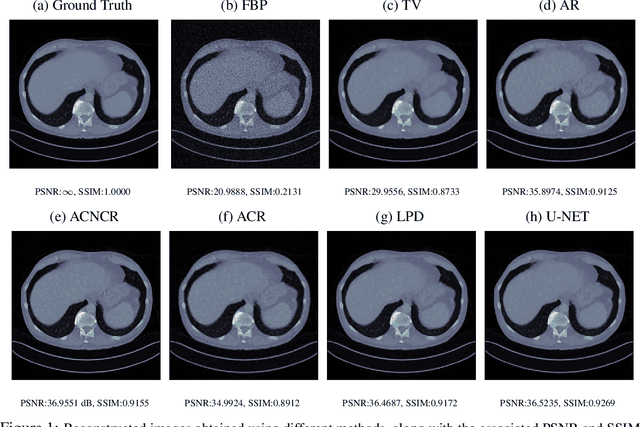
An emerging new paradigm for solving inverse problems is via the use of deep learning to learn a regularizer from data. This leads to high-quality results, but often at the cost of provable guarantees. In this work, we show how well-posedness and convergent regularization arises within the convex-nonconvex (CNC) framework for inverse problems. We introduce a novel input weakly convex neural network (IWCNN) construction to adapt the method of learned adversarial regularization to the CNC framework. Empirically we show that our method overcomes numerical issues of previous adversarial methods.
Recent Methodological Advances in Federated Learning for Healthcare
Oct 04, 2023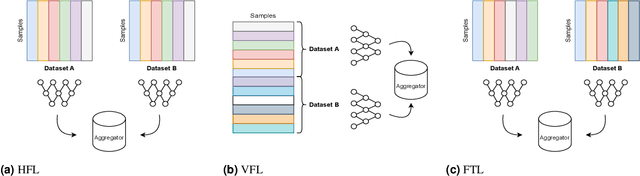
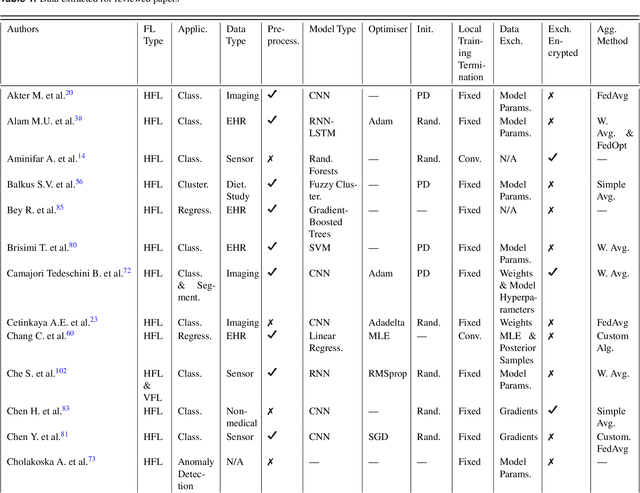
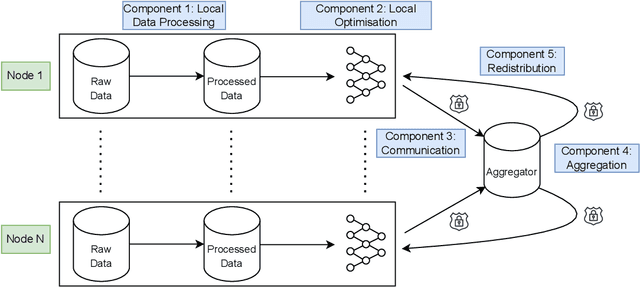

For healthcare datasets, it is often not possible to combine data samples from multiple sites due to ethical, privacy or logistical concerns. Federated learning allows for the utilisation of powerful machine learning algorithms without requiring the pooling of data. Healthcare data has many simultaneous challenges which require new methodologies to address, such as highly-siloed data, class imbalance, missing data, distribution shifts and non-standardised variables. Federated learning adds significant methodological complexity to conventional centralised machine learning, requiring distributed optimisation, communication between nodes, aggregation of models and redistribution of models. In this systematic review, we consider all papers on Scopus that were published between January 2015 and February 2023 and which describe new federated learning methodologies for addressing challenges with healthcare data. We performed a detailed review of the 89 papers which fulfilled these criteria. Significant systemic issues were identified throughout the literature which compromise the methodologies in many of the papers reviewed. We give detailed recommendations to help improve the quality of the methodology development for federated learning in healthcare.
MammoDG: Generalisable Deep Learning Breaks the Limits of Cross-Domain Multi-Center Breast Cancer Screening
Aug 02, 2023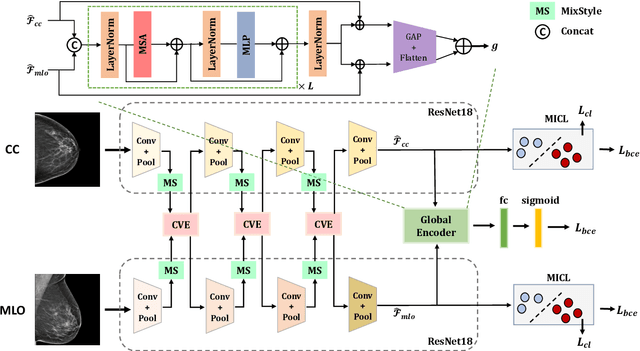
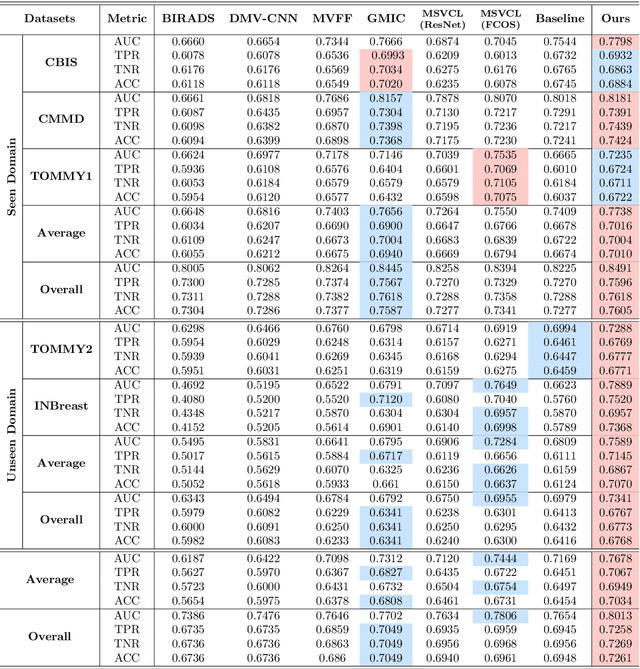
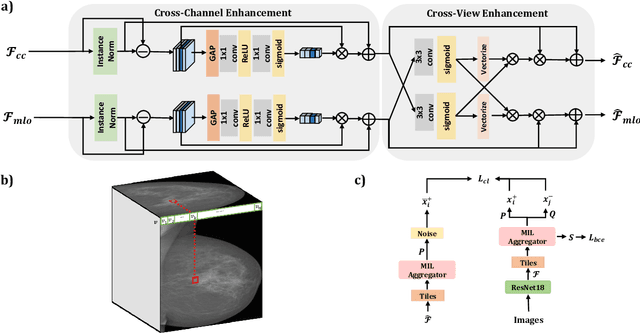
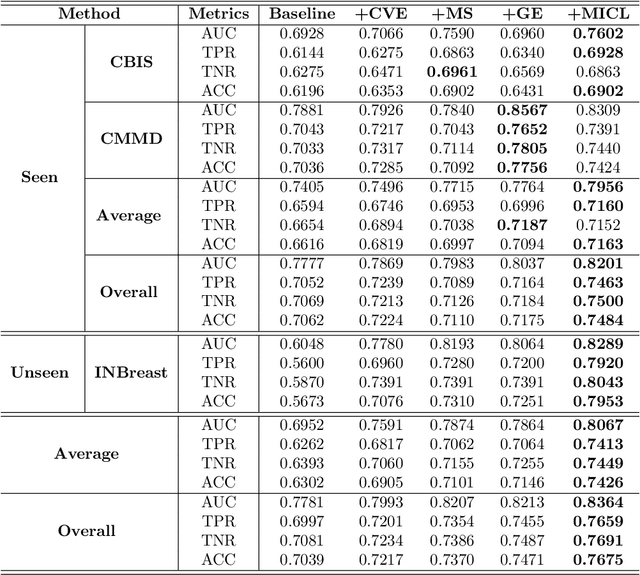
Breast cancer is a major cause of cancer death among women, emphasising the importance of early detection for improved treatment outcomes and quality of life. Mammography, the primary diagnostic imaging test, poses challenges due to the high variability and patterns in mammograms. Double reading of mammograms is recommended in many screening programs to improve diagnostic accuracy but increases radiologists' workload. Researchers explore Machine Learning models to support expert decision-making. Stand-alone models have shown comparable or superior performance to radiologists, but some studies note decreased sensitivity with multiple datasets, indicating the need for high generalisation and robustness models. This work devises MammoDG, a novel deep-learning framework for generalisable and reliable analysis of cross-domain multi-center mammography data. MammoDG leverages multi-view mammograms and a novel contrastive mechanism to enhance generalisation capabilities. Extensive validation demonstrates MammoDG's superiority, highlighting the critical importance of domain generalisation for trustworthy mammography analysis in imaging protocol variations.
Reinterpreting survival analysis in the universal approximator age
Jul 25, 2023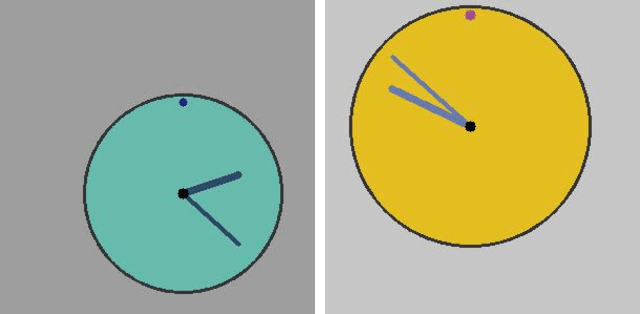
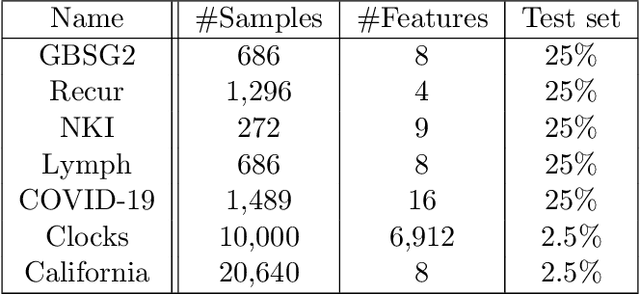
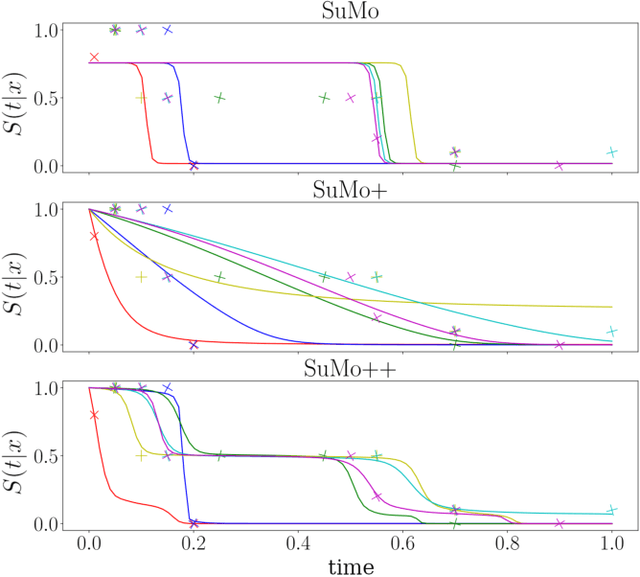

Survival analysis is an integral part of the statistical toolbox. However, while most domains of classical statistics have embraced deep learning, survival analysis only recently gained some minor attention from the deep learning community. This recent development is likely in part motivated by the COVID-19 pandemic. We aim to provide the tools needed to fully harness the potential of survival analysis in deep learning. On the one hand, we discuss how survival analysis connects to classification and regression. On the other hand, we provide technical tools. We provide a new loss function, evaluation metrics, and the first universal approximating network that provably produces survival curves without numeric integration. We show that the loss function and model outperform other approaches using a large numerical study.
Convergent regularization in inverse problems and linear plug-and-play denoisers
Jul 18, 2023Plug-and-play (PnP) denoising is a popular iterative framework for solving imaging inverse problems using off-the-shelf image denoisers. Their empirical success has motivated a line of research that seeks to understand the convergence of PnP iterates under various assumptions on the denoiser. While a significant amount of research has gone into establishing the convergence of the PnP iteration for different regularity conditions on the denoisers, not much is known about the asymptotic properties of the converged solution as the noise level in the measurement tends to zero, i.e., whether PnP methods are provably convergent regularization schemes under reasonable assumptions on the denoiser. This paper serves two purposes: first, we provide an overview of the classical regularization theory in inverse problems and survey a few notable recent data-driven methods that are provably convergent regularization schemes. We then continue to discuss PnP algorithms and their established convergence guarantees. Subsequently, we consider PnP algorithms with linear denoisers and propose a novel spectral filtering technique to control the strength of regularization arising from the denoiser. Further, by relating the implicit regularization of the denoiser to an explicit regularization functional, we rigorously show that PnP with linear denoisers leads to a convergent regularization scheme. More specifically, we prove that in the limit as the noise vanishes, the PnP reconstruction converges to the minimizer of a regularization potential subject to the solution satisfying the noiseless operator equation. The theoretical analysis is corroborated by numerical experiments for the classical inverse problem of tomographic image reconstruction.
Inverse Evolution Layers: Physics-informed Regularizers for Deep Neural Networks
Jul 14, 2023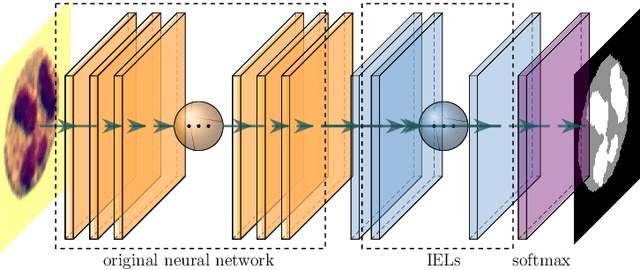
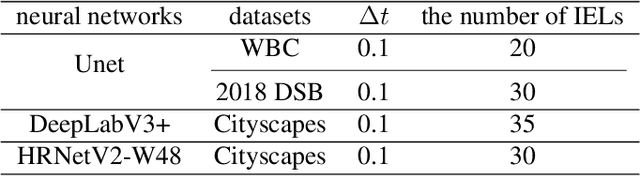
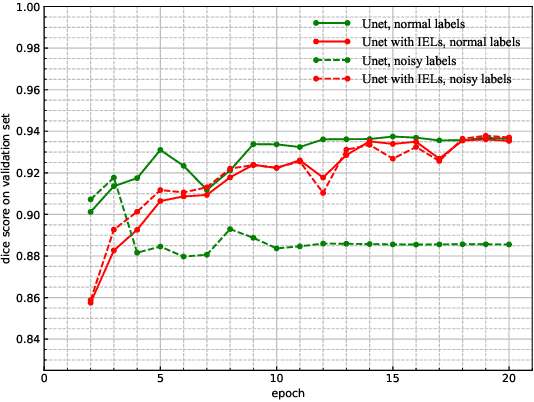
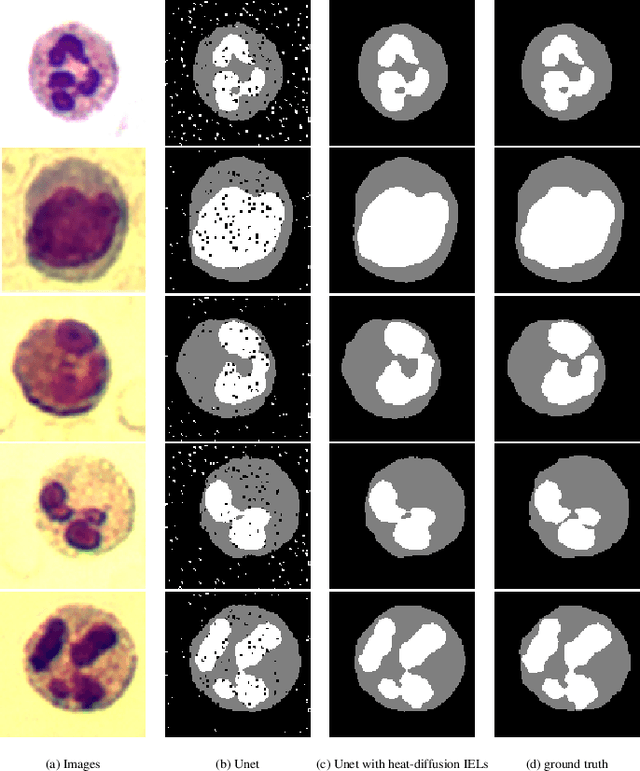
This paper proposes a novel approach to integrating partial differential equation (PDE)-based evolution models into neural networks through a new type of regularization. Specifically, we propose inverse evolution layers (IELs) based on evolution equations. These layers can achieve specific regularization objectives and endow neural networks' outputs with corresponding properties of the evolution models. Moreover, IELs are straightforward to construct and implement, and can be easily designed for various physical evolutions and neural networks. Additionally, the design process for these layers can provide neural networks with intuitive and mathematical interpretability, thus enhancing the transparency and explainability of the approach. To demonstrate the effectiveness, efficiency, and simplicity of our approach, we present an example of endowing semantic segmentation models with the smoothness property based on the heat diffusion model. To achieve this goal, we design heat-diffusion IELs and apply them to address the challenge of semantic segmentation with noisy labels. The experimental results demonstrate that the heat-diffusion IELs can effectively mitigate the overfitting problem caused by noisy labels.
Designing Stable Neural Networks using Convex Analysis and ODEs
Jun 29, 2023Motivated by classical work on the numerical integration of ordinary differential equations we present a ResNet-styled neural network architecture that encodes non-expansive (1-Lipschitz) operators, as long as the spectral norms of the weights are appropriately constrained. This is to be contrasted with the ordinary ResNet architecture which, even if the spectral norms of the weights are constrained, has a Lipschitz constant that, in the worst case, grows exponentially with the depth of the network. Further analysis of the proposed architecture shows that the spectral norms of the weights can be further constrained to ensure that the network is an averaged operator, making it a natural candidate for a learned denoiser in Plug-and-Play algorithms. Using a novel adaptive way of enforcing the spectral norm constraints, we show that, even with these constraints, it is possible to train performant networks. The proposed architecture is applied to the problem of adversarially robust image classification, to image denoising, and finally to the inverse problem of deblurring.
CDiffMR: Can We Replace the Gaussian Noise with K-Space Undersampling for Fast MRI?
Jun 25, 2023Deep learning has shown the capability to substantially accelerate MRI reconstruction while acquiring fewer measurements. Recently, diffusion models have gained burgeoning interests as a novel group of deep learning-based generative methods. These methods seek to sample data points that belong to a target distribution from a Gaussian distribution, which has been successfully extended to MRI reconstruction. In this work, we proposed a Cold Diffusion-based MRI reconstruction method called CDiffMR. Different from conventional diffusion models, the degradation operation of our CDiffMR is based on \textit{k}-space undersampling instead of adding Gaussian noise, and the restoration network is trained to harness a de-aliaseing function. We also design starting point and data consistency conditioning strategies to guide and accelerate the reverse process. More intriguingly, the pre-trained CDiffMR model can be reused for reconstruction tasks with different undersampling rates. We demonstrated, through extensive numerical and visual experiments, that the proposed CDiffMR can achieve comparable or even superior reconstruction results than state-of-the-art models. Compared to the diffusion model-based counterpart, CDiffMR reaches readily competing results using only $1.6 \sim 3.4\%$ for inference time. The code is publicly available at https://github.com/ayanglab/CDiffMR.