 Add to Chrome
 Add to Firefox
 Add to Edge
Understanding and Mitigating the Label Noise in Pre-training on Downstream Tasks
Sep 29, 2023

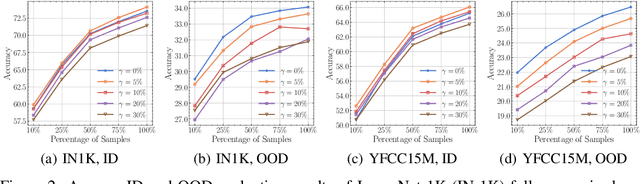


Pre-training on large-scale datasets and then fine-tuning on downstream tasks have become a standard practice in deep learning. However, pre-training data often contain label noise that may adversely affect the generalization of the model. This paper aims to understand the nature of noise in pre-training datasets and to mitigate its impact on downstream tasks. More specifically, through extensive experiments of supervised pre-training models on synthetic noisy ImageNet-1K and YFCC15M datasets, we demonstrate that while slight noise in pre-training can benefit in-domain (ID) transfer performance, where the training and testing data share the same distribution, it always deteriorates out-of-domain (OOD) performance, where training and testing data distribution are different. We empirically verify that the reason behind is noise in pre-training shapes the feature space differently. We then propose a lightweight black-box tuning method (NMTune) to affine the feature space to mitigate the malignant effect of noise and improve generalization on both ID and OOD tasks, considering one may not be able to fully fine-tune or even access the pre-trained models. We conduct practical experiments on popular vision and language models that are pre-trained on noisy data for evaluation of our approach. Our analysis and results show the importance of this interesting and novel research direction, which we term Noisy Model Learning.

Rethinking Audiovisual Segmentation with Semantic Quantization and Decomposition
Sep 29, 2023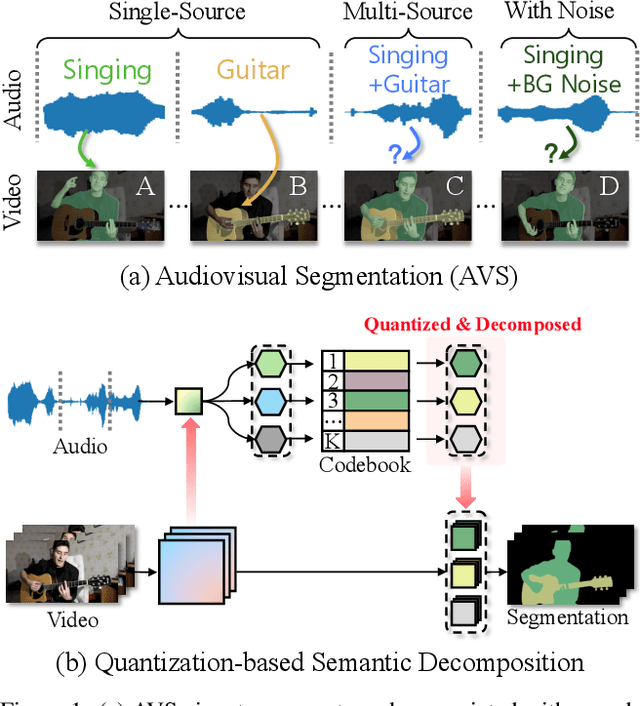


Audiovisual segmentation (AVS) is a challenging task that aims to segment visual objects in videos based on their associated acoustic cues. With multiple sound sources involved, establishing robust correspondences between audio and visual contents poses unique challenges due to its (1) intricate entanglement across sound sources and (2) frequent shift among sound events. Assuming sound events occur independently, the multi-source semantic space (which encompasses all possible semantic categories) can be viewed as the Cartesian product of single-source sub-spaces. This motivates us to decompose the multi-source audio semantics into single-source semantics, allowing for more effective interaction with visual content. Specifically, we propose a semantic decomposition method based on product quantization, where the multi-source semantics can be decomposed and represented by several quantized single-source semantics. Furthermore, we introduce a global-to-local quantization mechanism that distills knowledge from stable global (clip-level) features into local (frame-level) ones to handle the constant shift of audio semantics. Extensive experiments demonstrate that semantically quantized and decomposed audio representation significantly improves AVS performance, e.g., +21.2% mIoU on the most challenging AVS-Semantic benchmark.
Importance of negative sampling in weak label learning
Sep 23, 2023
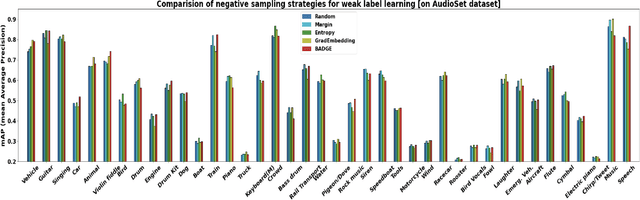
Weak-label learning is a challenging task that requires learning from data "bags" containing positive and negative instances, but only the bag labels are known. The pool of negative instances is usually larger than positive instances, thus making selecting the most informative negative instance critical for performance. Such a selection strategy for negative instances from each bag is an open problem that has not been well studied for weak-label learning. In this paper, we study several sampling strategies that can measure the usefulness of negative instances for weak-label learning and select them accordingly. We test our method on CIFAR-10 and AudioSet datasets and show that it improves the weak-label classification performance and reduces the computational cost compared to random sampling methods. Our work reveals that negative instances are not all equally irrelevant, and selecting them wisely can benefit weak-label learning.
Training Audio Captioning Models without Audio
Sep 14, 2023Automated Audio Captioning (AAC) is the task of generating natural language descriptions given an audio stream. A typical AAC system requires manually curated training data of audio segments and corresponding text caption annotations. The creation of these audio-caption pairs is costly, resulting in general data scarcity for the task. In this work, we address this major limitation and propose an approach to train AAC systems using only text. Our approach leverages the multimodal space of contrastively trained audio-text models, such as CLAP. During training, a decoder generates captions conditioned on the pretrained CLAP text encoder. During inference, the text encoder is replaced with the pretrained CLAP audio encoder. To bridge the modality gap between text and audio embeddings, we propose the use of noise injection or a learnable adapter, during training. We find that the proposed text-only framework performs competitively with state-of-the-art models trained with paired audio, showing that efficient text-to-audio transfer is possible. Finally, we showcase both stylized audio captioning and caption enrichment while training without audio or human-created text captions.
Fixed Inter-Neuron Covariability Induces Adversarial Robustness
Aug 07, 2023The vulnerability to adversarial perturbations is a major flaw of Deep Neural Networks (DNNs) that raises question about their reliability when in real-world scenarios. On the other hand, human perception, which DNNs are supposed to emulate, is highly robust to such perturbations, indicating that there may be certain features of the human perception that make it robust but are not represented in the current class of DNNs. One such feature is that the activity of biological neurons is correlated and the structure of this correlation tends to be rather rigid over long spans of times, even if it hampers performance and learning. We hypothesize that integrating such constraints on the activations of a DNN would improve its adversarial robustness, and, to test this hypothesis, we have developed the Self-Consistent Activation (SCA) layer, which comprises of neurons whose activations are consistent with each other, as they conform to a fixed, but learned, covariability pattern. When evaluated on image and sound recognition tasks, the models with a SCA layer achieved high accuracy, and exhibited significantly greater robustness than multi-layer perceptron models to state-of-the-art Auto-PGD adversarial attacks \textit{without being trained on adversarially perturbed data
Training on Foveated Images Improves Robustness to Adversarial Attacks
Aug 01, 2023Deep neural networks (DNNs) have been shown to be vulnerable to adversarial attacks -- subtle, perceptually indistinguishable perturbations of inputs that change the response of the model. In the context of vision, we hypothesize that an important contributor to the robustness of human visual perception is constant exposure to low-fidelity visual stimuli in our peripheral vision. To investigate this hypothesis, we develop \RBlur, an image transform that simulates the loss in fidelity of peripheral vision by blurring the image and reducing its color saturation based on the distance from a given fixation point. We show that compared to DNNs trained on the original images, DNNs trained on images transformed by \RBlur are substantially more robust to adversarial attacks, as well as other, non-adversarial, corruptions, achieving up to 25\% higher accuracy on perturbed data.
Rethinking Voice-Face Correlation: A Geometry View
Jul 26, 2023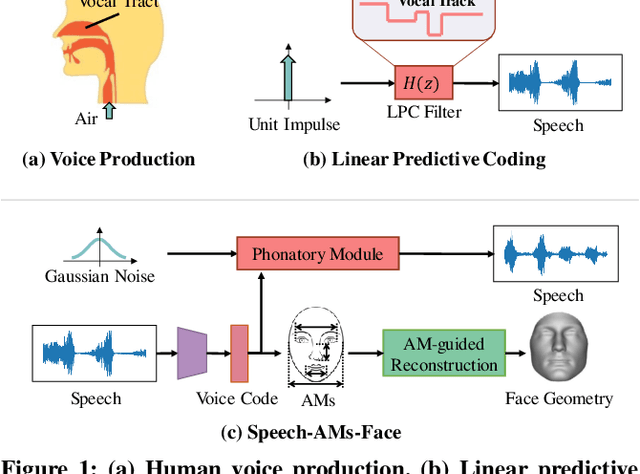

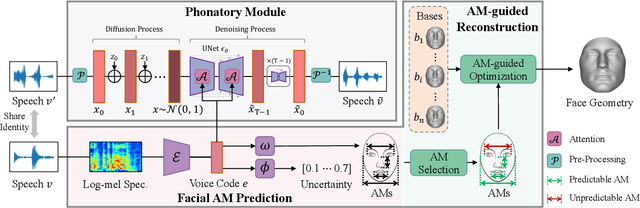
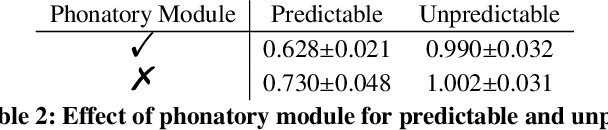
Previous works on voice-face matching and voice-guided face synthesis demonstrate strong correlations between voice and face, but mainly rely on coarse semantic cues such as gender, age, and emotion. In this paper, we aim to investigate the capability of reconstructing the 3D facial shape from voice from a geometry perspective without any semantic information. We propose a voice-anthropometric measurement (AM)-face paradigm, which identifies predictable facial AMs from the voice and uses them to guide 3D face reconstruction. By leveraging AMs as a proxy to link the voice and face geometry, we can eliminate the influence of unpredictable AMs and make the face geometry tractable. Our approach is evaluated on our proposed dataset with ground-truth 3D face scans and corresponding voice recordings, and we find significant correlations between voice and specific parts of the face geometry, such as the nasal cavity and cranium. Our work offers a new perspective on voice-face correlation and can serve as a good empirical study for anthropometry science.
The Hidden Dance of Phonemes and Visage: Unveiling the Enigmatic Link between Phonemes and Facial Features
Jul 26, 2023


This work unveils the enigmatic link between phonemes and facial features. Traditional studies on voice-face correlations typically involve using a long period of voice input, including generating face images from voices and reconstructing 3D face meshes from voices. However, in situations like voice-based crimes, the available voice evidence may be short and limited. Additionally, from a physiological perspective, each segment of speech -- phoneme -- corresponds to different types of airflow and movements in the face. Therefore, it is advantageous to discover the hidden link between phonemes and face attributes. In this paper, we propose an analysis pipeline to help us explore the voice-face relationship in a fine-grained manner, i.e., phonemes v.s. facial anthropometric measurements (AM). We build an estimator for each phoneme-AM pair and evaluate the correlation through hypothesis testing. Our results indicate that AMs are more predictable from vowels compared to consonants, particularly with plosives. Additionally, we observe that if a specific AM exhibits more movement during phoneme pronunciation, it is more predictable. Our findings support those in physiology regarding correlation and lay the groundwork for future research on speech-face multimodal learning.
BASS: Block-wise Adaptation for Speech Summarization
Jul 17, 2023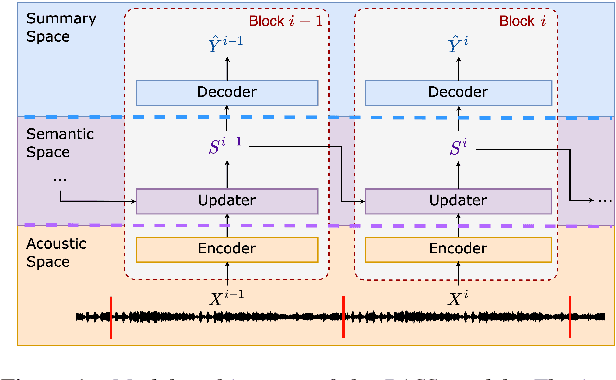
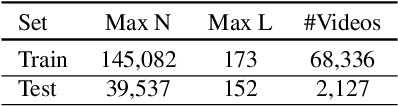
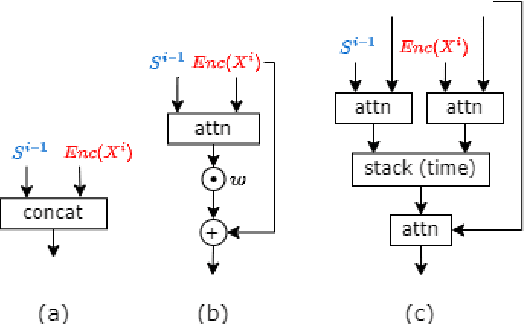

End-to-end speech summarization has been shown to improve performance over cascade baselines. However, such models are difficult to train on very large inputs (dozens of minutes or hours) owing to compute restrictions and are hence trained with truncated model inputs. Truncation leads to poorer models, and a solution to this problem rests in block-wise modeling, i.e., processing a portion of the input frames at a time. In this paper, we develop a method that allows one to train summarization models on very long sequences in an incremental manner. Speech summarization is realized as a streaming process, where hypothesis summaries are updated every block based on new acoustic information. We devise and test strategies to pass semantic context across the blocks. Experiments on the How2 dataset demonstrate that the proposed block-wise training method improves by 3 points absolute on ROUGE-L over a truncated input baseline.
UTOPIA: Unconstrained Tracking Objects without Preliminary Examination via Cross-Domain Adaptation
Jun 16, 2023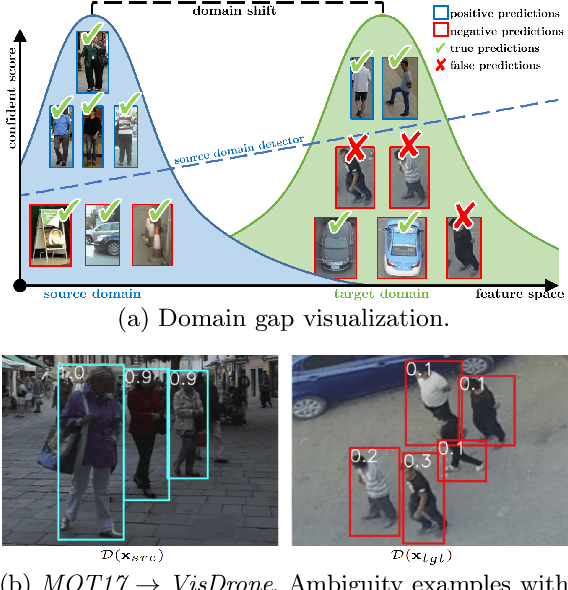
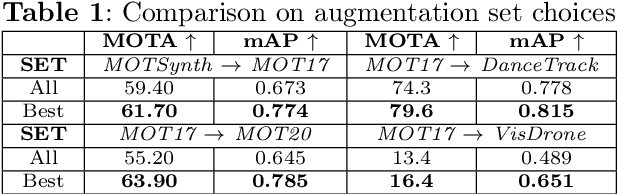
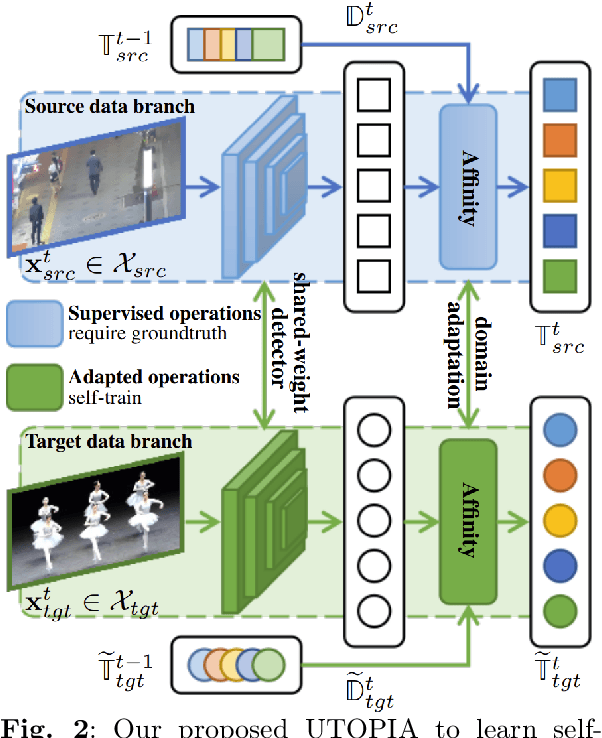
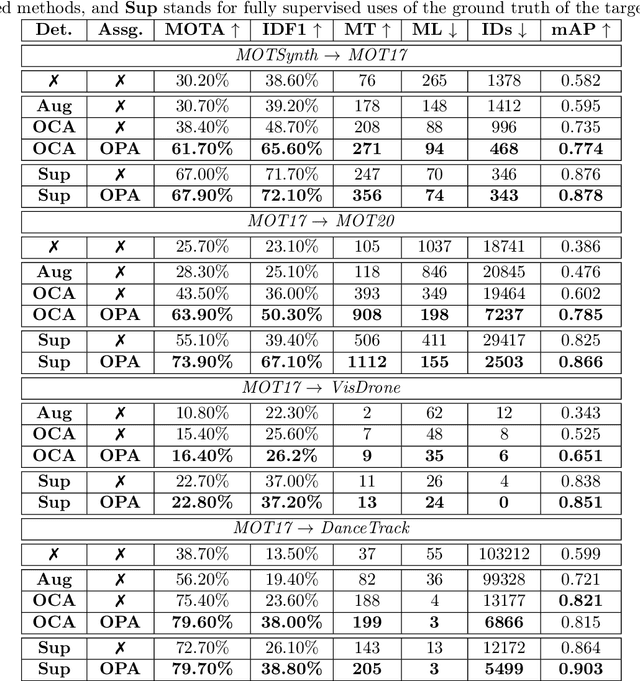
Multiple Object Tracking (MOT) aims to find bounding boxes and identities of targeted objects in consecutive video frames. While fully-supervised MOT methods have achieved high accuracy on existing datasets, they cannot generalize well on a newly obtained dataset or a new unseen domain. In this work, we first address the MOT problem from the cross-domain point of view, imitating the process of new data acquisition in practice. Then, a new cross-domain MOT adaptation from existing datasets is proposed without any pre-defined human knowledge in understanding and modeling objects. It can also learn and update itself from the target data feedback. The intensive experiments are designed on four challenging settings, including MOTSynth to MOT17, MOT17 to MOT20, MOT17 to VisDrone, and MOT17 to DanceTrack. We then prove the adaptability of the proposed self-supervised learning strategy. The experiments also show superior performance on tracking metrics MOTA and IDF1, compared to fully supervised, unsupervised, and self-supervised state-of-the-art methods.