 Add to Chrome
 Add to Firefox
 Add to Edge
DeepFace-Attention: Multimodal Face Biometrics for Attention Estimation with Application to e-Learning
Aug 14, 2024

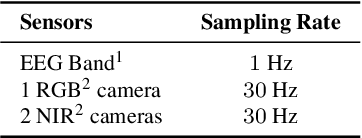
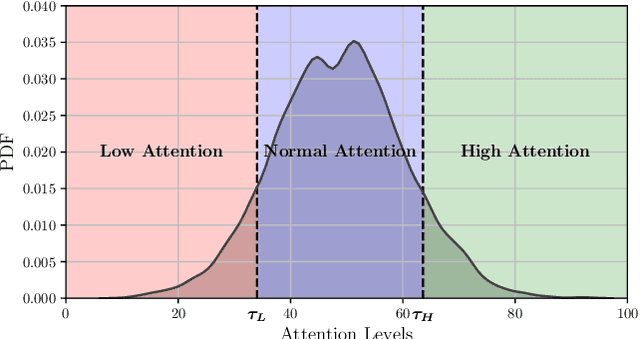
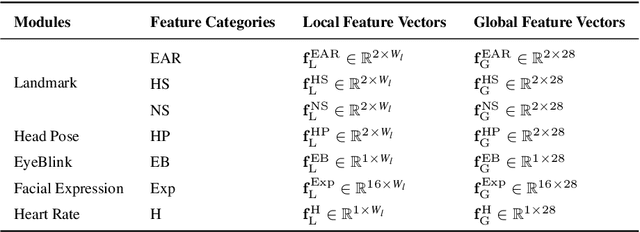
This work introduces an innovative method for estimating attention levels (cognitive load) using an ensemble of facial analysis techniques applied to webcam videos. Our method is particularly useful, among others, in e-learning applications, so we trained, evaluated, and compared our approach on the mEBAL2 database, a public multi-modal database acquired in an e-learning environment. mEBAL2 comprises data from 60 users who performed 8 different tasks. These tasks varied in difficulty, leading to changes in their cognitive loads. Our approach adapts state-of-the-art facial analysis technologies to quantify the users' cognitive load in the form of high or low attention. Several behavioral signals and physiological processes related to the cognitive load are used, such as eyeblink, heart rate, facial action units, and head pose, among others. Furthermore, we conduct a study to understand which individual features obtain better results, the most efficient combinations, explore local and global features, and how temporary time intervals affect attention level estimation, among other aspects. We find that global facial features are more appropriate for multimodal systems using score-level fusion, particularly as the temporal window increases. On the other hand, local features are more suitable for fusion through neural network training with score-level fusion approaches. Our method outperforms existing state-of-the-art accuracies using the public mEBAL2 benchmark.

Visual Attention Analysis in Online Learning
May 31, 2024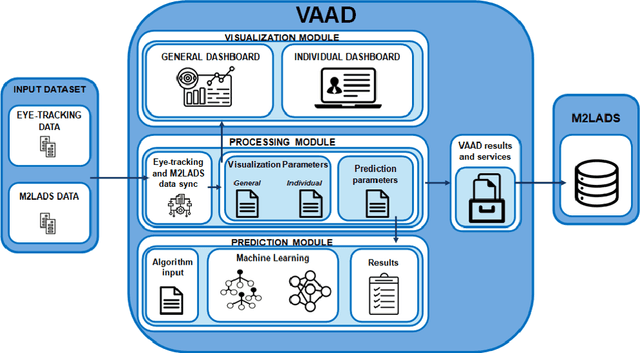
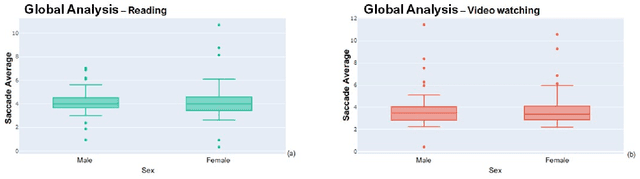
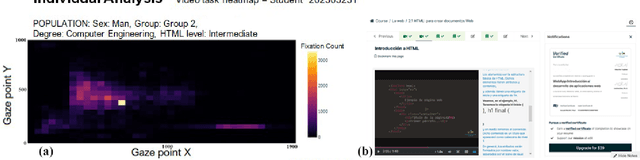
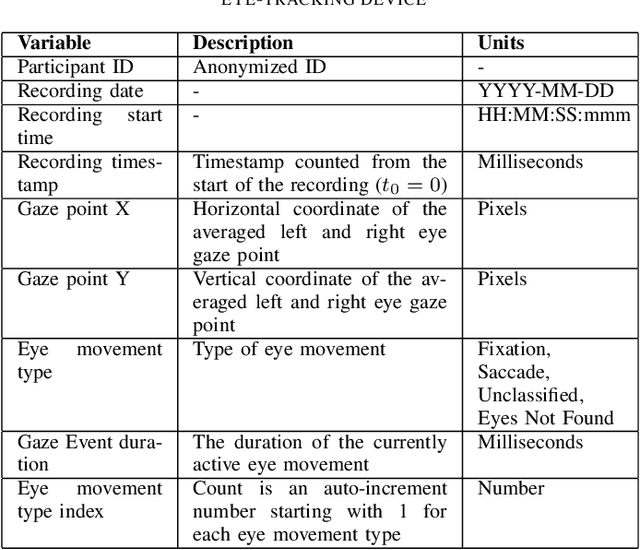
In this paper, we present an approach in the Multimodal Learning Analytics field. Within this approach, we have developed a tool to visualize and analyze eye movement data collected during learning sessions in online courses. The tool is named VAAD (an acronym for Visual Attention Analysis Dashboard). These eye movement data have been gathered using an eye-tracker and subsequently processed and visualized for interpretation. The purpose of the tool is to conduct a descriptive analysis of the data by facilitating its visualization, enabling the identification of differences and learning patterns among various learner populations. Additionally, it integrates a predictive module capable of anticipating learner activities during a learning session. Consequently, VAAD holds the potential to offer valuable insights into online learning behaviors from both descriptive and predictive perspectives.
MDIW-13: a New Multi-Lingual and Multi-Script Database and Benchmark for Script Identification
May 29, 2024Script identification plays a vital role in applications that involve handwriting and document analysis within a multi-script and multi-lingual environment. Moreover, it exhibits a profound connection with human cognition. This paper provides a new database for benchmarking script identification algorithms, which contains both printed and handwritten documents collected from a wide variety of scripts, such as Arabic, Bengali (Bangla), Gujarati, Gurmukhi, Devanagari, Japanese, Kannada, Malayalam, Oriya, Roman, Tamil, Telugu, and Thai. The dataset consists of 1,135 documents scanned from local newspaper and handwritten letters as well as notes from different native writers. Further, these documents are segmented into lines and words, comprising a total of 13,979 and 86,655 lines and words, respectively, in the dataset. Easy-to-go benchmarks are proposed with handcrafted and deep learning methods. The benchmark includes results at the document, line, and word levels with printed and handwritten documents. Results of script identification independent of the document/line/word level and independent of the printed/handwritten letters are also given. The new multi-lingual database is expected to create new script identifiers, present various challenges, including identifying handwritten and printed samples and serve as a foundation for future research in script identification based on the reported results of the three benchmarks.
Biometrics and Behavioral Modelling for Detecting Distractions in Online Learning
May 24, 2024

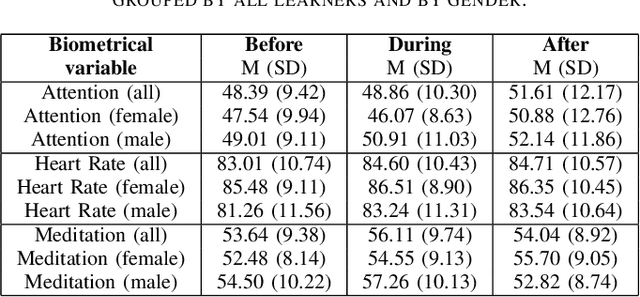
In this article, we explore computer vision approaches to detect abnormal head pose during e-learning sessions and we introduce a study on the effects of mobile phone usage during these sessions. We utilize behavioral data collected from 120 learners monitored while participating in a MOOC learning sessions. Our study focuses on the influence of phone-usage events on behavior and physiological responses, specifically attention, heart rate, and meditation, before, during, and after phone usage. Additionally, we propose an approach for estimating head pose events using images taken by the webcam during the MOOC learning sessions to detect phone-usage events. Our hypothesis suggests that head posture undergoes significant changes when learners interact with a mobile phone, contrasting with the typical behavior seen when learners face a computer during e-learning sessions. We propose an approach designed to detect deviations in head posture from the average observed during a learner's session, operating as a semi-supervised method. This system flags events indicating alterations in head posture for subsequent human review and selection of mobile phone usage occurrences with a sensitivity over 90%.
Privacy-Preserving Statistical Data Generation: Application to Sepsis Detection
Apr 25, 2024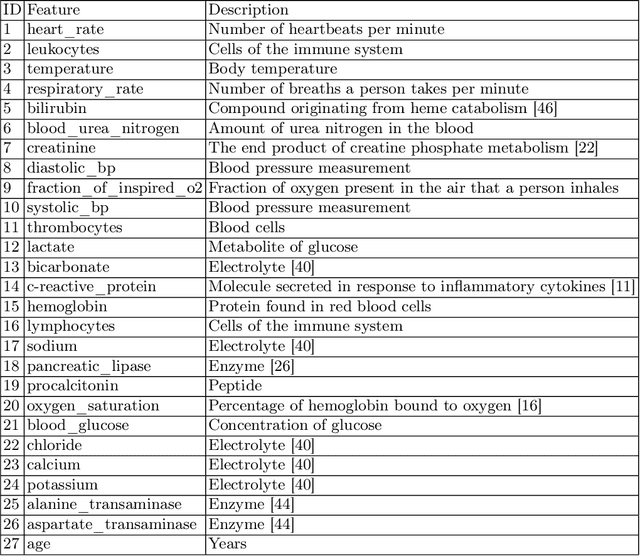
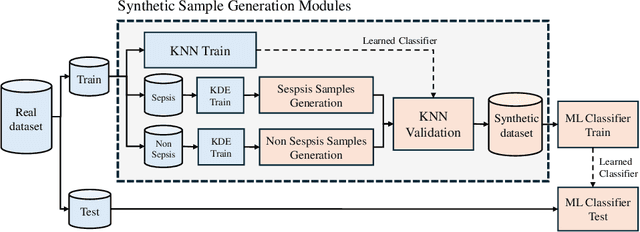

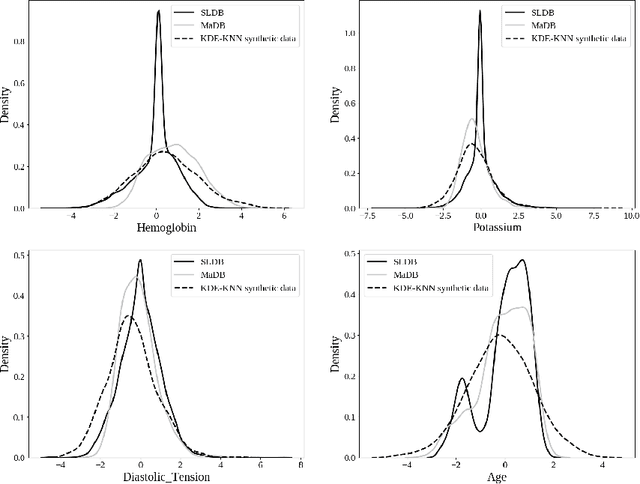
The biomedical field is among the sectors most impacted by the increasing regulation of Artificial Intelligence (AI) and data protection legislation, given the sensitivity of patient information. However, the rise of synthetic data generation methods offers a promising opportunity for data-driven technologies. In this study, we propose a statistical approach for synthetic data generation applicable in classification problems. We assess the utility and privacy implications of synthetic data generated by Kernel Density Estimator and K-Nearest Neighbors sampling (KDE-KNN) within a real-world context, specifically focusing on its application in sepsis detection. The detection of sepsis is a critical challenge in clinical practice due to its rapid progression and potentially life-threatening consequences. Moreover, we emphasize the benefits of KDE-KNN compared to current synthetic data generation methodologies. Additionally, our study examines the effects of incorporating synthetic data into model training procedures. This investigation provides valuable insights into the effectiveness of synthetic data generation techniques in mitigating regulatory constraints within the biomedical field.
Second Edition FRCSyn Challenge at CVPR 2024: Face Recognition Challenge in the Era of Synthetic Data
Apr 16, 2024
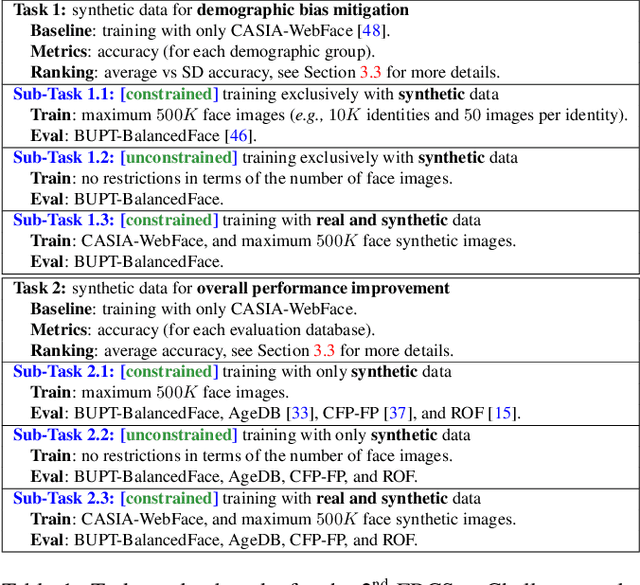

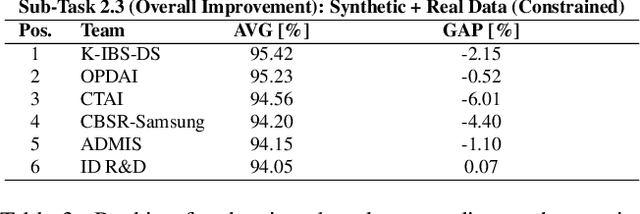
Synthetic data is gaining increasing relevance for training machine learning models. This is mainly motivated due to several factors such as the lack of real data and intra-class variability, time and errors produced in manual labeling, and in some cases privacy concerns, among others. This paper presents an overview of the 2nd edition of the Face Recognition Challenge in the Era of Synthetic Data (FRCSyn) organized at CVPR 2024. FRCSyn aims to investigate the use of synthetic data in face recognition to address current technological limitations, including data privacy concerns, demographic biases, generalization to novel scenarios, and performance constraints in challenging situations such as aging, pose variations, and occlusions. Unlike the 1st edition, in which synthetic data from DCFace and GANDiffFace methods was only allowed to train face recognition systems, in this 2nd edition we propose new sub-tasks that allow participants to explore novel face generative methods. The outcomes of the 2nd FRCSyn Challenge, along with the proposed experimental protocol and benchmarking contribute significantly to the application of synthetic data to face recognition.
* arXiv admin note: text overlap with arXiv:2311.10476
Is my Data in your AI Model? Membership Inference Test with Application to Face Images
Feb 14, 2024
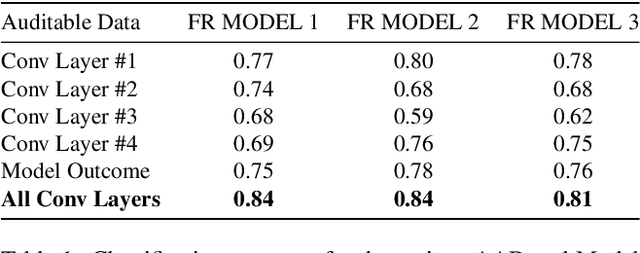
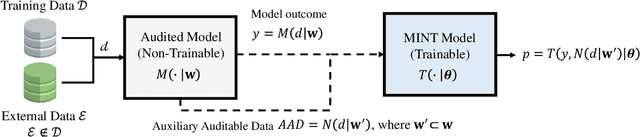

This paper introduces the Membership Inference Test (MINT), a novel approach that aims to empirically assess if specific data was used during the training of Artificial Intelligence (AI) models. Specifically, we propose two novel MINT architectures designed to learn the distinct activation patterns that emerge when an audited model is exposed to data used during its training process. The first architecture is based on a Multilayer Perceptron (MLP) network and the second one is based on Convolutional Neural Networks (CNNs). The proposed MINT architectures are evaluated on a challenging face recognition task, considering three state-of-the-art face recognition models. Experiments are carried out using six publicly available databases, comprising over 22 million face images in total. Also, different experimental scenarios are considered depending on the context available of the AI model to test. Promising results, up to 90% accuracy, are achieved using our proposed MINT approach, suggesting that it is possible to recognize if an AI model has been trained with specific data.
Synthetic Data for the Mitigation of Demographic Biases in Face Recognition
Feb 02, 2024This study investigates the possibility of mitigating the demographic biases that affect face recognition technologies through the use of synthetic data. Demographic biases have the potential to impact individuals from specific demographic groups, and can be identified by observing disparate performance of face recognition systems across demographic groups. They primarily arise from the unequal representations of demographic groups in the training data. In recent times, synthetic data have emerged as a solution to some problems that affect face recognition systems. In particular, during the generation process it is possible to specify the desired demographic and facial attributes of images, in order to control the demographic distribution of the synthesized dataset, and fairly represent the different demographic groups. We propose to fine-tune with synthetic data existing face recognition systems that present some demographic biases. We use synthetic datasets generated with GANDiffFace, a novel framework able to synthesize datasets for face recognition with controllable demographic distribution and realistic intra-class variations. We consider multiple datasets representing different demographic groups for training and evaluation. Also, we fine-tune different face recognition systems, and evaluate their demographic fairness with different metrics. Our results support the proposed approach and the use of synthetic data to mitigate demographic biases in face recognition.
* 8 pages, 3 figures
IEEE BigData 2023 Keystroke Verification Challenge (KVC)
Jan 29, 2024This paper describes the results of the IEEE BigData 2023 Keystroke Verification Challenge (KVC), that considers the biometric verification performance of Keystroke Dynamics (KD), captured as tweet-long sequences of variable transcript text from over 185,000 subjects. The data are obtained from two of the largest public databases of KD up to date, the Aalto Desktop and Mobile Keystroke Databases, guaranteeing a minimum amount of data per subject, age and gender annotations, absence of corrupted data, and avoiding excessively unbalanced subject distributions with respect to the considered demographic attributes. Several neural architectures were proposed by the participants, leading to global Equal Error Rates (EERs) as low as 3.33% and 3.61% achieved by the best team respectively in the desktop and mobile scenario, outperforming the current state of the art biometric verification performance for KD. Hosted on CodaLab, the KVC will be made ongoing to represent a useful tool for the research community to compare different approaches under the same experimental conditions and to deepen the knowledge of the field.
How Good is ChatGPT at Face Biometrics? A First Look into Recognition, Soft Biometrics, and Explainability
Jan 24, 2024Large Language Models (LLMs) such as GPT developed by OpenAI, have already shown astonishing results, introducing quick changes in our society. This has been intensified by the release of ChatGPT which allows anyone to interact in a simple conversational way with LLMs, without any experience in the field needed. As a result, ChatGPT has been rapidly applied to many different tasks such as code- and song-writer, education, virtual assistants, etc., showing impressive results for tasks for which it was not trained (zero-shot learning). The present study aims to explore the ability of ChatGPT, based on the recent GPT-4 multimodal LLM, for the task of face biometrics. In particular, we analyze the ability of ChatGPT to perform tasks such as face verification, soft-biometrics estimation, and explainability of the results. ChatGPT could be very valuable to further increase the explainability and transparency of the automatic decisions in human scenarios. Experiments are carried out in order to evaluate the performance and robustness of ChatGPT, using popular public benchmarks and comparing the results with state-of-the-art methods in the field. The results achieved in this study show the potential of LLMs such as ChatGPT for face biometrics, especially to enhance explainability. For reproducibility reasons, we release all the code in GitHub.