 Add to Chrome
 Add to Firefox
 Add to Edge
Exploring Vision-Language Models for Online Signature Verification: A Zero-Shot Capability Study
May 14, 2026
Recent advancements in Vision-Language Models (VLMs) have demonstrated strong capabilities in general visual reasoning, yet their applicability to rigorous biometric tasks remains unexplored. This work presents an exploratory study evaluating the zero-shot performance of state-of-the-art VLMs (GPT-5.2 and Gemini 2.5 Pro) on the Signature Verification Challenge (SVC) benchmark. To enable visual processing, raw kinematic time-series are converted into static images, encoding pressure information into stroke opacity whenever available in the source data. Furthermore, we introduce a scoring protocol that extracts latent token probabilities to compute robust biometric scores. Experimental results reveal a significant performance dichotomy dependent on signal quality and forgery type. In random forgery scenarios, the zero-shot VLM achieves exceptional discrimination, with GPT-5.2 reaching an Equal Error Rate of 0.32% in mobile tasks, outperforming supervised state-of-the-art systems. Conversely, in skilled forgery scenarios, where the task is more challenging because both signatures are almost identical, the results are significantly worse, and a critical "Rationalization Trap" emerges: chain-of-thought (CoT) reasoning degrades performance as the model produces kinematic hallucinations to justify forgery artifacts as natural variability.

Leveraging Avatar Fingerprinting: A Multi-Generator Photorealistic Talking-Head Public Database and Benchmark
Mar 27, 2026Recent advances in photorealistic avatar generation have enabled highly realistic talking-head avatars, raising security concerns regarding identity impersonation in AI-mediated communication. To advance in this challenging problem, the task of avatar fingerprinting aims to determine whether two avatar videos are driven by the same human operator or not. However, current public databases in the literature are scarce and based solely on old-fashioned talking-head avatar generators, not representing realistic scenarios for the current task of avatar fingerprinting. To overcome this situation, the present article introduces AVAPrintDB, a new publicly available multi-generator talking-head avatar database for avatar fingerprinting. AVAPrintDB is constructed from two audiovisual corpora and three state-of-the-art avatar generators (GAGAvatar, LivePortrait, HunyuanPortrait), representing different synthesis paradigms, and includes both self- and cross-reenactments to simulate legitimate usage and impersonation scenarios. Building on this database, we also define a standardized and reproducible benchmark for avatar fingerprinting, considering public state-of-the-art avatar fingerprinting systems and exploring novel methods based on Foundation Models (DINOv2 and CLIP). Also, we conduct a comprehensive analysis under generator and dataset shift. Our results show that, while identity-related motion cues persist across synthetic avatars, current avatar fingerprinting systems remain highly sensitive to changes in the synthesis pipeline and source domain. The AVAPrintDB, benchmark protocols, and avatar fingerprinting systems are publicly available to facilitate reproducible research.
Longitudinal Digital Phenotyping for Early Cognitive-Motor Screening
Mar 26, 2026Early detection of atypical cognitive-motor development is critical for timely intervention, yet traditional assessments rely heavily on subjective, static evaluations. The integration of digital devices offers an opportunity for continuous, objective monitoring through digital biomarkers. In this work, we propose an AI-driven longitudinal framework to model developmental trajectories in children aged 18 months to 8 years. Using a dataset of tablet-based interactions collected over multiple academic years, we analyzed six cognitive-motor tasks (e.g., fine motor control, reaction time). We applied dimensionality reduction (t-SNE) and unsupervised clustering (K-Means++) to identify distinct developmental phenotypes and tracked individual transitions between these profiles over time. Our analysis reveals three distinct profiles: low, medium, and high performance. Crucially, longitudinal tracking highlights a high stability in the low-performance cluster (>90% retention in early years), suggesting that early deficits tend to persist without intervention. Conversely, higher-performance clusters show greater variability, potentially reflecting engagement factors. This study validates the use of unsupervised learning on touchscreen data to uncover heterogeneous developmental paths. The identified profiles serve as scalable, data-driven proxies for cognitive growth, offering a foundation for early screening tools and personalized pediatric interventions.
Exploring Deep Learning and Ultra-Widefield Imaging for Diabetic Retinopathy and Macular Edema
Mar 09, 2026Diabetic retinopathy (DR) and diabetic macular edema (DME) are leading causes of preventable blindness among working-age adults. Traditional approaches in the literature focus on standard color fundus photography (CFP) for the detection of these conditions. Nevertheless, recent ultra-widefield imaging (UWF) offers a significantly wider field of view in comparison to CFP. Motivated by this, the present study explores state-of-the-art deep learning (DL) methods and UWF imaging on three clinically relevant tasks: i) image quality assessment for UWF, ii) identification of referable diabetic retinopathy (RDR), and iii) identification of DME. Using the publicly available UWF4DR Challenge dataset, released as part of the MICCAI 2024 conference, we benchmark DL models in the spatial (RGB) and frequency domains, including popular convolutional neural networks (CNNs) as well as recent vision transformers (ViTs) and foundation models. In addition, we explore a final feature-level fusion to increase robustness. Finally, we also analyze the decisions of the DL models using Grad-CAM, increasing the explainability. Our proposal achieves consistently strong performance across all architectures, underscoring the competitiveness of emerging ViTs and foundation models and the promise of feature-level fusion and frequency-domain representations for UWF analysis.
Is Visual Realism Enough? Evaluating Gait Biometric Fidelity in Generative AI Human Animation
Dec 22, 2025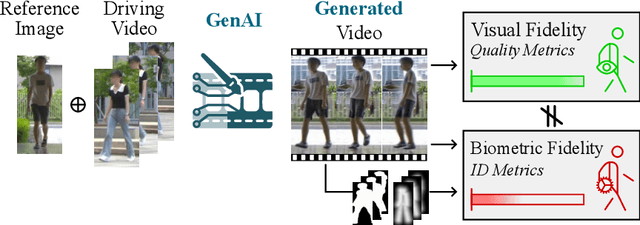

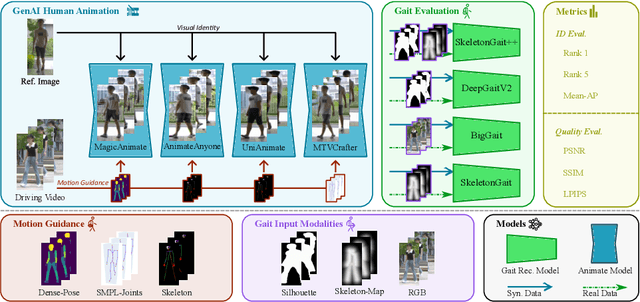
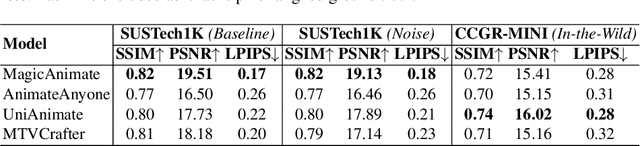
Generative AI (GenAI) models have revolutionized animation, enabling the synthesis of humans and motion patterns with remarkable visual fidelity. However, generating truly realistic human animation remains a formidable challenge, where even minor inconsistencies can make a subject appear unnatural. This limitation is particularly critical when AI-generated videos are evaluated for behavioral biometrics, where subtle motion cues that define identity are easily lost or distorted. The present study investigates whether state-of-the-art GenAI human animation models can preserve the subtle spatio-temporal details needed for person identification through gait biometrics. Specifically, we evaluate four different GenAI models across two primary evaluation tasks to assess their ability to i) restore gait patterns from reference videos under varying conditions of complexity, and ii) transfer these gait patterns to different visual identities. Our results show that while visual quality is mostly high, biometric fidelity remains low in tasks focusing on identification, suggesting that current GenAI models struggle to disentangle identity from motion. Furthermore, through an identity transfer task, we expose a fundamental flaw in appearance-based gait recognition: when texture is disentangled from motion, identification collapses, proving current GenAI models rely on visual attributes rather than temporal dynamics.
Is It Really You? Exploring Biometric Verification Scenarios in Photorealistic Talking-Head Avatar Videos
Aug 01, 2025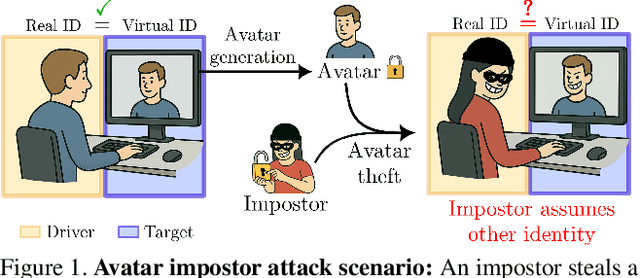
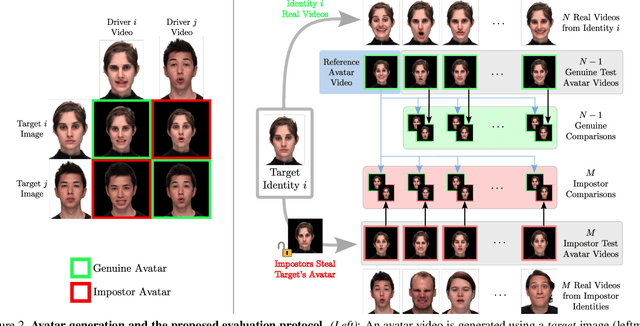
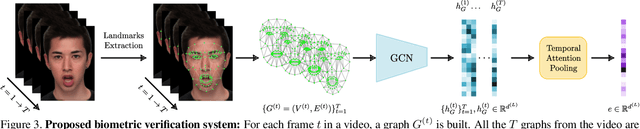
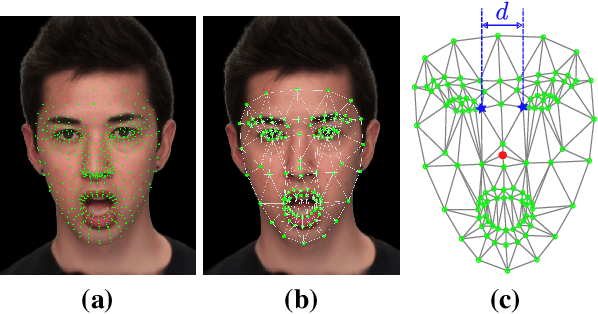
Photorealistic talking-head avatars are becoming increasingly common in virtual meetings, gaming, and social platforms. These avatars allow for more immersive communication, but they also introduce serious security risks. One emerging threat is impersonation: an attacker can steal a user's avatar-preserving their appearance and voice-making it nearly impossible to detect its fraudulent usage by sight or sound alone. In this paper, we explore the challenge of biometric verification in such avatar-mediated scenarios. Our main question is whether an individual's facial motion patterns can serve as reliable behavioral biometrics to verify their identity when the avatar's visual appearance is a facsimile of its owner. To answer this question, we introduce a new dataset of realistic avatar videos created using a state-of-the-art one-shot avatar generation model, GAGAvatar, with genuine and impostor avatar videos. We also propose a lightweight, explainable spatio-temporal Graph Convolutional Network architecture with temporal attention pooling, that uses only facial landmarks to model dynamic facial gestures. Experimental results demonstrate that facial motion cues enable meaningful identity verification with AUC values approaching 80%. The proposed benchmark and biometric system are available for the research community in order to bring attention to the urgent need for more advanced behavioral biometric defenses in avatar-based communication systems.
Exploring a Patch-Wise Approach for Privacy-Preserving Fake ID Detection
Apr 10, 2025In an increasingly digitalized world, verifying the authenticity of ID documents has become a critical challenge for real-life applications such as digital banking, crypto-exchanges, renting, etc. This study focuses on the topic of fake ID detection, covering several limitations in the field. In particular, no publicly available data from real ID documents exists, and most studies rely on proprietary in-house databases that are not available due to privacy reasons. In order to shed some light on this critical challenge that makes difficult to advance in the field, we explore a trade-off between privacy (i.e., amount of sensitive data available) and performance, proposing a novel patch-wise approach for privacy-preserving fake ID detection. Our proposed approach explores how privacy can be enhanced through: i) two levels of anonymization for an ID document (i.e., fully- and pseudo-anonymized), and ii) different patch size configurations, varying the amount of sensitive data visible in the patch image. Also, state-of-the-art methods such as Vision Transformers and Foundation Models are considered in the analysis. The experimental framework shows that, on an unseen database (DLC-2021), our proposal achieves 13.91% and 0% EERs at patch and ID document level, showing a good generalization to other databases. In addition to this exploration, another key contribution of our study is the release of the first publicly available database that contains 48,400 patches from both real and fake ID documents, along with the experimental framework and models, which will be available in our GitHub.
MINT-Demo: Membership Inference Test Demonstrator
Mar 11, 2025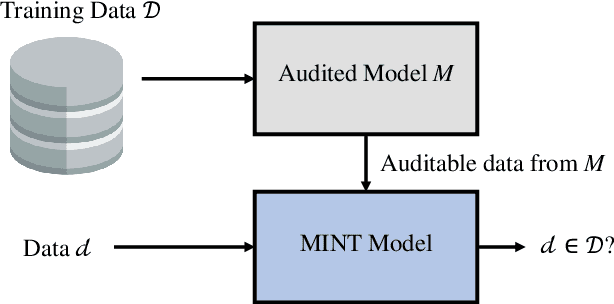
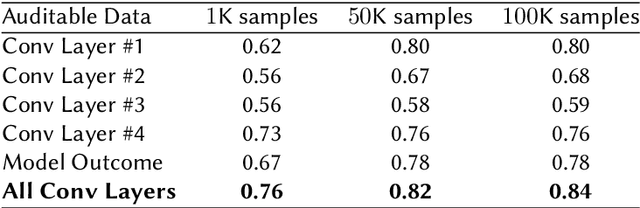
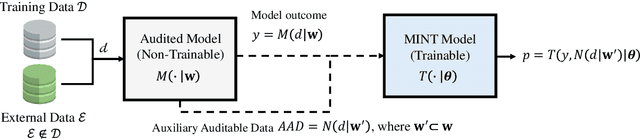
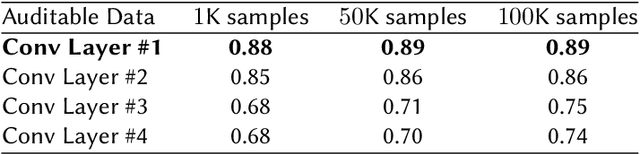
We present the Membership Inference Test Demonstrator, to emphasize the need for more transparent machine learning training processes. MINT is a technique for experimentally determining whether certain data has been used during the training of machine learning models. We conduct experiments with popular face recognition models and 5 public databases containing over 22M images. Promising results, up to 89% accuracy are achieved, suggesting that it is possible to recognize if an AI model has been trained with specific data. Finally, we present a MINT platform as demonstrator of this technology aimed to promote transparency in AI training.
KVC-onGoing: Keystroke Verification Challenge
Dec 29, 2024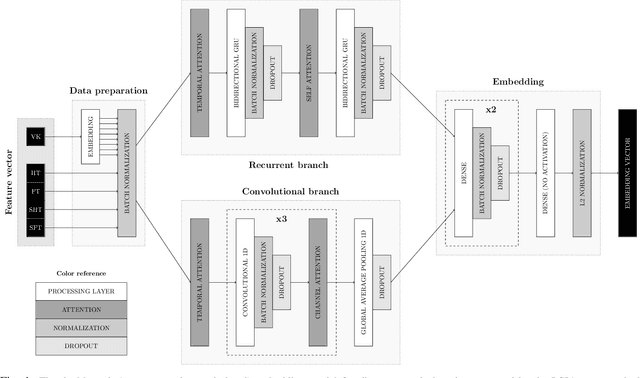
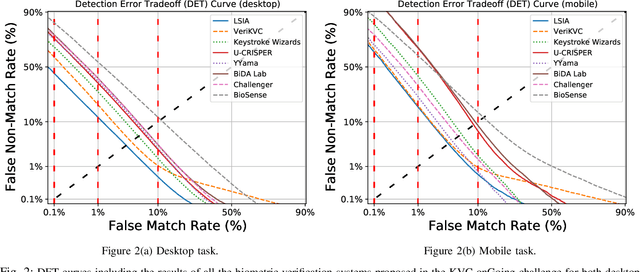
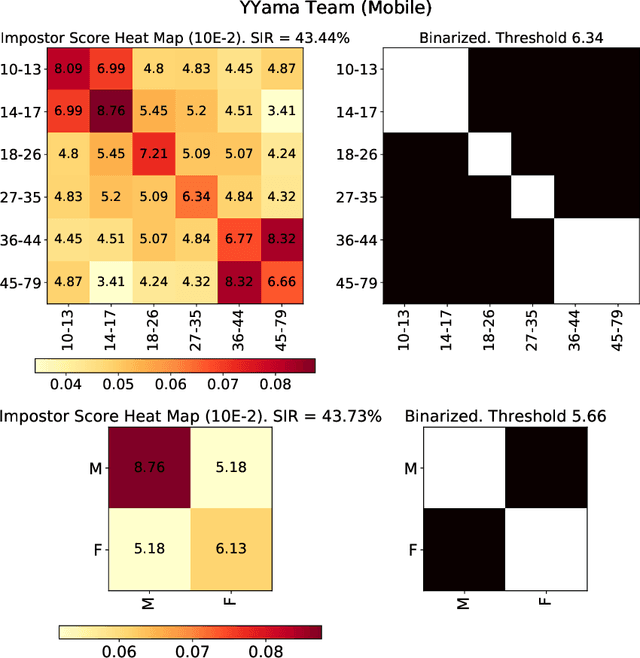
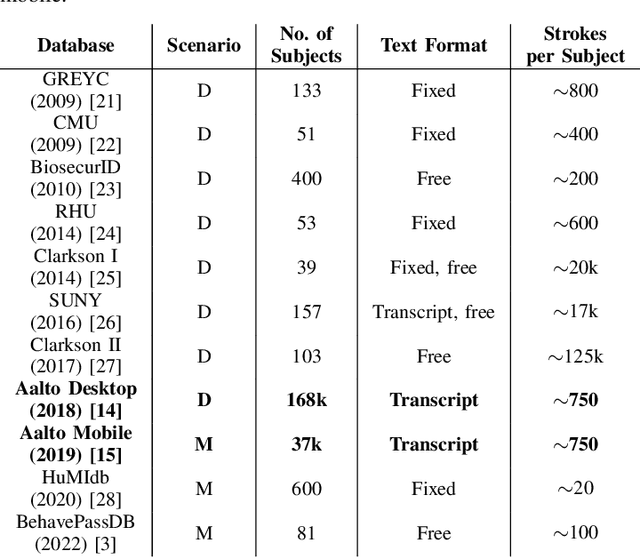
This article presents the Keystroke Verification Challenge - onGoing (KVC-onGoing), on which researchers can easily benchmark their systems in a common platform using large-scale public databases, the Aalto University Keystroke databases, and a standard experimental protocol. The keystroke data consist of tweet-long sequences of variable transcript text from over 185,000 subjects, acquired through desktop and mobile keyboards simulating real-life conditions. The results on the evaluation set of KVC-onGoing have proved the high discriminative power of keystroke dynamics, reaching values as low as 3.33% of Equal Error Rate (EER) and 11.96% of False Non-Match Rate (FNMR) @1% False Match Rate (FMR) in the desktop scenario, and 3.61% of EER and 17.44% of FNMR @1% at FMR in the mobile scenario, significantly improving previous state-of-the-art results. Concerning demographic fairness, the analyzed scores reflect the subjects' age and gender to various extents, not negligible in a few cases. The framework runs on CodaLab.
Second FRCSyn-onGoing: Winning Solutions and Post-Challenge Analysis to Improve Face Recognition with Synthetic Data
Dec 02, 2024Synthetic data is gaining increasing popularity for face recognition technologies, mainly due to the privacy concerns and challenges associated with obtaining real data, including diverse scenarios, quality, and demographic groups, among others. It also offers some advantages over real data, such as the large amount of data that can be generated or the ability to customize it to adapt to specific problem-solving needs. To effectively use such data, face recognition models should also be specifically designed to exploit synthetic data to its fullest potential. In order to promote the proposal of novel Generative AI methods and synthetic data, and investigate the application of synthetic data to better train face recognition systems, we introduce the 2nd FRCSyn-onGoing challenge, based on the 2nd Face Recognition Challenge in the Era of Synthetic Data (FRCSyn), originally launched at CVPR 2024. This is an ongoing challenge that provides researchers with an accessible platform to benchmark i) the proposal of novel Generative AI methods and synthetic data, and ii) novel face recognition systems that are specifically proposed to take advantage of synthetic data. We focus on exploring the use of synthetic data both individually and in combination with real data to solve current challenges in face recognition such as demographic bias, domain adaptation, and performance constraints in demanding situations, such as age disparities between training and testing, changes in the pose, or occlusions. Very interesting findings are obtained in this second edition, including a direct comparison with the first one, in which synthetic databases were restricted to DCFace and GANDiffFace.