 Add to Chrome
 Add to Firefox
 Add to Edge
Matbench
Papers and Code
Deployment-complete benchmarking
May 25, 2026
Benchmarks increasingly guide deployment, procurement and scientific screening, yet a score supports only the response it records, not necessarily the deployment action. We introduce deployment-complete benchmarking, which tests whether benchmark evidence determines a deployment action. A benchmark is complete for a claim exactly when the action is constant on each evidence fiber; mixed fibers expose missing deployment information, and completion curves quantify the evidence required to resolve ambiguity. In controlled response spaces, benchmark-channel conformal coverage of 94.98% transferred poorly to an unmeasured deployment channel (10.07%), whereas response-rank intervals achieved 94.91% coverage; even zero benchmark error certified only 45.4% of candidates at the largest residual size. Public audits revealed incompleteness, including 97.9% mixed Tox21 fibers and zero median certifiable fraction in main Matbench and JARVIS audits. In held-out replays, certify-then-acquire reduced false decisions from 1.19% to 0.027% in Tox21 and from 20.3% to 0.128% in JARVIS, while changing model choice and identifying deployment-relevant probes. Deployment-ready benchmarks should report evidence, supported actions, ambiguity and completion cost rather than scores alone.

TriForces: Augmenting Atomistic GNNs for Transferable Representations
May 20, 2026Machine learning interatomic potentials (MLIPs) achieve excellent accuracy when trained on large Density Functional Theory (DFT) data. To be useful in practice, they must often be adapted to target chemistries using small and expensive task-specific datasets. However, MLIPs transfer inconsistently across domains, with representations that often loose accessible composition and structure information. To address this, we present TriForces, a model-agnostic three-stream framework that separates composition and structure information, combined with self-supervised learning to preserve transferable representations. TriForces improves performance on MatBench and QM9 over baselines without needing DFT labels and enables efficient similar structure retrieval through its learned latent space. On OMat24, in limited-data training regime, TriForces reduces energy MAE by 57% at 20K samples only and improves force MAE across sample sizes. We release pretrained TriForces variants across multiple MLIP architectures with code at https://github.com/Ramlaoui/triforces.
EquiformerV3: Scaling Efficient, Expressive, and General SE(3)-Equivariant Graph Attention Transformers
Apr 10, 2026As $SE(3)$-equivariant graph neural networks mature as a core tool for 3D atomistic modeling, improving their efficiency, expressivity, and physical consistency has become a central challenge for large-scale applications. In this work, we introduce EquiformerV3, the third generation of the $SE(3)$-equivariant graph attention Transformer, designed to advance all three dimensions: efficiency, expressivity, and generality. Building on EquiformerV2, we have the following three key advances. First, we optimize the software implementation, achieving $1.75\times$ speedup. Second, we introduce simple and effective modifications to EquiformerV2, including equivariant merged layer normalization, improved feedforward network hyper-parameters, and attention with smooth radius cutoff. Third, we propose SwiGLU-$S^2$ activations to incorporate many-body interactions for better theoretical expressivity and to preserve strict equivariance while reducing the complexity of sampling $S^2$ grids. Together, SwiGLU-$S^2$ activations and smooth-cutoff attention enable accurate modeling of smoothly varying potential energy surfaces (PES), generalizing EquiformerV3 to tasks requiring energy-conserving simulations and higher-order derivatives of PES. With these improvements, EquiformerV3 trained with the auxiliary task of denoising non-equilibrium structures (DeNS) achieves state-of-the-art results on OC20, OMat24, and Matbench Discovery.
MatRIS: Toward Reliable and Efficient Pretrained Machine Learning Interatomic Potentials
Mar 05, 2026Foundation MLIPs demonstrate broad applicability across diverse material systems and have emerged as a powerful and transformative paradigm in chemical and computational materials science. Equivariant MLIPs achieve state-of-the-art accuracy in a wide range of benchmarks by incorporating equivariant inductive bias. However, the reliance on tensor products and high-degree representations makes them computationally costly. This raises a fundamental question: as quantum mechanical-based datasets continue to expand, can we develop a more compact model to thoroughly exploit high-dimensional atomic interactions? In this work, we present MatRIS (\textbf{Mat}erials \textbf{R}epresentation and \textbf{I}nteraction \textbf{S}imulation), an invariant MLIP that introduces attention-based modeling of three-body interactions. MatRIS leverages a novel separable attention mechanism with linear complexity $O(N)$, enabling both scalability and expressiveness. MatRIS delivers accuracy comparable to that of leading equivariant models on a wide range of popular benchmarks (Matbench-Discovery, MatPES, MDR phonon, Molecular dataset, etc). Taking Matbench-Discovery as an example, MatRIS achieves an F1 score of up to 0.847 and attains comparable accuracy at a lower training cost. The work indicates that our carefully designed invariant models can match or exceed the accuracy of equivariant models at a fraction of the cost, shedding light on the development of accurate and efficient MLIPs.
Orb: A Fast, Scalable Neural Network Potential
Oct 29, 2024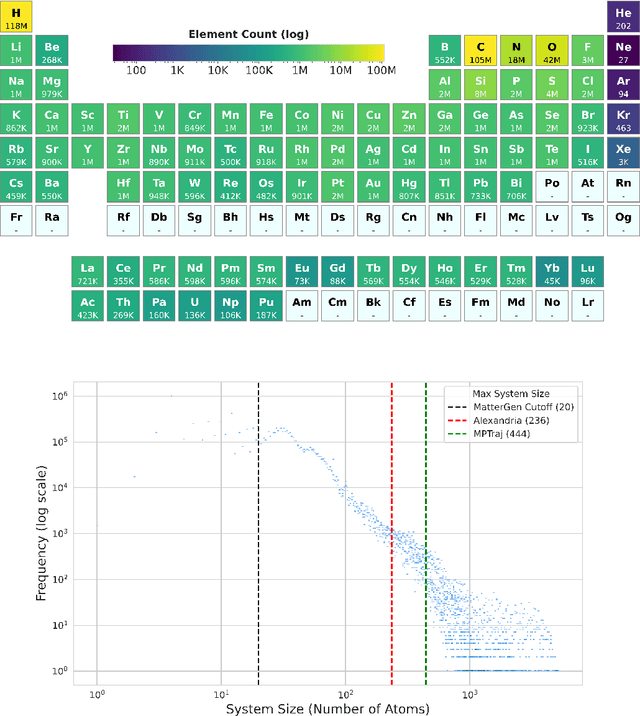
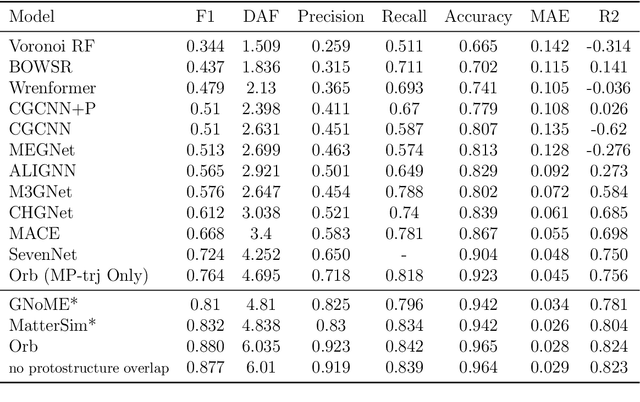
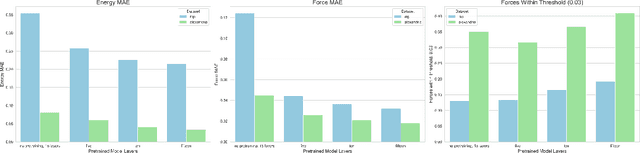
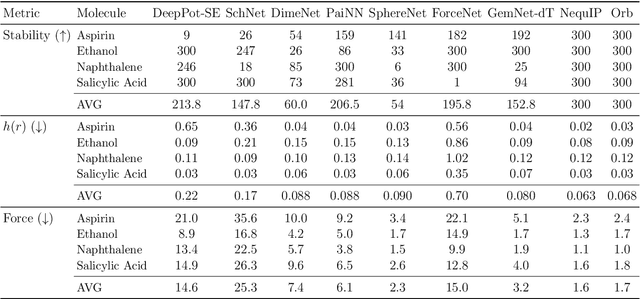
We introduce Orb, a family of universal interatomic potentials for atomistic modelling of materials. Orb models are 3-6 times faster than existing universal potentials, stable under simulation for a range of out of distribution materials and, upon release, represented a 31% reduction in error over other methods on the Matbench Discovery benchmark. We explore several aspects of foundation model development for materials, with a focus on diffusion pretraining. We evaluate Orb as a model for geometry optimization, Monte Carlo and molecular dynamics simulations.
Open Materials 2024 (OMat24) Inorganic Materials Dataset and Models
Oct 16, 2024

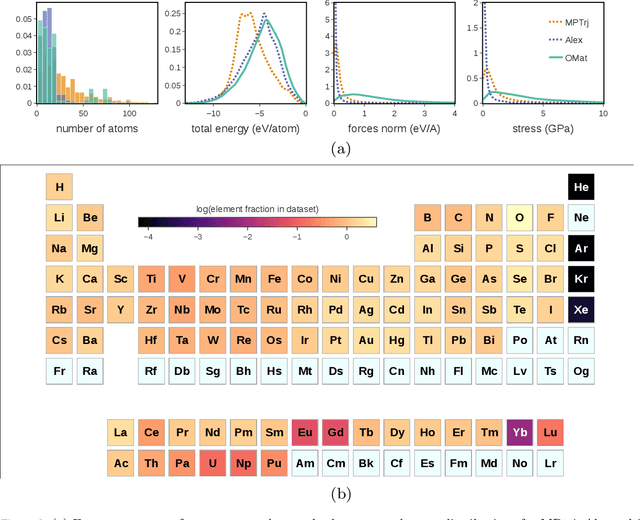

The ability to discover new materials with desirable properties is critical for numerous applications from helping mitigate climate change to advances in next generation computing hardware. AI has the potential to accelerate materials discovery and design by more effectively exploring the chemical space compared to other computational methods or by trial-and-error. While substantial progress has been made on AI for materials data, benchmarks, and models, a barrier that has emerged is the lack of publicly available training data and open pre-trained models. To address this, we present a Meta FAIR release of the Open Materials 2024 (OMat24) large-scale open dataset and an accompanying set of pre-trained models. OMat24 contains over 110 million density functional theory (DFT) calculations focused on structural and compositional diversity. Our EquiformerV2 models achieve state-of-the-art performance on the Matbench Discovery leaderboard and are capable of predicting ground-state stability and formation energies to an F1 score above 0.9 and an accuracy of 20 meV/atom, respectively. We explore the impact of model size, auxiliary denoising objectives, and fine-tuning on performance across a range of datasets including OMat24, MPtraj, and Alexandria. The open release of the OMat24 dataset and models enables the research community to build upon our efforts and drive further advancements in AI-assisted materials science.
Structure-based out-of-distribution (OOD) materials property prediction: a benchmark study
Jan 16, 2024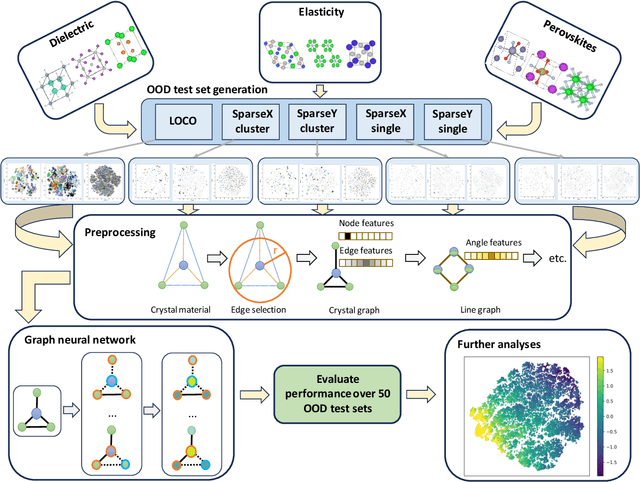
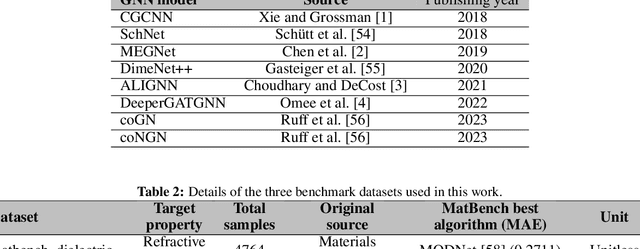
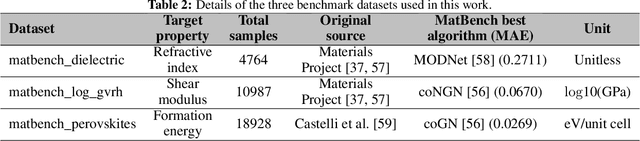
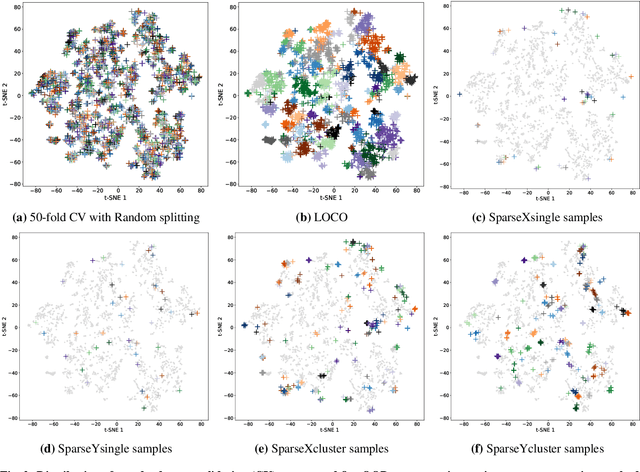
In real-world material research, machine learning (ML) models are usually expected to predict and discover novel exceptional materials that deviate from the known materials. It is thus a pressing question to provide an objective evaluation of ML model performances in property prediction of out-of-distribution (OOD) materials that are different from the training set distribution. Traditional performance evaluation of materials property prediction models through random splitting of the dataset frequently results in artificially high performance assessments due to the inherent redundancy of typical material datasets. Here we present a comprehensive benchmark study of structure-based graph neural networks (GNNs) for extrapolative OOD materials property prediction. We formulate five different categories of OOD ML problems for three benchmark datasets from the MatBench study. Our extensive experiments show that current state-of-the-art GNN algorithms significantly underperform for the OOD property prediction tasks on average compared to their baselines in the MatBench study, demonstrating a crucial generalization gap in realistic material prediction tasks. We further examine the latent physical spaces of these GNN models and identify the sources of CGCNN, ALIGNN, and DeeperGATGNN's significantly more robust OOD performance than those of the current best models in the MatBench study (coGN and coNGN), and provide insights to improve their performance.
From Molecules to Materials: Pre-training Large Generalizable Models for Atomic Property Prediction
Oct 25, 2023Foundation models have been transformational in machine learning fields such as natural language processing and computer vision. Similar success in atomic property prediction has been limited due to the challenges of training effective models across multiple chemical domains. To address this, we introduce Joint Multi-domain Pre-training (JMP), a supervised pre-training strategy that simultaneously trains on multiple datasets from different chemical domains, treating each dataset as a unique pre-training task within a multi-task framework. Our combined training dataset consists of $\sim$120M systems from OC20, OC22, ANI-1x, and Transition-1x. We evaluate performance and generalization by fine-tuning over a diverse set of downstream tasks and datasets including: QM9, rMD17, MatBench, QMOF, SPICE, and MD22. JMP demonstrates an average improvement of 59% over training from scratch, and matches or sets state-of-the-art on 34 out of 40 tasks. Our work highlights the potential of pre-training strategies that utilize diverse data to advance property prediction across chemical domains, especially for low-data tasks.
Crystal-GFN: sampling crystals with desirable properties and constraints
Oct 07, 2023Accelerating material discovery holds the potential to greatly help mitigate the climate crisis. Discovering new solid-state crystals such as electrocatalysts, ionic conductors or photovoltaics can have a crucial impact, for instance, in improving the efficiency of renewable energy production and storage. In this paper, we introduce Crystal-GFlowNet, a generative model of crystal structures that sequentially samples a crystal's composition, space group and lattice parameters. This domain-inspired approach enables the flexible incorporation of physical and geometrical constraints, as well as the use of any available predictive model of a desired property as an objective function. We evaluate the capabilities of Crystal-GFlowNet by using as objective the formation energy of a crystal structure, as predicted by a new proxy model trained on MatBench. The results demonstrate that Crystal-GFlowNet is able to sample diverse crystals with low formation energy.
Structure to Property: Chemical Element Embeddings and a Deep Learning Approach for Accurate Prediction of Chemical Properties
Sep 17, 2023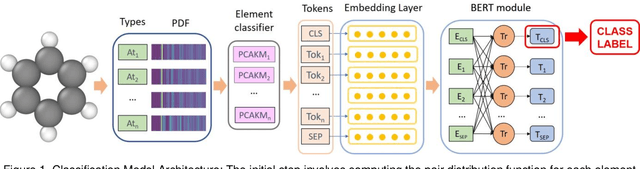
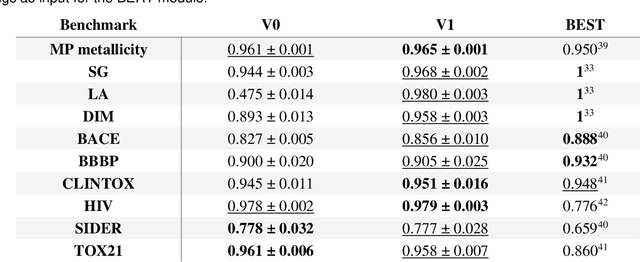
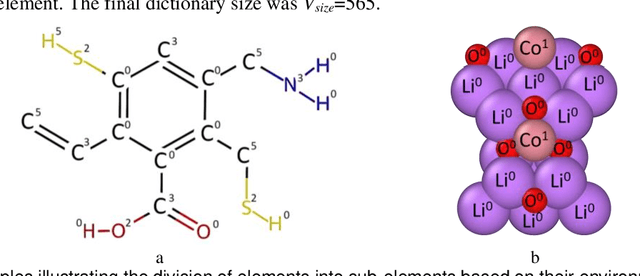
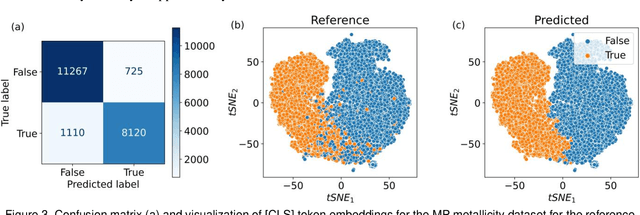
The application of machine learning (ML) techniques in computational chemistry has led to significant advances in predicting molecular properties, accelerating drug discovery, and material design. ML models can extract hidden patterns and relationships from complex and large datasets, allowing for the prediction of various chemical properties with high accuracy. The use of such methods has enabled the discovery of molecules and materials that were previously difficult to identify. This paper introduces a new ML model based on deep learning techniques, such as a multilayer encoder and decoder architecture, for classification tasks. We demonstrate the opportunities offered by our approach by applying it to various types of input data, including organic and inorganic compounds. In particular, we developed and tested the model using the Matbench and Moleculenet benchmarks, which include crystal properties and drug design-related benchmarks. We also conduct a comprehensive analysis of vector representations of chemical compounds, shedding light on the underlying patterns in molecular data. The models used in this work exhibit a high degree of predictive power, underscoring the progress that can be made with refined machine learning when applied to molecular and material datasets. For instance, on the Tox21 dataset, we achieved an average accuracy of 96%, surpassing the previous best result by 10%. Our code is publicly available at https://github.com/dmamur/elembert.