 Add to Chrome
 Add to Firefox
 Add to Edge
Contour Detection
Papers and Code
Disco: Densely-overlapping Cell Instance Segmentation via Adjacency-aware Collaborative Coloring
Feb 05, 2026
Accurate cell instance segmentation is foundational for digital pathology analysis. Existing methods based on contour detection and distance mapping still face significant challenges in processing complex and dense cellular regions. Graph coloring-based methods provide a new paradigm for this task, yet the effectiveness of this paradigm in real-world scenarios with dense overlaps and complex topologies has not been verified. Addressing this issue, we release a large-scale dataset GBC-FS 2025, which contains highly complex and dense sub-cellular nuclear arrangements. We conduct the first systematic analysis of the chromatic properties of cell adjacency graphs across four diverse datasets and reveal an important discovery: most real-world cell graphs are non-bipartite, with a high prevalence of odd-length cycles (predominantly triangles). This makes simple 2-coloring theory insufficient for handling complex tissues, while higher-chromaticity models would cause representational redundancy and optimization difficulties. Building on this observation of complex real-world contexts, we propose Disco (Densely-overlapping Cell Instance Segmentation via Adjacency-aware COllaborative Coloring), an adjacency-aware framework based on the "divide and conquer" principle. It uniquely combines a data-driven topological labeling strategy with a constrained deep learning system to resolve complex adjacency conflicts. First, "Explicit Marking" strategy transforms the topological challenge into a learnable classification task by recursively decomposing the cell graph and isolating a "conflict set." Second, "Implicit Disambiguation" mechanism resolves ambiguities in conflict regions by enforcing feature dissimilarity between different instances, enabling the model to learn separable feature representations.

Contour Refinement using Discrete Diffusion in Low Data Regime
Feb 05, 2026Boundary detection of irregular and translucent objects is an important problem with applications in medical imaging, environmental monitoring and manufacturing, where many of these applications are plagued with scarce labeled data and low in situ computational resources. While recent image segmentation studies focus on segmentation mask alignment with ground-truth, the task of boundary detection remains understudied, especially in the low data regime. In this work, we present a lightweight discrete diffusion contour refinement pipeline for robust boundary detection in the low data regime. We use a Convolutional Neural Network(CNN) architecture with self-attention layers as the core of our pipeline, and condition on a segmentation mask, iteratively denoising a sparse contour representation. We introduce multiple novel adaptations for improved low-data efficacy and inference efficiency, including using a simplified diffusion process, a customized model architecture, and minimal post processing to produce a dense, isolated contour given a dataset of size <500 training images. Our method outperforms several SOTA baselines on the medical imaging dataset KVASIR, is competitive on HAM10K and our custom wildfire dataset, Smoke, while improving inference framerate by 3.5X.
Edge-Aligned Initialization of Kernels for Steered Mixture-of-Experts
Feb 02, 2026Steered Mixture-of-Experts (SMoE) has recently emerged as a powerful framework for spatial-domain image modeling, enabling high-fidelity image representation using a remarkably small number of parameters. Its ability to steer kernel-based experts toward structural image features has led to successful applications in image compression, denoising, super-resolution, and light field processing. However, practical adoption is hindered by the reliance on gradient-based optimization to estimate model parameters on a per-image basis - a process that is computationally intensive and difficult to scale. Initialization strategies for SMoE are an essential component that directly affects convergence and reconstruction quality. In this paper, we propose a novel, edge-based initialization scheme that achieves good reconstruction qualities while reducing the need for stochastic optimization significantly. Through a method that leverages Canny edge detection to extract a sparse set of image contours, kernel positions and orientations are deterministically inferred. A separate approach enables the direct estimation of initial expert coefficients. This initialization reduces both memory consumption and computational cost.
Multi-head automated segmentation by incorporating detection head into the contextual layer neural network
Feb 02, 2026Deep learning based auto segmentation is increasingly used in radiotherapy, but conventional models often produce anatomically implausible false positives, or hallucinations, in slices lacking target structures. We propose a gated multi-head Transformer architecture based on Swin U-Net, augmented with inter-slice context integration and a parallel detection head, which jointly performs slice-level structure detection via a multi-layer perceptron and pixel-level segmentation through a context-enhanced stream. Detection outputs gate the segmentation predictions to suppress false positives in anatomically invalid slices, and training uses slice-wise Tversky loss to address class imbalance. Experiments on the Prostate-Anatomical-Edge-Cases dataset from The Cancer Imaging Archive demonstrate that the gated model substantially outperforms a non-gated segmentation-only baseline, achieving a mean Dice loss of $0.013 \pm 0.036$ versus $0.732 \pm 0.314$, with detection probabilities strongly correlated with anatomical presence, effectively eliminating spurious segmentations. In contrast, the non-gated model exhibited higher variability and persistent false positives across all slices. These results indicate that detection-based gating enhances robustness and anatomical plausibility in automated segmentation applications, reducing hallucinated predictions without compromising segmentation quality in valid slices, and offers a promising approach for improving the reliability of clinical radiotherapy auto-contouring workflows.
Advanced Geometric Correction Algorithms for 3D Medical Reconstruction: Comparison of Computed Tomography and Macroscopic Imaging
Jan 30, 2026This paper introduces a hybrid two-stage registration framework for reconstructing three-dimensional (3D) kidney anatomy from macroscopic slices, using CT-derived models as the geometric reference standard. The approach addresses the data-scarcity and high-distortion challenges typical of macroscopic imaging, where fully learning-based registration (e.g., VoxelMorph) often fails to generalize due to limited training diversity and large nonrigid deformations that exceed the capture range of unconstrained convolutional filters. In the proposed pipeline, the Optimal Cross-section Matching (OCM) algorithm first performs constrained global alignment: translation, rotation, and uniform scaling to establish anatomically consistent slice initialization. Next, a lightweight deep-learning refinement network, inspired by VoxelMorph, predicts residual local deformations between consecutive slices. The core novelty of this architecture lies in its hierarchical decomposition of the registration manifold. This hybrid OCM+DL design integrates explicit geometric priors with the flexible learning capacity of neural networks, ensuring stable optimization and plausible deformation fields even with few training examples. Experiments on an original dataset of 40 kidneys demonstrated better results compared to single-stage baselines. The pipeline maintains physical calibration via Hough-based grid detection and employs Bezier-based contour smoothing for robust meshing and volume estimation. Although validated on kidney data, the proposed framework generalizes to other soft-tissue organs reconstructed from optical or photographic cross-sections. By decoupling interpretable global optimization from data-efficient deep refinement, the method advances the precision, reproducibility, and anatomical realism of multimodal 3D reconstructions for surgical planning, morphological assessment, and medical education.
Goal-oriented Communication for Fast and Robust Robotic Fault Detection and Recovery
Jan 26, 2026Autonomous robotic systems are widely deployed in smart factories and operate in dynamic, uncertain, and human-involved environments that require low-latency and robust fault detection and recovery (FDR). However, existing FDR frameworks exhibit various limitations, such as significant delays in communication and computation, and unreliability in robot motion/trajectory generation, mainly because the communication-computation-control (3C) loop is designed without considering the downstream FDR goal. To address this, we propose a novel Goal-oriented Communication (GoC) framework that jointly designs the 3C loop tailored for fast and robust robotic FDR, with the goal of minimising the FDR time while maximising the robotic task (e.g., workpiece sorting) success rate. For fault detection, our GoC framework innovatively defines and extracts the 3D scene graph (3D-SG) as the semantic representation via our designed representation extractor, and detects faults by monitoring spatial relationship changes in the 3D-SG. For fault recovery, we fine-tune a small language model (SLM) via Low-Rank Adaptation (LoRA) and enhance its reasoning and generalization capabilities via knowledge distillation to generate recovery motions for robots. We also design a lightweight goal-oriented digital twin reconstruction module to refine the recovery motions generated by the SLM when fine-grained robotic control is required, using only task-relevant object contours for digital twin reconstruction. Extensive simulations demonstrate that our GoC framework reduces the FDR time by up to 82.6% and improves the task success rate by up to 76%, compared to the state-of-the-art frameworks that rely on vision language models for fault detection and large language models for fault recovery.
Prior-Guided DETR for Ultrasound Nodule Detection
Jan 05, 2026Accurate detection of ultrasound nodules is essential for the early diagnosis and treatment of thyroid and breast cancers. However, this task remains challenging due to irregular nodule shapes, indistinct boundaries, substantial scale variations, and the presence of speckle noise that degrades structural visibility. To address these challenges, we propose a prior-guided DETR framework specifically designed for ultrasound nodule detection. Instead of relying on purely data-driven feature learning, the proposed framework progressively incorporates different prior knowledge at multiple stages of the network. First, a Spatially-adaptive Deformable FFN with Prior Regularization (SDFPR) is embedded into the CNN backbone to inject geometric priors into deformable sampling, stabilizing feature extraction for irregular and blurred nodules. Second, a Multi-scale Spatial-Frequency Feature Mixer (MSFFM) is designed to extract multi-scale structural priors, where spatial-domain processing emphasizes contour continuity and boundary cues, while frequency-domain modeling captures global morphology and suppresses speckle noise. Furthermore, a Dense Feature Interaction (DFI) mechanism propagates and exploits these prior-modulated features across all encoder layers, enabling the decoder to enhance query refinement under consistent geometric and structural guidance. Experiments conducted on two clinically collected thyroid ultrasound datasets (Thyroid I and Thyroid II) and two public benchmarks (TN3K and BUSI) for thyroid and breast nodules demonstrate that the proposed method achieves superior accuracy compared with 18 detection methods, particularly in detecting morphologically complex nodules.The source code is publicly available at https://github.com/wjj1wjj/Ultrasound-DETR.
Physics-Inspired Modeling and Content Adaptive Routing in an Infrared Gas Leak Detection Network
Dec 29, 2025Detecting infrared gas leaks is critical for environmental monitoring and industrial safety, yet remains difficult because plumes are faint, small, semitransparent, and have weak, diffuse boundaries. We present physics-edge hybrid gas dynamic routing network (PEG-DRNet). First, we introduce the Gas Block, a diffusion-convection unit modeling gas transport: a local branch captures short-range variations, while a large-kernel branch captures long-range propagation. An edge-gated learnable fusion module balances local detail and global context, strengthening weak-contrast plume and contour cues. Second, we propose the adaptive gradient and phase edge operator (AGPEO), computing reliable edge priors from multi-directional gradients and phase-consistent responses. These are transformed by a multi-scale edge perception module (MSEPM) into hierarchical edge features that reinforce boundaries. Finally, the content-adaptive sparse routing path aggregation network (CASR-PAN), with adaptive information modulation modules for fusion and self, selectively propagates informative features across scales based on edge and content cues, improving cross-scale discriminability while reducing redundancy. Experiments on the IIG dataset show that PEG-DRNet achieves an overall AP of 29.8\%, an AP$_{50}$ of 84.3\%, and a small-object AP of 25.3\%, surpassing the RT-DETR-R18 baseline by 3.0\%, 6.5\%, and 5.3\%, respectively, while requiring only 43.7 Gflops and 14.9 M parameters. The proposed PEG-DRNet achieves superior overall performance with the best balance of accuracy and computational efficiency, outperforming existing CNN and Transformer detectors in AP and AP$_{50}$ on the IIG and LangGas dataset.
Artificial Intelligence and Nuclear Weapons Proliferation: The Technological Arms Race for (In)visibility
Dec 08, 2025A robust nonproliferation regime has contained the spread of nuclear weapons to just nine states. Yet, emerging and disruptive technologies are reshaping the landscape of nuclear risks, presenting a critical juncture for decision makers. This article lays out the contours of an overlooked but intensifying technological arms race for nuclear (in)visibility, driven by the interplay between proliferation-enabling technologies (PETs) and detection-enhancing technologies (DETs). We argue that the strategic pattern of proliferation will be increasingly shaped by the innovation pace in these domains. Artificial intelligence (AI) introduces unprecedented complexity to this equation, as its rapid scaling and knowledge substitution capabilities accelerate PET development and challenge traditional monitoring and verification methods. To analyze this dynamic, we develop a formal model centered on a Relative Advantage Index (RAI), quantifying the shifting balance between PETs and DETs. Our model explores how asymmetric technological advancement, particularly logistic AI-driven PET growth versus stepwise DET improvements, expands the band of uncertainty surrounding proliferation detectability. Through replicable scenario-based simulations, we evaluate the impact of varying PET growth rates and DET investment strategies on cumulative nuclear breakout risk. We identify a strategic fork ahead, where detection may no longer suffice without broader PET governance. Governments and international organizations should accordingly invest in policies and tools agile enough to keep pace with tomorrow's technology.
* Best Paper Award (2025) from Risk Analysis as one of the articles published in the journal that year with the most significant impacts to the theory or practice of risk analysis. Main text: 17 pages, 5 tables, 5 figures. Online appendix: 4 pages, 3 figures, 1 table. Online simulation tool for the formal model available here: https://david-m-allison.github.io/ProliferationSimulation
MCAQ-YOLO: Morphological Complexity-Aware Quantization for Efficient Object Detection with Curriculum Learning
Nov 17, 2025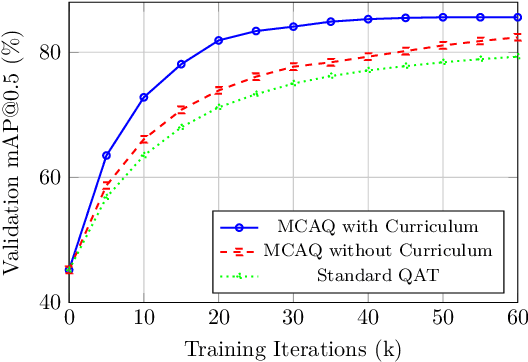
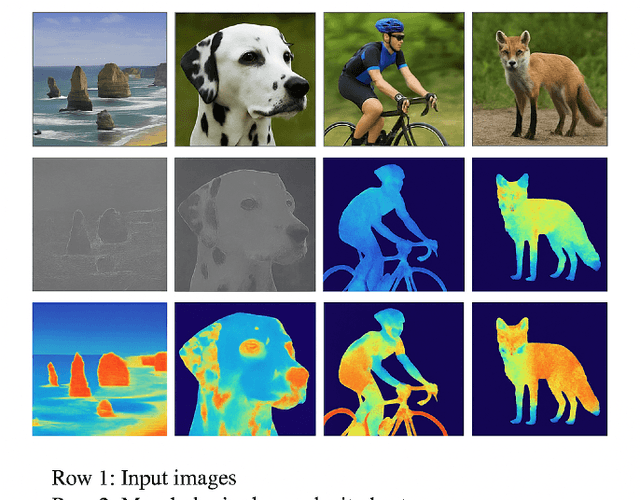
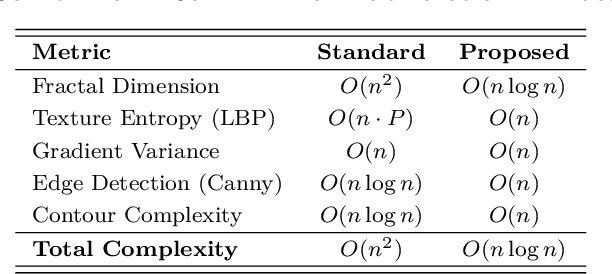

Most neural network quantization methods apply uniform bit precision across spatial regions, ignoring the heterogeneous structural and textural complexity of visual data. This paper introduces MCAQ-YOLO, a morphological complexity-aware quantization framework for object detection. The framework employs five morphological metrics - fractal dimension, texture entropy, gradient variance, edge density, and contour complexity - to characterize local visual morphology and guide spatially adaptive bit allocation. By correlating these metrics with quantization sensitivity, MCAQ-YOLO dynamically adjusts bit precision according to spatial complexity. In addition, a curriculum-based quantization-aware training scheme progressively increases quantization difficulty to stabilize optimization and accelerate convergence. Experimental results demonstrate a strong correlation between morphological complexity and quantization sensitivity and show that MCAQ-YOLO achieves superior detection accuracy and convergence efficiency compared with uniform quantization. On a safety equipment dataset, MCAQ-YOLO attains 85.6 percent mAP@0.5 with an average of 4.2 bits and a 7.6x compression ratio, yielding 3.5 percentage points higher mAP than uniform 4-bit quantization while introducing only 1.8 ms of additional runtime overhead per image. Cross-dataset validation on COCO and Pascal VOC further confirms consistent performance gains, indicating that morphology-driven spatial quantization can enhance efficiency and robustness for computationally constrained, safety-critical visual recognition tasks.