 Add to Chrome
 Add to Firefox
 Add to Edge
Casia B
Papers and Code
Affinity Contrastive Learning for Skeleton-based Human Activity Understanding
Jan 23, 2026
In skeleton-based human activity understanding, existing methods often adopt the contrastive learning paradigm to construct a discriminative feature space. However, many of these approaches fail to exploit the structural inter-class similarities and overlook the impact of anomalous positive samples. In this study, we introduce ACLNet, an Affinity Contrastive Learning Network that explores the intricate clustering relationships among human activity classes to improve feature discrimination. Specifically, we propose an affinity metric to refine similarity measurements, thereby forming activity superclasses that provide more informative contrastive signals. A dynamic temperature schedule is also introduced to adaptively adjust the penalty strength for various superclasses. In addition, we employ a margin-based contrastive strategy to improve the separation of hard positive and negative samples within classes. Extensive experiments on NTU RGB+D 60, NTU RGB+D 120, Kinetics-Skeleton, PKU-MMD, FineGYM, and CASIA-B demonstrate the superiority of our method in skeleton-based action recognition, gait recognition, and person re-identification. The source code is available at https://github.com/firework8/ACLNet.
* Accepted by TBIOM

Beyond Motion Pattern: An Empirical Study of Physical Forces for Human Motion Understanding
Dec 23, 2025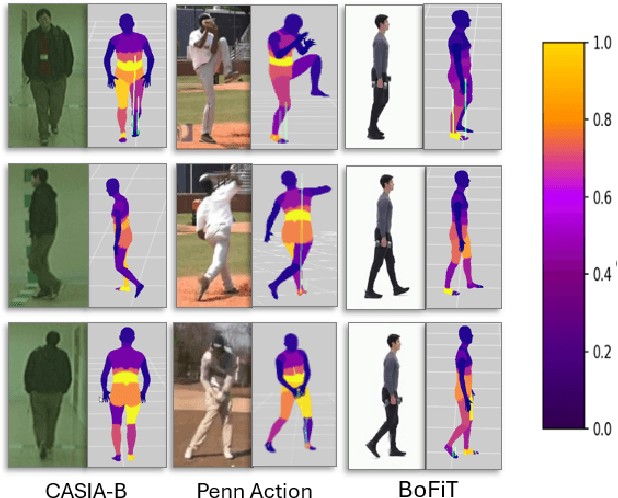
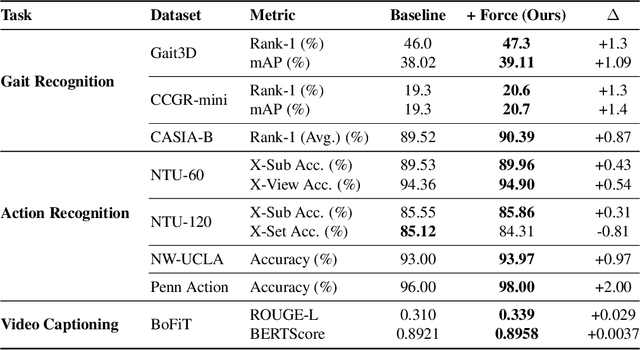
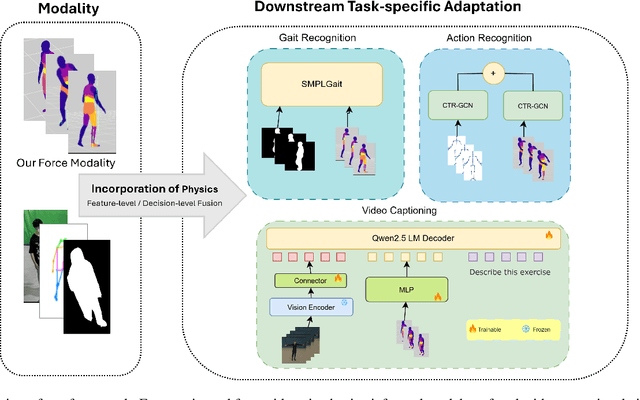
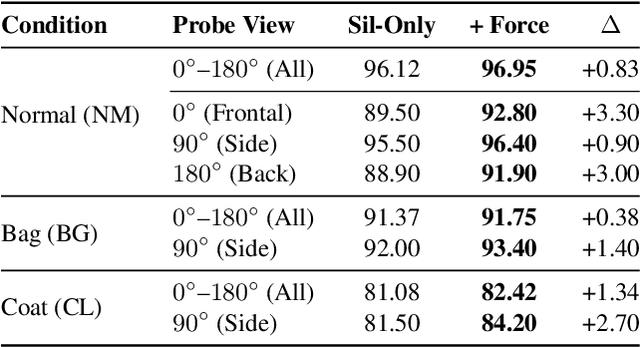
Human motion understanding has advanced rapidly through vision-based progress in recognition, tracking, and captioning. However, most existing methods overlook physical cues such as joint actuation forces that are fundamental in biomechanics. This gap motivates our study: if and when do physically inferred forces enhance motion understanding? By incorporating forces into established motion understanding pipelines, we systematically evaluate their impact across baseline models on 3 major tasks: gait recognition, action recognition, and fine-grained video captioning. Across 8 benchmarks, incorporating forces yields consistent performance gains; for example, on CASIA-B, Rank-1 gait recognition accuracy improved from 89.52% to 90.39% (+0.87), with larger gain observed under challenging conditions: +2.7% when wearing a coat and +3.0% at the side view. On Gait3D, performance also increases from 46.0% to 47.3% (+1.3). In action recognition, CTR-GCN achieved +2.00% on Penn Action, while high-exertion classes like punching/slapping improved by +6.96%. Even in video captioning, Qwen2.5-VL's ROUGE-L score rose from 0.310 to 0.339 (+0.029), indicating that physics-inferred forces enhance temporal grounding and semantic richness. These results demonstrate that force cues can substantially complement visual and kinematic features under dynamic, occluded, or appearance-varying conditions.
RobustGait: Robustness Analysis for Appearance Based Gait Recognition
Nov 17, 2025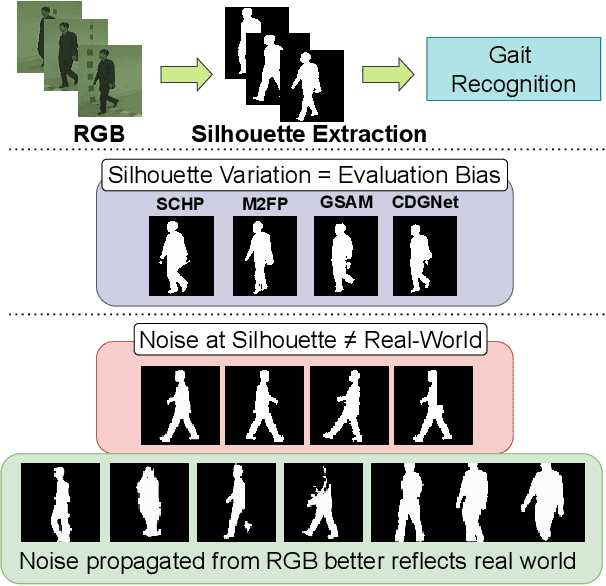
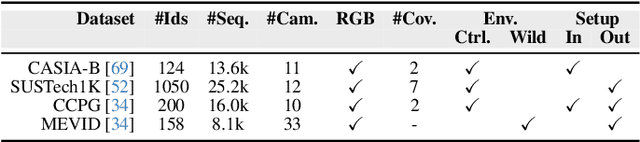
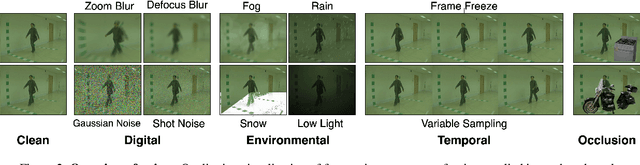
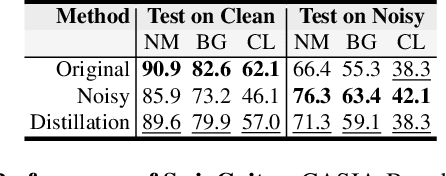
Appearance-based gait recognition have achieved strong performance on controlled datasets, yet systematic evaluation of its robustness to real-world corruptions and silhouette variability remains lacking. We present RobustGait, a framework for fine-grained robustness evaluation of appearance-based gait recognition systems. RobustGait evaluation spans four dimensions: the type of perturbation (digital, environmental, temporal, occlusion), the silhouette extraction method (segmentation and parsing networks), the architectural capacities of gait recognition models, and various deployment scenarios. The benchmark introduces 15 corruption types at 5 severity levels across CASIA-B, CCPG, and SUSTech1K, with in-the-wild validation on MEVID, and evaluates six state-of-the-art gait systems. We came across several exciting insights. First, applying noise at the RGB level better reflects real-world degradation, and reveal how distortions propagate through silhouette extraction to the downstream gait recognition systems. Second, gait accuracy is highly sensitive to silhouette extractor biases, revealing an overlooked source of benchmark bias. Third, robustness is dependent on both the type of perturbation and the architectural design. Finally, we explore robustness-enhancing strategies, showing that noise-aware training and knowledge distillation improve performance and move toward deployment-ready systems.
Exploring Generalized Gait Recognition: Reducing Redundancy and Noise within Indoor and Outdoor Datasets
May 21, 2025Generalized gait recognition, which aims to achieve robust performance across diverse domains, remains a challenging problem due to severe domain shifts in viewpoints, appearances, and environments. While mixed-dataset training is widely used to enhance generalization, it introduces new obstacles including inter-dataset optimization conflicts and redundant or noisy samples, both of which hinder effective representation learning. To address these challenges, we propose a unified framework that systematically improves cross-domain gait recognition. First, we design a disentangled triplet loss that isolates supervision signals across datasets, mitigating gradient conflicts during optimization. Second, we introduce a targeted dataset distillation strategy that filters out the least informative 20\% of training samples based on feature redundancy and prediction uncertainty, enhancing data efficiency. Extensive experiments on CASIA-B, OU-MVLP, Gait3D, and GREW demonstrate that our method significantly improves cross-dataset recognition for both GaitBase and DeepGaitV2 backbones, without sacrificing source-domain accuracy. Code will be released at https://github.com/li1er3/Generalized_Gait.
On Denoising Walking Videos for Gait Recognition
May 24, 2025To capture individual gait patterns, excluding identity-irrelevant cues in walking videos, such as clothing texture and color, remains a persistent challenge for vision-based gait recognition. Traditional silhouette- and pose-based methods, though theoretically effective at removing such distractions, often fall short of high accuracy due to their sparse and less informative inputs. Emerging end-to-end methods address this by directly denoising RGB videos using human priors. Building on this trend, we propose DenoisingGait, a novel gait denoising method. Inspired by the philosophy that "what I cannot create, I do not understand", we turn to generative diffusion models, uncovering how they partially filter out irrelevant factors for gait understanding. Additionally, we introduce a geometry-driven Feature Matching module, which, combined with background removal via human silhouettes, condenses the multi-channel diffusion features at each foreground pixel into a two-channel direction vector. Specifically, the proposed within- and cross-frame matching respectively capture the local vectorized structures of gait appearance and motion, producing a novel flow-like gait representation termed Gait Feature Field, which further reduces residual noise in diffusion features. Experiments on the CCPG, CASIA-B*, and SUSTech1K datasets demonstrate that DenoisingGait achieves a new SoTA performance in most cases for both within- and cross-domain evaluations. Code is available at https://github.com/ShiqiYu/OpenGait.
Database-Agnostic Gait Enrollment using SetTransformers
May 05, 2025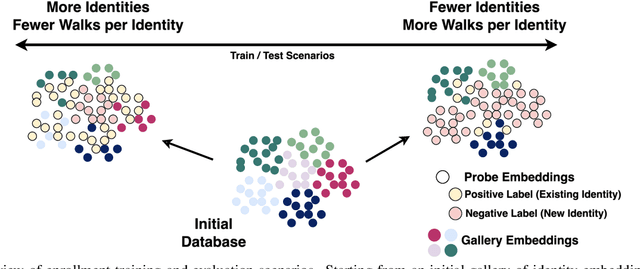
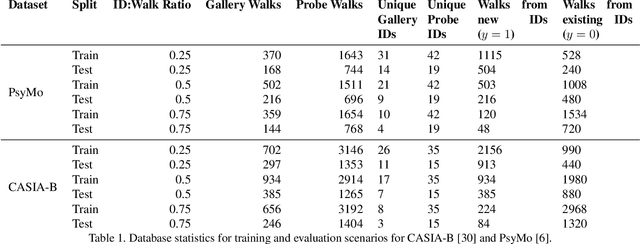
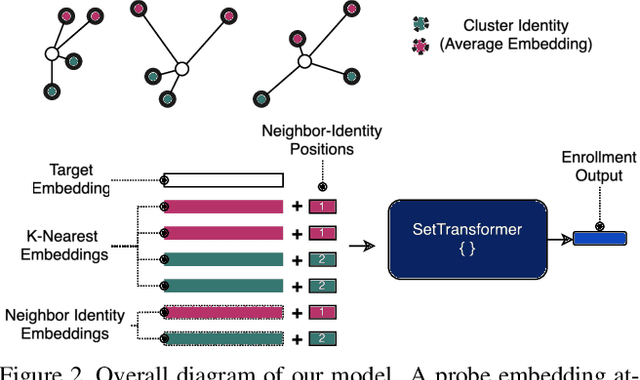
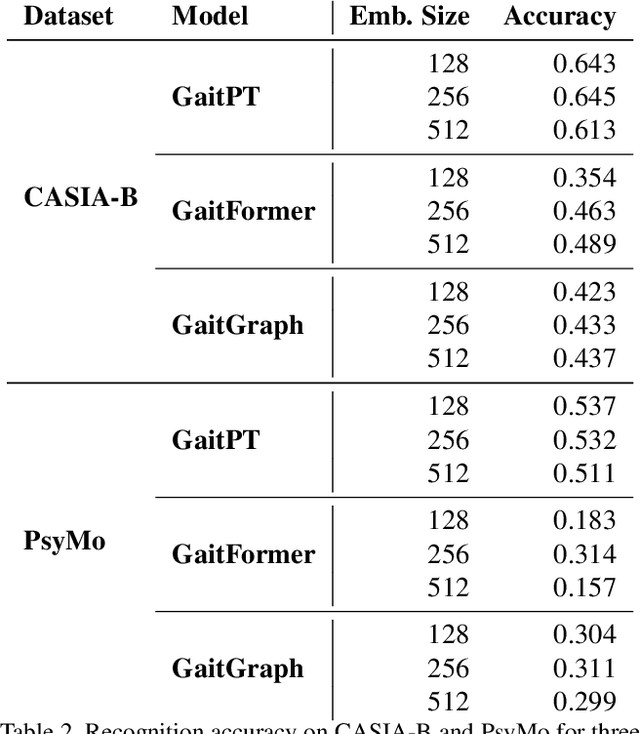
Gait recognition has emerged as a powerful tool for unobtrusive and long-range identity analysis, with growing relevance in surveillance and monitoring applications. Although recent advances in deep learning and large-scale datasets have enabled highly accurate recognition under closed-set conditions, real-world deployment demands open-set gait enrollment, which means determining whether a new gait sample corresponds to a known identity or represents a previously unseen individual. In this work, we introduce a transformer-based framework for open-set gait enrollment that is both dataset-agnostic and recognition-architecture-agnostic. Our method leverages a SetTransformer to make enrollment decisions based on the embedding of a probe sample and a context set drawn from the gallery, without requiring task-specific thresholds or retraining for new environments. By decoupling enrollment from the main recognition pipeline, our model is generalized across different datasets, gallery sizes, and identity distributions. We propose an evaluation protocol that uses existing datasets in different ratios of identities and walks per identity. We instantiate our method using skeleton-based gait representations and evaluate it on two benchmark datasets (CASIA-B and PsyMo), using embeddings from three state-of-the-art recognition models (GaitGraph, GaitFormer, and GaitPT). We show that our method is flexible, is able to accurately perform enrollment in different scenarios, and scales better with data compared to traditional approaches. We will make the code and dataset scenarios publicly available.
MAUCell: An Adaptive Multi-Attention Framework for Video Frame Prediction
Jan 28, 2025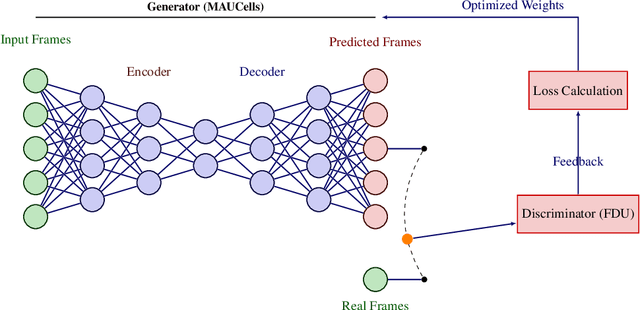
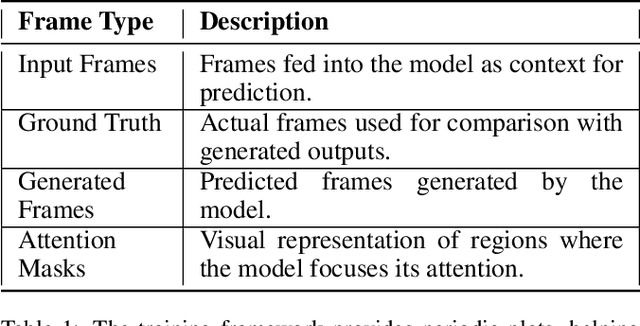
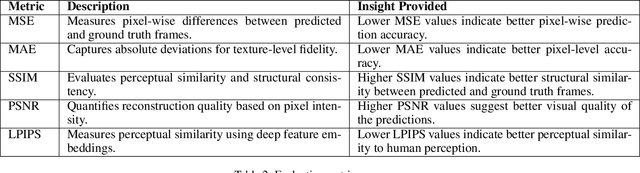
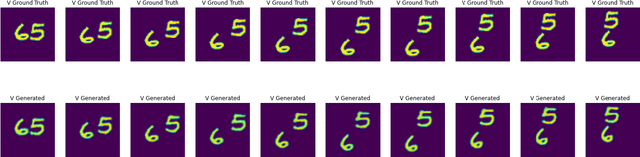
Temporal sequence modeling stands as the fundamental foundation for video prediction systems and real-time forecasting operations as well as anomaly detection applications. The achievement of accurate predictions through efficient resource consumption remains an ongoing issue in contemporary temporal sequence modeling. We introduce the Multi-Attention Unit (MAUCell) which combines Generative Adversarial Networks (GANs) and spatio-temporal attention mechanisms to improve video frame prediction capabilities. Our approach implements three types of attention models to capture intricate motion sequences. A dynamic combination of these attention outputs allows the model to reach both advanced decision accuracy along with superior quality while remaining computationally efficient. The integration of GAN elements makes generated frames appear more true to life therefore the framework creates output sequences which mimic real-world footage. The new design system maintains equilibrium between temporal continuity and spatial accuracy to deliver reliable video prediction. Through a comprehensive evaluation methodology which merged the perceptual LPIPS measurement together with classic tests MSE, MAE, SSIM and PSNR exhibited enhancing capabilities than contemporary approaches based on direct benchmark tests of Moving MNIST, KTH Action, and CASIA-B (Preprocessed) datasets. Our examination indicates that MAUCell shows promise for operational time requirements. The research findings demonstrate how GANs work best with attention mechanisms to create better applications for predicting video sequences.
A Bidirectional Siamese Recurrent Neural Network for Accurate Gait Recognition Using Body Landmarks
Dec 05, 2024Gait recognition is a significant biometric technique for person identification, particularly in scenarios where other physiological biometrics are impractical or ineffective. In this paper, we address the challenges associated with gait recognition and present a novel approach to improve its accuracy and reliability. The proposed method leverages advanced techniques, including sequential gait landmarks obtained through the Mediapipe pose estimation model, Procrustes analysis for alignment, and a Siamese biGRU-dualStack Neural Network architecture for capturing temporal dependencies. Extensive experiments were conducted on large-scale cross-view datasets to demonstrate the effectiveness of the approach, achieving high recognition accuracy compared to other models. The model demonstrated accuracies of 95.7%, 94.44%, 87.71%, and 86.6% on CASIA-B, SZU RGB-D, OU-MVLP, and Gait3D datasets respectively. The results highlight the potential applications of the proposed method in various practical domains, indicating its significant contribution to the field of gait recognition.
IMDPrompter: Adapting SAM to Image Manipulation Detection by Cross-View Automated Prompt Learning
Feb 04, 2025Using extensive training data from SA-1B, the Segment Anything Model (SAM) has demonstrated exceptional generalization and zero-shot capabilities, attracting widespread attention in areas such as medical image segmentation and remote sensing image segmentation. However, its performance in the field of image manipulation detection remains largely unexplored and unconfirmed. There are two main challenges in applying SAM to image manipulation detection: a) reliance on manual prompts, and b) the difficulty of single-view information in supporting cross-dataset generalization. To address these challenges, we develops a cross-view prompt learning paradigm called IMDPrompter based on SAM. Benefiting from the design of automated prompts, IMDPrompter no longer relies on manual guidance, enabling automated detection and localization. Additionally, we propose components such as Cross-view Feature Perception, Optimal Prompt Selection, and Cross-View Prompt Consistency, which facilitate cross-view perceptual learning and guide SAM to generate accurate masks. Extensive experimental results from five datasets (CASIA, Columbia, Coverage, IMD2020, and NIST16) validate the effectiveness of our proposed method.
GaitMA: Pose-guided Multi-modal Feature Fusion for Gait Recognition
Jul 20, 2024Gait recognition is a biometric technology that recognizes the identity of humans through their walking patterns. Existing appearance-based methods utilize CNN or Transformer to extract spatial and temporal features from silhouettes, while model-based methods employ GCN to focus on the special topological structure of skeleton points. However, the quality of silhouettes is limited by complex occlusions, and skeletons lack dense semantic features of the human body. To tackle these problems, we propose a novel gait recognition framework, dubbed Gait Multi-model Aggregation Network (GaitMA), which effectively combines two modalities to obtain a more robust and comprehensive gait representation for recognition. First, skeletons are represented by joint/limb-based heatmaps, and features from silhouettes and skeletons are respectively extracted using two CNN-based feature extractors. Second, a co-attention alignment module is proposed to align the features by element-wise attention. Finally, we propose a mutual learning module, which achieves feature fusion through cross-attention, Wasserstein loss is further introduced to ensure the effective fusion of two modalities. Extensive experimental results demonstrate the superiority of our model on Gait3D, OU-MVLP, and CASIA-B.