 Add to Chrome
 Add to Firefox
 Add to Edge
Towards Optimal Valve Prescription for Transcatheter Aortic Valve Replacement (TAVR) Surgery: A Machine Learning Approach
Dec 09, 2025
Transcatheter Aortic Valve Replacement (TAVR) has emerged as a minimally invasive treatment option for patients with severe aortic stenosis, a life-threatening cardiovascular condition. Multiple transcatheter heart valves (THV) have been approved for use in TAVR, but current guidelines regarding valve type prescription remain an active topic of debate. We propose a data-driven clinical support tool to identify the optimal valve type with the objective of minimizing the risk of permanent pacemaker implantation (PPI), a predominant postoperative complication. We synthesize a novel dataset that combines U.S. and Greek patient populations and integrates three distinct data sources (patient demographics, computed tomography scans, echocardiograms) while harmonizing differences in each country's record system. We introduce a leaf-level analysis to leverage population heterogeneity and avoid benchmarking against uncertain counterfactual risk estimates. The final prescriptive model shows a reduction in PPI rates of 26% and 16% compared with the current standard of care in our internal U.S. population and external Greek validation cohort, respectively. To the best of our knowledge, this work represents the first unified, personalized prescription strategy for THV selection in TAVR.

Towards Stable Machine Learning Model Retraining via Slowly Varying Sequences
Apr 08, 2024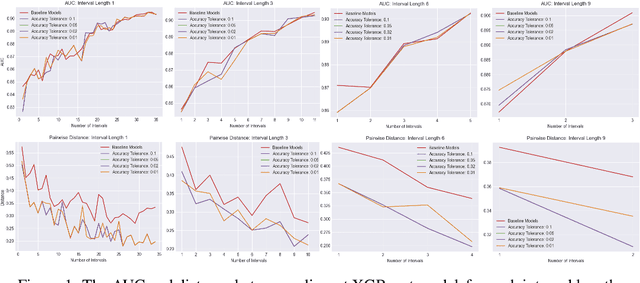

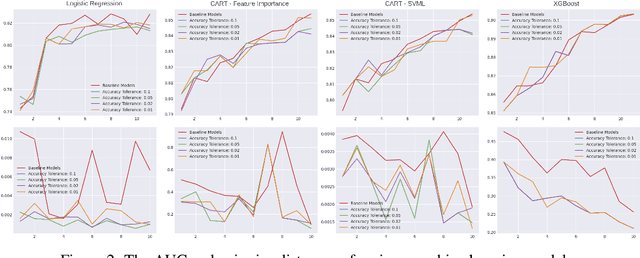

Retraining machine learning models remains an important task for real-world machine learning model deployment. Existing methods focus largely on greedy approaches to find the best-performing model without considering the stability of trained model structures across different retraining evolutions. In this study, we develop a mixed integer optimization algorithm that holistically considers the problem of retraining machine learning models across different data batch updates. Our method focuses on retaining consistent analytical insights - which is important to model interpretability, ease of implementation, and fostering trust with users - by using custom-defined distance metrics that can be directly incorporated into the optimization problem. Importantly, our method shows stronger stability than greedily trained models with a small, controllable sacrifice in model performance in a real-world production case study. Finally, important analytical insights, as demonstrated using SHAP feature importance, are shown to be consistent across retraining iterations.
Cooperative Multi-Agent Graph Bandits: UCB Algorithm and Regret Analysis
Jan 18, 2024In this paper, we formulate the multi-agent graph bandit problem as a multi-agent extension of the graph bandit problem introduced by Zhang, Johansson, and Li [CISS 57, 1-6 (2023)]. In our formulation, $N$ cooperative agents travel on a connected graph $G$ with $K$ nodes. Upon arrival at each node, agents observe a random reward drawn from a node-dependent probability distribution. The reward of the system is modeled as a weighted sum of the rewards the agents observe, where the weights capture the decreasing marginal reward associated with multiple agents sampling the same node at the same time. We propose an Upper Confidence Bound (UCB)-based learning algorithm, Multi-G-UCB, and prove that its expected regret over $T$ steps is bounded by $O(N\log(T)[\sqrt{KT} + DK])$, where $D$ is the diameter of graph $G$. Lastly, we numerically test our algorithm by comparing it to alternative methods.