 Add to Chrome
 Add to Firefox
 Add to Edge
Discrete Key-Value Bottleneck
Jul 22, 2022
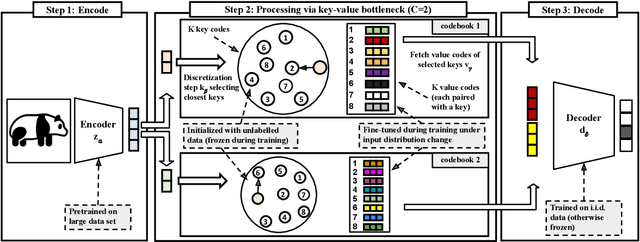
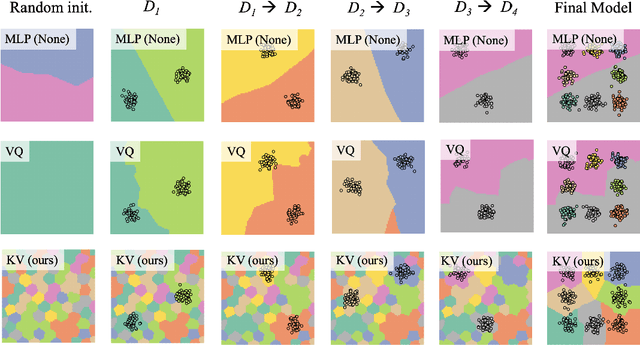
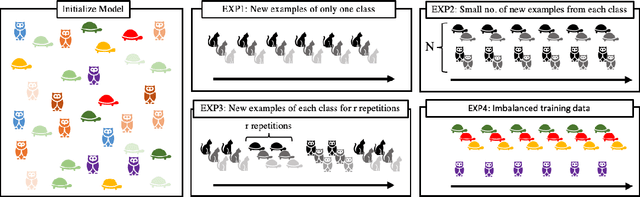
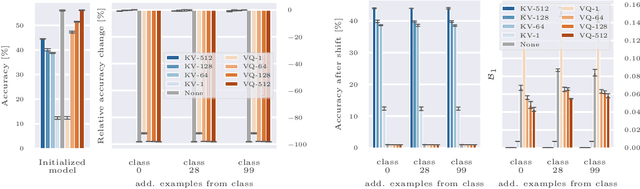
Deep neural networks perform well on prediction and classification tasks in the canonical setting where data streams are i.i.d., labeled data is abundant, and class labels are balanced. Challenges emerge with distribution shifts, including non-stationary or imbalanced data streams. One powerful approach that has addressed this challenge involves self-supervised pretraining of large encoders on volumes of unlabeled data, followed by task-specific tuning. Given a new task, updating the weights of these encoders is challenging as a large number of weights needs to be fine-tuned, and as a result, they forget information about the previous tasks. In the present work, we propose a model architecture to address this issue, building upon a discrete bottleneck containing pairs of separate and learnable (key, value) codes. In this setup, we follow the encode; process the representation via a discrete bottleneck; and decode paradigm, where the input is fed to the pretrained encoder, the output of the encoder is used to select the nearest keys, and the corresponding values are fed to the decoder to solve the current task. The model can only fetch and re-use a limited number of these (key, value) pairs during inference, enabling localized and context-dependent model updates. We theoretically investigate the ability of the proposed model to minimize the effect of the distribution shifts and show that such a discrete bottleneck with (key, value) pairs reduces the complexity of the hypothesis class. We empirically verified the proposed methods' benefits under challenging distribution shift scenarios across various benchmark datasets and show that the proposed model reduces the common vulnerability to non-i.i.d. and non-stationary training distributions compared to various other baselines.

Lookback for Learning to Branch
Jun 30, 2022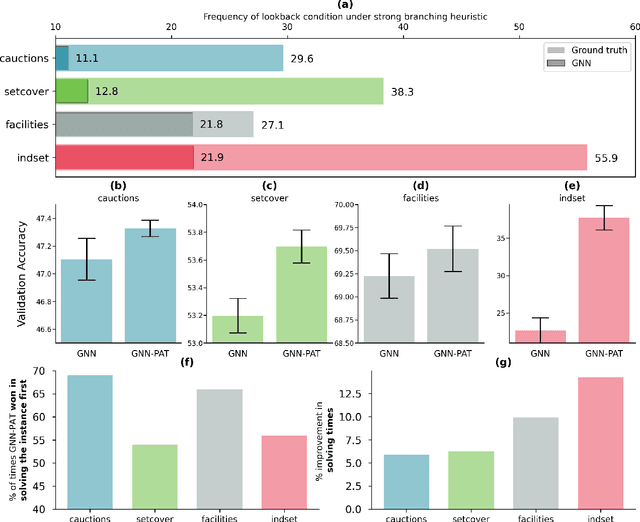

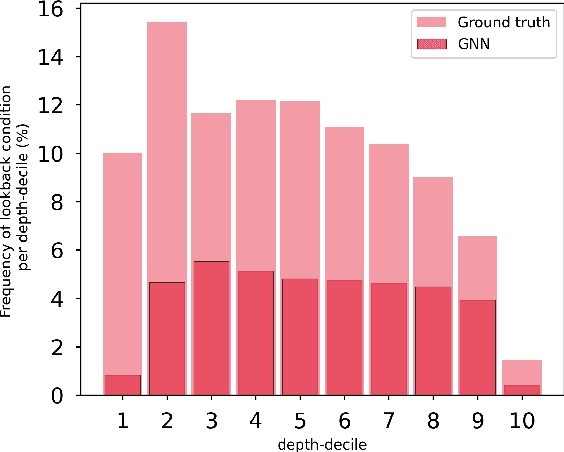
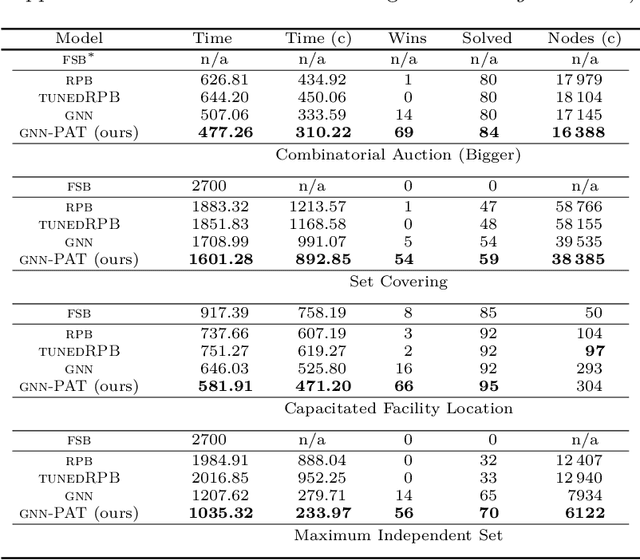
The expressive and computationally inexpensive bipartite Graph Neural Networks (GNN) have been shown to be an important component of deep learning based Mixed-Integer Linear Program (MILP) solvers. Recent works have demonstrated the effectiveness of such GNNs in replacing the branching (variable selection) heuristic in branch-and-bound (B&B) solvers. These GNNs are trained, offline and on a collection of MILPs, to imitate a very good but computationally expensive branching heuristic, strong branching. Given that B&B results in a tree of sub-MILPs, we ask (a) whether there are strong dependencies exhibited by the target heuristic among the neighboring nodes of the B&B tree, and (b) if so, whether we can incorporate them in our training procedure. Specifically, we find that with the strong branching heuristic, a child node's best choice was often the parent's second-best choice. We call this the "lookback" phenomenon. Surprisingly, the typical branching GNN of Gasse et al. (2019) often misses this simple "answer". To imitate the target behavior more closely by incorporating the lookback phenomenon in GNNs, we propose two methods: (a) target smoothing for the standard cross-entropy loss function, and (b) adding a Parent-as-Target (PAT) Lookback regularizer term. Finally, we propose a model selection framework to incorporate harder-to-formulate objectives such as solving time in the final models. Through extensive experimentation on standard benchmark instances, we show that our proposal results in up to 22% decrease in the size of the B&B tree and up to 15% improvement in the solving times.
Your Autoregressive Generative Model Can be Better If You Treat It as an Energy-Based One
Jun 26, 2022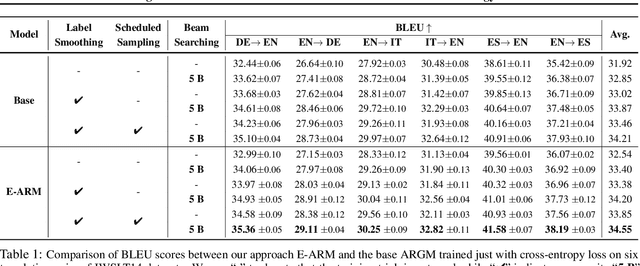
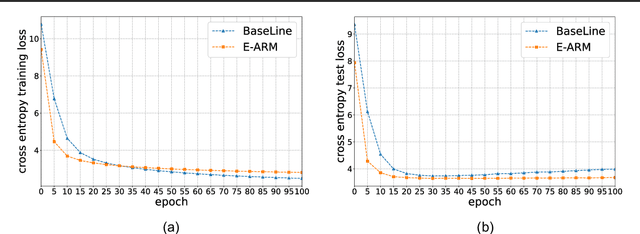
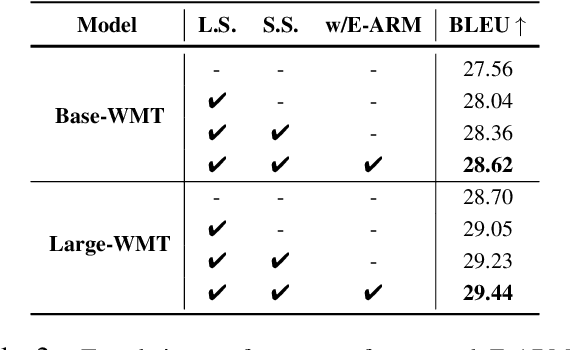
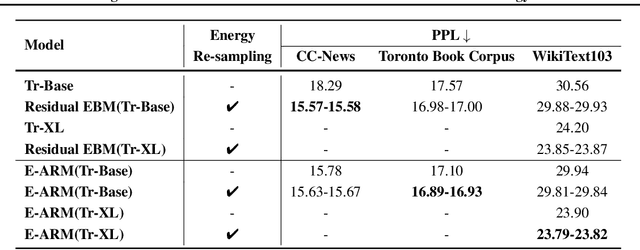
Autoregressive generative models are commonly used, especially for those tasks involving sequential data. They have, however, been plagued by a slew of inherent flaws due to the intrinsic characteristics of chain-style conditional modeling (e.g., exposure bias or lack of long-range coherence), severely limiting their ability to model distributions properly. In this paper, we propose a unique method termed E-ARM for training autoregressive generative models that takes advantage of a well-designed energy-based learning objective. By leveraging the extra degree of freedom of the softmax operation, we are allowed to make the autoregressive model itself be an energy-based model for measuring the likelihood of input without introducing any extra parameters. Furthermore, we show that E-ARM can be trained efficiently and is capable of alleviating the exposure bias problem and increase temporal coherence for autoregressive generative models. Extensive empirical results, covering benchmarks like language modeling, neural machine translation, and image generation, demonstrate the effectiveness of the proposed approach.
On the Generalization and Adaption Performance of Causal Models
Jun 09, 2022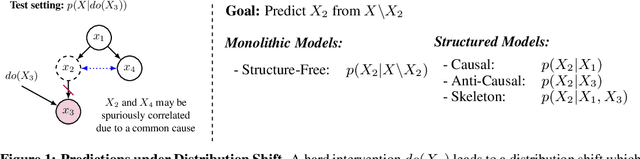
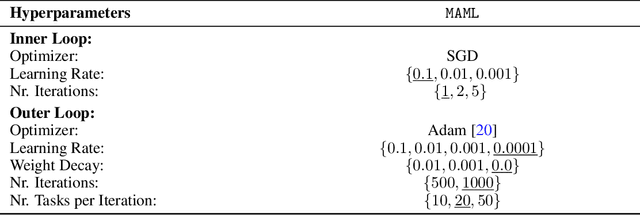
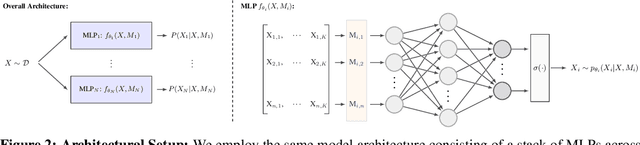
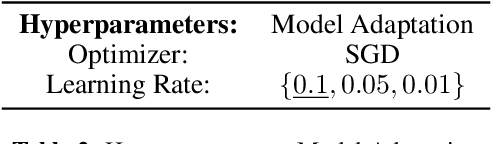
Learning models that offer robust out-of-distribution generalization and fast adaptation is a key challenge in modern machine learning. Modelling causal structure into neural networks holds the promise to accomplish robust zero and few-shot adaptation. Recent advances in differentiable causal discovery have proposed to factorize the data generating process into a set of modules, i.e. one module for the conditional distribution of every variable where only causal parents are used as predictors. Such a modular decomposition of knowledge enables adaptation to distributions shifts by only updating a subset of parameters. In this work, we systematically study the generalization and adaption performance of such modular neural causal models by comparing it to monolithic models and structured models where the set of predictors is not constrained to causal parents. Our analysis shows that the modular neural causal models outperform other models on both zero and few-shot adaptation in low data regimes and offer robust generalization. We also found that the effects are more significant for sparser graphs as compared to denser graphs.
On Neural Architecture Inductive Biases for Relational Tasks
Jun 09, 2022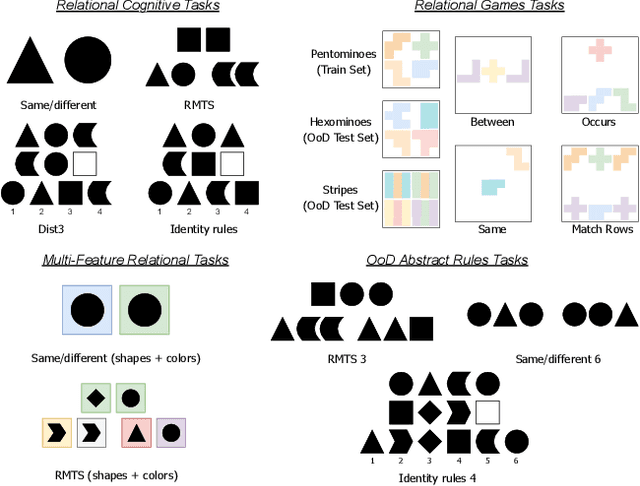
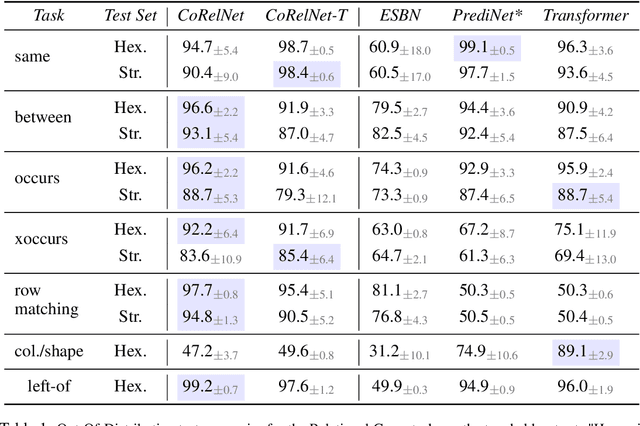
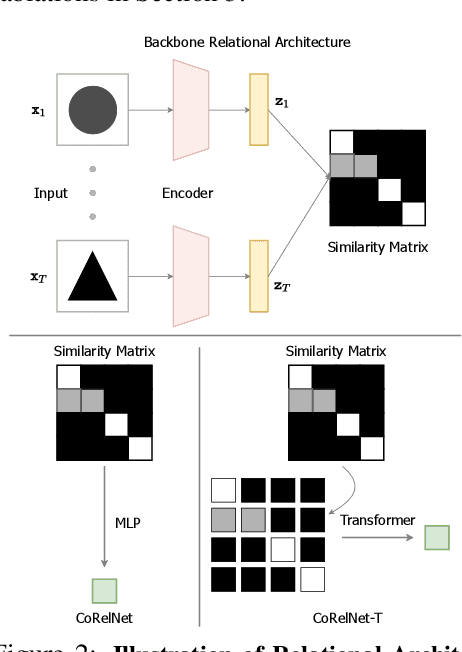
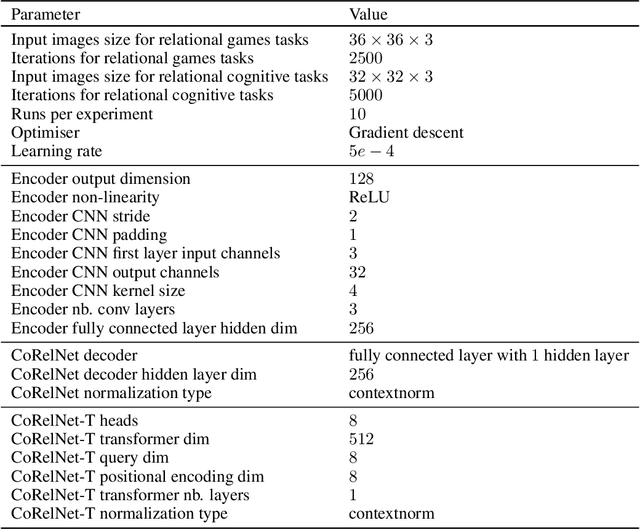
Current deep learning approaches have shown good in-distribution generalization performance, but struggle with out-of-distribution generalization. This is especially true in the case of tasks involving abstract relations like recognizing rules in sequences, as we find in many intelligence tests. Recent work has explored how forcing relational representations to remain distinct from sensory representations, as it seems to be the case in the brain, can help artificial systems. Building on this work, we further explore and formalize the advantages afforded by 'partitioned' representations of relations and sensory details, and how this inductive bias can help recompose learned relational structure in newly encountered settings. We introduce a simple architecture based on similarity scores which we name Compositional Relational Network (CoRelNet). Using this model, we investigate a series of inductive biases that ensure abstract relations are learned and represented distinctly from sensory data, and explore their effects on out-of-distribution generalization for a series of relational psychophysics tasks. We find that simple architectural choices can outperform existing models in out-of-distribution generalization. Together, these results show that partitioning relational representations from other information streams may be a simple way to augment existing network architectures' robustness when performing out-of-distribution relational computations.
Building Robust Ensembles via Margin Boosting
Jun 07, 2022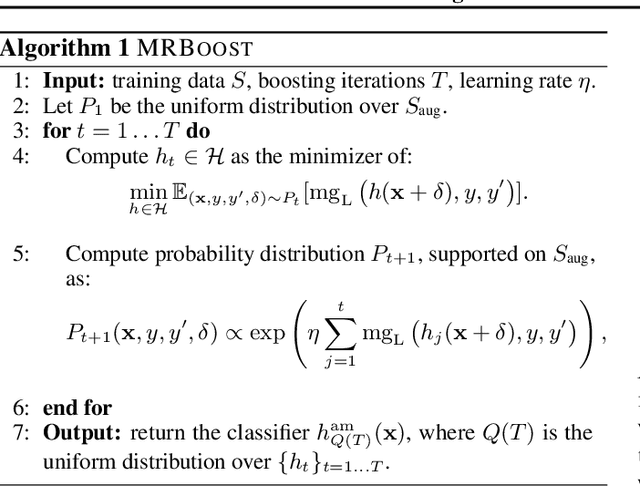
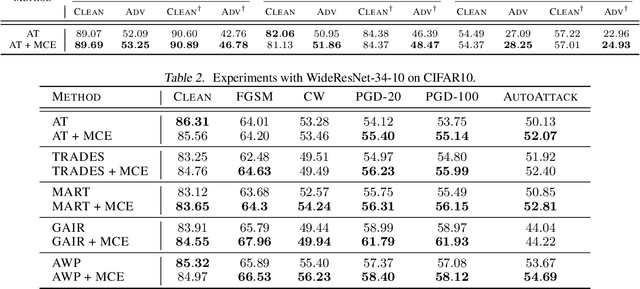
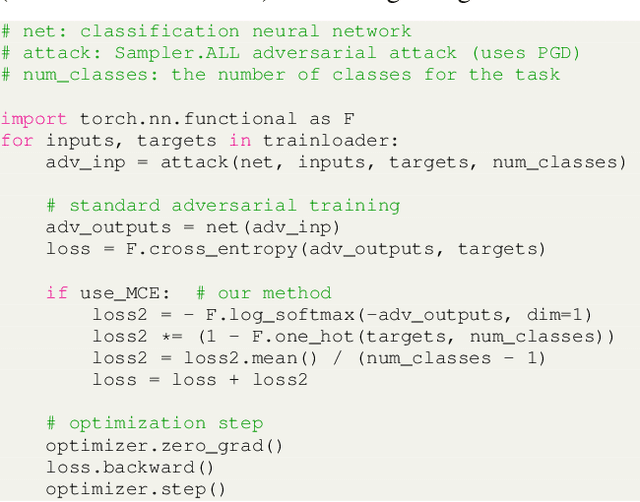
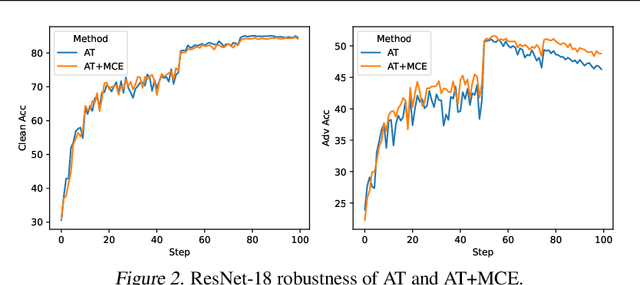
In the context of adversarial robustness, a single model does not usually have enough power to defend against all possible adversarial attacks, and as a result, has sub-optimal robustness. Consequently, an emerging line of work has focused on learning an ensemble of neural networks to defend against adversarial attacks. In this work, we take a principled approach towards building robust ensembles. We view this problem from the perspective of margin-boosting and develop an algorithm for learning an ensemble with maximum margin. Through extensive empirical evaluation on benchmark datasets, we show that our algorithm not only outperforms existing ensembling techniques, but also large models trained in an end-to-end fashion. An important byproduct of our work is a margin-maximizing cross-entropy (MCE) loss, which is a better alternative to the standard cross-entropy (CE) loss. Empirically, we show that replacing the CE loss in state-of-the-art adversarial training techniques with our MCE loss leads to significant performance improvement.
Is a Modular Architecture Enough?
Jun 06, 2022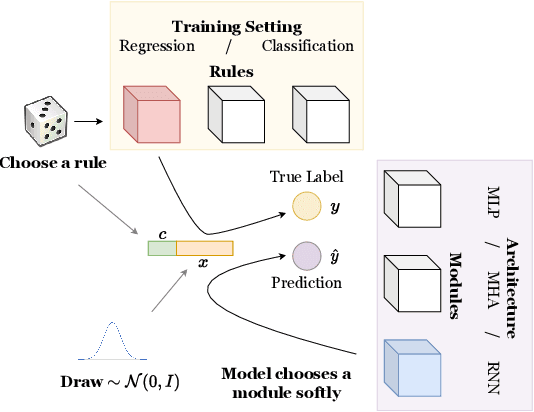
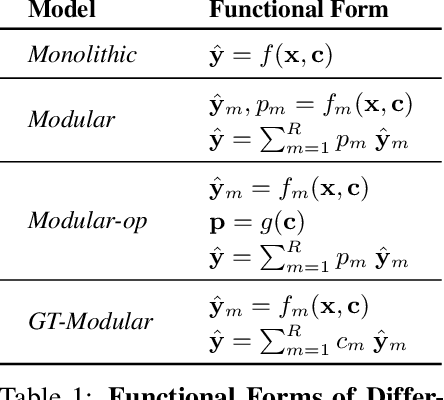
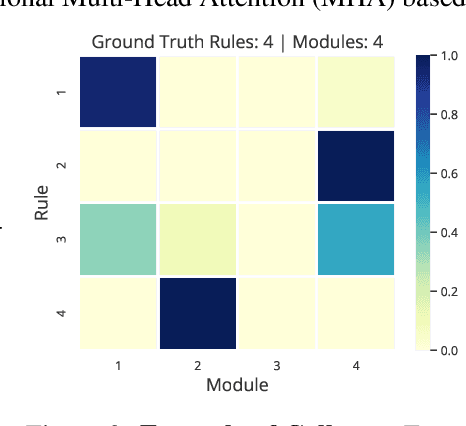
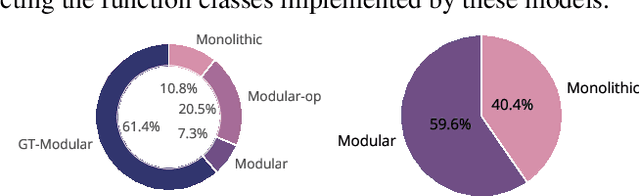
Inspired from human cognition, machine learning systems are gradually revealing advantages of sparser and more modular architectures. Recent work demonstrates that not only do some modular architectures generalize well, but they also lead to better out-of-distribution generalization, scaling properties, learning speed, and interpretability. A key intuition behind the success of such systems is that the data generating system for most real-world settings is considered to consist of sparsely interacting parts, and endowing models with similar inductive biases will be helpful. However, the field has been lacking in a rigorous quantitative assessment of such systems because these real-world data distributions are complex and unknown. In this work, we provide a thorough assessment of common modular architectures, through the lens of simple and known modular data distributions. We highlight the benefits of modularity and sparsity and reveal insights on the challenges faced while optimizing modular systems. In doing so, we propose evaluation metrics that highlight the benefits of modularity, the regimes in which these benefits are substantial, as well as the sub-optimality of current end-to-end learned modular systems as opposed to their claimed potential.
Weakly Supervised Representation Learning with Sparse Perturbations
Jun 02, 2022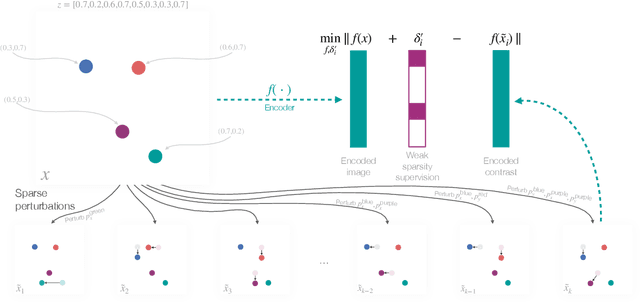
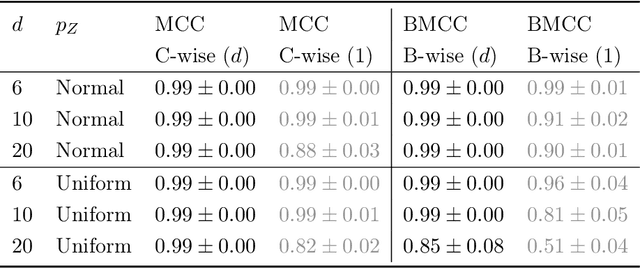
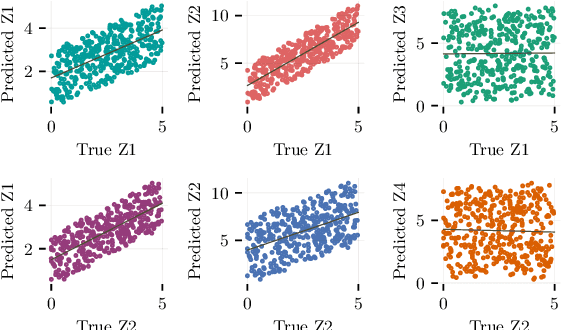
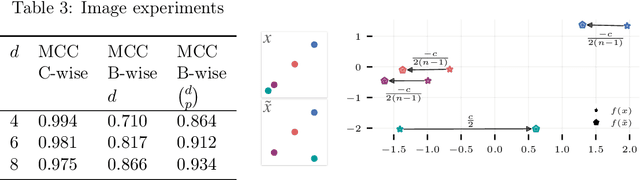
The theory of representation learning aims to build methods that provably invert the data generating process with minimal domain knowledge or any source of supervision. Most prior approaches require strong distributional assumptions on the latent variables and weak supervision (auxiliary information such as timestamps) to provide provable identification guarantees. In this work, we show that if one has weak supervision from observations generated by sparse perturbations of the latent variables--e.g. images in a reinforcement learning environment where actions move individual sprites--identification is achievable under unknown continuous latent distributions. We show that if the perturbations are applied only on mutually exclusive blocks of latents, we identify the latents up to those blocks. We also show that if these perturbation blocks overlap, we identify latents up to the smallest blocks shared across perturbations. Consequently, if there are blocks that intersect in one latent variable only, then such latents are identified up to permutation and scaling. We propose a natural estimation procedure based on this theory and illustrate it on low-dimensional synthetic and image-based experiments.
Agnostic Physics-Driven Deep Learning
May 30, 2022
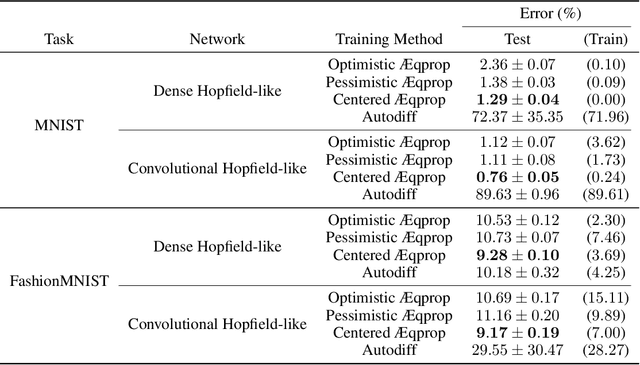
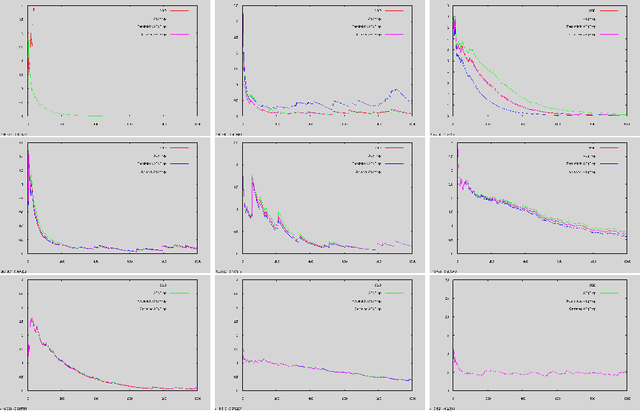

This work establishes that a physical system can perform statistical learning without gradient computations, via an Agnostic Equilibrium Propagation (Aeqprop) procedure that combines energy minimization, homeostatic control, and nudging towards the correct response. In Aeqprop, the specifics of the system do not have to be known: the procedure is based only on external manipulations, and produces a stochastic gradient descent without explicit gradient computations. Thanks to nudging, the system performs a true, order-one gradient step for each training sample, in contrast with order-zero methods like reinforcement or evolutionary strategies, which rely on trial and error. This procedure considerably widens the range of potential hardware for statistical learning to any system with enough controllable parameters, even if the details of the system are poorly known. Aeqprop also establishes that in natural (bio)physical systems, genuine gradient-based statistical learning may result from generic, relatively simple mechanisms, without backpropagation and its requirement for analytic knowledge of partial derivatives.
Temporal Latent Bottleneck: Synthesis of Fast and Slow Processing Mechanisms in Sequence Learning
May 30, 2022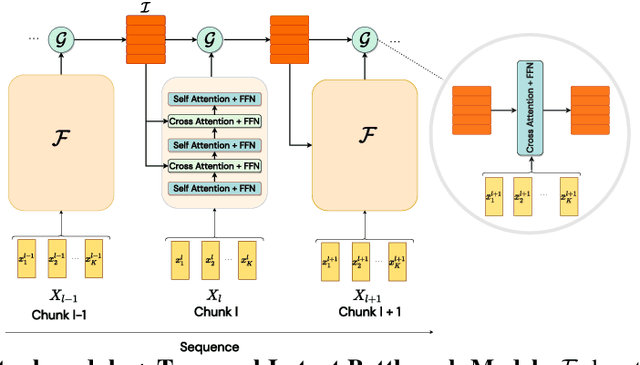
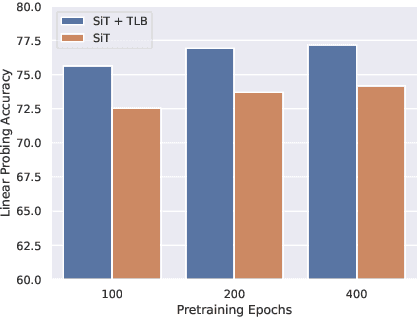
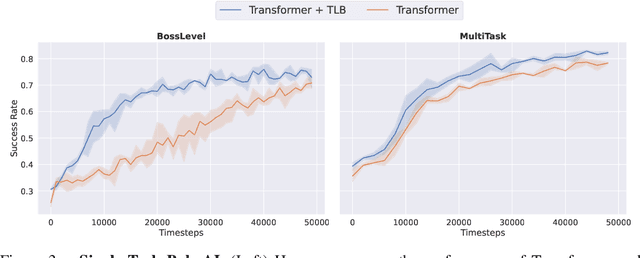
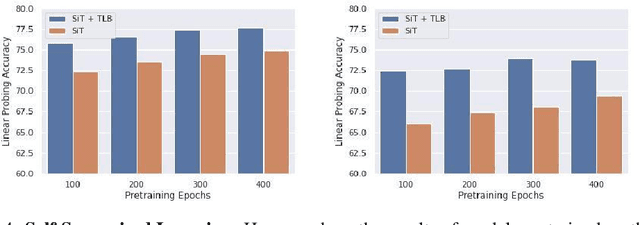
Recurrent neural networks have a strong inductive bias towards learning temporally compressed representations, as the entire history of a sequence is represented by a single vector. By contrast, Transformers have little inductive bias towards learning temporally compressed representations, as they allow for attention over all previously computed elements in a sequence. Having a more compressed representation of a sequence may be beneficial for generalization, as a high-level representation may be more easily re-used and re-purposed and will contain fewer irrelevant details. At the same time, excessive compression of representations comes at the cost of expressiveness. We propose a solution which divides computation into two streams. A slow stream that is recurrent in nature aims to learn a specialized and compressed representation, by forcing chunks of $K$ time steps into a single representation which is divided into multiple vectors. At the same time, a fast stream is parameterized as a Transformer to process chunks consisting of $K$ time-steps conditioned on the information in the slow-stream. In the proposed approach we hope to gain the expressiveness of the Transformer, while encouraging better compression and structuring of representations in the slow stream. We show the benefits of the proposed method in terms of improved sample efficiency and generalization performance as compared to various competitive baselines for visual perception and sequential decision making tasks.