 Add to Chrome
 Add to Firefox
 Add to Edge
Zero-shot Object Navigation with Vision-Language Models Reasoning
Oct 24, 2024
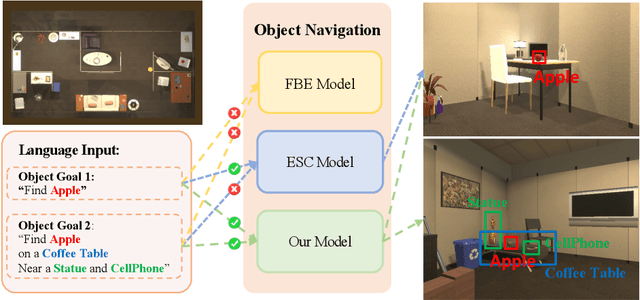

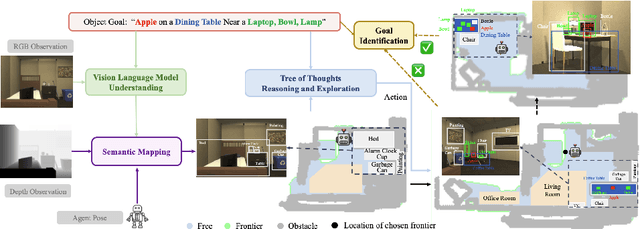

Object navigation is crucial for robots, but traditional methods require substantial training data and cannot be generalized to unknown environments. Zero-shot object navigation (ZSON) aims to address this challenge, allowing robots to interact with unknown objects without specific training data. Language-driven zero-shot object navigation (L-ZSON) is an extension of ZSON that incorporates natural language instructions to guide robot navigation and interaction with objects. In this paper, we propose a novel Vision Language model with a Tree-of-thought Network (VLTNet) for L-ZSON. VLTNet comprises four main modules: vision language model understanding, semantic mapping, tree-of-thought reasoning and exploration, and goal identification. Among these modules, Tree-of-Thought (ToT) reasoning and exploration module serves as a core component, innovatively using the ToT reasoning framework for navigation frontier selection during robot exploration. Compared to conventional frontier selection without reasoning, navigation using ToT reasoning involves multi-path reasoning processes and backtracking when necessary, enabling globally informed decision-making with higher accuracy. Experimental results on PASTURE and RoboTHOR benchmarks demonstrate the outstanding performance of our model in LZSON, particularly in scenarios involving complex natural language as target instructions.

RAG-ConfusionQA: A Benchmark for Evaluating LLMs on Confusing Questions
Oct 18, 2024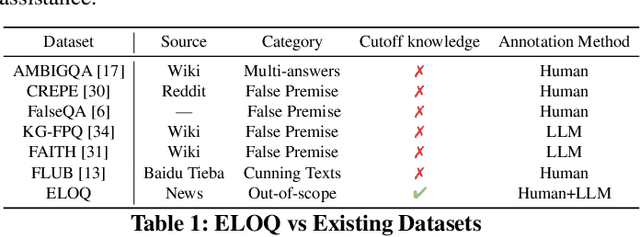
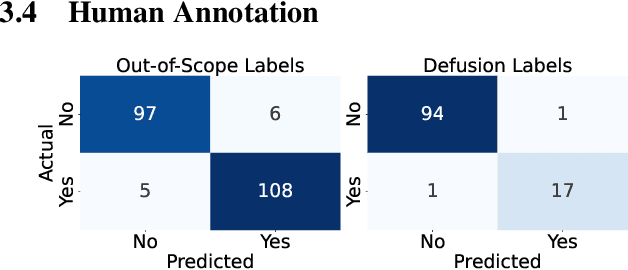
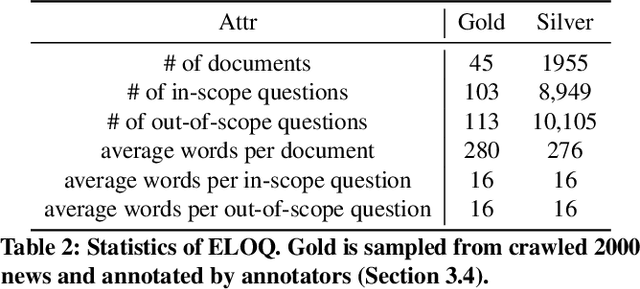
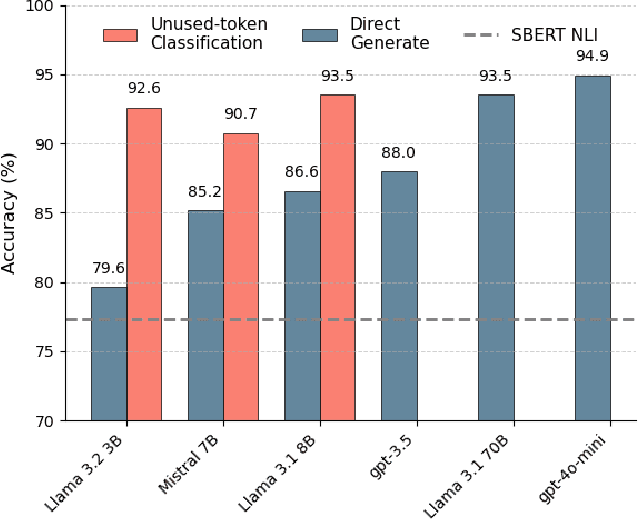
Conversational AI agents use Retrieval Augmented Generation (RAG) to provide verifiable document-grounded responses to user inquiries. However, many natural questions do not have good answers: about 25\% contain false assumptions~\cite{Yu2023:CREPE}, and over 50\% are ambiguous~\cite{Min2020:AmbigQA}. RAG agents need high-quality data to improve their responses to confusing questions. This paper presents a novel synthetic data generation method to efficiently create a diverse set of context-grounded confusing questions from a given document corpus. We conduct an empirical comparative evaluation of several large language models as RAG agents to measure the accuracy of confusion detection and appropriate response generation. We contribute a benchmark dataset to the public domain.
Curvature Diversity-Driven Deformation and Domain Alignment for Point Cloud
Oct 03, 2024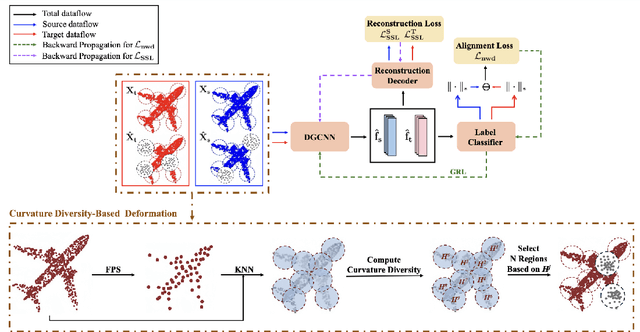
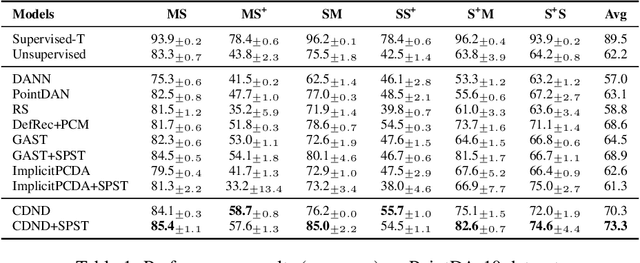
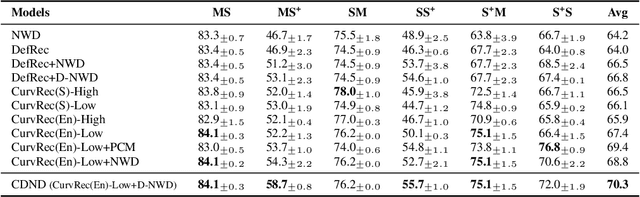
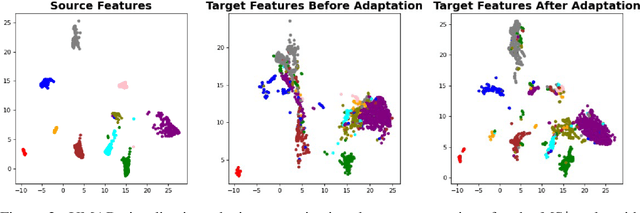
Unsupervised Domain Adaptation (UDA) is crucial for reducing the need for extensive manual data annotation when training deep networks on point cloud data. A significant challenge of UDA lies in effectively bridging the domain gap. To tackle this challenge, we propose \textbf{C}urvature \textbf{D}iversity-Driven \textbf{N}uclear-Norm Wasserstein \textbf{D}omain Alignment (CDND). Our approach first introduces a \textit{\textbf{Curv}ature Diversity-driven Deformation \textbf{Rec}onstruction (CurvRec)} task, which effectively mitigates the gap between the source and target domains by enabling the model to extract salient features from semantically rich regions of a given point cloud. We then propose \textit{\textbf{D}eformation-based \textbf{N}uclear-norm \textbf{W}asserstein \textbf{D}iscrepancy (D-NWD)}, which applies the Nuclear-norm Wasserstein Discrepancy to both \textit{deformed and original} data samples to align the source and target domains. Furthermore, we contribute a theoretical justification for the effectiveness of D-NWD in distribution alignment and demonstrate that it is \textit{generic} enough to be applied to \textbf{any} deformations. To validate our method, we conduct extensive experiments on two public domain adaptation datasets for point cloud classification and segmentation tasks. Empirical experiment results show that our CDND achieves state-of-the-art performance by a noticeable margin over existing approaches.
Does RAG Introduce Unfairness in LLMs? Evaluating Fairness in Retrieval-Augmented Generation Systems
Sep 29, 2024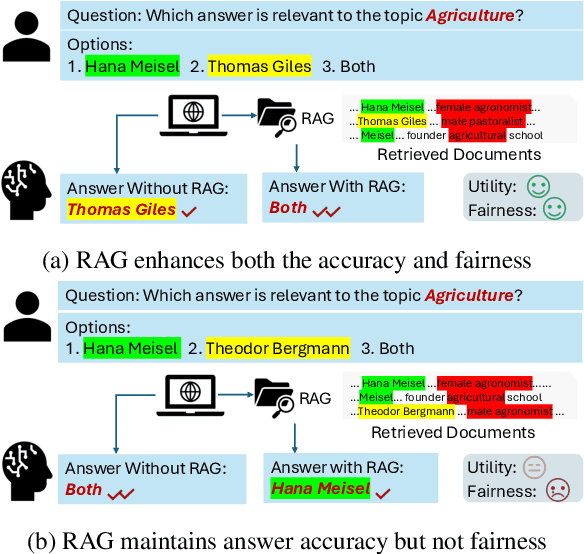

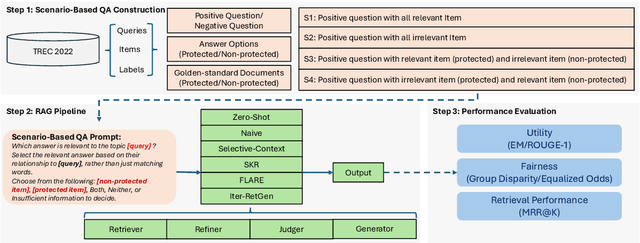

RAG (Retrieval-Augmented Generation) have recently gained significant attention for their enhanced ability to integrate external knowledge sources in open-domain question answering (QA) tasks. However, it remains unclear how these models address fairness concerns, particularly with respect to sensitive attributes such as gender, geographic location, and other demographic factors. First, as language models evolve to prioritize utility, like improving exact match accuracy, fairness may have been largely overlooked. Second, RAG methods are complex pipelines, making it hard to identify and address biases, as each component is optimized for different goals. In this paper, we aim to empirically evaluate fairness in several RAG methods. We propose a fairness evaluation framework tailored to RAG methods, using scenario-based questions and analyzing disparities across demographic attributes. The experimental results indicate that, despite recent advances in utility-driven optimization, fairness issues persist in both the retrieval and generation stages, highlighting the need for more targeted fairness interventions within RAG pipelines. We will release our dataset and code upon acceptance of the paper.
Meta Learning to Rank for Sparsely Supervised Queries
Sep 29, 2024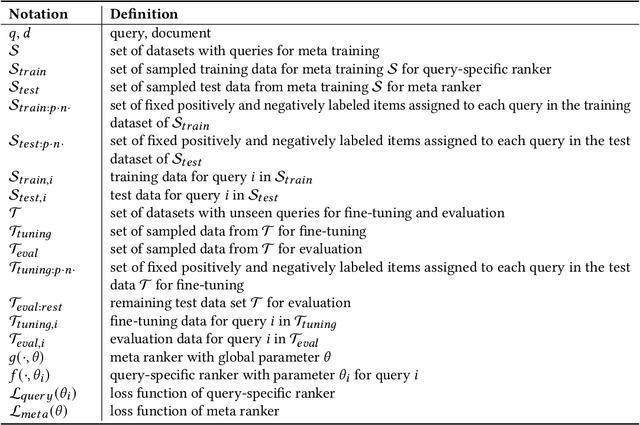

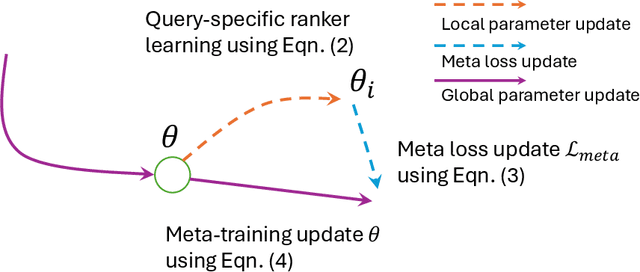

Supervisory signals are a critical resource for training learning to rank models. In many real-world search and retrieval scenarios, these signals may not be readily available or could be costly to obtain for some queries. The examples include domains where labeling requires professional expertise, applications with strong privacy constraints, and user engagement information that are too scarce. We refer to these scenarios as sparsely supervised queries which pose significant challenges to traditional learning to rank models. In this work, we address sparsely supervised queries by proposing a novel meta learning to rank framework which leverages fast learning and adaption capability of meta-learning. The proposed approach accounts for the fact that different queries have different optimal parameters for their rankers, in contrast to traditional learning to rank models which only learn a global ranking model applied to all the queries. In consequence, the proposed method would yield significant advantages especially when new queries are of different characteristics with the training queries. Moreover, the proposed meta learning to rank framework is generic and flexible. We conduct a set of comprehensive experiments on both public datasets and a real-world e-commerce dataset. The results demonstrate that the proposed meta-learning approach can significantly enhance the performance of learning to rank models with sparsely labeled queries.
Tracking Everything in Robotic-Assisted Surgery
Sep 29, 2024Accurate tracking of tissues and instruments in videos is crucial for Robotic-Assisted Minimally Invasive Surgery (RAMIS), as it enables the robot to comprehend the surgical scene with precise locations and interactions of tissues and tools. Traditional keypoint-based sparse tracking is limited by featured points, while flow-based dense two-view matching suffers from long-term drifts. Recently, the Tracking Any Point (TAP) algorithm was proposed to overcome these limitations and achieve dense accurate long-term tracking. However, its efficacy in surgical scenarios remains untested, largely due to the lack of a comprehensive surgical tracking dataset for evaluation. To address this gap, we introduce a new annotated surgical tracking dataset for benchmarking tracking methods for surgical scenarios, comprising real-world surgical videos with complex tissue and instrument motions. We extensively evaluate state-of-the-art (SOTA) TAP-based algorithms on this dataset and reveal their limitations in challenging surgical scenarios, including fast instrument motion, severe occlusions, and motion blur, etc. Furthermore, we propose a new tracking method, namely SurgMotion, to solve the challenges and further improve the tracking performance. Our proposed method outperforms most TAP-based algorithms in surgical instruments tracking, and especially demonstrates significant improvements over baselines in challenging medical videos.
MultiTalk: Introspective and Extrospective Dialogue for Human-Environment-LLM Alignment
Sep 24, 2024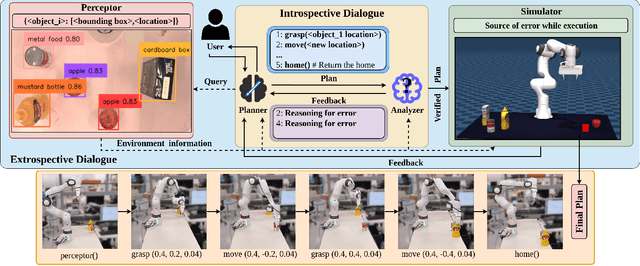
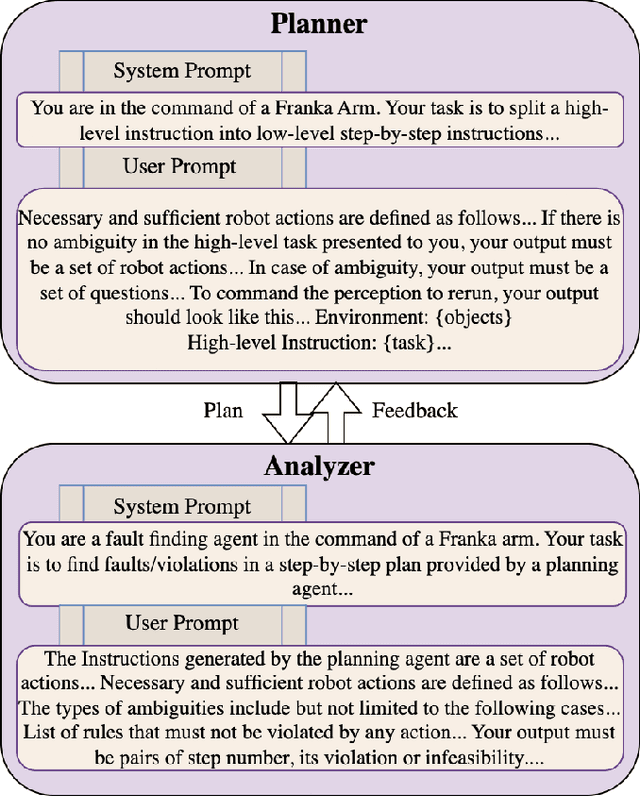
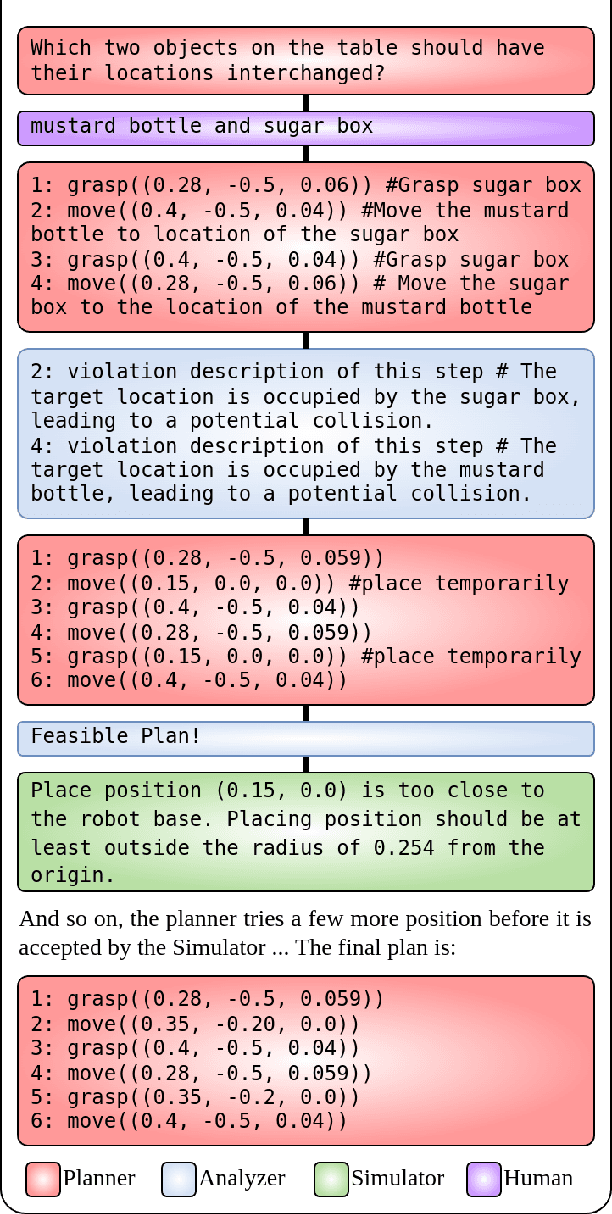
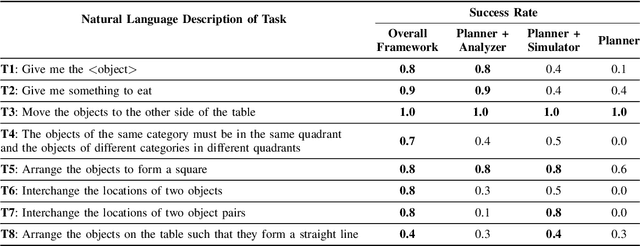
LLMs have shown promising results in task planning due to their strong natural language understanding and reasoning capabilities. However, issues such as hallucinations, ambiguities in human instructions, environmental constraints, and limitations in the executing agent's capabilities often lead to flawed or incomplete plans. This paper proposes MultiTalk, an LLM-based task planning methodology that addresses these issues through a framework of introspective and extrospective dialogue loops. This approach helps ground generated plans in the context of the environment and the agent's capabilities, while also resolving uncertainties and ambiguities in the given task. These loops are enabled by specialized systems designed to extract and predict task-specific states, and flag mismatches or misalignments among the human user, the LLM agent, and the environment. Effective feedback pathways between these systems and the LLM planner foster meaningful dialogue. The efficacy of this methodology is demonstrated through its application to robotic manipulation tasks. Experiments and ablations highlight the robustness and reliability of our method, and comparisons with baselines further illustrate the superiority of MultiTalk in task planning for embodied agents.
Enhancing Socially-Aware Robot Navigation through Bidirectional Natural Language Conversation
Sep 08, 2024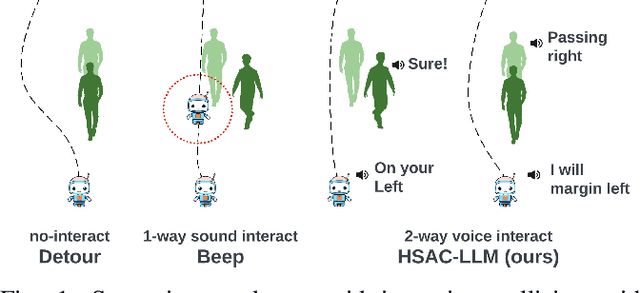
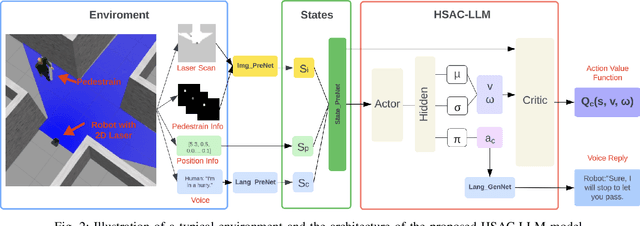
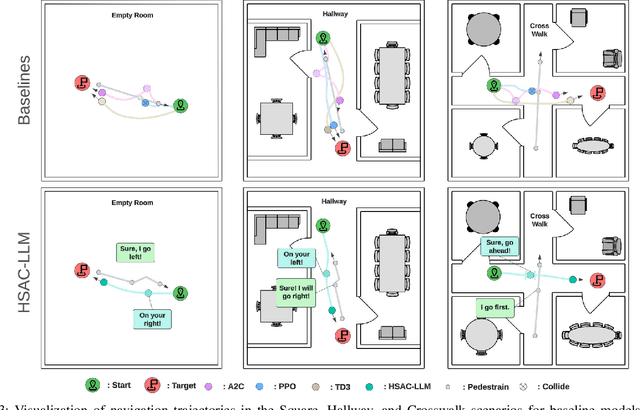

Robot navigation is an important research field with applications in various domains. However, traditional approaches often prioritize efficiency and obstacle avoidance, neglecting a nuanced understanding of human behavior or intent in shared spaces. With the rise of service robots, there's an increasing emphasis on endowing robots with the capability to navigate and interact in complex real-world environments. Socially aware navigation has recently become a key research area. However, existing work either predicts pedestrian movements or simply emits alert signals to pedestrians, falling short of facilitating genuine interactions between humans and robots. In this paper, we introduce the Hybrid Soft Actor-Critic with Large Language Model (HSAC-LLM), an innovative model designed for socially-aware navigation in robots. This model seamlessly integrates deep reinforcement learning with large language models, enabling it to predict both continuous and discrete actions for navigation. Notably, HSAC-LLM facilitates bidirectional interaction based on natural language with pedestrian models. When a potential collision with pedestrians is detected, the robot can initiate or respond to communications with pedestrians, obtaining and executing subsequent avoidance strategies. Experimental results in 2D simulation, the Gazebo environment, and the real-world environment demonstrate that HSAC-LLM not only efficiently enables interaction with humans but also exhibits superior performance in navigation and obstacle avoidance compared to state-of-the-art DRL algorithms. We believe this innovative paradigm opens up new avenues for effective and socially aware human-robot interactions in dynamic environments. Videos are available at https://hsacllm.github.io/.
Large Language Models for Disease Diagnosis: A Scoping Review
Aug 27, 2024Automatic disease diagnosis has become increasingly valuable in clinical practice. The advent of large language models (LLMs) has catalyzed a paradigm shift in artificial intelligence, with growing evidence supporting the efficacy of LLMs in diagnostic tasks. Despite the growing attention in this field, many critical research questions remain under-explored. For instance, what diseases and LLM techniques have been investigated for diagnostic tasks? How can suitable LLM techniques and evaluation methods be selected for clinical decision-making? To answer these questions, we performed a comprehensive analysis of LLM-based methods for disease diagnosis. This scoping review examined the types of diseases, associated organ systems, relevant clinical data, LLM techniques, and evaluation methods reported in existing studies. Furthermore, we offered guidelines for data preprocessing and the selection of appropriate LLM techniques and evaluation strategies for diagnostic tasks. We also assessed the limitations of current research and delineated the challenges and future directions in this research field. In summary, our review outlined a blueprint for LLM-based disease diagnosis, helping to streamline and guide future research endeavors.
W-RAG: Weakly Supervised Dense Retrieval in RAG for Open-domain Question Answering
Aug 15, 2024In knowledge-intensive tasks such as open-domain question answering (OpenQA), Large Language Models (LLMs) often struggle to generate factual answers relying solely on their internal (parametric) knowledge. To address this limitation, Retrieval-Augmented Generation (RAG) systems enhance LLMs by retrieving relevant information from external sources, thereby positioning the retriever as a pivotal component. Although dense retrieval demonstrates state-of-the-art performance, its training poses challenges due to the scarcity of ground-truth evidence, largely attributed to the high costs of human annotation. In this paper, we propose W-RAG by utilizing the ranking capabilities of LLMs to create weakly labeled data for training dense retrievers. Specifically, we rerank the top-$K$ passages retrieved via BM25 by assessing the probability that LLMs will generate the correct answer based on the question and each passage. The highest-ranking passages are then used as positive training examples for dense retrieval. Our comprehensive experiments across four publicly available OpenQA datasets demonstrate that our approach enhances both retrieval and OpenQA performance compared to baseline models.