 Add to Chrome
 Add to Firefox
 Add to Edge
Efficient $Q$-Learning and Actor-Critic Methods for Robust Average Reward Reinforcement Learning
Jun 08, 2025
We present the first $Q$-learning and actor-critic algorithms for robust average reward Markov Decision Processes (MDPs) with non-asymptotic convergence under contamination, TV distance and Wasserstein distance uncertainty sets. We show that the robust $Q$ Bellman operator is a strict contractive mapping with respect to a carefully constructed semi-norm with constant functions being quotiented out. This property supports a stochastic approximation update, that learns the optimal robust $Q$ function in $\tilde{\cO}(\epsilon^{-2})$ samples. We also show that the same idea can be used for robust $Q$ function estimation, which can be further used for critic estimation. Coupling it with theories in robust policy mirror descent update, we present a natural actor-critic algorithm that attains an $\epsilon$-optimal robust policy in $\tilde{\cO}(\epsilon^{-3})$ samples. These results advance the theory of distributionally robust reinforcement learning in the average reward setting.

Autonomous Flights inside Narrow Tunnels
May 26, 2025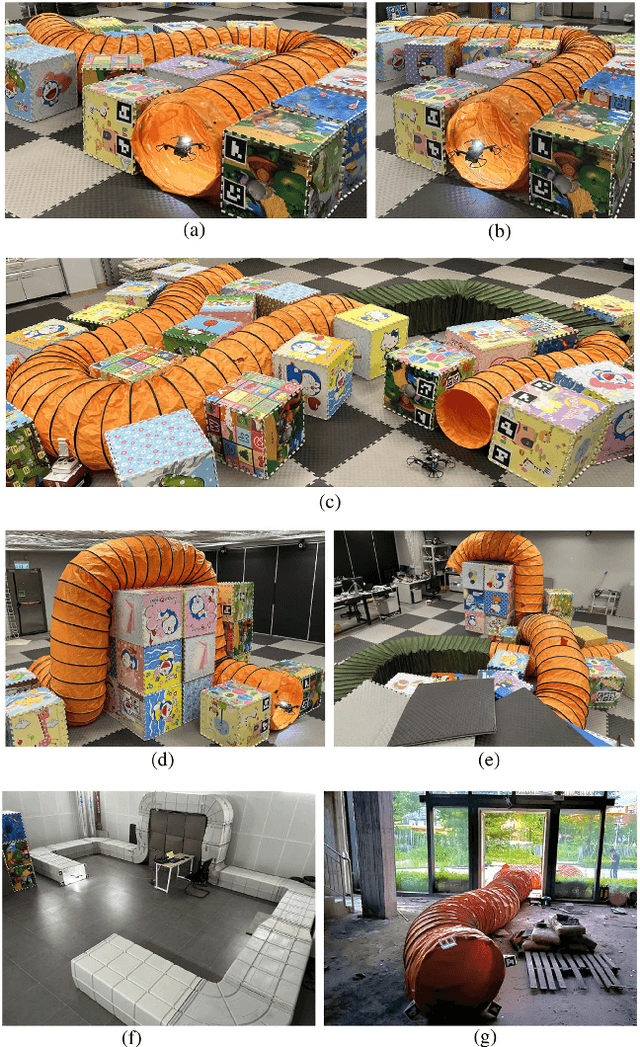
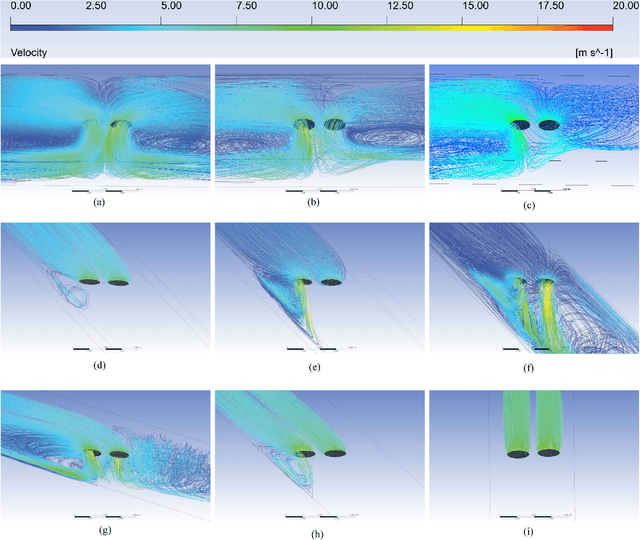
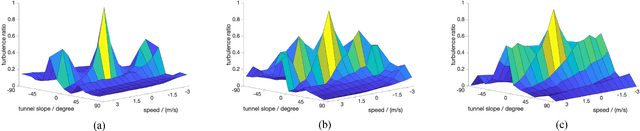
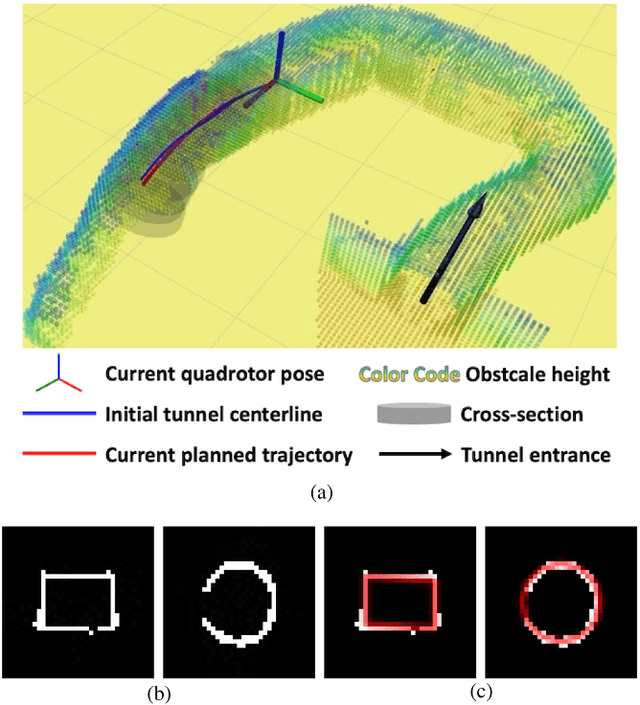
Multirotors are usually desired to enter confined narrow tunnels that are barely accessible to humans in various applications including inspection, search and rescue, and so on. This task is extremely challenging since the lack of geometric features and illuminations, together with the limited field of view, cause problems in perception; the restricted space and significant ego airflow disturbances induce control issues. This paper introduces an autonomous aerial system designed for navigation through tunnels as narrow as 0.5 m in diameter. The real-time and online system includes a virtual omni-directional perception module tailored for the mission and a novel motion planner that incorporates perception and ego airflow disturbance factors modeled using camera projections and computational fluid dynamics analyses, respectively. Extensive flight experiments on a custom-designed quadrotor are conducted in multiple realistic narrow tunnels to validate the superior performance of the system, even over human pilots, proving its potential for real applications. Additionally, a deployment pipeline on other multirotor platforms is outlined and open-source packages are provided for future developments.
Lookahead Q-Cache: Achieving More Consistent KV Cache Eviction via Pseudo Query
May 24, 2025Large language models (LLMs) rely on key-value cache (KV cache) to accelerate decoding by reducing redundant computations. However, the KV cache memory usage grows substantially with longer text sequences, posing challenges for efficient deployment. Existing KV cache eviction methods prune tokens using prefilling-stage attention scores, causing inconsistency with actual inference queries, especially under tight memory budgets. In this paper, we propose Lookahead Q-Cache (LAQ), a novel eviction framework that generates low-cost pseudo lookahead queries to better approximate the true decoding-stage queries. By using these lookahead queries as the observation window for importance estimation, LAQ achieves more consistent and accurate KV cache eviction aligned with real inference scenarios. Experimental results on LongBench and Needle-in-a-Haystack benchmarks show that LAQ outperforms existing methods across various budget levels, achieving a 1 $\sim$ 4 point improvement on LongBench under limited cache budget. Moreover, LAQ is complementary to existing approaches and can be flexibly combined to yield further improvements.
Think Before You Accept: Semantic Reflective Verification for Faster Speculative Decoding
May 24, 2025Large language models (LLMs) suffer from high inference latency due to the auto-regressive decoding process. Speculative decoding accelerates inference by generating multiple draft tokens using a lightweight model and verifying them in parallel. However, existing verification methods rely heavily on distributional consistency while overlooking semantic correctness, thereby limiting the potential speedup of speculative decoding. While some methods employ additional models for relaxed verification of draft tokens, they often fail to generalize effectively to more diverse or open-domain settings. In this work, we propose Reflective Verification, a training-free and semantics-aware approach that achieves a better trade-off between correctness and efficiency. Specifically, we leverage the inherent reflective capacity of LLMs to semantically assess the correctness of draft tokens in parallel during verification. Using prompt-based probing, we obtain both the original and reflective distributions of draft tokens in a single forward pass. The fusion of these distributions enables semantic-level verification of draft tokens that incorporates both consistency and correctness. Experiments across multiple domain benchmarks and model scales demonstrate that our method significantly increases the acceptance length of draft tokens without compromising model performance. Furthermore, we find that the proposed Reflective Verification is orthogonal to existing statistical verification methods, and their combination yields additional 5$\sim$15\% improvements in decoding speed.
Global Convergence for Average Reward Constrained MDPs with Primal-Dual Actor Critic Algorithm
May 21, 2025This paper investigates infinite-horizon average reward Constrained Markov Decision Processes (CMDPs) with general parametrization. We propose a Primal-Dual Natural Actor-Critic algorithm that adeptly manages constraints while ensuring a high convergence rate. In particular, our algorithm achieves global convergence and constraint violation rates of $\tilde{\mathcal{O}}(1/\sqrt{T})$ over a horizon of length $T$ when the mixing time, $\tau_{\mathrm{mix}}$, is known to the learner. In absence of knowledge of $\tau_{\mathrm{mix}}$, the achievable rates change to $\tilde{\mathcal{O}}(1/T^{0.5-\epsilon})$ provided that $T \geq \tilde{\mathcal{O}}\left(\tau_{\mathrm{mix}}^{2/\epsilon}\right)$. Our results match the theoretical lower bound for Markov Decision Processes and establish a new benchmark in the theoretical exploration of average reward CMDPs.
Self-Learning Hyperspectral and Multispectral Image Fusion via Adaptive Residual Guided Subspace Diffusion Model
May 17, 2025Hyperspectral and multispectral image (HSI-MSI) fusion involves combining a low-resolution hyperspectral image (LR-HSI) with a high-resolution multispectral image (HR-MSI) to generate a high-resolution hyperspectral image (HR-HSI). Most deep learning-based methods for HSI-MSI fusion rely on large amounts of hyperspectral data for supervised training, which is often scarce in practical applications. In this paper, we propose a self-learning Adaptive Residual Guided Subspace Diffusion Model (ARGS-Diff), which only utilizes the observed images without any extra training data. Specifically, as the LR-HSI contains spectral information and the HR-MSI contains spatial information, we design two lightweight spectral and spatial diffusion models to separately learn the spectral and spatial distributions from them. Then, we use these two models to reconstruct HR-HSI from two low-dimensional components, i.e, the spectral basis and the reduced coefficient, during the reverse diffusion process. Furthermore, we introduce an Adaptive Residual Guided Module (ARGM), which refines the two components through a residual guided function at each sampling step, thereby stabilizing the sampling process. Extensive experimental results demonstrate that ARGS-Diff outperforms existing state-of-the-art methods in terms of both performance and computational efficiency in the field of HSI-MSI fusion. Code is available at https://github.com/Zhu1116/ARGS-Diff.
Visual moral inference and communication
Apr 12, 2025Humans can make moral inferences from multiple sources of input. In contrast, automated moral inference in artificial intelligence typically relies on language models with textual input. However, morality is conveyed through modalities beyond language. We present a computational framework that supports moral inference from natural images, demonstrated in two related tasks: 1) inferring human moral judgment toward visual images and 2) analyzing patterns in moral content communicated via images from public news. We find that models based on text alone cannot capture the fine-grained human moral judgment toward visual stimuli, but language-vision fusion models offer better precision in visual moral inference. Furthermore, applications of our framework to news data reveal implicit biases in news categories and geopolitical discussions. Our work creates avenues for automating visual moral inference and discovering patterns of visual moral communication in public media.
Pay More Attention to the Robustness of Prompt for Instruction Data Mining
Mar 31, 2025Instruction tuning has emerged as a paramount method for tailoring the behaviors of LLMs. Recent work has unveiled the potential for LLMs to achieve high performance through fine-tuning with a limited quantity of high-quality instruction data. Building upon this approach, we further explore the impact of prompt's robustness on the selection of high-quality instruction data. This paper proposes a pioneering framework of high-quality online instruction data mining for instruction tuning, focusing on the impact of prompt's robustness on the data mining process. Our notable innovation, is to generate the adversarial instruction data by conducting the attack for the prompt of online instruction data. Then, we introduce an Adversarial Instruction-Following Difficulty metric to measure how much help the adversarial instruction data can provide to the generation of the corresponding response. Apart from it, we propose a novel Adversarial Instruction Output Embedding Consistency approach to select high-quality online instruction data. We conduct extensive experiments on two benchmark datasets to assess the performance. The experimental results serve to underscore the effectiveness of our proposed two methods. Moreover, the results underscore the critical practical significance of considering prompt's robustness.
Resource-Efficient Federated Fine-Tuning Large Language Models for Heterogeneous Data
Mar 27, 2025Fine-tuning large language models (LLMs) via federated learning, i.e., FedLLM, has been proposed to adapt LLMs for various downstream applications in a privacy-preserving way. To reduce the fine-tuning costs on resource-constrained devices, FedLoRA is proposed to fine-tune only a small subset of model parameters by integrating low-rank adaptation (LoRA) into FedLLM. However, apart from resource constraints, there is still another critical challenge, i.e., data heterogeneity, severely hindering the implementation of FedLoRA in practical applications. Herein, inspired by the previous group-based federated learning paradigm, we propose a hierarchical FedLoRA framework, termed HierFedLoRA, to address these challenges. Specifically, HierFedLoRA partitions all devices into multiple near-IID groups and adjusts the intra-group aggregation frequency for each group to eliminate the negative effects of non-IID data. Meanwhile, to reduce the computation and communication cost, HierFedLoRA dynamically assigns diverse and suitable fine-tuning depth (i.e., the number of continuous fine-tuning layers from the output) for each group. HierFedLoRA explores jointly optimizing aggregation frequency and depth upon their coupled relationship to better enhance the performance of FedLoRA. Extensive experiments are conducted on a physical platform with 80 commercial devices. The results show that HierFedLoRA improves the final model accuracy by 1.6% to 4.2%, speeding up the fine-tuning process by at least 2.1$\times$, compared to the strong baselines.
A Survey on Transformer Context Extension: Approaches and Evaluation
Mar 17, 2025Large language models (LLMs) based on Transformer have been widely applied in the filed of natural language processing (NLP), demonstrating strong performance, particularly in handling short text tasks. However, when it comes to long context scenarios, the performance of LLMs degrades due to some challenges. To alleviate this phenomenon, there is a number of work proposed recently. In this survey, we first list the challenges of applying pre-trained LLMs to process long contexts. Then systematically review the approaches related to long context and propose our taxonomy categorizing them into four main types: positional encoding, context compression, retrieval augmented, and attention pattern. In addition to the approaches, we focus on the evaluation of long context, organizing relevant data, tasks, and metrics based on existing long context benchmarks. Finally, we summarize unresolved issues in the long context domain and put forward our views on future developments.