 Add to Chrome
 Add to Firefox
 Add to Edge
GeoSearcher: Anchor-Guided Progressive Reasoning for Remote Sensing Visual Grounding with Process Supervision
Jul 01, 2026
Recent multimodal large language models (MLLMs) have shown strong cross-modal understanding and coordinate generation abilities in visual grounding. However, transferring these abilities to remote sensing visual grounding (RSVG) remains challenging. High-resolution remote sensing images usually cover large-scale scenes, where targets are often extremely small and surrounded by numerous visually similar distractors. Meanwhile, queries often contain multiple clues, such as reference objects, spatial relations, and target attributes. Existing MLLM-based methods usually formulate RSVG as one-step coordinate generation, which may lead to unstable predictions for small-object localization and complex queries. To address these challenges, we propose GeoSearcher, which reformulates RSVG as an anchor-guided progressive reasoning process and realizes it through two coupled stages: Anchor-Centric Reasoning Supervised Fine-Tuning (ACR-SFT) and Process-Faithful Group Relative Policy Optimization (PF-GRPO). In ACR-SFT, anchor-centric reasoning data are used to teach the model to represent key visual clues as anchors and progressively integrate location, relational, and attribute clues around them. In PF-GRPO, Process-Aware Reward (PAR) and Reasoning-Informative Sample Selector (RISS) further optimize this reasoning behavior by jointly evaluating key reasoning steps and target localization, while focusing training on samples that are more beneficial for improving progressive reasoning. Through this design, GeoSearcher transforms large-scale visual search into a more constrained local reasoning process. Extensive experiments on DIOR-RSVG, OPT-RSVG, and VRS-Bench show that GeoSearcher outperforms existing state-of-the-art methods. The project will be released at https://github.com/wangdianyu954-xixi/GeoSearcher.

AetheRock: An Arm-Worn Robot Teaching System for Force-Guided Vision-Tactile Learning
Jun 08, 2026Force and tactile sensing are indispensable in contact-rich manipulation. However, force-aware robot learning faces critical challenges due to the incompatible assembly of tactile and force sensors in handheld or wearable devices. To address these limitations, we first introduce AetheRock for gripper-force, vision, and tactile data collection, which is an arm-worn device featuring a modular and easily manufactured visuo-tactile sensor, GelSlim-MiniFab, at the fingertip, a resistive pressure sensor at the human finger contact region, a customized PCB module, and a wearable kit for comfortable and robust collection. Building on this, we propose ForceVT, a representation learning framework that uses force and vision to guide fidelity-agnostic tactile learning, enabling robust inference in any tactile situation. Real-world experiments show that AetheRock achieves qualified data efficiency and that ForceVT effectively alleviates inefficiencies when visuo-tactile sensors exhibit manufacturing and utilization inconsistencies. Overall, our work mitigates the limitations of gripper-force vision-tactile robot learning through innovative hardware design and algorithms.
CLIP-Guided Data Augmentation for Night-Time Image Dehazing
Apr 07, 2026Nighttime image dehazing faces a more complex degradation pattern than its daytime counterpart, as haze scattering couples with low illumination, non-uniform lighting, and strong light interference. Under limited supervision, this complexity aggravates domain drift and training instability, since target-domain samples are scarce while naively introducing external data may weaken adaptation due to distribution mismatch. This paper presents our solution to the NTIRE 2026 Night Time Image Dehazing Challenge, built as a unified framework that integrates domain-aligned data construction, stage-wise training, and inference-time enhancement. Specifically, a pre-trained CLIP visual encoder screens candidate external samples by similarity to construct training data closer to the target domain. NAFNet is then trained in two stages, first adapting to the target domain and then expanding to broader degradation patterns. At inference time, TLC, x8 self-ensemble, and weighted snapshot fusion are combined to improve output stability. Rather than relying on complex network redesign, the proposed framework offers a practical and effective pipeline for nighttime image dehazing.
Generative modeling of granular flow on inclined planes using conditional flow matching
Apr 06, 2026Granular flows govern many natural and industrial processes, yet their interior kinematics and mechanics remain largely unobservable, as experiments access only boundaries or free surfaces. Conventional numerical simulations are computationally expensive for fast inverse reconstruction, and deterministic models tend to collapse to over-smoothed mean predictions in ill-posed settings. This study, to the best of the authors' knowledge, presents the first conditional flow matching (CFM) framework for granular-flow reconstruction from sparse boundary observations. Trained on high-fidelity particle-resolved discrete element simulations, the generative model is guided at inference by a differentiable forward operator with a sparsity-aware gradient guidance mechanism, which enforces measurement consistency without hyperparameter tuning and prevents unphysical velocity predictions in non-material regions. A physics decoder maps the reconstructed velocity fields to stress states and energy fluctuation quantities, including mean stress, deviatoric stress, and granular temperature. The framework accurately recovers interior flow fields from full observation to only 16% of the informative window, and it remains effective under strongly diluted spatial resolution with only 11% of data. It also outperforms a deterministic CNN baseline in the most ill-posed reconstruction regime and provides spatially resolved uncertainty estimates through ensemble generation. These results demonstrate that conditional generative modeling offers a practical route for non-invasive inference of hidden bulk mechanics in granular media, with broader applicability for inverse problems in particulate and multiphase systems.
Foundation Models in Remote Sensing: Evolving from Unimodality to Multimodality
Mar 01, 2026Remote sensing (RS) techniques are increasingly crucial for deepening our understanding of the planet. As the volume and diversity of RS data continue to grow exponentially, there is an urgent need for advanced data modeling and understanding capabilities to manage and interpret these vast datasets effectively. Foundation models present significant new growth opportunities and immense potential to revolutionize the RS field. In this paper, we conduct a comprehensive technical survey on foundation models in RS, offering a brand-new perspective by exploring their evolution from unimodality to multimodality. We hope this work serves as a valuable entry point for researchers interested in both foundation models and RS and helps them launch new projects or explore new research topics in this rapidly evolving area. This survey addresses the following three key questions: What are foundation models in RS? Why are foundation models needed in RS? How can we effectively guide junior researchers in gaining a comprehensive and practical understanding of foundation models in RS applications? More specifically, we begin by outlining the background and motivation, emphasizing the importance of foundation models in RS. We then review existing foundation models in RS, systematically categorizing them into unimodal and multimodal approaches. Additionally, we provide a tutorial-like section to guide researchers, especially beginners, on how to train foundation models in RS and apply them to real-world tasks. The survey aims to equip researchers in RS with a deeper and more efficient understanding of foundation models, enabling them to get started easily and effectively apply these models across various RS applications.
STARS: Shared-specific Translation and Alignment for missing-modality Remote Sensing Semantic Segmentation
Jan 24, 2026Multimodal remote sensing technology significantly enhances the understanding of surface semantics by integrating heterogeneous data such as optical images, Synthetic Aperture Radar (SAR), and Digital Surface Models (DSM). However, in practical applications, the missing of modality data (e.g., optical or DSM) is a common and severe challenge, which leads to performance decline in traditional multimodal fusion models. Existing methods for addressing missing modalities still face limitations, including feature collapse and overly generalized recovered features. To address these issues, we propose \textbf{STARS} (\textbf{S}hared-specific \textbf{T}ranslation and \textbf{A}lignment for missing-modality \textbf{R}emote \textbf{S}ensing), a robust semantic segmentation framework for incomplete multimodal inputs. STARS is built on two key designs. First, we introduce an asymmetric alignment mechanism with bidirectional translation and stop-gradient, which effectively prevents feature collapse and reduces sensitivity to hyperparameters. Second, we propose a Pixel-level Semantic sampling Alignment (PSA) strategy that combines class-balanced pixel sampling with cross-modality semantic alignment loss, to mitigate alignment failures caused by severe class imbalance and improve minority-class recognition.
Any-Optical-Model: A Universal Foundation Model for Optical Remote Sensing
Dec 19, 2025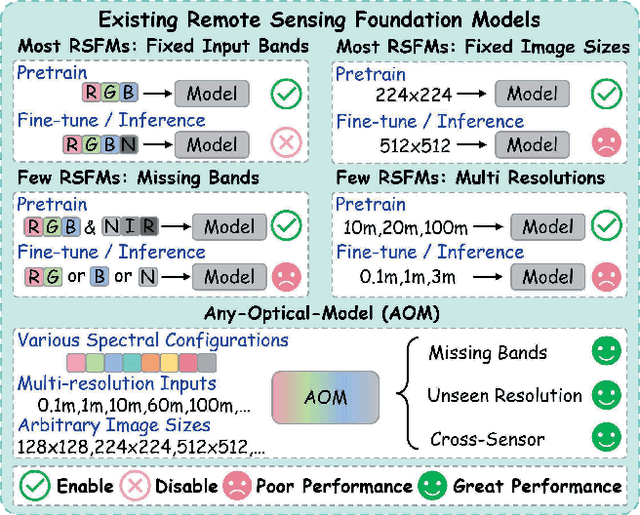
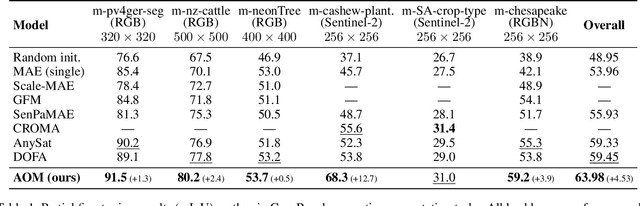
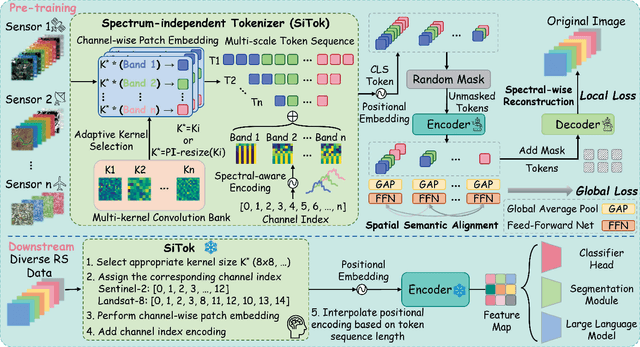
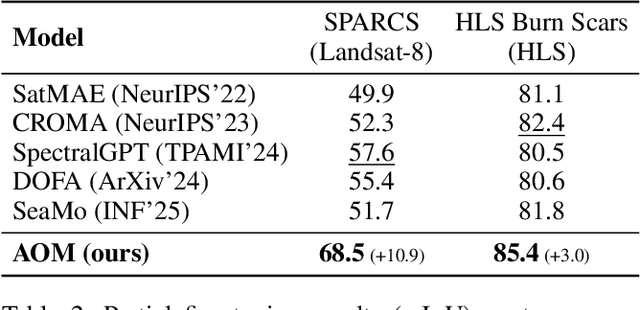
Optical satellites, with their diverse band layouts and ground sampling distances, supply indispensable evidence for tasks ranging from ecosystem surveillance to emergency response. However, significant discrepancies in band composition and spatial resolution across different optical sensors present major challenges for existing Remote Sensing Foundation Models (RSFMs). These models are typically pretrained on fixed band configurations and resolutions, making them vulnerable to real world scenarios involving missing bands, cross sensor fusion, and unseen spatial scales, thereby limiting their generalization and practical deployment. To address these limitations, we propose Any Optical Model (AOM), a universal RSFM explicitly designed to accommodate arbitrary band compositions, sensor types, and resolution scales. To preserve distinctive spectral characteristics even when bands are missing or newly introduced, AOM introduces a spectrum-independent tokenizer that assigns each channel a dedicated band embedding, enabling explicit encoding of spectral identity. To effectively capture texture and contextual patterns from sub-meter to hundred-meter imagery, we design a multi-scale adaptive patch embedding mechanism that dynamically modulates the receptive field. Furthermore, to maintain global semantic consistency across varying resolutions, AOM incorporates a multi-scale semantic alignment mechanism alongside a channel-wise self-supervised masking and reconstruction pretraining strategy that jointly models spectral-spatial relationships. Extensive experiments on over 10 public datasets, including those from Sentinel-2, Landsat, and HLS, demonstrate that AOM consistently achieves state-of-the-art (SOTA) performance under challenging conditions such as band missing, cross sensor, and cross resolution settings.
TSGDiff: Rethinking Synthetic Time Series Generation from a Pure Graph Perspective
Nov 15, 2025Diffusion models have shown great promise in data generation, yet generating time series data remains challenging due to the need to capture complex temporal dependencies and structural patterns. In this paper, we present \textit{TSGDiff}, a novel framework that rethinks time series generation from a graph-based perspective. Specifically, we represent time series as dynamic graphs, where edges are constructed based on Fourier spectrum characteristics and temporal dependencies. A graph neural network-based encoder-decoder architecture is employed to construct a latent space, enabling the diffusion process to model the structural representation distribution of time series effectively. Furthermore, we propose the Topological Structure Fidelity (Topo-FID) score, a graph-aware metric for assessing the structural similarity of time series graph representations. Topo-FID integrates two sub-metrics: Graph Edit Similarity, which quantifies differences in adjacency matrices, and Structural Entropy Similarity, which evaluates the entropy of node degree distributions. This comprehensive metric provides a more accurate assessment of structural fidelity in generated time series. Experiments on real-world datasets demonstrate that \textit{TSGDiff} generates high-quality synthetic time series data generation, faithfully preserving temporal dependencies and structural integrity, thereby advancing the field of synthetic time series generation.
A Weak Penalty Neural ODE for Learning Chaotic Dynamics from Noisy Time Series
Nov 10, 2025Accurate forecasting of complex high-dimensional dynamical systems from observational data is essential for several applications across science and engineering. A key challenge, however, is that real-world measurements are often corrupted by noise, which severely degrades the performance of data-driven models. Particularly, in chaotic dynamical systems, where small errors amplify rapidly, it is challenging to identify a data-driven model from noisy data that achieves short-term accuracy while preserving long-term invariant properties. In this paper, we propose the use of the weak formulation as a complementary approach to the classical strong formulation of data-driven time-series forecasting models. Specifically, we focus on the neural ordinary differential equation (NODE) architecture. Unlike the standard strong formulation, which relies on the discretization of the NODE followed by optimization, the weak formulation constrains the model using a set of integrated residuals over temporal subdomains. While such a formulation yields an effective NODE model, we discover that the performance of a NODE can be further enhanced by employing this weak formulation as a penalty alongside the classical strong formulation-based learning. Through numerical demonstrations, we illustrate that our proposed training strategy, which we coined as the Weak-Penalty NODE (WP-NODE), achieves state-of-the-art forecasting accuracy and exceptional robustness across benchmark chaotic dynamical systems.
FlexiMo: A Flexible Remote Sensing Foundation Model
Mar 31, 2025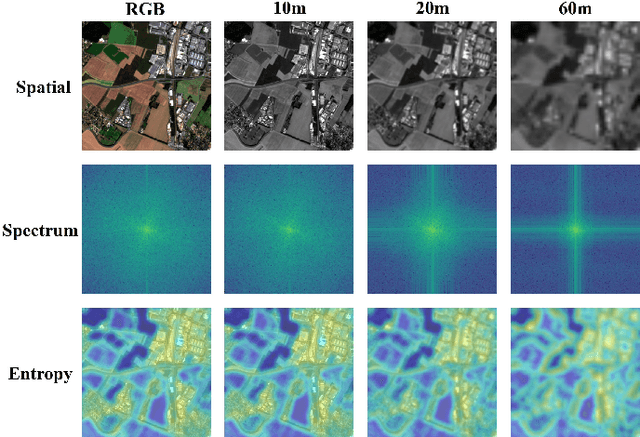
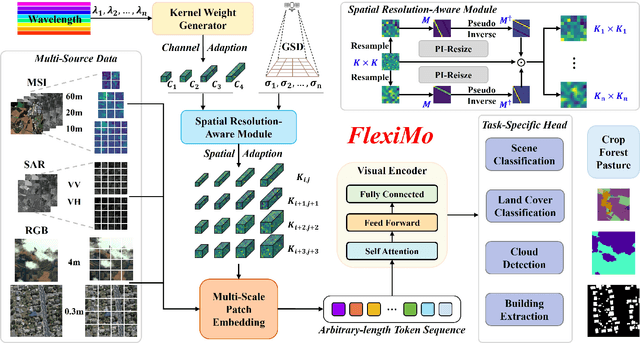
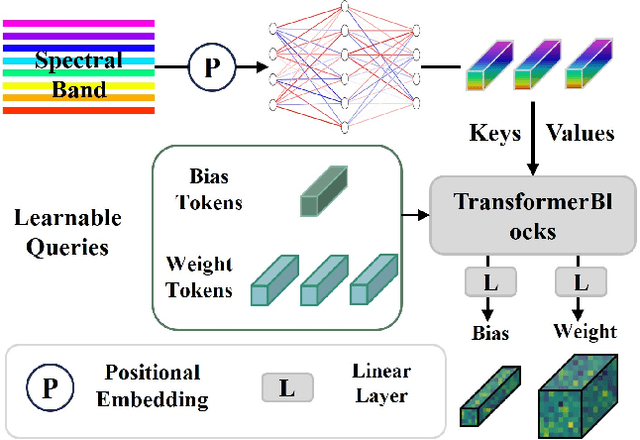
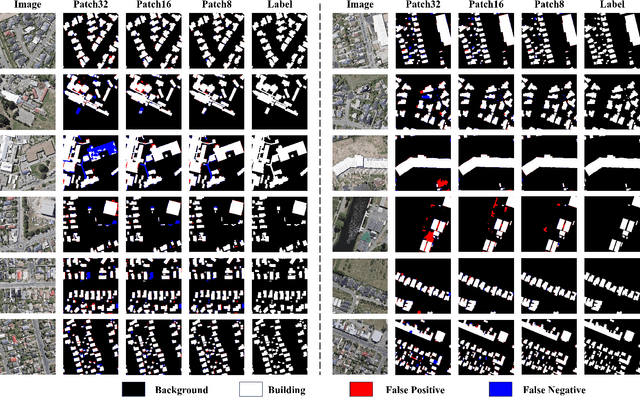
The rapid expansion of multi-source satellite imagery drives innovation in Earth observation, opening unprecedented opportunities for Remote Sensing Foundation Models to harness diverse data. However, many existing models remain constrained by fixed spatial resolutions and patch sizes, limiting their ability to fully exploit the heterogeneous spatial characteristics inherent in satellite imagery. To address these challenges, we propose FlexiMo, a flexible remote sensing foundation model that endows the pre-trained model with the flexibility to adapt to arbitrary spatial resolutions. Central to FlexiMo is a spatial resolution-aware module that employs a parameter-free alignment embedding mechanism to dynamically recalibrate patch embeddings based on the input image's resolution and dimensions. This design not only preserves critical token characteristics and ensures multi-scale feature fidelity but also enables efficient feature extraction without requiring modifications to the underlying network architecture. In addition, FlexiMo incorporates a lightweight channel adaptation module that leverages prior spectral information from sensors. This mechanism allows the model to process images with varying numbers of channels while maintaining the data's intrinsic physical properties. Extensive experiments on diverse multimodal, multi-resolution, and multi-scale datasets demonstrate that FlexiMo significantly enhances model generalization and robustness. In particular, our method achieves outstanding performance across a range of downstream tasks, including scene classification, land cover classification, urban building segmentation, and cloud detection. By enabling parameter-efficient and physically consistent adaptation, FlexiMo paves the way for more adaptable and effective foundation models in real-world remote sensing applications.