 Add to Chrome
 Add to Firefox
 Add to Edge
Hy-MultiTurn: A Six-Dimensional Benchmark for Deep Multi-Turn Dialogue Understanding
Jul 31, 2026
Long-running multi-turn interactions with chatbots and agents are now common, and a correct response often depends on remembering earlier details, tracking later revisions, identifying intended objects or referents, and withholding action when required conditions are unmet. Existing multi-turn benchmarks typically cover short exchanges and do not fully evaluate these capabilities in long multi-turn interactions, particularly in Chinese, while offering limited insight into how and why models fail. To address these limitations, we analyze real chatbot failures to identify six recurring mechanisms and use them to define six controlled evaluation modes in Hy-MultiTurn, a Chinese benchmark for deep multi-turn dialogue understanding. The six modes evaluate constraint memory, precise execution, constraint synthesis, object localization, action suppression, and reference resolution. Across the six modes, we construct 209 controlled tasks spanning 12-76 turns, with dialogue length, irrelevant-topic distraction, and colloquial phrasing adding further difficulty. Evaluation of 22 frontier model configurations shows that Hy-MultiTurn is broadly challenging, as even GPT-5.5, the strongest overall configuration, satisfies all requirements in only 41.1 percent of responses and no model performs best in all six modes.

Beyond Rephrasing: Book-Level Organization Improves Synthetic Textbook Data for Mid-Training
Jul 30, 2026Synthetic textbook data has improved language model pre-training, but prior work largely treats the benefit as a property of generated content or local rewriting style. We study a different factor: whether related content is organized into coherent book-level documents. We contribute both a scalable synthesis pipeline and controlled evidence that this organization matters. The pipeline retrieves source material from a pre-training corpus, clusters it into topical units, plans hierarchical tables of contents, and assembles source-grounded sections into complete books (our Full setting), yielding 686K textbooks (32B tokens) across 15,000+ disciplines. Replacing natural books in a mid-training mix with this corpus improves downstream performance by +1.09 on average. Controlled comparisons then disentangle the relevant design factors. A content-matched Split condition holds generated text and tokens fixed but treats each section as an independent document; Full's +1.02 mean gain isolates document packaging. A length-matched RandomConcat control that joins sections from different books remains below Full, ruling out document length alone. A retrieval-pool-matched Rephrase condition independently rewrites individual retrieved documents under the same audience-by-style scheme, without clustering, TOC planning, or book assembly; Full's +1.17 gain demonstrates the value of structured synthesis. On Llama3-8B, Full likewise outperforms both RandomConcat and Natural Books, supporting book-level organization as a useful axis for synthetic pre-training data design.
ESPO: Early-Stopping Proximal Policy Optimization
May 28, 2026When a large language model under reinforcement learning commits a wrong reasoning step early in a trajectory, standard algorithms force it to keep generating until the maximum horizon, spending compute on tokens that never receive positive reward and polluting advantage estimates with post-failure noise. We propose ESPO (Early-Stopping Proximal Policy Optimization), which detects trajectory failure on-the-fly and terminates rollouts early. At each generation step, ESPO computes a surrogate regret using only the logits already computed during sampling, and terminates when the smoothed cumulative regret significantly exceeds its estimated values. Truncated trajectories are treated as absorbing failure states with a terminal reward, concentrating negative temporal-difference (TD) errors near the detected failure step without any additional reward model or human annotation. On DeepSeek-R1-Distill-Qwen-7B trained for mathematical reasoning, ESPO surpasses PPO on AIME~2024 (46.28% vs. 45.25%), AMC~2023 (85.83% vs. 82.94%), and MATH-500 (87.42% vs. 85.43%), while saving more than 20% rollout tokens cumulatively.
Harness-Bench: Measuring Harness Effects across Models in Realistic Agent Workflows
May 27, 2026LLM agents are increasingly deployed as executable systems that use tools, modify workspaces, and produce concrete artifacts. In such workflows, performance depends not only on the base model, but also on the harness: the system layer that manages context, tools, state, constraints, permissions, tracing, and recovery. However, existing benchmarks typically abstract away execution, compare complete agent systems, or hold the harness fixed, making execution-layer variation difficult to study. We introduce Harness-Bench, a diagnostic benchmark for evaluating configuration-level harness effects in realistic agent workflows. Harness-Bench evaluates representative harness configurations across multiple model backends under shared task environments, budgets, and evaluation protocols, while preserving each harness's native execution behavior. The benchmark contains 106 sandboxed offline tasks constructed from practical agent-use patterns and manually reviewed for realism, solvability, oracle-checkability, and integrity. Each run records final artifacts, execution traces, usage statistics, and validator outputs, enabling analysis beyond final completion. Across 5,194 execution trajectories, we observe substantial variation in completion, process quality, efficiency, and failure behavior across model-harness pairings. These results suggest that agent capability should be reported at the model-harness configuration level rather than attributed to the base model alone. Our analysis further identifies recurring execution-alignment failures, where plausible reasoning becomes decoupled from tool feedback, workspace state, evidence, or verifiable output contracts. Harness-Bench provides a reproducible foundation for diagnosing and improving reliable, efficient, and auditable agent execution stacks.
MemAudit: Post-hoc Auditing of Poisoned Agent Memory via Causal Attribution and Structural Anomaly Detection
May 22, 2026Large language model agents increasingly rely on persistent memory to store past interactions, retrieve relevant demonstrations, and improve long-horizon task execution. However, this memory mechanism also creates a practical security vulnerability: an adversarial user may inject malicious records into the agent's memory through ordinary interaction, and these records can later be retrieved to steer the agent's reasoning and actions. Existing defenses primarily focus on online intervention, such as prompt filtering or output blocking, but they do not address the post-hoc question of which stored memories are responsible after harmful behavior has already been observed. We propose \textbf{MemAudit}, a post-hoc causal memory auditing framework for memory-augmented LLM agents. The framework combines two complementary signals: (1) a counterfactual memory influence score that measures each memory's causal contribution to harmful outputs, and (2) a memory consistency graph that identifies structurally anomalous memories within the broader memory store. We evaluate MemAudit against MINJA, a query-only memory injection attack in which malicious records are generated and stored through normal agent interactions rather than direct memory-bank modification. Across both QA and reasoning-agent settings, MemAudit substantially reduces attack success rates under realistic post-hoc auditing scenarios. The results show that QA attack success is reduced from $70\%$ to $0\%$, while RAP attack success drops from $83.3\%$ to $0\%$.
TriPlay-RL: Tri-Role Self-Play Reinforcement Learning for LLM Safety Alignment
Jan 26, 2026In recent years, safety risks associated with large language models have become increasingly prominent, highlighting the urgent need to mitigate the generation of toxic and harmful content. The mainstream paradigm for LLM safety alignment typically adopts a collaborative framework involving three roles: an attacker for adversarial prompt generation, a defender for safety defense, and an evaluator for response assessment. In this paper, we propose a closed-loop reinforcement learning framework called TriPlay-RL that enables iterative and co-improving collaboration among three roles with near-zero manual annotation. Experimental results show that the attacker preserves high output diversity while achieving a 20%-50% improvement in adversarial effectiveness; the defender attains 10%-30% gains in safety performance without degrading general reasoning capability; and the evaluator continuously refines its fine-grained judgment ability through iterations, accurately distinguishing unsafe responses, simple refusals, and useful guidance. Overall, our framework establishes an efficient and scalable paradigm for LLM safety alignment, enabling continuous co-evolution within a unified learning loop.
EntroCoT: Enhancing Chain-of-Thought via Adaptive Entropy-Guided Segmentation
Jan 08, 2026Chain-of-Thought (CoT) prompting has significantly enhanced the mathematical reasoning capabilities of Large Language Models. We find existing fine-tuning datasets frequently suffer from the "answer right but reasoning wrong" probelm, where correct final answers are derived from hallucinated, redundant, or logically invalid intermediate steps. This paper proposes EntroCoT, a unified framework for automatically identifying and refining low-quality CoT supervision traces. EntroCoT first proposes an entropy-based mechanism to segment the reasoning trace into multiple steps at uncertain junctures, and then introduces a Monte Carlo rollout-based mechanism to evaluate the marginal contribution of each step. By accurately filtering deceptive reasoning samples, EntroCoT constructs a high-quality dataset where every intermediate step in each reasoning trace facilitates the final answer. Extensive experiments on mathematical benchmarks demonstrate that fine-tuning on the subset constructed by EntroCoT consistently outperforms the baseslines of full-dataset supervision.
MCPAgentBench: A Real-world Task Benchmark for Evaluating LLM Agent MCP Tool Use
Dec 31, 2025Large Language Models (LLMs) are increasingly serving as autonomous agents, and their utilization of external tools via the Model Context Protocol (MCP) is considered a future trend. Current MCP evaluation sets suffer from issues such as reliance on external MCP services and a lack of difficulty awareness. To address these limitations, we propose MCPAgentBench, a benchmark based on real-world MCP definitions designed to evaluate the tool-use capabilities of agents. We construct a dataset containing authentic tasks and simulated MCP tools. The evaluation employs a dynamic sandbox environment that presents agents with candidate tool lists containing distractors, thereby testing their tool selection and discrimination abilities. Furthermore, we introduce comprehensive metrics to measure both task completion rates and execution efficiency. Experiments conducted on various latest mainstream Large Language Models reveal significant performance differences in handling complex, multi-step tool invocations. All code is open-source at Github.
Benchmarking Multi-Step Legal Reasoning and Analyzing Chain-of-Thought Effects in Large Language Models
Nov 19, 2025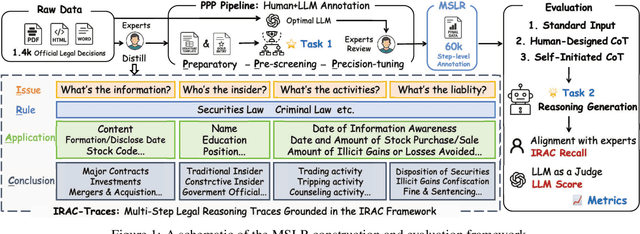
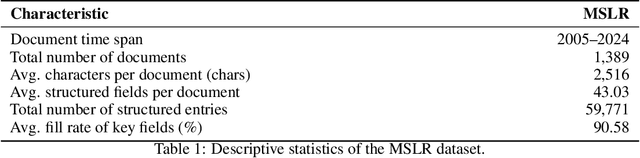
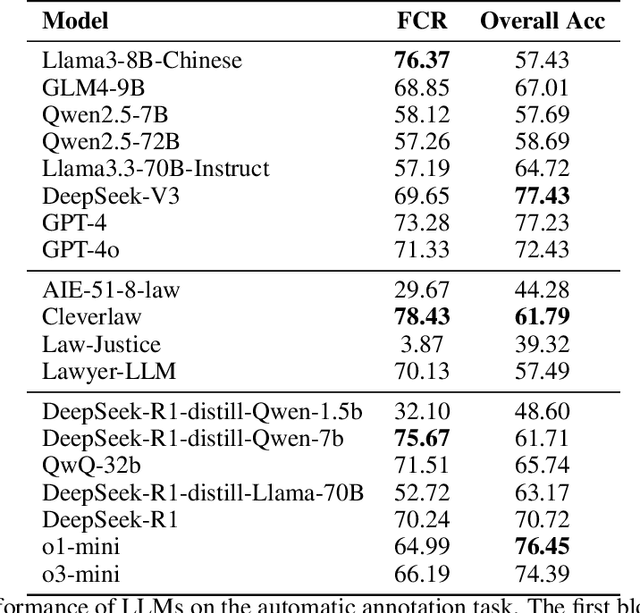
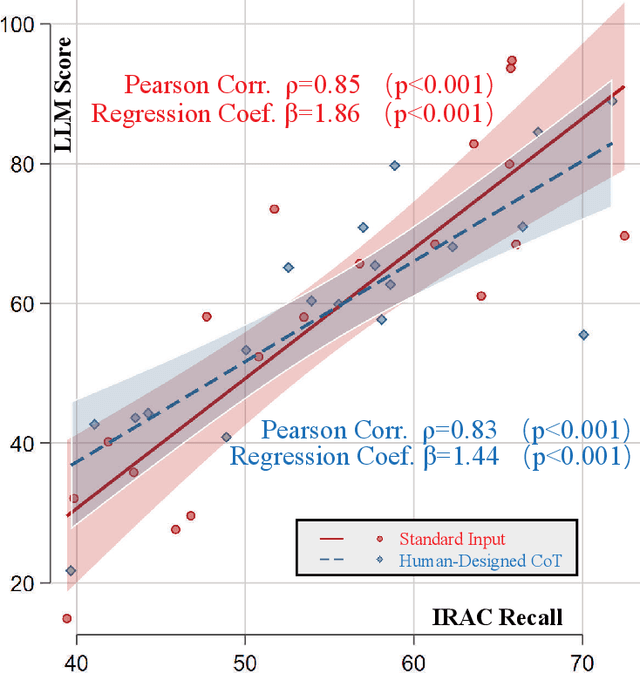
Large language models (LLMs) have demonstrated strong reasoning abilities across specialized domains, motivating research into their application to legal reasoning. However, existing legal benchmarks often conflate factual recall with genuine inference, fragment the reasoning process, and overlook the quality of reasoning. To address these limitations, we introduce MSLR, the first Chinese multi-step legal reasoning dataset grounded in real-world judicial decision making. MSLR adopts the IRAC framework (Issue, Rule, Application, Conclusion) to model structured expert reasoning from official legal documents. In addition, we design a scalable Human-LLM collaborative annotation pipeline that efficiently produces fine-grained step-level reasoning annotations and provides a reusable methodological framework for multi-step reasoning datasets. Evaluation of multiple LLMs on MSLR shows only moderate performance, highlighting the challenges of adapting to complex legal reasoning. Further experiments demonstrate that Self-Initiated Chain-of-Thought prompts generated by models autonomously improve reasoning coherence and quality, outperforming human-designed prompts. MSLR contributes to advancing LLM reasoning and Chain-of-Thought strategies and offers open resources for future research. The dataset and code are available at https://github.com/yuwenhan07/MSLR-Bench and https://law.sjtu.edu.cn/flszyjzx/index.html.
BBox DocVQA: A Large Scale Bounding Box Grounded Dataset for Enhancing Reasoning in Document Visual Question Answer
Nov 19, 2025Document Visual Question Answering (DocVQA) is a fundamental task for multimodal document understanding and a key testbed for vision language reasoning. However, most existing DocVQA datasets are limited to the page level and lack fine grained spatial grounding, constraining the interpretability and reasoning capability of Vision Language Models (VLMs). To address this gap, we introduce BBox DocVQA a large scale, bounding box grounded dataset designed to enhance spatial reasoning and evidence localization in visual documents. We further present an automated construction pipeline, Segment Judge and Generate, which integrates a segment model for region segmentation, a VLM for semantic judgment, and another advanced VLM for question answer generation, followed by human verification for quality assurance. The resulting dataset contains 3.6 K diverse documents and 32 K QA pairs, encompassing single and multi region as well as single and multi page scenarios. Each QA instance is grounded on explicit bounding boxes, enabling fine grained evaluation of spatial semantic alignment. Benchmarking multiple state of the art VLMs (e.g., GPT 5, Qwen2.5 VL, and InternVL) on BBox DocVQA reveals persistent challenges in spatial grounding and reasoning accuracy. Furthermore, fine tuning on BBox DocVQA substantially improves both bounding box localization and answer generation, validating its effectiveness for enhancing the reasoning ability of VLMs. Our dataset and code will be publicly released to advance research on interpretable and spatially grounded vision language reasoning.