 Add to Chrome
 Add to Firefox
 Add to Edge
Schema-Aware Planning and Hybrid Knowledge Toolset for Reliable Knowledge Graph Triple Verification
Apr 05, 2026
Knowledge Graphs (KGs) serve as a critical foundation for AI systems, yet their automated construction inevitably introduces noise, compromising data trustworthiness. Existing triple verification methods, based on graph embeddings or language models, often suffer from single-source bias by relying on either internal structural constraints or external semantic evidence, and usually follow a static inference paradigm. As a result, they struggle with complex or long-tail facts and provide limited interpretability. To address these limitations, we propose SHARP (Schema-Hybrid Agent for Reliable Prediction), a training-free autonomous agent that reformulates triple verification as a dynamic process of strategic planning, active investigation, and evidential reasoning. Specifically, SHARP combines a Memory-Augmented Mechanism with Schema-Aware Strategic Planning to improve reasoning stability, and employs an enhanced ReAct loop with a Hybrid Knowledge Toolset to dynamically integrate internal KG structure and external textual evidence for cross-verification. Experiments on FB15K-237 and Wikidata5M-Ind show that SHARP significantly outperforms existing state-of-the-art baselines, achieving accuracy gains of 4.2% and 12.9%, respectively. Moreover, SHARP provides transparent, fact-based evidence chains for each judgment, demonstrating strong interpretability and robustness for complex verification tasks.

Expert Streaming: Accelerating Low-Batch MoE Inference via Multi-chiplet Architecture and Dynamic Expert Trajectory Scheduling
Mar 29, 2026Mixture-of-Experts is a promising approach for edge AI with low-batch inference. Yet, on-device deployments often face limited on-chip memory and severe workload imbalance; the prevalent use of offloading further incurs off-chip memory access bottlenecks. Moreover, MoE sparsity and dynamic gating shift distributed strategies toward much finer granularity and introduce runtime scheduling considerations. Recently, high die-to-die bandwidth chiplet interconnects have created new opportunities for multi-chiplet systems to address workload imbalance and offloading bottlenecks with fine-grained scheduling. In this paper, we propose Fully Sharded Expert Data Parallelism, a parallelization paradigm specifically architected for low-batch MoE inference on multi-chiplet accelerators. FSE-DP attains adaptive computation-communication overlap and balanced load by orchestrating fine-grained, complementary expert streams along dynamic trajectories across high-bandwidth D2D links. The attendant dataflow complexity is tamed by a minimal, hardware-amenable set of virtualization rules and a lightweight scheduling algorithm. Our approach achieves 1.22 to 2.00 times speedup over state-of-the-art baselines and saves up to 78.8 percent on-chip memory.
Loosely-Structured Software: Engineering Context, Structure, and Evolution Entropy in Runtime-Rewired Multi-Agent Systems
Mar 16, 2026As LLM-based multi-agent systems (MAS) become more autonomous, their free-form interactions increasingly dominate system behavior. However, scaling the number of agents often amplifies context pressure, coordination errors, and system drift. It is well known that building robust MAS requires more than prompt tuning or increased model intelligence. It necessitates engineering discipline focused on architecture to manage complexity under uncertainty. We characterize agentic software by a core property: \emph{runtime generation and evolution under uncertainty}. Drawing upon and extending software engineering experience, especially object-oriented programming, this paper introduces \emph{Loosely-Structured Software (LSS)}, a new class of software systems that shifts the engineering focus from constructing deterministic logic to managing the runtime entropy generated by View-constructed programming, semantic-driven self-organization, and endogenous evolution. To make this entropy governable, we introduce design principles under a three-layer engineering framework: \emph{View/Context Engineering} to manage the execution environment and maintain task-relevant Views, \emph{Structure Engineering} to organize dynamic binding over artifacts and agents, and \emph{Evolution Engineering} to govern the lifecycle of self-rewriting artifacts. Building on this framework, we develop LSS design patterns as semantic control blocks that stabilize fluid, inference-mediated interactions while preserving agent adaptability. Together, these abstractions improve the \emph{designability}, \emph{scalability}, and \emph{evolvability} of agentic infrastructure. We provide basic experimental validation of key mechanisms, demonstrating the effectiveness of LSS.
General-purpose Dataflow Model with Neuromorphic Primitives
Aug 02, 2024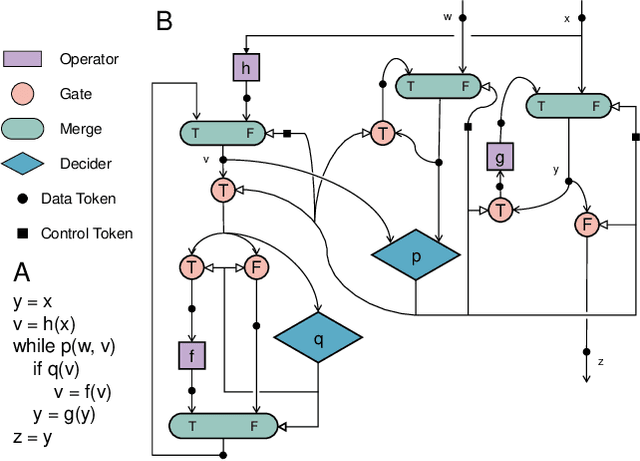
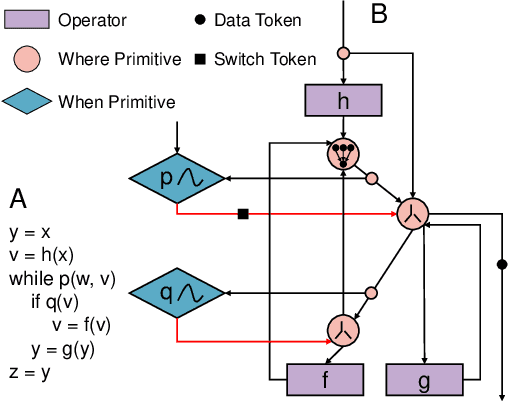
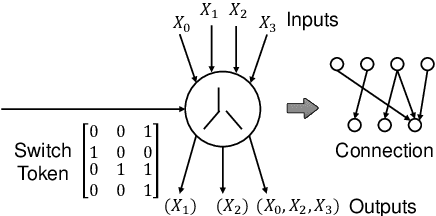
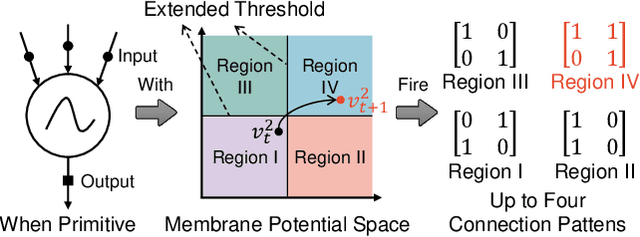
Neuromorphic computing exhibits great potential to provide high-performance benefits in various applications beyond neural networks. However, a general-purpose program execution model that aligns with the features of neuromorphic computing is required to bridge the gap between program versatility and neuromorphic hardware efficiency. The dataflow model offers a potential solution, but it faces high graph complexity and incompatibility with neuromorphic hardware when dealing with control flow programs, which decreases the programmability and performance. Here, we present a dataflow model tailored for neuromorphic hardware, called neuromorphic dataflow, which provides a compact, concise, and neuromorphic-compatible program representation for control logic. The neuromorphic dataflow introduces "when" and "where" primitives, which restructure the view of control. The neuromorphic dataflow embeds these primitives in the dataflow schema with the plasticity inherited from the spiking algorithms. Our method enables the deployment of general-purpose programs on neuromorphic hardware with both programmability and plasticity, while fully utilizing the hardware's potential.
Solution-oriented Agent-based Models Generation with Verifier-assisted Iterative In-context Learning
Feb 04, 2024Agent-based models (ABMs) stand as an essential paradigm for proposing and validating hypothetical solutions or policies aimed at addressing challenges posed by complex systems and achieving various objectives. This process demands labor-intensive endeavors and multidisciplinary expertise. Large language models (LLMs) encapsulating cross-domain knowledge and programming proficiency could potentially alleviate the difficulty of this process. However, LLMs excel in handling sequential information, making it challenging for analyzing the intricate interactions and nonlinear dynamics inherent in ABMs. Additionally, due to the lack of self-evaluation capability of LLMs, relying solely on LLMs is insufficient to effectively accomplish this process. In this paper, we present SAGE, a general solution-oriented ABM generation framework designed for automatic modeling and generating solutions for targeted problems. Unlike approaches reliant on expert handcrafting or resource-intensive neural network training, SAGE establishes a verifier-assisted iterative in-context learning process employing large language models (LLMs) to leverages their inherent cross-domain knowledge for tackling intricate demands from diverse domain scenarios. In SAGE, we introduce an semi-structured conceptual representation expliciting the intricate structures of ABMs and an objective representation to guide LLMs in modeling scenarios and proposing hypothetical solutions through in-context learning. To ensure the model executability and solution feasibility, SAGE devises a two-level verifier with chain-of-thought prompting tailored to the complex interactions and non-linear dynamics of ABMs, driving the iterative generation optimization. Moreover, we construct an evaluation dataset of solution-oriented ABMs from open sources.It contains practical models across various domains.
General Automatic Solution Generation of Social Problems
Jan 25, 2024Given the escalating intricacy and multifaceted nature of contemporary social systems, manually generating solutions to address pertinent social issues has become a formidable task. In response to this challenge, the rapid development of artificial intelligence has spurred the exploration of computational methodologies aimed at automatically generating solutions. However, current methods for auto-generation of solutions mainly concentrate on local social regulations that pertain to specific scenarios. Here, we report an automatic social operating system (ASOS) designed for general social solution generation, which is built upon agent-based models, enabling both global and local analyses and regulations of social problems across spatial and temporal dimensions. ASOS adopts a hypergraph with extensible social semantics for a comprehensive and structured representation of social dynamics. It also incorporates a generalized protocol for standardized hypergraph operations and a symbolic hybrid framework that delivers interpretable solutions, yielding a balance between regulatory efficacy and function viability. To demonstrate the effectiveness of ASOS, we apply it to the domain of averting extreme events within international oil futures markets. By generating a new trading role supplemented by new mechanisms, ASOS can adeptly discern precarious market conditions and make front-running interventions for non-profit purposes. This study demonstrates that ASOS provides an efficient and systematic approach for generating solutions for enhancing our society.