 Add to Chrome
 Add to Firefox
 Add to Edge
Breaking Limits of Line-of-Sight MIMO Capacity in 6G Wireless Communications
Aug 13, 2024
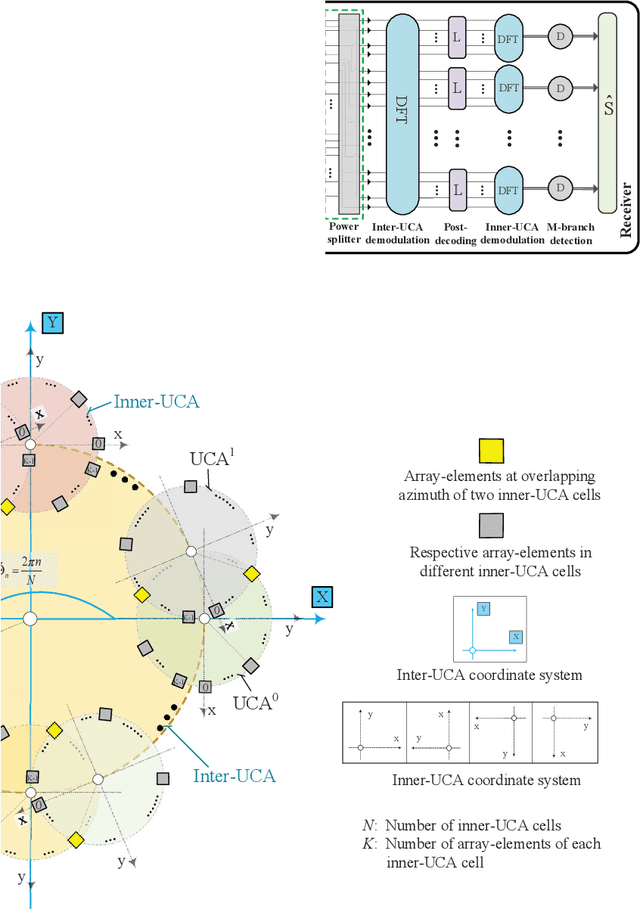
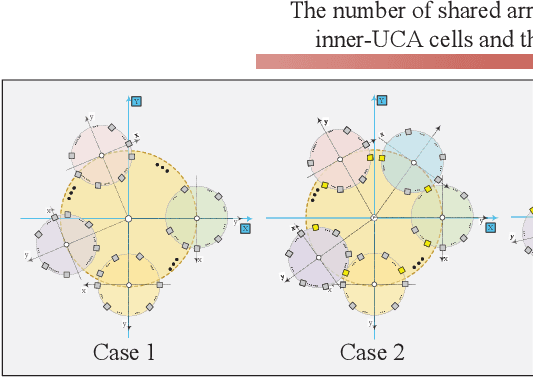
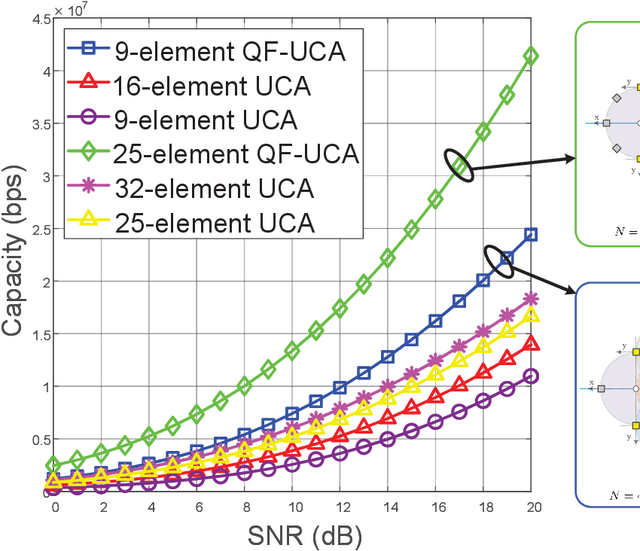
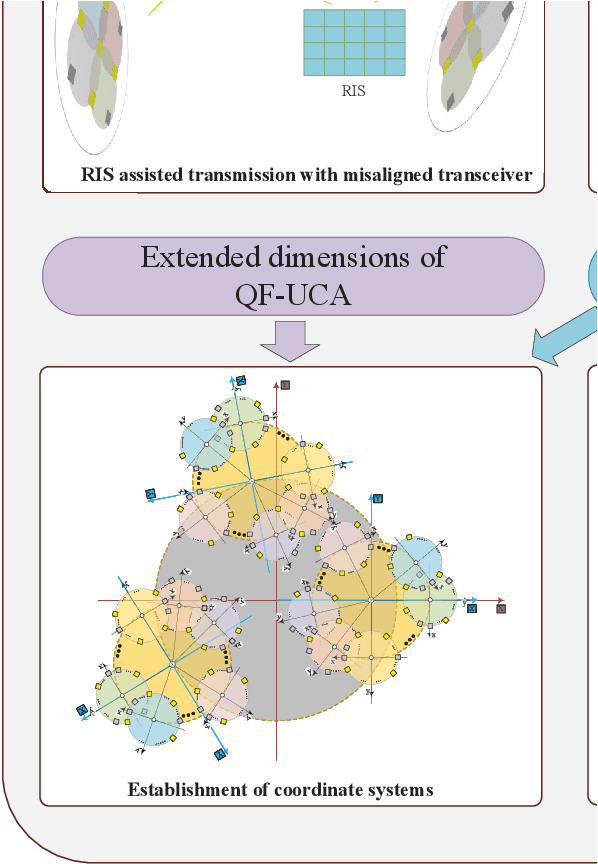
Multiple-input-multiple-output (MIMO) has been proved its success for the fourth generation (4G) long term evolution (LTE) and is one of the key technical enablers for evolved mobile broadband (eMBB) in the fifth generation (5G) wireless communications. However, along with the number of antennas eventually increased to be extremely large and one-hop communication distance gradually reduced, how to significantly increase the capacity for line-of-sight (LOS) MIMO becomes more and more urgent. In this article, we introduce the quasi-fractal uniform circular array (QF-UCA) antenna structure based MIMO wireless communications, which can adequately exploit the potential of MIMO in LOS channel and greatly increase the capacity with low complexity demodulation schemes. Specifically, three advantages regarding QF-UCA based LOS MIMO are reviewed. Then, research challenges on transceiver alignment, low-rank channel matrix, extended dimensions of QF-UCA, maximum number of orthogonal streams, and the corresponding potential solutions are discussed. Compared with traditional scattering-depended MIMO communications, the QF-UCA based LOS MIMO wireless communication can achieve high-efficient transmission in LOS channel.

Achieving Practical OAM Based Wireless Communications With Misaligned Transceiver
Aug 13, 2024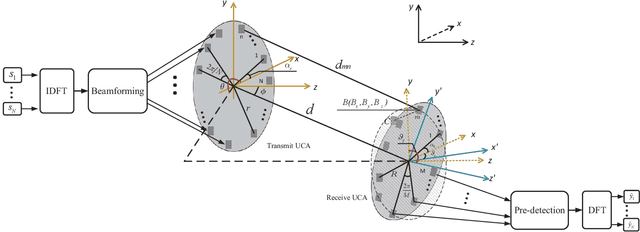
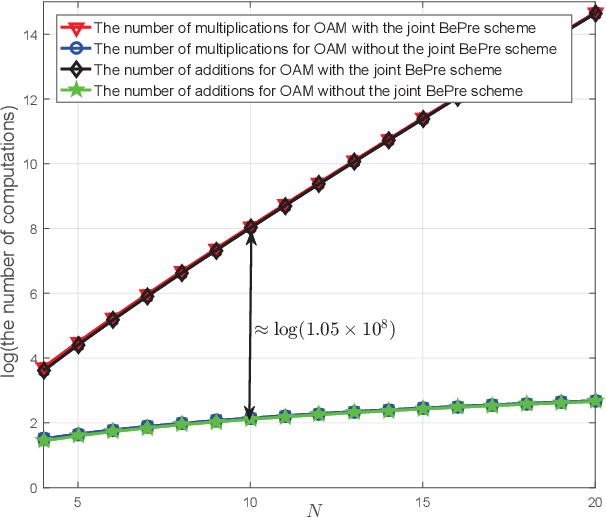
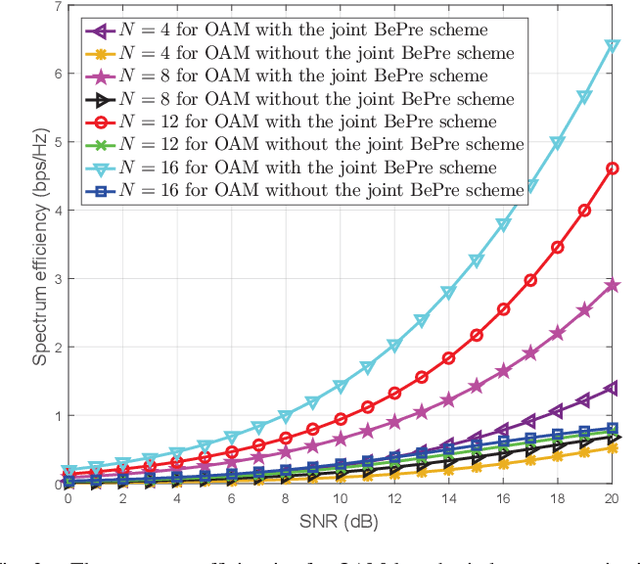
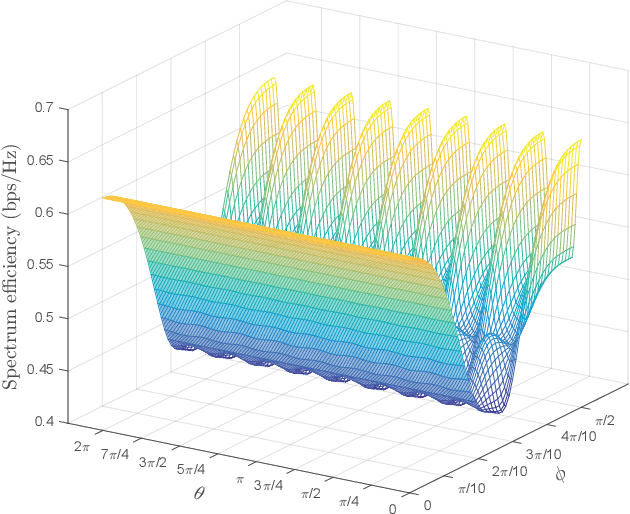
Orbital angular momentum (OAM) has attracted much attention for radio vortex wireless communications due to the orthogonality among different OAM-modes. To maintain the orthogonality among different OAM modes at the receiver, the strict alignment between transmit and receive antennas is highly demanded. However, it is not practical to guarantee the transceiver alignment in wireless communications. The phase turbulence, resulting from the misaligned transceivers, leads to serious inter-mode interference among different OAM modes and therefore fail for signals detection of multiple OAM modes at the receiver. To achieve practical OAM based wireless communications, in this paper we investigate the radio vortex wireless communications with misaligned transmit and receive antennas. We propose a joint Beamforming and Pre-detection (BePre) scheme, which uses two unitary matrices to convert the channel matrix into the equivalent circulant matrix for keeping the orthogonality among OAM-modes at the receiver. Then, the OAM signals can be detected with the mode-decomposition scheme at the misaligned receiver. Extensive simulations obtained validate and evaluate that our developed joint BePre scheme can efficiently detect the signals of multiple OAM-modes for the misaligned transceiver and can significantly increase the spectrum efficiency.
Quasi-Fractal UCA Based OAM for Highly Efficient Orthogonal Transmission
Aug 10, 2024
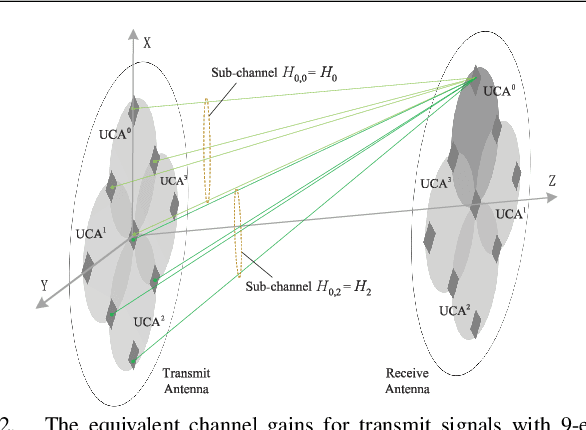
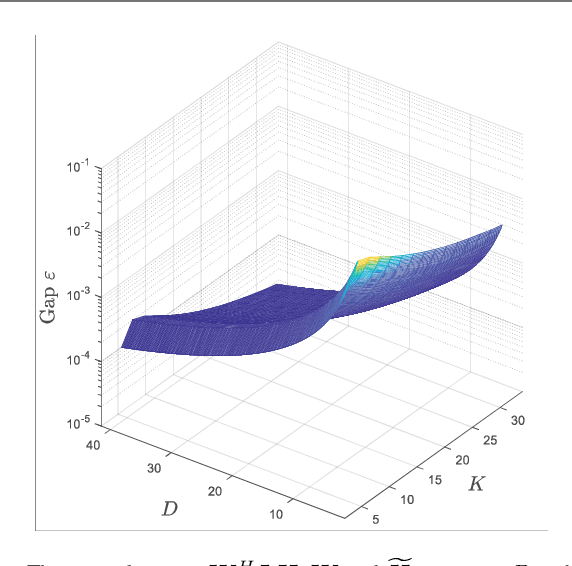

The development of orbital angular momentum (OAM)-based radio vortex transmission presents a promising opportunity for increasing the capacity of wireless communication in correlated channels due to its inherent orthogonality among different OAM modes. One of the most popular schemes for high-efficient OAM transmission is the digital baseband associated with uniform circular array (UCA) based transceiver. However, the periodicity of complex-exponential feed makes the maximum number of orthogonal signals carried by multiple OAM modes generally restricted to the array-element number of UCA antenna, which poses an open question of how to employ more OAM modes given a fixed number of array elements. Furthermore, signals modulated with high-order OAM modes are difficult to be captured by the receiver due to their serious divergence as propagating in free space, thus severely limiting the capacity of radio vortex communications. To overcome the above challenges, in this paper based on the partly element-overlapped fractal geometry layout and effectively using low-order OAM modes, we propose the quasi-fractal UCA (QF-UCA) antenna based OAM multiplexing transmission. We perform the two-dimension OAM modulation (TOM) and demodulation (TOD) schemes with the orthogonal OAM mode number exceeding the array-element number, which is beyond the traditional concept of multiple antennas based wireless communications. Simulation results show that our proposed scheme can achieve more number of orthogonal multiplexing streams than the maximum number of orthogonal multiplexing corresponding to traditional multiple antenna systems.
Enhanced Traffic Flow Prediction with Multi-Segment Fusion Tensor Graph Convolutional Networks
Aug 08, 2024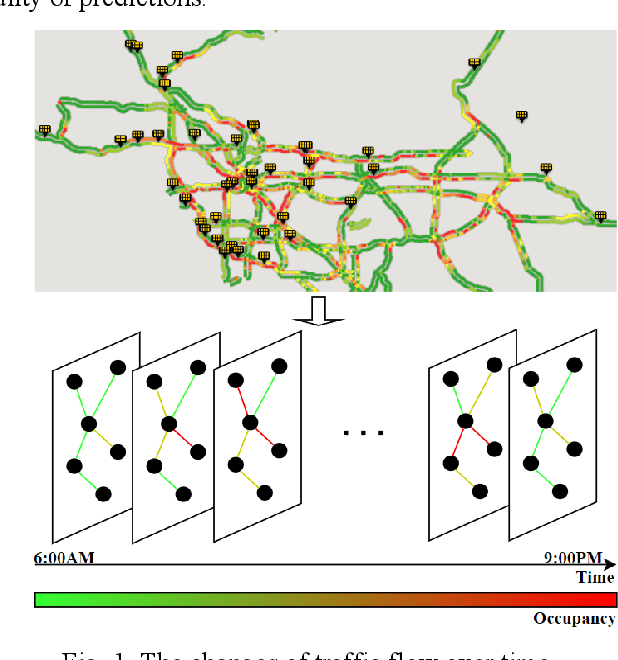
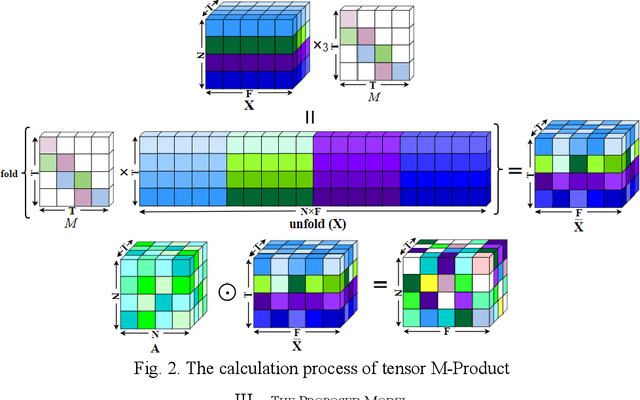
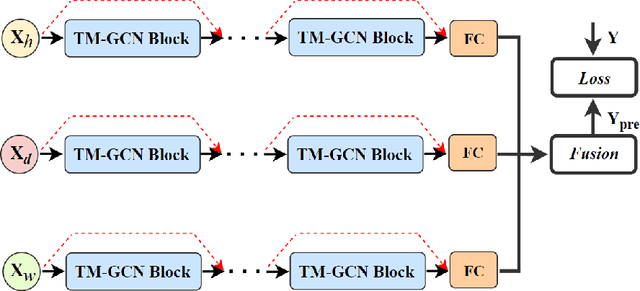
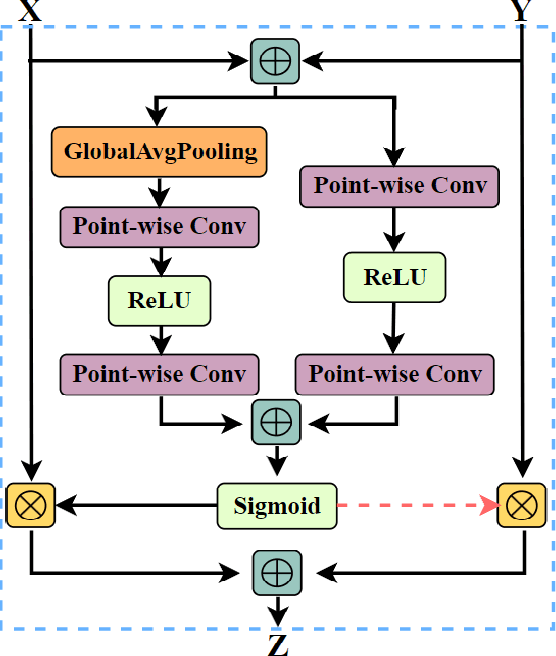
Accurate traffic Flow Prediction can assist in traffic management, route planning, and congestion mitigation, which holds significant importance in enhancing the efficiency and reliability of intelligent transportation systems (ITS). However, existing traffic flow prediction models suffer from limitations in capturing the complex spatial-temporal dependencies within traffic networks. In order to address this issue, this study proposes a multi-segment fusion tensor graph convolutional network (MS-FTGCN) for traffic flow prediction with the following three-fold ideas: a) building a unified spatial-temporal graph convolutional framework based on Tensor M-product, which capture the spatial-temporal patterns simultaneously; b) incorporating hourly, daily, and weekly components to model multi temporal properties of traffic flows, respectively; c) fusing the outputs of the three components by attention mechanism to obtain the final traffic flow prediction results. The results of experiments conducted on two traffic flow datasets demonstrate that the proposed MS-FTGCN outperforms the state-of-the-art models.
MS-Mapping: An Uncertainty-Aware Large-Scale Multi-Session LiDAR Mapping System
Aug 07, 2024
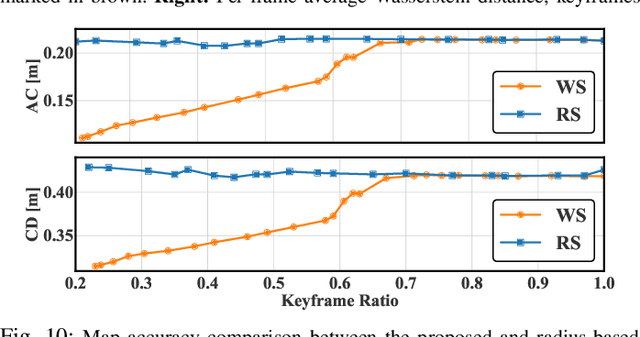


Large-scale multi-session LiDAR mapping is essential for a wide range of applications, including surveying, autonomous driving, crowdsourced mapping, and multi-agent navigation. However, existing approaches often struggle with data redundancy, robustness, and accuracy in complex environments. To address these challenges, we present MS-Mapping, an novel multi-session LiDAR mapping system that employs an incremental mapping scheme for robust and accurate map assembly in large-scale environments. Our approach introduces three key innovations: 1) A distribution-aware keyframe selection method that captures the subtle contributions of each point cloud frame to the map by analyzing the similarity of map distributions. This method effectively reduces data redundancy and pose graph size, while enhancing graph optimization speed; 2) An uncertainty model that automatically performs least-squares adjustments according to the covariance matrix during graph optimization, improving mapping precision, robustness, and flexibility without the need for scene-specific parameter tuning. This uncertainty model enables our system to monitor pose uncertainty and avoid ill-posed optimizations, thereby increasing adaptability to diverse and challenging environments. 3) To ensure fair evaluation, we redesign baseline comparisons and the evaluation benchmark. Direct assessment of map accuracy demonstrates the superiority of the proposed MS-Mapping algorithm compared to state-of-the-art methods. In addition to employing public datasets such as Urban-Nav, FusionPortable, and Newer College, we conducted extensive experiments on such a large \SI{855}{m}$\times$\SI{636}{m} ground truth map, collecting over \SI{20}{km} of indoor and outdoor data across more than ten sequences...
UpLIF: An Updatable Self-Tuning Learned Index Framework
Aug 07, 2024The emergence of learned indexes has caused a paradigm shift in our perception of indexing by considering indexes as predictive models that estimate keys' positions within a data set, resulting in notable improvements in key search efficiency and index size reduction; however, a significant challenge inherent in learned index modeling is its constrained support for update operations, necessitated by the requirement for a fixed distribution of records. Previous studies have proposed various approaches to address this issue with the drawback of high overhead due to multiple model retraining. In this paper, we present UpLIF, an adaptive self-tuning learned index that adjusts the model to accommodate incoming updates, predicts the distribution of updates for performance improvement, and optimizes its index structure using reinforcement learning. We also introduce the concept of balanced model adjustment, which determines the model's inherent properties (i.e. bias and variance), enabling the integration of these factors into the existing index model without the need for retraining with new data. Our comprehensive experiments show that the system surpasses state-of-the-art indexing solutions (both traditional and ML-based), achieving an increase in throughput of up to 3.12 times with 1000 times less memory usage.
Integrating Controllable Motion Skills from Demonstrations
Aug 06, 2024


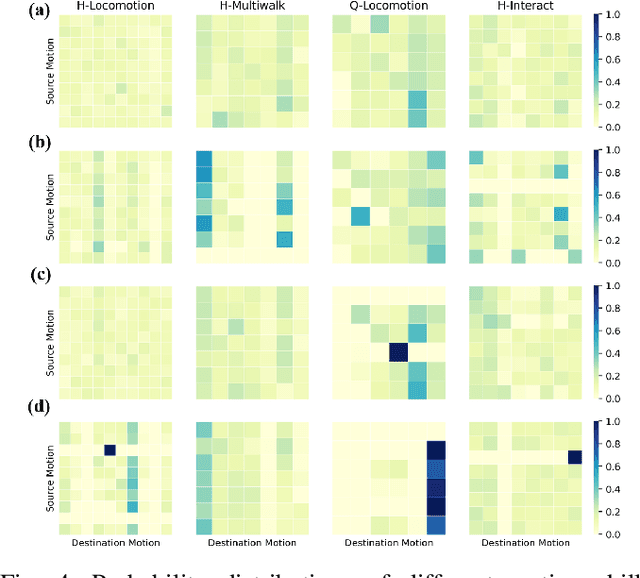
The expanding applications of legged robots require their mastery of versatile motion skills. Correspondingly, researchers must address the challenge of integrating multiple diverse motion skills into controllers. While existing reinforcement learning (RL)-based approaches have achieved notable success in multi-skill integration for legged robots, these methods often require intricate reward engineering or are restricted to integrating a predefined set of motion skills constrained by specific task objectives, resulting in limited flexibility. In this work, we introduce a flexible multi-skill integration framework named Controllable Skills Integration (CSI). CSI enables the integration of a diverse set of motion skills with varying styles into a single policy without the need for complex reward tuning. Furthermore, in a hierarchical control manner, the trained low-level policy can be coupled with a high-level Natural Language Inference (NLI) module to enable preliminary language-directed skill control. Our experiments demonstrate that CSI can flexibly integrate a diverse array of motion skills more comprehensively and facilitate the transitions between different skills. Additionally, CSI exhibits good scalability as the number of motion skills to be integrated increases significantly.
DRFormer: Multi-Scale Transformer Utilizing Diverse Receptive Fields for Long Time-Series Forecasting
Aug 05, 2024
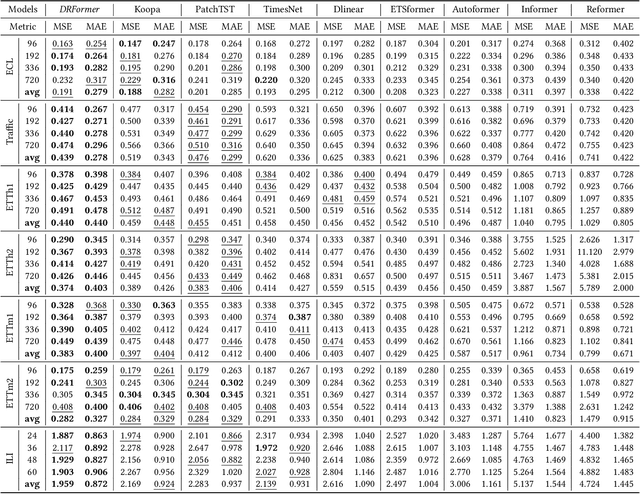
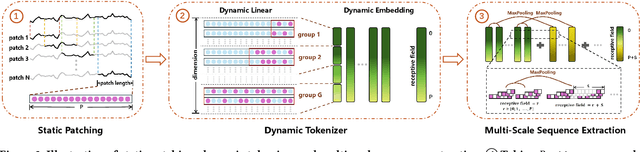
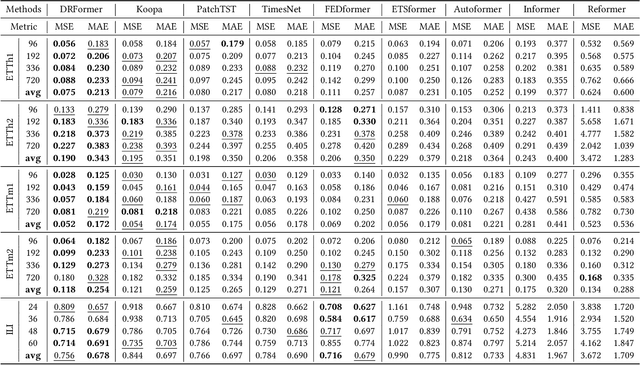
Long-term time series forecasting (LTSF) has been widely applied in finance, traffic prediction, and other domains. Recently, patch-based transformers have emerged as a promising approach, segmenting data into sub-level patches that serve as input tokens. However, existing methods mostly rely on predetermined patch lengths, necessitating expert knowledge and posing challenges in capturing diverse characteristics across various scales. Moreover, time series data exhibit diverse variations and fluctuations across different temporal scales, which traditional approaches struggle to model effectively. In this paper, we propose a dynamic tokenizer with a dynamic sparse learning algorithm to capture diverse receptive fields and sparse patterns of time series data. In order to build hierarchical receptive fields, we develop a multi-scale Transformer model, coupled with multi-scale sequence extraction, capable of capturing multi-resolution features. Additionally, we introduce a group-aware rotary position encoding technique to enhance intra- and inter-group position awareness among representations across different temporal scales. Our proposed model, named DRFormer, is evaluated on various real-world datasets, and experimental results demonstrate its superiority compared to existing methods. Our code is available at: https://github.com/ruixindingECNU/DRFormer.
Rate Maximization for RIS-Assisted OAM Multiuser Wireless Communications
Aug 02, 2024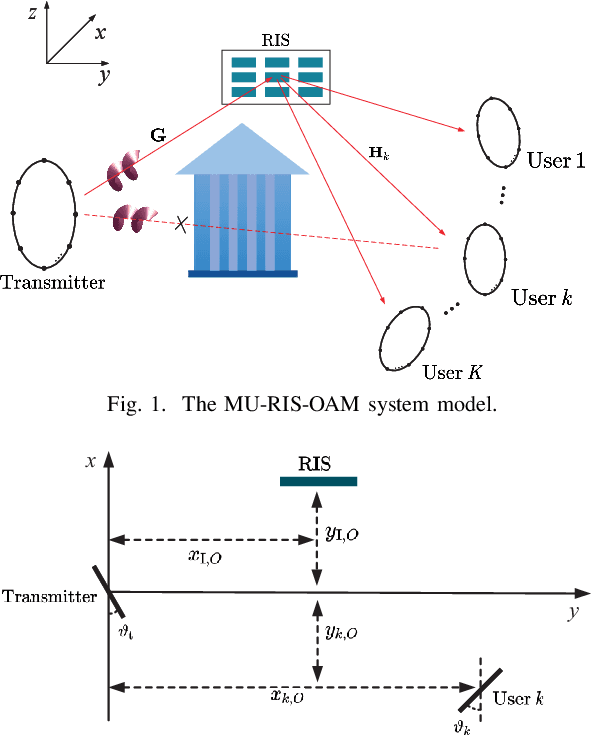
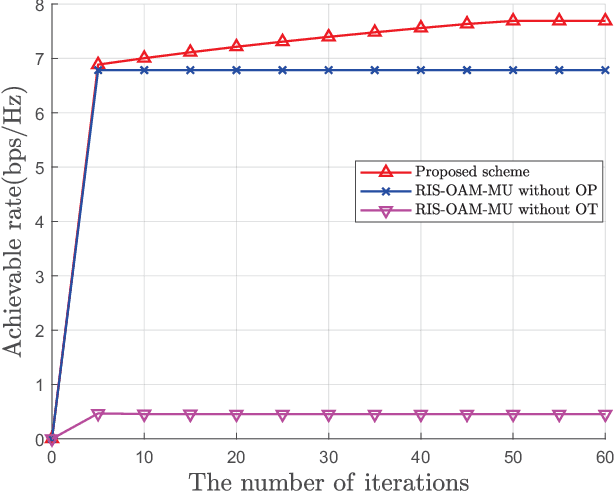
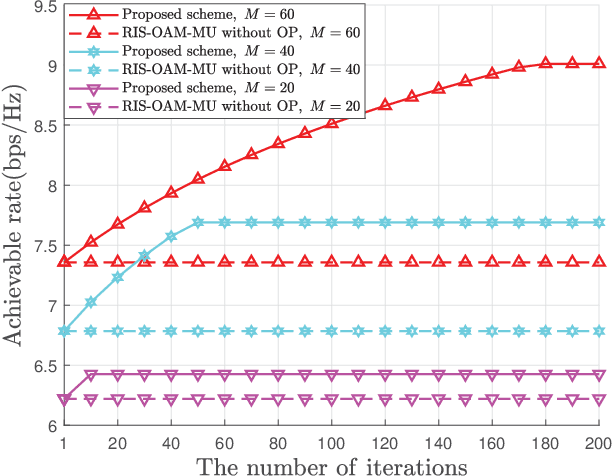
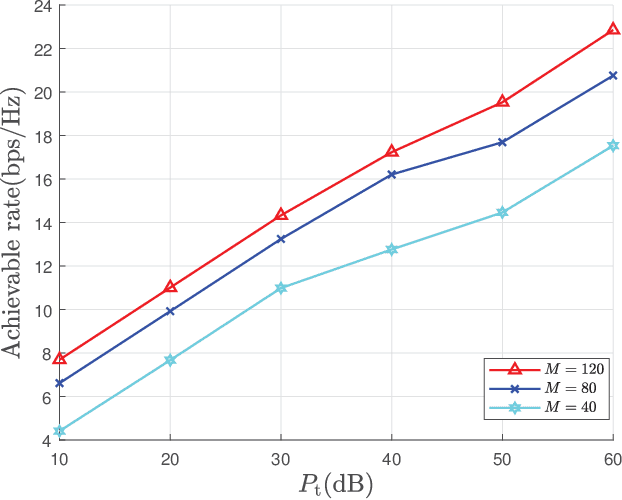
Conventional multiple-input multiple-out (MIMO) technologies have encountered bottlenecks of significantly increasing spectrum efficiencies of wireless communications due to the low degrees of freedom in practical line-of-sight scenarios and severe path loss of high frequency carriers. Orbital angular momentum (OAM) has shown the potential for high spectrum efficiencies in radio frequency domains. To investigate the advantage of OAM in multiuser communications, in this paper we propose the reconfigurable intelligence surface (RIS) assisted OAM multiuser (MU) wireless communication schemes, where RIS is deployed to establish the direct links blocked by obstacles between the OAM transmitter and users, to significantly increase the achievable sum rate (ASR) of MU systems. To maximize the ASR, we develop the alternative optimization algorithm to jointly optimize the transmit power and phase shifts of RIS. The numerical outcomes demonstrate the superiority of our proposed scheme compared to existing methods in terms of ASR.
A Comprehensive Review of Multimodal Large Language Models: Performance and Challenges Across Different Tasks
Aug 02, 2024
In an era defined by the explosive growth of data and rapid technological advancements, Multimodal Large Language Models (MLLMs) stand at the forefront of artificial intelligence (AI) systems. Designed to seamlessly integrate diverse data types-including text, images, videos, audio, and physiological sequences-MLLMs address the complexities of real-world applications far beyond the capabilities of single-modality systems. In this paper, we systematically sort out the applications of MLLM in multimodal tasks such as natural language, vision, and audio. We also provide a comparative analysis of the focus of different MLLMs in the tasks, and provide insights into the shortcomings of current MLLMs, and suggest potential directions for future research. Through these discussions, this paper hopes to provide valuable insights for the further development and application of MLLM.