 Add to Chrome
 Add to Firefox
 Add to Edge
Diffusion of Thoughts: Chain-of-Thought Reasoning in Diffusion Language Models
Feb 12, 2024
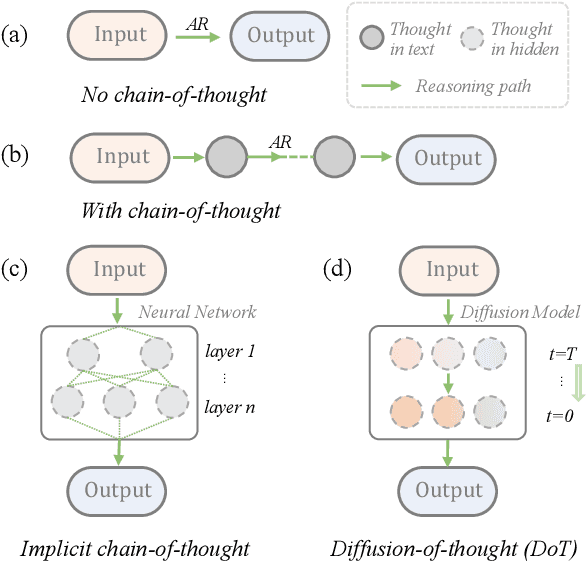
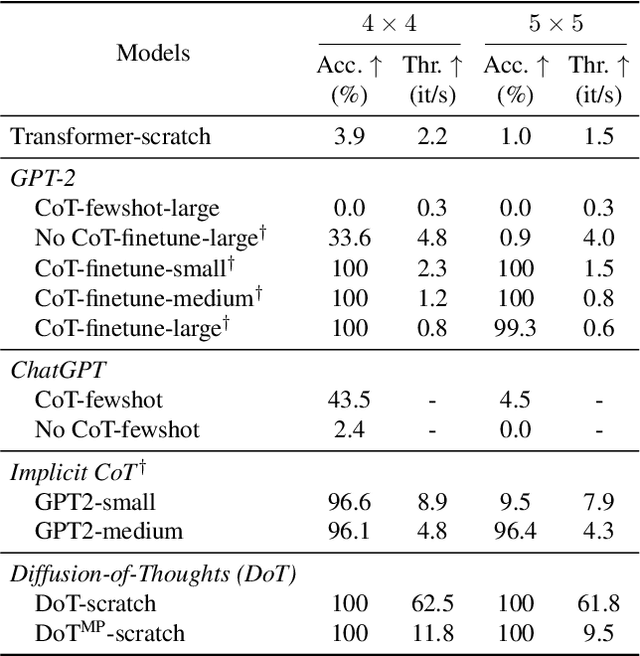
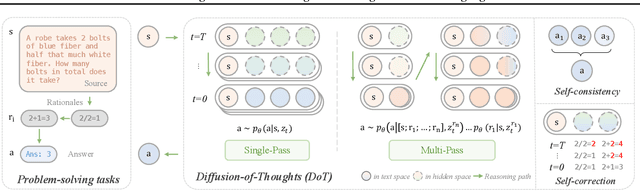
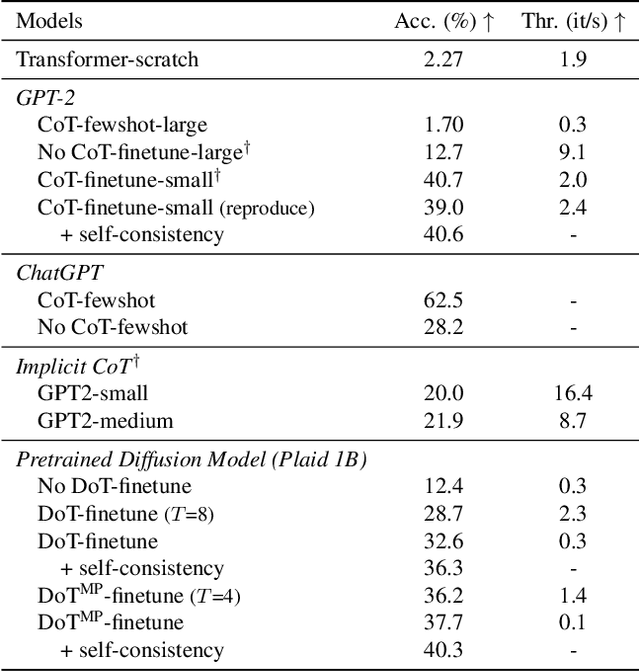
Diffusion models have gained attention in text processing, offering many potential advantages over traditional autoregressive models. This work explores the integration of diffusion models and Chain-of-Thought (CoT), a well-established technique to improve the reasoning ability in autoregressive language models. We propose Diffusion-of-Thought (DoT), allowing reasoning steps to diffuse over time through the diffusion process. In contrast to traditional autoregressive language models that make decisions in a left-to-right, token-by-token manner, DoT offers more flexibility in the trade-off between computation and reasoning performance. Our experimental results demonstrate the effectiveness of DoT in multi-digit multiplication and grade school math problems. Additionally, DoT showcases promising self-correction abilities and benefits from existing reasoning-enhancing techniques like self-consistency decoding. Our findings contribute to the understanding and development of reasoning capabilities in diffusion language models.

Mitigating Hallucinations of Large Language Models via Knowledge Consistent Alignment
Jan 28, 2024While Large Language Models (LLMs) have proven to be exceptional on a variety of tasks after alignment, they may still produce responses that contradict the context or world knowledge confidently, a phenomenon known as ``hallucination''. In this paper, we demonstrate that reducing the inconsistency between the external knowledge encapsulated in the training data and the intrinsic knowledge inherited in the pretraining corpus could mitigate hallucination in alignment. Specifically, we introduce a novel knowledge consistent alignment (KCA) approach, which involves automatically formulating examinations based on external knowledge for accessing the comprehension of LLMs. For data encompassing knowledge inconsistency, KCA implements several simple yet efficient strategies for processing. We illustrate the superior performance of the proposed KCA approach in mitigating hallucinations across six benchmarks using LLMs of different backbones and scales. Furthermore, we confirm the correlation between knowledge inconsistency and hallucination, signifying the effectiveness of reducing knowledge inconsistency in alleviating hallucinations. Our code, model weights, and data are public at \url{https://github.com/fanqiwan/KCA}.
Knowledge Fusion of Large Language Models
Jan 22, 2024While training large language models (LLMs) from scratch can generate models with distinct functionalities and strengths, it comes at significant costs and may result in redundant capabilities. Alternatively, a cost-effective and compelling approach is to merge existing pre-trained LLMs into a more potent model. However, due to the varying architectures of these LLMs, directly blending their weights is impractical. In this paper, we introduce the notion of knowledge fusion for LLMs, aimed at combining the capabilities of existing LLMs and transferring them into a single LLM. By leveraging the generative distributions of source LLMs, we externalize their collective knowledge and unique strengths, thereby potentially elevating the capabilities of the target model beyond those of any individual source LLM. We validate our approach using three popular LLMs with different architectures--Llama-2, MPT, and OpenLLaMA--across various benchmarks and tasks. Our findings confirm that the fusion of LLMs can improve the performance of the target model across a range of capabilities such as reasoning, commonsense, and code generation. Our code, model weights, and data are public at \url{https://github.com/fanqiwan/FuseLLM}.
Alleviating Hallucinations of Large Language Models through Induced Hallucinations
Dec 25, 2023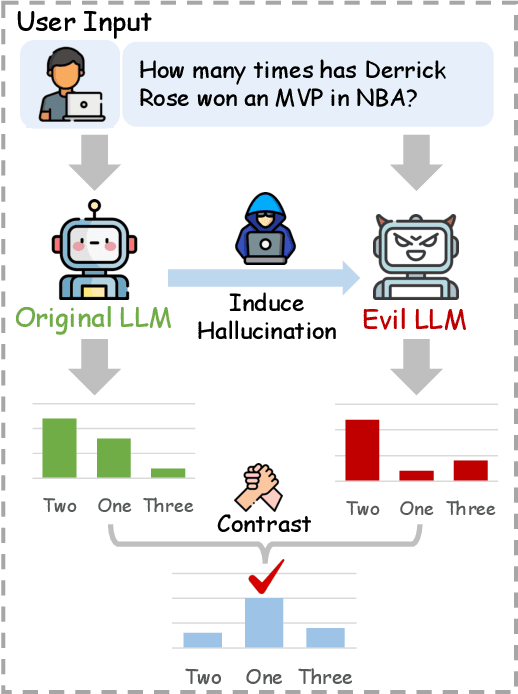
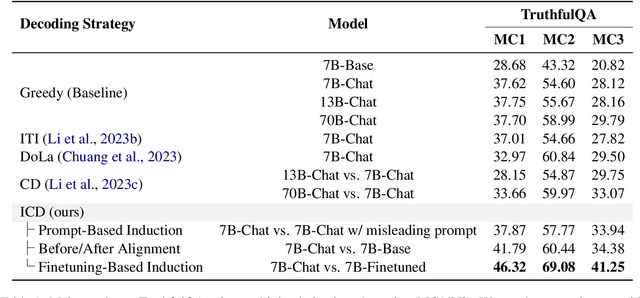
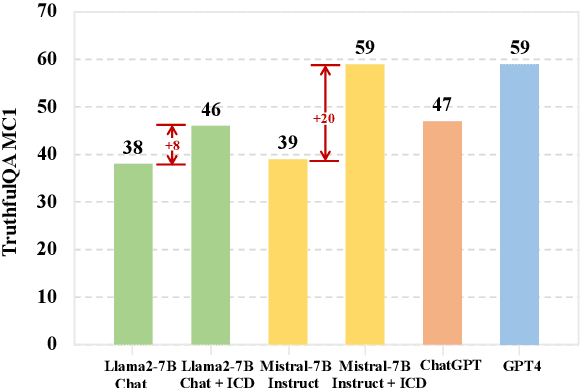
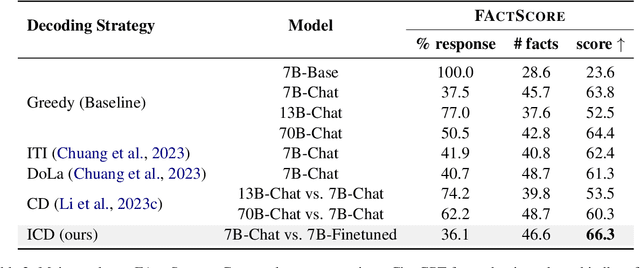
Despite their impressive capabilities, large language models (LLMs) have been observed to generate responses that include inaccurate or fabricated information, a phenomenon commonly known as ``hallucination''. In this work, we propose a simple \textit{Induce-then-Contrast} Decoding (ICD) strategy to alleviate hallucinations. We first construct a factually weak LLM by inducing hallucinations from the original LLMs. Then, we penalize these induced hallucinations during decoding to enhance the factuality of the generated content. Concretely, we determine the final next-token predictions by amplifying the predictions from the original model and downplaying the induced untruthful predictions via contrastive decoding. Experimental results on both discrimination-based and generation-based hallucination evaluation benchmarks, such as TruthfulQA and \textsc{FActScore}, demonstrate that our proposed ICD methods can effectively enhance the factuality of LLMs across various model sizes and families. For example, when equipped with ICD, Llama2-7B-Chat and Mistral-7B-Instruct achieve performance comparable to ChatGPT and GPT4 on TruthfulQA, respectively.
TRAMS: Training-free Memory Selection for Long-range Language Modeling
Nov 05, 2023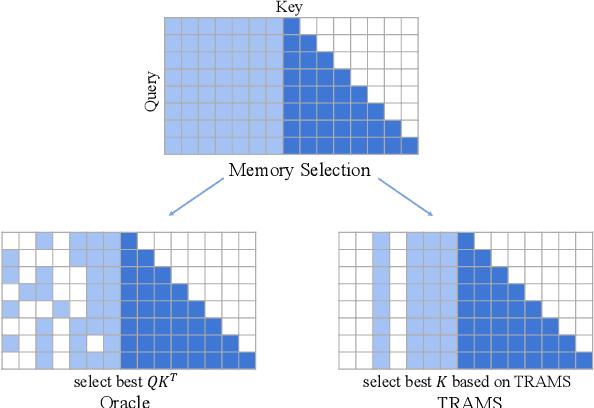
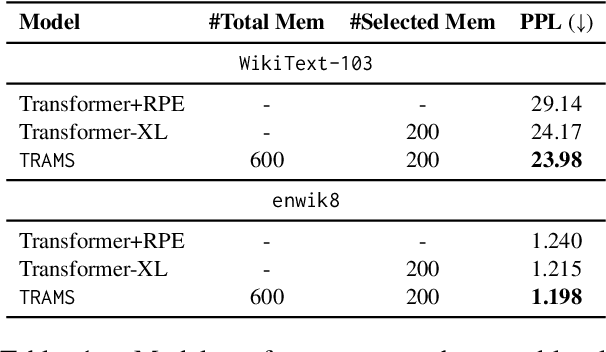
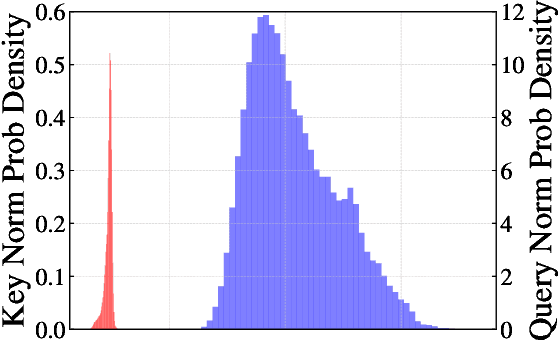
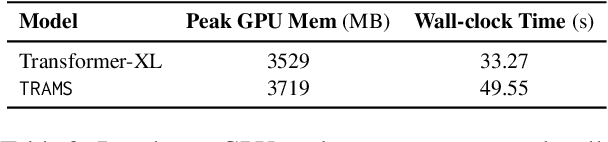
The Transformer architecture is crucial for numerous AI models, but it still faces challenges in long-range language modeling. Though several specific transformer architectures have been designed to tackle issues of long-range dependencies, existing methods like Transformer-XL are plagued by a high percentage of ineffective memories. In this study, we present a plug-and-play strategy, known as TRAining-free Memory Selection (TRAMS), that selects tokens participating in attention calculation based on one simple metric. This strategy allows us to keep tokens that are likely to have a high attention score with the current queries and ignore the other ones. We have tested our approach on the word-level benchmark (WikiText-103) and the character-level benchmark (enwik8), and the results indicate an improvement without having additional training or adding additional parameters.
Collaborative Evaluation: Exploring the Synergy of Large Language Models and Humans for Open-ended Generation Evaluation
Oct 30, 2023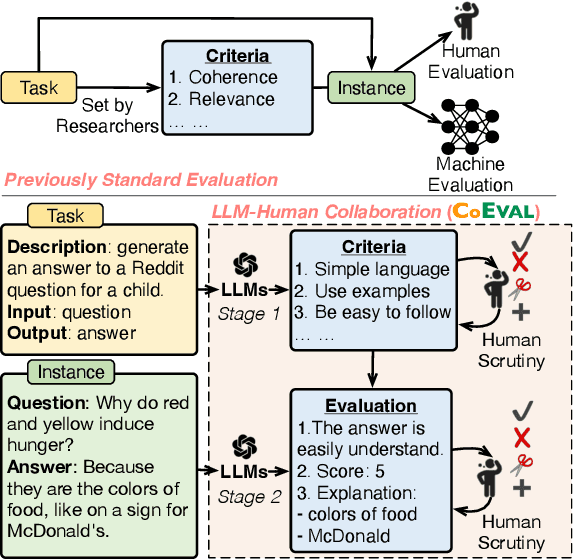

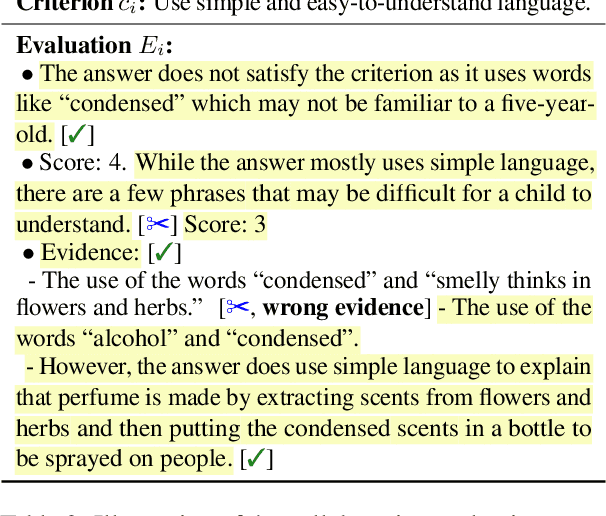
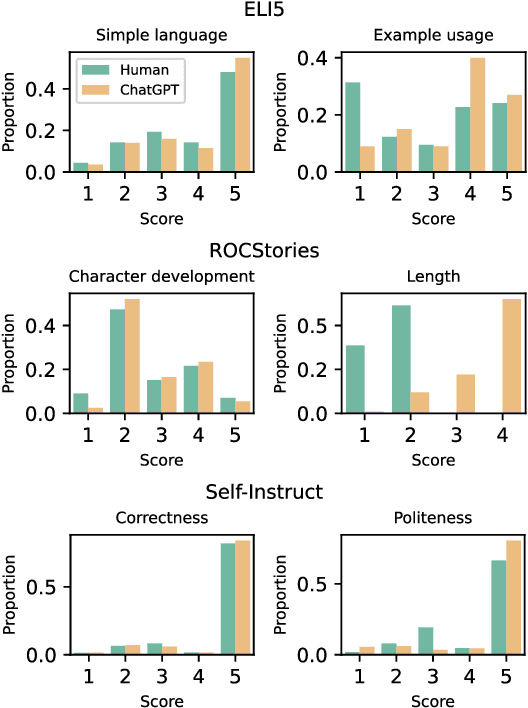
Humans are widely involved in the evaluation of open-ended natural language generation tasks (NLG) that demand creativity, as automatic metrics often exhibit weak correlations with human judgments. Large language models (LLMs) recently have emerged as a scalable and cost-effective alternative to human evaluations. However, both humans and LLMs have limitations, i.e., inherent subjectivity and unreliable judgments, particularly for open-ended tasks that require adaptable metrics tailored to diverse task requirements. To explore the synergy between humans and LLM-based evaluators and address the challenges of existing inconsistent evaluation criteria in open-ended NLG tasks, we propose a Collaborative Evaluation pipeline CoEval, involving the design of a checklist of task-specific criteria and the detailed evaluation of texts, in which LLM generates initial ideation, and then humans engage in scrutiny. We conducted a series of experiments to investigate the mutual effects between LLMs and humans in CoEval. Results show that, by utilizing LLMs, CoEval effectively evaluates lengthy texts, saving significant time and reducing human evaluation outliers. Human scrutiny still plays a role, revising around 20% of LLM evaluation scores for ultimate reliability.
Explore-Instruct: Enhancing Domain-Specific Instruction Coverage through Active Exploration
Oct 24, 2023
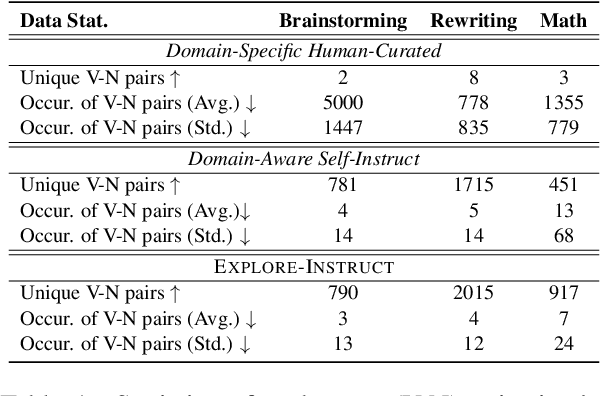
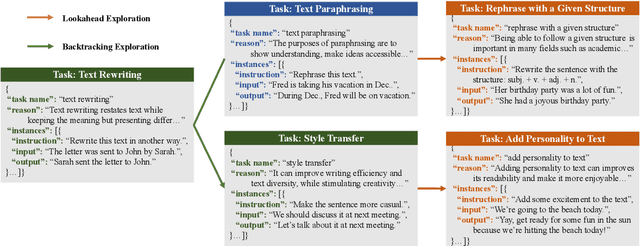
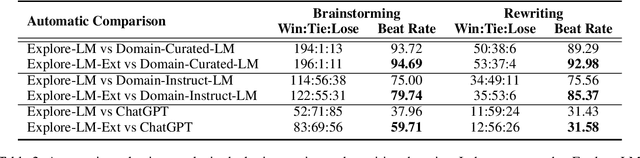
Instruction-tuning can be substantially optimized through enhanced diversity, resulting in models capable of handling a broader spectrum of tasks. However, existing data employed for such tuning often exhibit an inadequate coverage of individual domains, limiting the scope for nuanced comprehension and interactions within these areas. To address this deficiency, we propose Explore-Instruct, a novel approach to enhance the data coverage to be used in domain-specific instruction-tuning through active exploration via Large Language Models (LLMs). Built upon representative domain use cases, Explore-Instruct explores a multitude of variations or possibilities by implementing a search algorithm to obtain diversified and domain-focused instruction-tuning data. Our data-centric analysis validates the effectiveness of this proposed approach in improving domain-specific instruction coverage. Moreover, our model's performance demonstrates considerable advancements over multiple baselines, including those utilizing domain-specific data enhancement. Our findings offer a promising opportunity to improve instruction coverage, especially in domain-specific contexts, thereby advancing the development of adaptable language models. Our code, model weights, and data are public at \url{https://github.com/fanqiwan/Explore-Instruct}.
Retrieval-Generation Alignment for End-to-End Task-Oriented Dialogue System
Oct 20, 2023Developing an efficient retriever to retrieve knowledge from a large-scale knowledge base (KB) is critical for task-oriented dialogue systems to effectively handle localized and specialized tasks. However, widely used generative models such as T5 and ChatGPT often struggle to differentiate subtle differences among the retrieved KB records when generating responses, resulting in suboptimal quality of generated responses. In this paper, we propose the application of maximal marginal likelihood to train a perceptive retriever by utilizing signals from response generation for supervision. In addition, our approach goes beyond considering solely retrieved entities and incorporates various meta knowledge to guide the generator, thus improving the utilization of knowledge. We evaluate our approach on three task-oriented dialogue datasets using T5 and ChatGPT as the backbone models. The results demonstrate that when combined with meta knowledge, the response generator can effectively leverage high-quality knowledge records from the retriever and enhance the quality of generated responses. The codes and models of this paper are available at https://github.com/shenwzh3/MK-TOD.
On Synthetic Data for Back Translation
Oct 20, 2023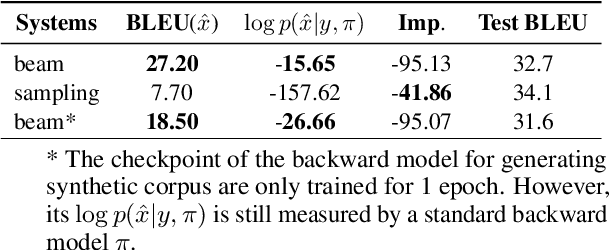
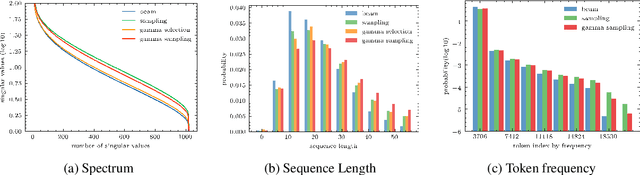
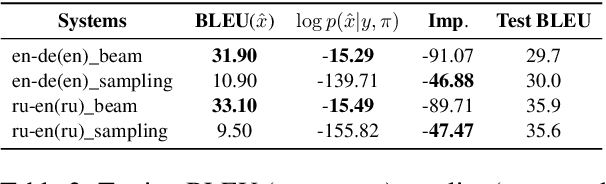
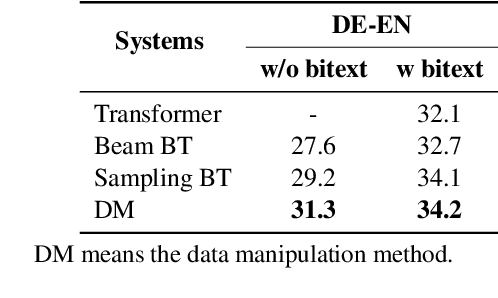
Back translation (BT) is one of the most significant technologies in NMT research fields. Existing attempts on BT share a common characteristic: they employ either beam search or random sampling to generate synthetic data with a backward model but seldom work studies the role of synthetic data in the performance of BT. This motivates us to ask a fundamental question: {\em what kind of synthetic data contributes to BT performance?} Through both theoretical and empirical studies, we identify two key factors on synthetic data controlling the back-translation NMT performance, which are quality and importance. Furthermore, based on our findings, we propose a simple yet effective method to generate synthetic data to better trade off both factors so as to yield a better performance for BT. We run extensive experiments on WMT14 DE-EN, EN-DE, and RU-EN benchmark tasks. By employing our proposed method to generate synthetic data, our BT model significantly outperforms the standard BT baselines (i.e., beam and sampling based methods for data generation), which proves the effectiveness of our proposed methods.
SEGO: Sequential Subgoal Optimization for Mathematical Problem-Solving
Oct 19, 2023Large Language Models (LLMs) have driven substantial progress in artificial intelligence in recent years, exhibiting impressive capabilities across a wide range of tasks, including mathematical problem-solving. Inspired by the success of subgoal-based methods, we propose a novel framework called \textbf{SE}quential sub\textbf{G}oal \textbf{O}ptimization (SEGO) to enhance LLMs' ability to solve mathematical problems. By establishing a connection between the subgoal breakdown process and the probability of solving problems, SEGO aims to identify better subgoals with theoretical guarantees. Addressing the challenge of identifying suitable subgoals in a large solution space, our framework generates problem-specific subgoals and adjusts them according to carefully designed criteria. Incorporating these optimized subgoals into the policy model training leads to significant improvements in problem-solving performance. We validate SEGO's efficacy through experiments on two benchmarks, GSM8K and MATH, where our approach outperforms existing methods, highlighting the potential of SEGO in AI-driven mathematical problem-solving. Data and code associated with this paper will be available at https://github.com/zhaoxlpku/SEGO