 Add to Chrome
 Add to Firefox
 Add to Edge
PQuantML: A Tool for End-to-End Hardware-aware Model Compression
Mar 27, 2026
PQuantML is a new open-source, hardware-aware neural network model compression library tailored to end-to-end workflows. Motivated by the need to deploy performant models to environments with strict latency constraints, PQuantML simplifies training of compressed models by providing a unified interface to apply pruning and quantization, either jointly or individually. The library implements multiple pruning methods with different granularities, as well as fixed-point quantization with support for High-Granularity Quantization. We evaluate PQuantML on representative tasks such as the jet substructure classification, so-called jet tagging, an on-edge problem related to real-time LHC data processing. Using various pruning methods with fixed-point quantization, PQuantML achieves substantial parameter and bit-width reductions while maintaining accuracy. The resulting compression is further compared against existing tools, such as QKeras and HGQ.

Enabling Low-Latency Machine learning on Radiation-Hard FPGAs with hls4ml
Feb 17, 2026This paper presents the first demonstration of a viable, ultra-fast, radiation-hard machine learning (ML) application on FPGAs, which could be used in future high-energy physics experiments. We present a three-fold contribution, with the PicoCal calorimeter, planned for the LHCb Upgrade II experiment, used as a test case. First, we develop a lightweight autoencoder to compress a 32-sample timing readout, representative of that of the PicoCal, into a two-dimensional latent space. Second, we introduce a systematic, hardware-aware quantization strategy and show that the model can be reduced to 10-bit weights with minimal performance loss. Third, as a barrier to the adoption of on-detector ML is the lack of support for radiation-hard FPGAs in the High-Energy Physics community's standard ML synthesis tool, hls4ml, we develop a new backend for this library. This new back-end enables the automatic translation of ML models into High-Level Synthesis (HLS) projects for the Microchip PolarFire family of FPGAs, one of the few commercially available and radiation hard FPGAs. We present the synthesis of the autoencoder on a target PolarFire FPGA, which indicates that a latency of 25 ns can be achieved. We show that the resources utilized are low enough that the model can be placed within the inherently protected logic of the FPGA. Our extension to hls4ml is a significant contribution, paving the way for broader adoption of ML on FPGAs in high-radiation environments.
AIE4ML: An End-to-End Framework for Compiling Neural Networks for the Next Generation of AMD AI Engines
Dec 17, 2025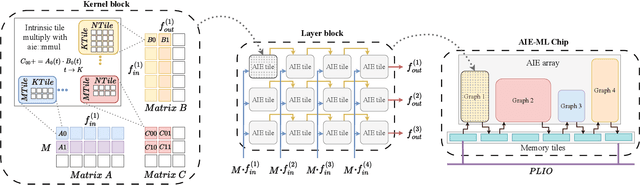
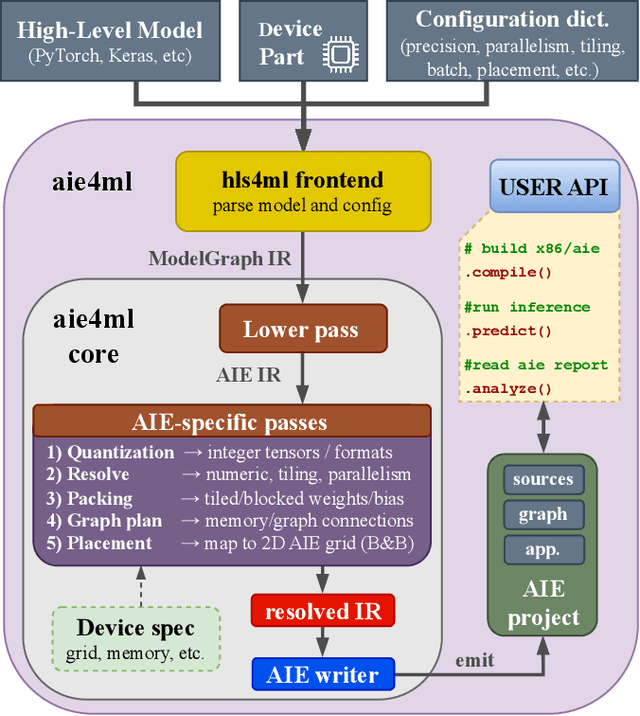
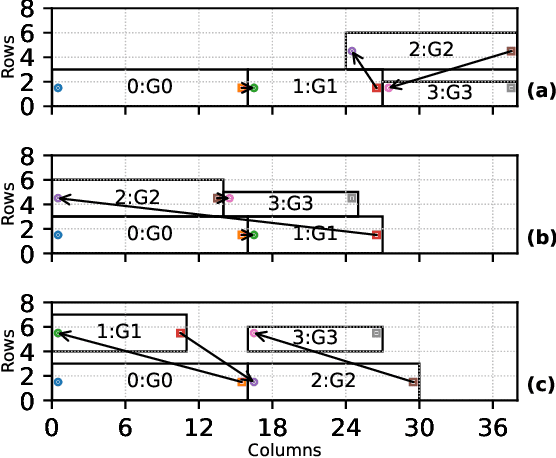
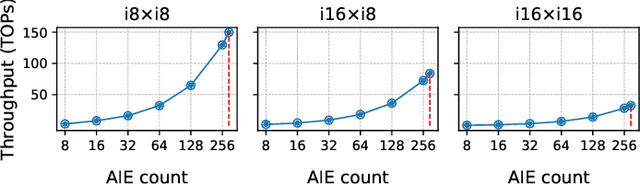
Efficient AI inference on AMD's Versal AI Engine (AIE) is challenging due to tightly coupled VLIW execution, explicit datapaths, and local memory management. Prior work focused on first-generation AIE kernel optimizations, without tackling full neural network execution across the 2D array. In this work, we present AIE4ML, the first comprehensive framework for converting AI models automatically into optimized firmware targeting the AIE-ML generation devices, also with forward compatibility for the newer AIE-MLv2 architecture. At the single-kernel level, we attain performance close to the architectural peak. At the graph and system levels, we provide a structured parallelization method that can scale across the 2D AIE-ML fabric and exploit its dedicated memory tiles to stay entirely on-chip throughout the model execution. As a demonstration, we designed a generalized and highly efficient linear-layer implementation with intrinsic support for fused bias addition and ReLU activation. Also, as our framework necessitates the generation of multi-layer implementations, our approach systematically derives deterministic, compact, and topology-optimized placements tailored to the physical 2D grid of the device through a novel graph placement and search algorithm. Finally, the framework seamlessly accepts quantized models imported from high-level tools such as hls4ml or PyTorch while preserving bit-exactness. In layer scaling benchmarks, we achieve up to 98.6% efficiency relative to the single-kernel baseline, utilizing 296 of 304 AIE tiles (97.4%) of the device with entirely on-chip data movement. With evaluations across real-world model topologies, we demonstrate that AIE4ML delivers GPU-class throughput under microsecond latency constraints, making it a practical companion for ultra-low-latency environments such as trigger systems in particle physics experiments.
wa-hls4ml: A Benchmark and Surrogate Models for hls4ml Resource and Latency Estimation
Nov 06, 2025
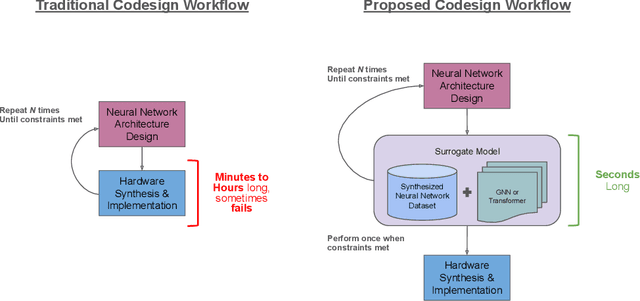
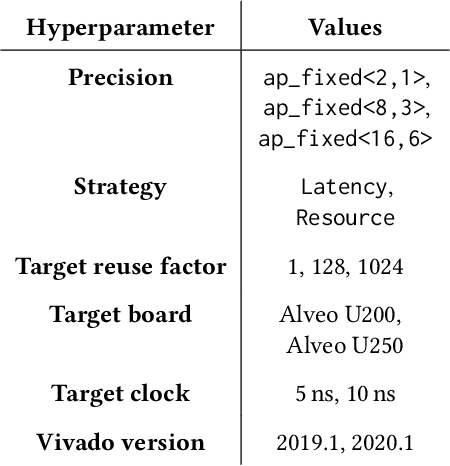
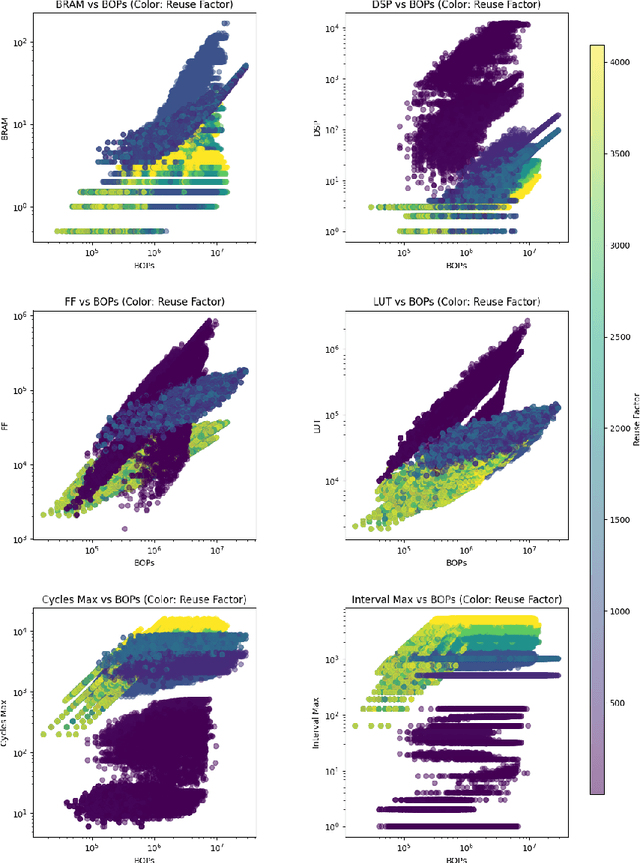
As machine learning (ML) is increasingly implemented in hardware to address real-time challenges in scientific applications, the development of advanced toolchains has significantly reduced the time required to iterate on various designs. These advancements have solved major obstacles, but also exposed new challenges. For example, processes that were not previously considered bottlenecks, such as hardware synthesis, are becoming limiting factors in the rapid iteration of designs. To mitigate these emerging constraints, multiple efforts have been undertaken to develop an ML-based surrogate model that estimates resource usage of ML accelerator architectures. We introduce wa-hls4ml, a benchmark for ML accelerator resource and latency estimation, and its corresponding initial dataset of over 680,000 fully connected and convolutional neural networks, all synthesized using hls4ml and targeting Xilinx FPGAs. The benchmark evaluates the performance of resource and latency predictors against several common ML model architectures, primarily originating from scientific domains, as exemplar models, and the average performance across a subset of the dataset. Additionally, we introduce GNN- and transformer-based surrogate models that predict latency and resources for ML accelerators. We present the architecture and performance of the models and find that the models generally predict latency and resources for the 75% percentile within several percent of the synthesized resources on the synthetic test dataset.
Building Machine Learning Challenges for Anomaly Detection in Science
Mar 03, 2025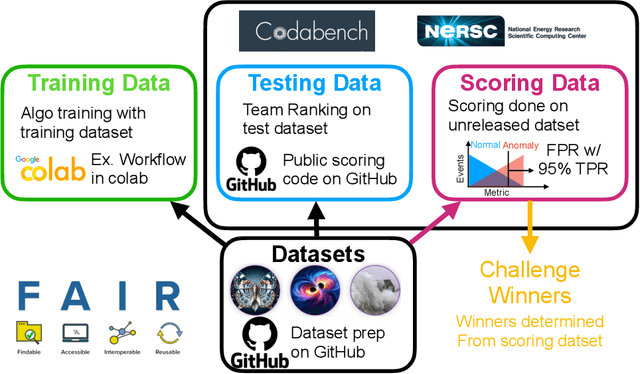
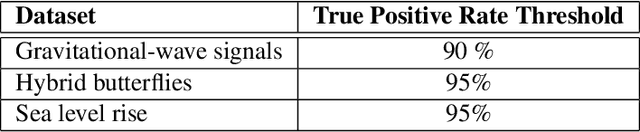
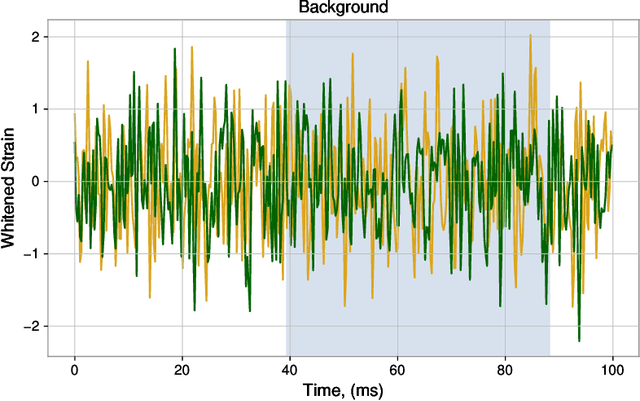
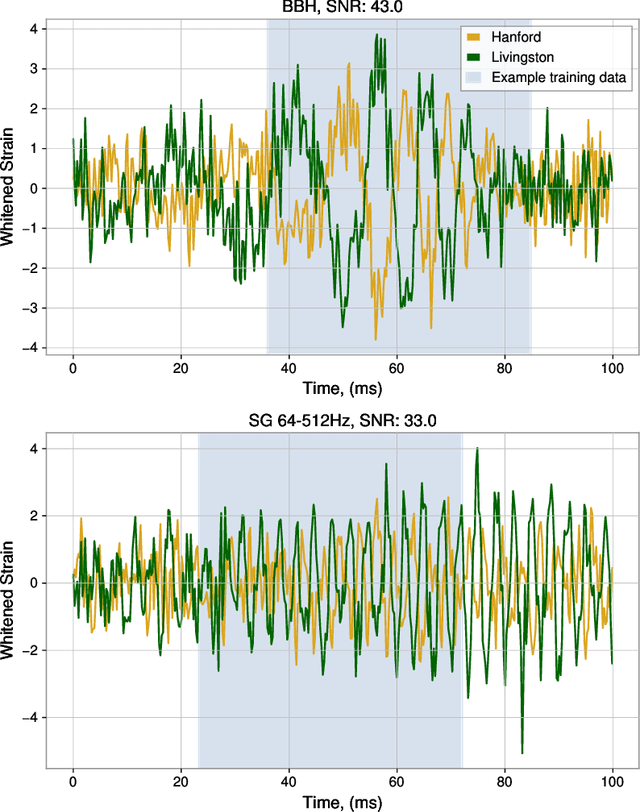
Scientific discoveries are often made by finding a pattern or object that was not predicted by the known rules of science. Oftentimes, these anomalous events or objects that do not conform to the norms are an indication that the rules of science governing the data are incomplete, and something new needs to be present to explain these unexpected outliers. The challenge of finding anomalies can be confounding since it requires codifying a complete knowledge of the known scientific behaviors and then projecting these known behaviors on the data to look for deviations. When utilizing machine learning, this presents a particular challenge since we require that the model not only understands scientific data perfectly but also recognizes when the data is inconsistent and out of the scope of its trained behavior. In this paper, we present three datasets aimed at developing machine learning-based anomaly detection for disparate scientific domains covering astrophysics, genomics, and polar science. We present the different datasets along with a scheme to make machine learning challenges around the three datasets findable, accessible, interoperable, and reusable (FAIR). Furthermore, we present an approach that generalizes to future machine learning challenges, enabling the possibility of large, more compute-intensive challenges that can ultimately lead to scientific discovery.
SymbolFit: Automatic Parametric Modeling with Symbolic Regression
Nov 15, 2024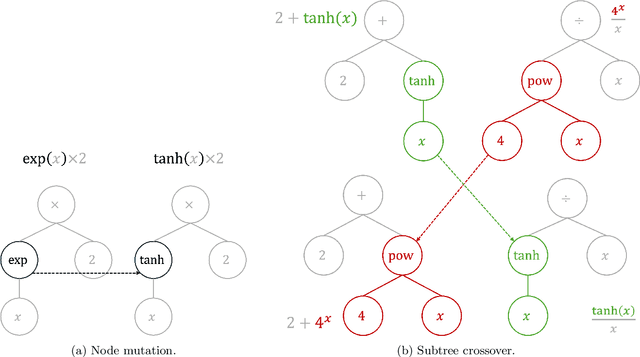
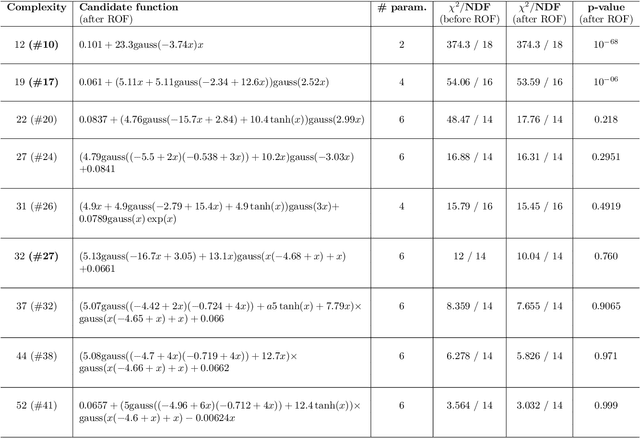
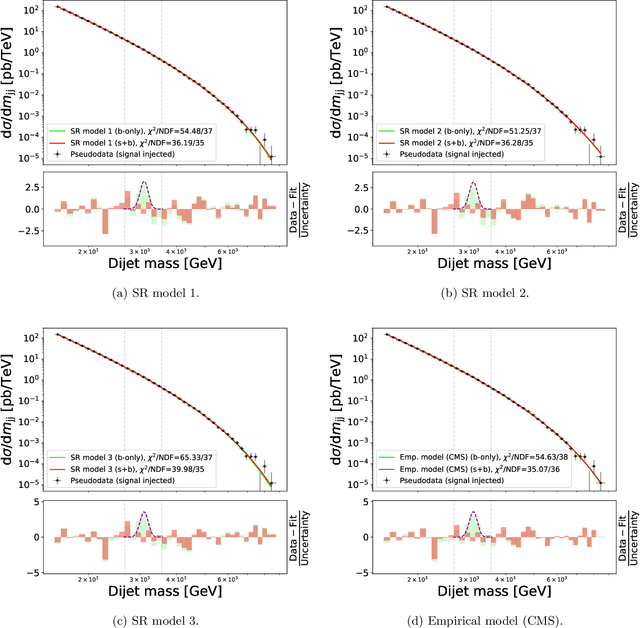
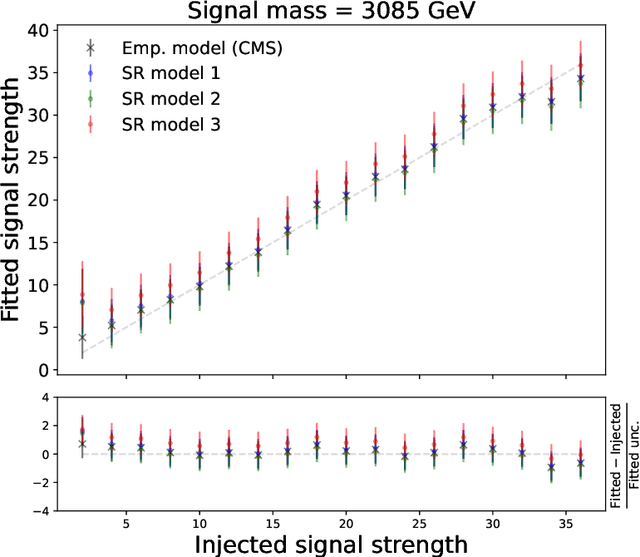
We introduce SymbolFit, a framework that automates parametric modeling by using symbolic regression to perform a machine-search for functions that fit the data, while simultaneously providing uncertainty estimates in a single run. Traditionally, constructing a parametric model to accurately describe binned data has been a manual and iterative process, requiring an adequate functional form to be determined before the fit can be performed. The main challenge arises when the appropriate functional forms cannot be derived from first principles, especially when there is no underlying true closed-form function for the distribution. In this work, we address this problem by utilizing symbolic regression, a machine learning technique that explores a vast space of candidate functions without needing a predefined functional form, treating the functional form itself as a trainable parameter. Our approach is demonstrated in data analysis applications in high-energy physics experiments at the CERN Large Hadron Collider (LHC). We demonstrate its effectiveness and efficiency using five real proton-proton collision datasets from new physics searches at the LHC, namely the background modeling in resonance searches for high-mass dijet, trijet, paired-dijet, diphoton, and dimuon events. We also validate the framework using several toy datasets with one and more variables.
Low Latency Transformer Inference on FPGAs for Physics Applications with hls4ml
Sep 08, 2024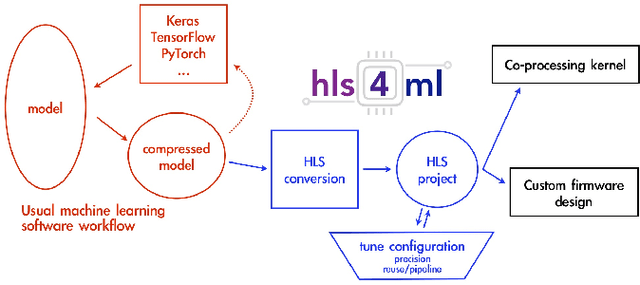
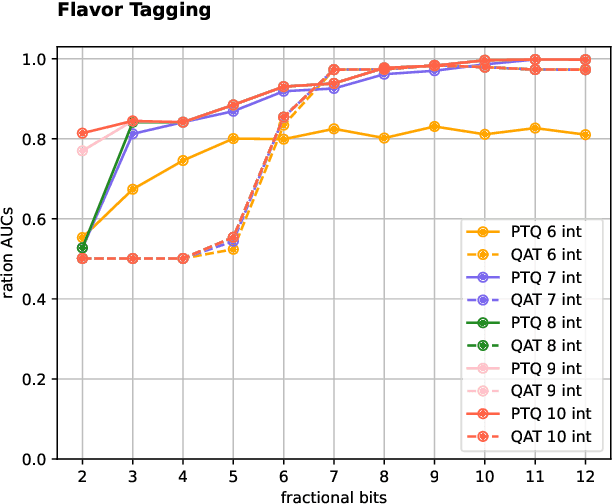
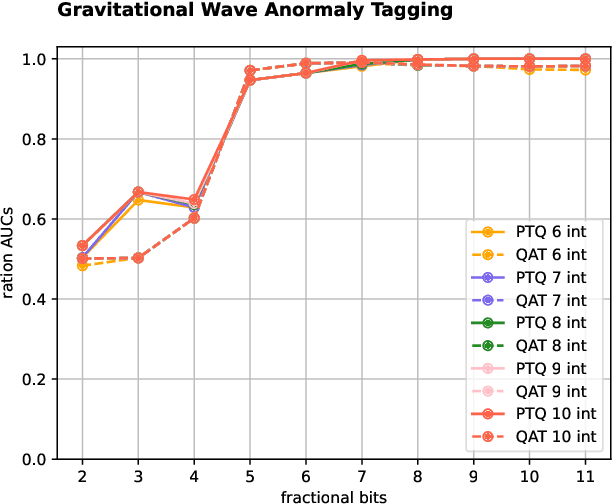
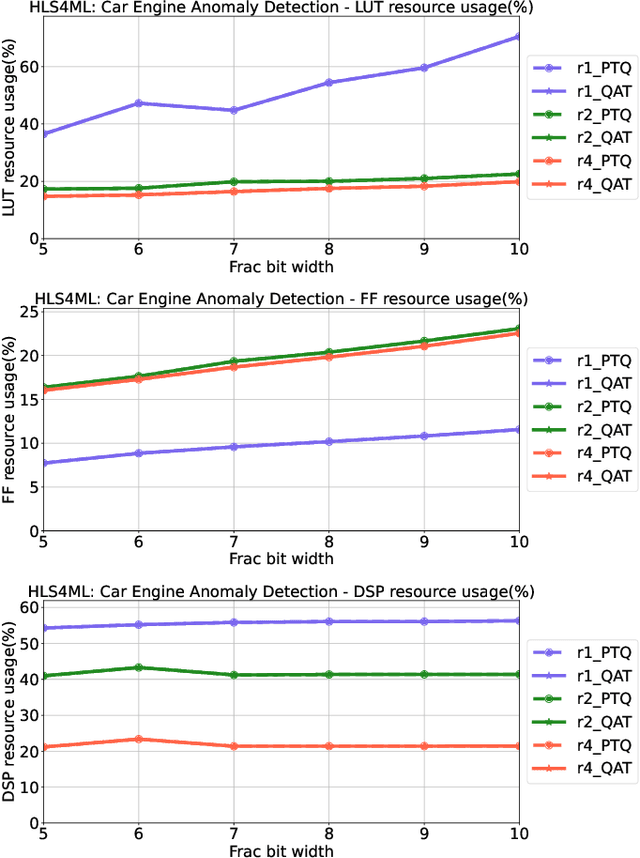
This study presents an efficient implementation of transformer architectures in Field-Programmable Gate Arrays(FPGAs) using hls4ml. We demonstrate the strategy for implementing the multi-head attention, softmax, and normalization layer and evaluate three distinct models. Their deployment on VU13P FPGA chip achieved latency less than 2us, demonstrating the potential for real-time applications. HLS4ML compatibility with any TensorFlow-built transformer model further enhances the scalability and applicability of this work. Index Terms: FPGAs, machine learning, transformers, high energy physics, LIGO
Reliable edge machine learning hardware for scientific applications
Jun 27, 2024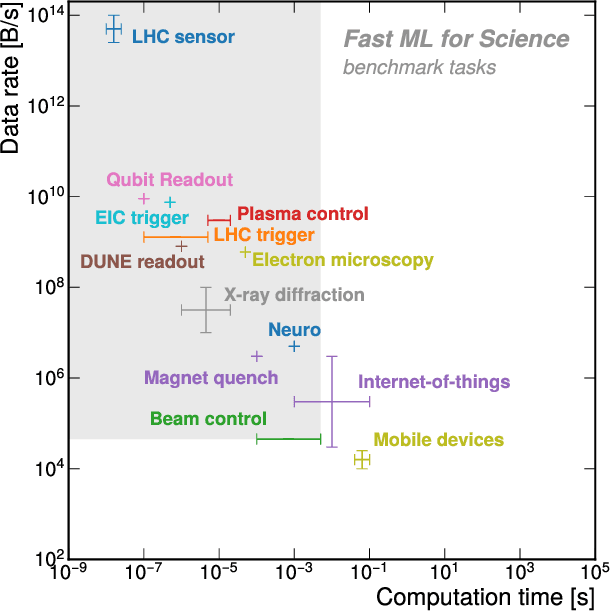
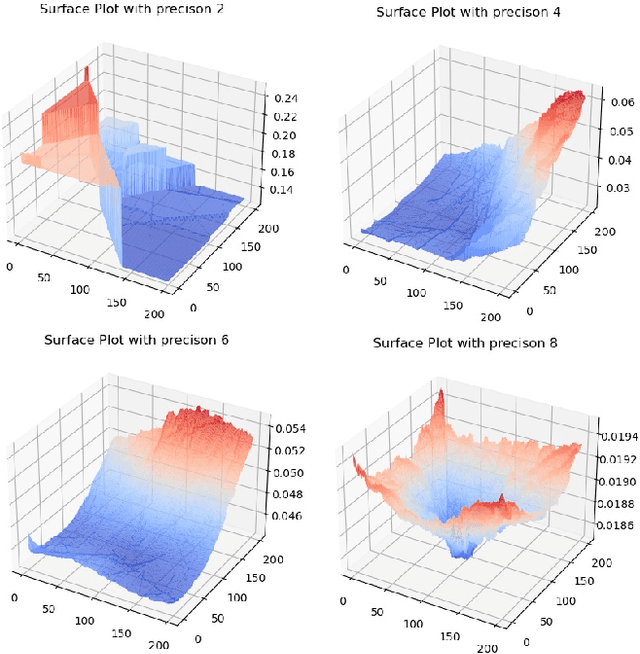
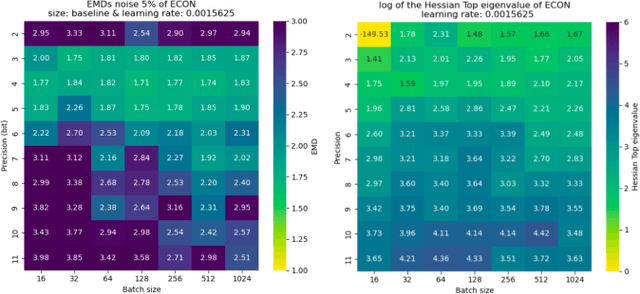
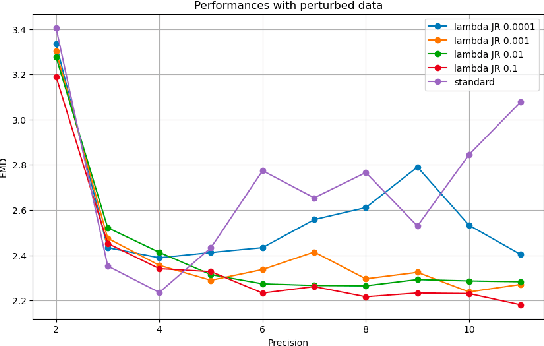
Extreme data rate scientific experiments create massive amounts of data that require efficient ML edge processing. This leads to unique validation challenges for VLSI implementations of ML algorithms: enabling bit-accurate functional simulations for performance validation in experimental software frameworks, verifying those ML models are robust under extreme quantization and pruning, and enabling ultra-fine-grained model inspection for efficient fault tolerance. We discuss approaches to developing and validating reliable algorithms at the scientific edge under such strict latency, resource, power, and area requirements in extreme experimental environments. We study metrics for developing robust algorithms, present preliminary results and mitigation strategies, and conclude with an outlook of these and future directions of research towards the longer-term goal of developing autonomous scientific experimentation methods for accelerated scientific discovery.
Gradient-based Automatic Per-Weight Mixed Precision Quantization for Neural Networks On-Chip
May 01, 2024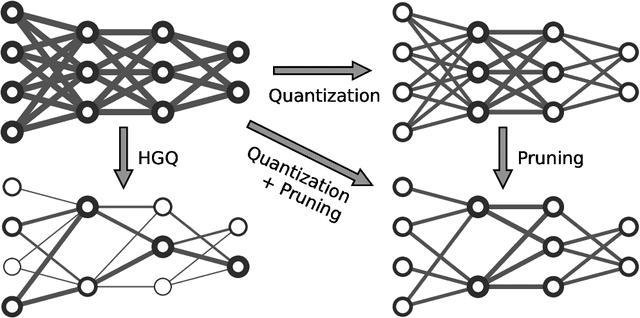
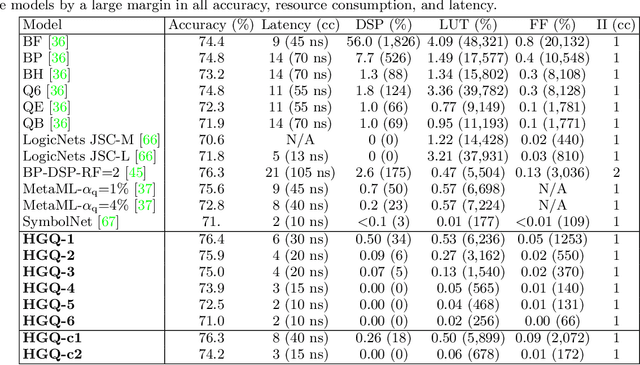
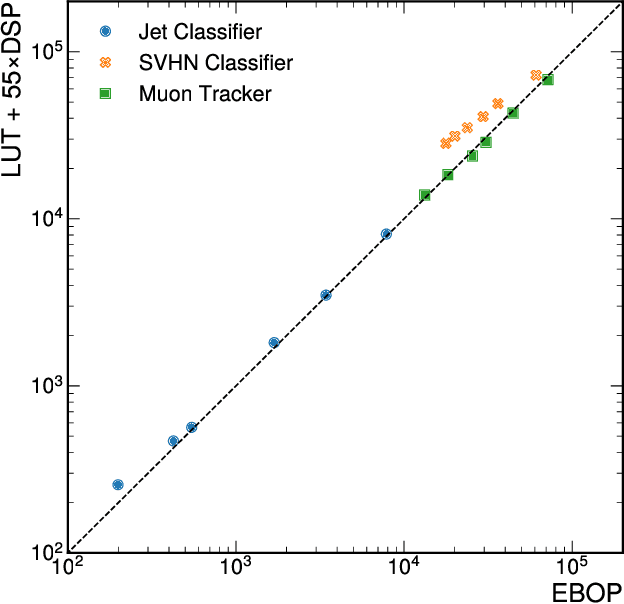

Model size and inference speed at deployment time, are major challenges in many deep learning applications. A promising strategy to overcome these challenges is quantization. However, a straightforward uniform quantization to very low precision can result in significant accuracy loss. Mixed-precision quantization, based on the idea that certain parts of the network can accommodate lower precision without compromising performance compared to other parts, offers a potential solution. In this work, we present High Granularity Quantization (HGQ), an innovative quantization-aware training method designed to fine-tune the per-weight and per-activation precision in an automatic way for ultra-low latency and low power neural networks which are to be deployed on FPGAs. We demonstrate that HGQ can outperform existing methods by a substantial margin, achieving resource reduction by up to a factor of 20 and latency improvement by a factor of 5 while preserving accuracy.
Sets are all you need: Ultrafast jet classification on FPGAs for HL-LHC
Feb 02, 2024


We study various machine learning based algorithms for performing accurate jet flavor classification on field-programmable gate arrays and demonstrate how latency and resource consumption scale with the input size and choice of algorithm. These architectures provide an initial design for models that could be used for tagging at the CERN LHC during its high-luminosity phase. The high-luminosity upgrade will lead to a five-fold increase in its instantaneous luminosity for proton-proton collisions and, in turn, higher data volume and complexity, such as the availability of jet constituents. Through quantization-aware training and efficient hardware implementations, we show that O(100) ns inference of complex architectures such as deep sets and interaction networks is feasible at a low computational resource cost.