 Add to Chrome
 Add to Firefox
 Add to Edge
CliniCARE-Bench: Clinical Calibrated Audit of Medical Reasoning in EHR
Aug 07, 2026
Large language models perform strongly on medical knowledge benchmarks, but reliable clinical deployment requires agents to conduct defensible investigations over heterogeneous, longitudinal records: determining what evidence is needed, retrieving and reconciling structured and free-text data, grounding conclusions in verifiable evidence, and deferring cases that cannot be resolved reliably. We introduce CliniCARE-Bench (Clinical Calibrated Audit of Medical Reasoning in EHR), a benchmark for retrospective clinical audit: 25 clinician-validated scenarios instantiated as 750 patient-specific cases over real-patient-derived MIMIC-IV data. Systems investigate each case through a governed, logged tool environment for record retrieval, computation, and policy access, and return one of four verdicts---Yes, No, Indeterminate: Lack of Data, or Indeterminate: Medically Ambiguous---the last two separating missing evidence from residual medical ambiguity. Beyond verdict accuracy, we score patient-evidence and policy grounding, process adherence, calibrated abstention, reliability, and efficiency against case-level reference verdicts produced by independent multi-model adjudication and calibrated against Clinical Board review. Every retrieval, computation, and report is replayable, so the investigation trace is inspectable and scorable. To our knowledge, CliniCARE-Bench is the first deployment-oriented clinical-agent benchmark to jointly evaluate real longitudinal EHR investigation, claim-level evidence grounding, governing-policy use, process adherence, and calibrated abstention within a common patient-level adjudication framework. Across 16 agentic systems, four-way accuracy spans 65.3-76.1%, but raw accuracy overstates investigation quality. Defect-free accuracy, which credits a verdict only when correct and free of prohibited shortcuts, is 4.8-14.8 points lower and reorders the leaderboard.

HarnessOpt-Bench: Evaluating LLMs at Harness Optimization
Aug 06, 2026As LLMs are increasingly deployed within agentic systems, their capabilities depend not only on the model weights but also on the harness: the prompts, tools, control flow, memory, and orchestration code surrounding them. This makes automated harness optimization -- the iterative and evaluation-guided improvement of a harness by an AI system -- both an important route to improving AI systems and a demanding capability for AI systems themselves. Yet the community lacks a common protocol for measuring how well frontier LLMs perform at this task. We introduce HarnessOpt-Bench, a benchmark for end-to-end harness optimization under expensive and stochastic evaluation. An optimizer, an LLM paired with a coding harness, receives a target agent's seed harness, graded evaluation feedback, and a fixed target-evaluation budget. It edits the harness and nominates a final candidate, which is scored by its normalized gain over the seed on a held-out test partition that remains inaccessible throughout search. A trusted execution environment enforces the evaluation boundary, meters target-agent resource use, and preserves candidate versions for audit. We evaluate 5 frontier LLMs as optimizers both under a shared coding harness and under their native harnesses across 4 downstream tasks, over 111 scored runs. Experiment results show that optimizer models separate more than the coding harnesses they act through, native harnesses are not consistently superior, and gains vary substantially across tasks and seed regimes. These results establish harness optimization as a measurable and discriminative capability with large space for improvement.
Insights Generator: Systematic Corpus-Level Trace Diagnostics for LLM Agents
May 21, 2026Diagnosing failures in LLM agents remains largely manual. Practitioners inspect a small subset of execution traces, form ad-hoc hypotheses, and iterate. This process misses patterns that only emerge across trace populations and does not scale to production corpora where individual traces span tens of thousands of tokens. We formalize the problem of corpus-level trace diagnostics. Given a corpus of execution traces, the goal is to produce grounded natural-language insights that characterize systematic behavioral patterns across trace groups, each linked to supporting evidence. We present the Insights Generator (IG), a multi-agent system that answers diagnostic questions by proposing and testing hypotheses across the trace corpus to produce an evidence-backed insights report. We evaluate IG across qualitative and objective dimensions, spanning rubric-based report assessment and downstream performance improvements achieved by implementing IG insights. Human experts using IG reports improve scaffold performance by 30.4pp over the unmodified baseline scaffold, and coding agents leveraging IG-derived insights show consistent and stable gains. Across benchmarks, IG's scout-investigator architecture produces findings comparable in detection coverage to competing approaches, while domain experts rated IG reports as leading depth and evidence quality.
MIDST Challenge at SaTML 2025: Membership Inference over Diffusion-models-based Synthetic Tabular data
Mar 19, 2026Synthetic data is often perceived as a silver-bullet solution to data anonymization and privacy-preserving data publishing. Drawn from generative models like diffusion models, synthetic data is expected to preserve the statistical properties of the original dataset while remaining resilient to privacy attacks. Recent developments of diffusion models have been effective on a wide range of data types, but their privacy resilience, particularly for tabular formats, remains largely unexplored. MIDST challenge sought a quantitative evaluation of the privacy gain of synthetic tabular data generated by diffusion models, with a specific focus on its resistance to membership inference attacks (MIAs). Given the heterogeneity and complexity of tabular data, multiple target models were explored for MIAs, including diffusion models for single tables of mixed data types and multi-relational tables with interconnected constraints. MIDST inspired the development of novel black-box and white-box MIAs tailored to these target diffusion models as a key outcome, enabling a comprehensive evaluation of their privacy efficacy. The MIDST GitHub repository is available at https://github.com/VectorInstitute/MIDST
VeRO: An Evaluation Harness for Agents to Optimize Agents
Feb 25, 2026An important emerging application of coding agents is agent optimization: the iterative improvement of a target agent through edit-execute-evaluate cycles. Despite its relevance, the community lacks a systematic understanding of coding agent performance on this task. Agent optimization differs fundamentally from conventional software engineering: the target agent interleaves deterministic code with stochastic LLM completions, requiring structured capture of both intermediate reasoning and downstream execution outcomes. To address these challenges, we introduce VERO (Versioning, Rewards, and Observations), which provides (1) a reproducible evaluation harness with versioned agent snapshots, budget-controlled evaluation, and structured execution traces, and (2) a benchmark suite of target agents and tasks with reference evaluation procedures. Using VERO, we conduct an empirical study comparing optimizer configurations across tasks and analyzing which modifications reliably improve target agent performance. We release VERO to support research on agent optimization as a core capability for coding agents.
FedRAG: A Framework for Fine-Tuning Retrieval-Augmented Generation Systems
Jun 12, 2025Retrieval-augmented generation (RAG) systems have been shown to be effective in addressing many of the drawbacks of relying solely on the parametric memory of large language models. Recent work has demonstrated that RAG systems can be improved via fine-tuning of their retriever and generator models. In this work, we introduce FedRAG, a framework for fine-tuning RAG systems across centralized and federated architectures. FedRAG supports state-of-the-art fine-tuning methods, offering a simple and intuitive interface and a seamless conversion from centralized to federated training tasks. FedRAG is also deeply integrated with the modern RAG ecosystem, filling a critical gap in available tools.
ViLBias: A Framework for Bias Detection using Linguistic and Visual Cues
Dec 22, 2024

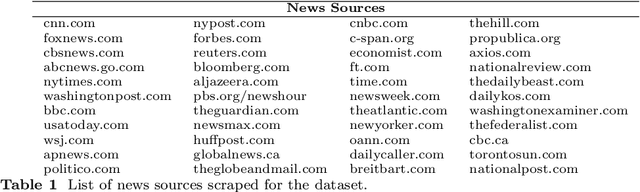

The integration of Large Language Models (LLMs) and Vision-Language Models (VLMs) opens new avenues for addressing complex challenges in multimodal content analysis, particularly in biased news detection. This study introduces ViLBias, a framework that leverages state of the art LLMs and VLMs to detect linguistic and visual biases in news content, addressing the limitations of traditional text-only approaches. Our contributions include a novel dataset pairing textual content with accompanying visuals from diverse news sources and a hybrid annotation framework, combining LLM-based annotations with human review to enhance quality while reducing costs and improving scalability. We evaluate the efficacy of LLMs and VLMs in identifying biases, revealing their strengths in detecting subtle framing and text-visual inconsistencies. Empirical analysis demonstrates that incorporating visual cues alongside text enhances bias detection accuracy by 3 to 5 %, showcasing the complementary strengths of LLMs in generative reasoning and Small Language Models (SLMs) in classification. This study offers a comprehensive exploration of LLMs and VLMs as tools for detecting multimodal biases in news content, highlighting both their potential and limitations. Our research paves the way for more robust, scalable, and nuanced approaches to media bias detection, contributing to the broader field of natural language processing and multimodal analysis. (The data and code will be made available for research purposes).
Fact or Fiction? Can LLMs be Reliable Annotators for Political Truths?
Nov 08, 2024
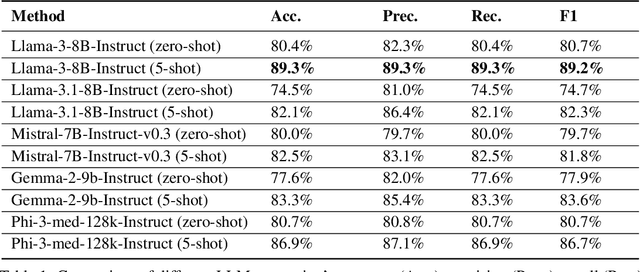
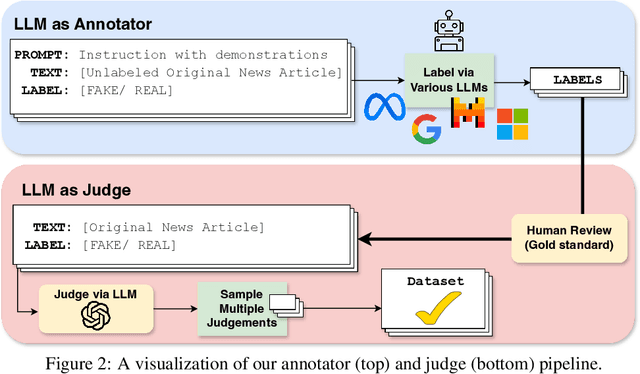

Political misinformation poses significant challenges to democratic processes, shaping public opinion and trust in media. Manual fact-checking methods face issues of scalability and annotator bias, while machine learning models require large, costly labelled datasets. This study investigates the use of state-of-the-art large language models (LLMs) as reliable annotators for detecting political factuality in news articles. Using open-source LLMs, we create a politically diverse dataset, labelled for bias through LLM-generated annotations. These annotations are validated by human experts and further evaluated by LLM-based judges to assess the accuracy and reliability of the annotations. Our approach offers a scalable and robust alternative to traditional fact-checking, enhancing transparency and public trust in media.
MBIAS: Mitigating Bias in Large Language Models While Retaining Context
May 22, 2024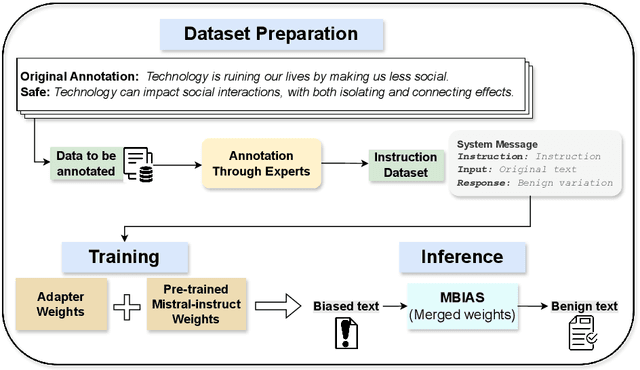
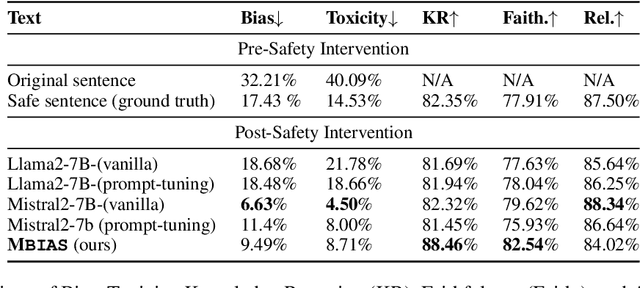
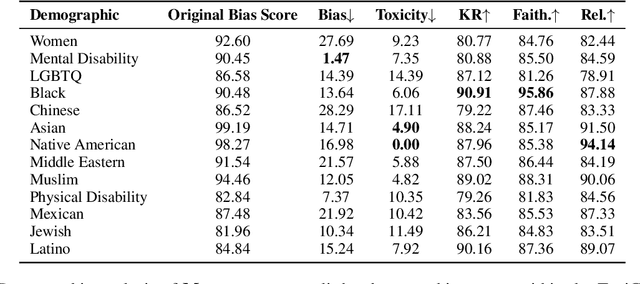
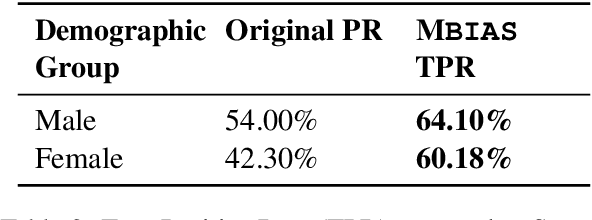
In addressing the critical need for safety in Large Language Models (LLMs), it is crucial to ensure that the outputs are not only safe but also retain their contextual accuracy. Many existing LLMs are safe fine-tuned either with safety demonstrations, or rely only on adversarial testing. While able to get safe outputs, they often risk losing contextual meaning as they mitigate bias and toxicity. In response, we present MBIAS, a LLM framework instruction fine-tuned on a custom dataset specifically designed for safety interventions. MBIAS aims to address the significant issues of bias and toxicity in LLMs generations that typically manifest as underrepresentation or negative portrayals across various demographics, including inappropriate linguistic mentions and biased content in social media. We experiment on MBIAS for safety interventions using various configurations, and demonstrate more than a 30\% reduction in overall bias and toxicity while successfully retaining key information. Additionally, a demographic analysis on an out-of-distribution test set confirms the robustness of our approach, with reductions in bias and toxicity exceeding 90\% across various demographics. The dataset and instruction fine-tuned MBIAS are made available to the research community at https://huggingface.co/newsmediabias/MBIAS.
Closing the Perception-Action Loop for Semantically Safe Navigation in Semi-Static Environments
Apr 22, 2024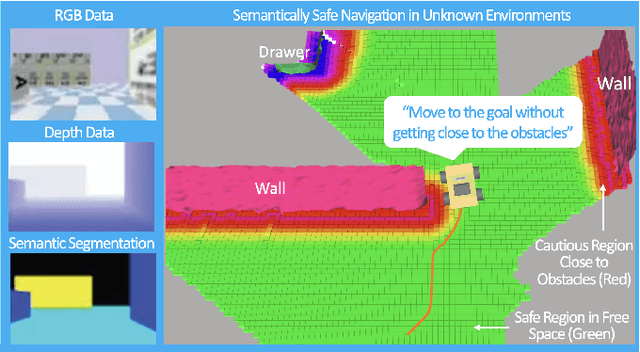
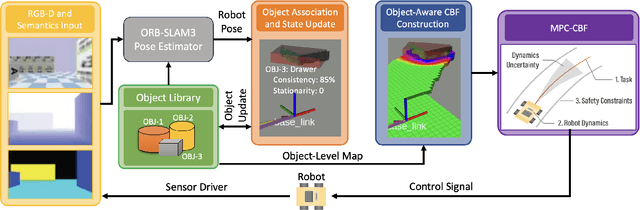
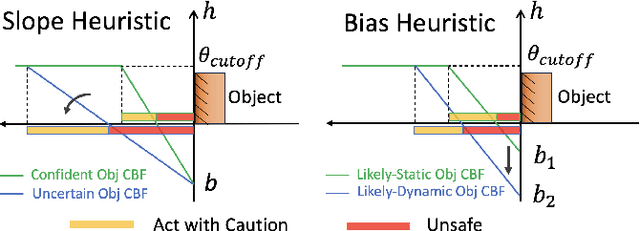
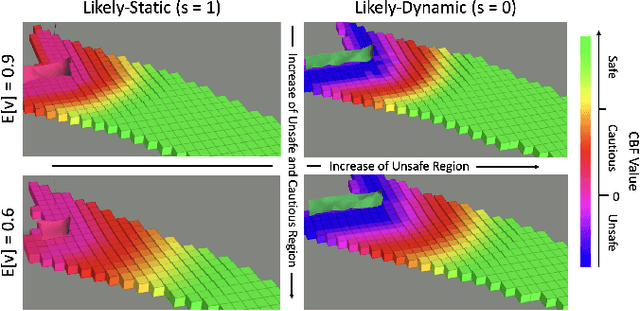
Autonomous robots navigating in changing environments demand adaptive navigation strategies for safe long-term operation. While many modern control paradigms offer theoretical guarantees, they often assume known extrinsic safety constraints, overlooking challenges when deployed in real-world environments where objects can appear, disappear, and shift over time. In this paper, we present a closed-loop perception-action pipeline that bridges this gap. Our system encodes an online-constructed dense map, along with object-level semantic and consistency estimates into a control barrier function (CBF) to regulate safe regions in the scene. A model predictive controller (MPC) leverages the CBF-based safety constraints to adapt its navigation behaviour, which is particularly crucial when potential scene changes occur. We test the system in simulations and real-world experiments to demonstrate the impact of semantic information and scene change handling on robot behavior, validating the practicality of our approach.