 Add to Chrome
 Add to Firefox
 Add to Edge
MIDST Challenge at SaTML 2025: Membership Inference over Diffusion-models-based Synthetic Tabular data
Mar 19, 2026
Synthetic data is often perceived as a silver-bullet solution to data anonymization and privacy-preserving data publishing. Drawn from generative models like diffusion models, synthetic data is expected to preserve the statistical properties of the original dataset while remaining resilient to privacy attacks. Recent developments of diffusion models have been effective on a wide range of data types, but their privacy resilience, particularly for tabular formats, remains largely unexplored. MIDST challenge sought a quantitative evaluation of the privacy gain of synthetic tabular data generated by diffusion models, with a specific focus on its resistance to membership inference attacks (MIAs). Given the heterogeneity and complexity of tabular data, multiple target models were explored for MIAs, including diffusion models for single tables of mixed data types and multi-relational tables with interconnected constraints. MIDST inspired the development of novel black-box and white-box MIAs tailored to these target diffusion models as a key outcome, enabling a comprehensive evaluation of their privacy efficacy. The MIDST GitHub repository is available at https://github.com/VectorInstitute/MIDST

FENDA-FL: Personalized Federated Learning on Heterogeneous Clinical Datasets
Sep 28, 2023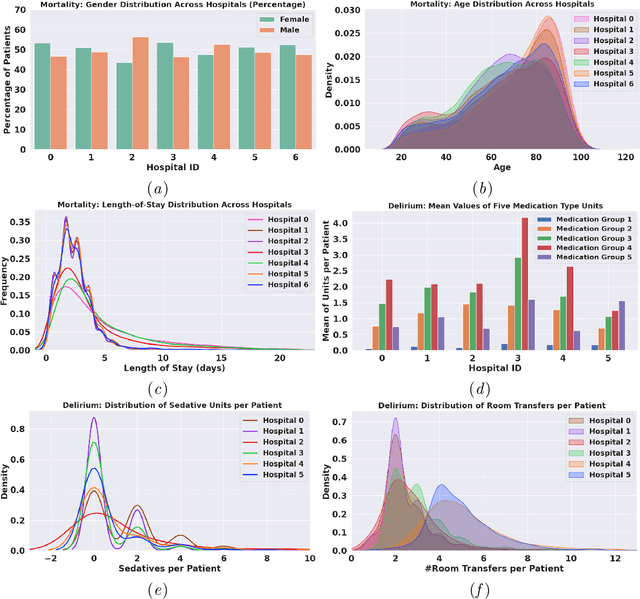
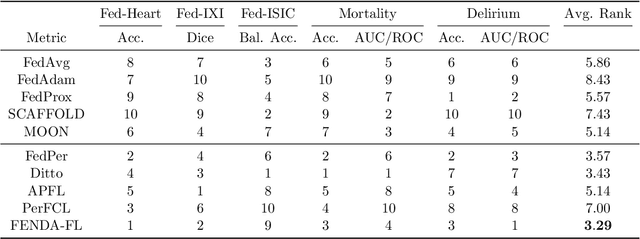
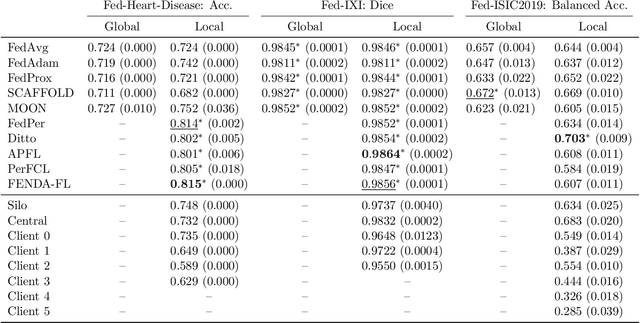
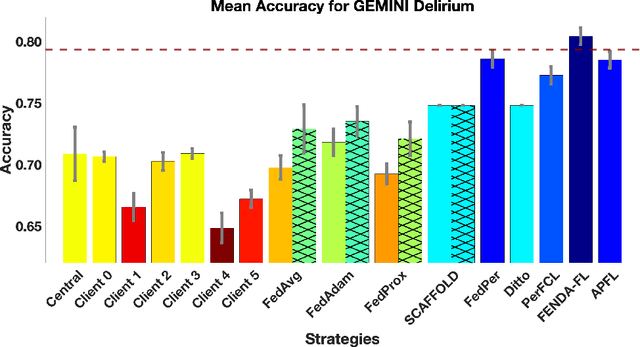
Federated learning (FL) is increasingly being recognized as a key approach to overcoming the data silos that so frequently obstruct the training and deployment of machine-learning models in clinical settings. This work contributes to a growing body of FL research specifically focused on clinical applications along three important directions. First, an extension of the FENDA method (Kim et al., 2016) to the FL setting is proposed. Experiments conducted on the FLamby benchmarks (du Terrail et al., 2022a) and GEMINI datasets (Verma et al., 2017) show that the approach is robust to heterogeneous clinical data and often outperforms existing global and personalized FL techniques. Further, the experimental results represent substantive improvements over the original FLamby benchmarks and expand such benchmarks to include evaluation of personalized FL methods. Finally, we advocate for a comprehensive checkpointing and evaluation framework for FL to better reflect practical settings and provide multiple baselines for comparison.