 Add to Chrome
 Add to Firefox
 Add to Edge
Understanding and Constructing Latent Modality Structures in Multi-modal Representation Learning
Mar 10, 2023
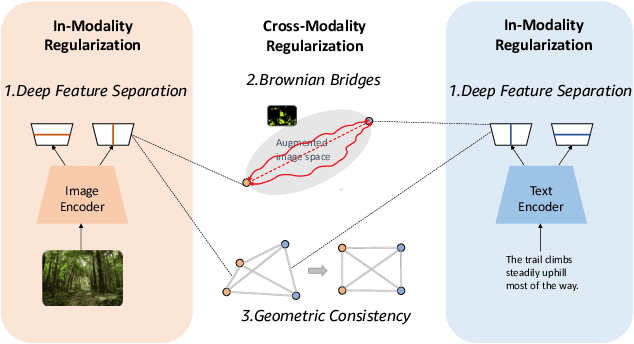
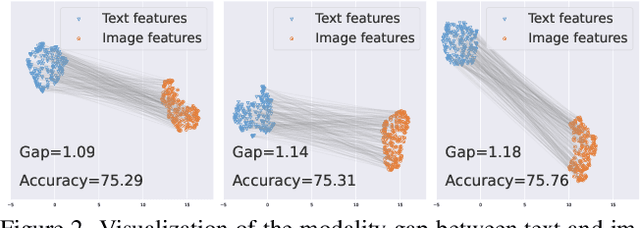
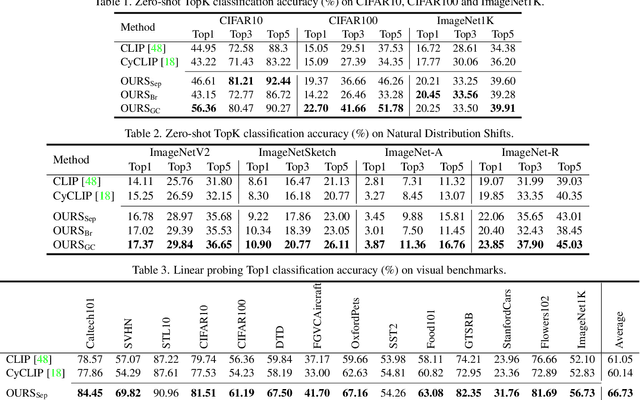
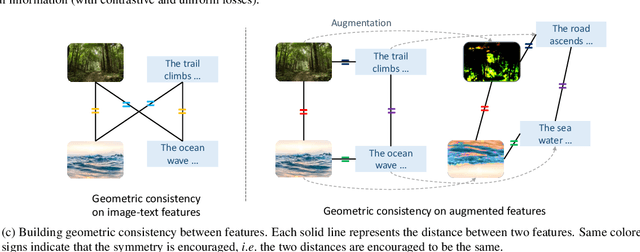
Contrastive loss has been increasingly used in learning representations from multiple modalities. In the limit, the nature of the contrastive loss encourages modalities to exactly match each other in the latent space. Yet it remains an open question how the modality alignment affects the downstream task performance. In this paper, based on an information-theoretic argument, we first prove that exact modality alignment is sub-optimal in general for downstream prediction tasks. Hence we advocate that the key of better performance lies in meaningful latent modality structures instead of perfect modality alignment. To this end, we propose three general approaches to construct latent modality structures. Specifically, we design 1) a deep feature separation loss for intra-modality regularization; 2) a Brownian-bridge loss for inter-modality regularization; and 3) a geometric consistency loss for both intra- and inter-modality regularization. Extensive experiments are conducted on two popular multi-modal representation learning frameworks: the CLIP-based two-tower model and the ALBEF-based fusion model. We test our model on a variety of tasks including zero/few-shot image classification, image-text retrieval, visual question answering, visual reasoning, and visual entailment. Our method achieves consistent improvements over existing methods, demonstrating the effectiveness and generalizability of our proposed approach on latent modality structure regularization.

SMILE: Scaling Mixture-of-Experts with Efficient Bi-level Routing
Dec 10, 2022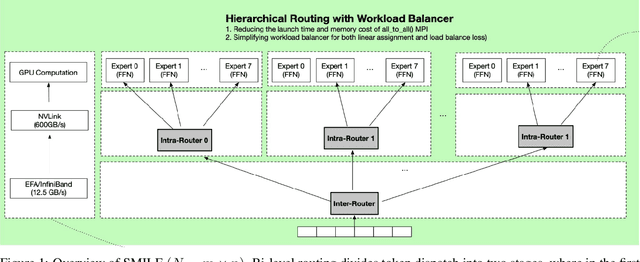
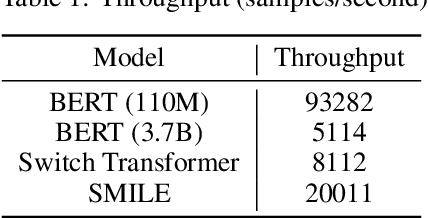
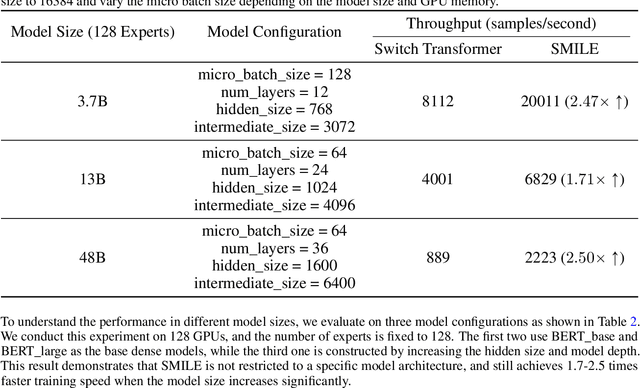
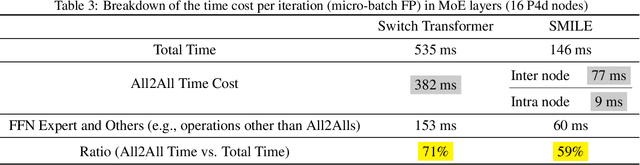
The mixture of Expert (MoE) parallelism is a recent advancement that scales up the model size with constant computational cost. MoE selects different sets of parameters (i.e., experts) for each incoming token, resulting in a sparsely-activated model. Despite several successful applications of MoE, its training efficiency degrades significantly as the number of experts increases. The routing stage in MoE relies on the efficiency of the All2All communication collective, which suffers from network congestion and has poor scalability. To mitigate these issues, we introduce SMILE, which exploits heterogeneous network bandwidth and splits a single-step routing into bi-level routing. Our experimental results show that the proposed method obtains a 2.5x speedup over Switch Transformer in terms of pretraining throughput on the Colossal Clean Crawled Corpus without losing any convergence speed.
MICO: Selective Search with Mutual Information Co-training
Sep 09, 2022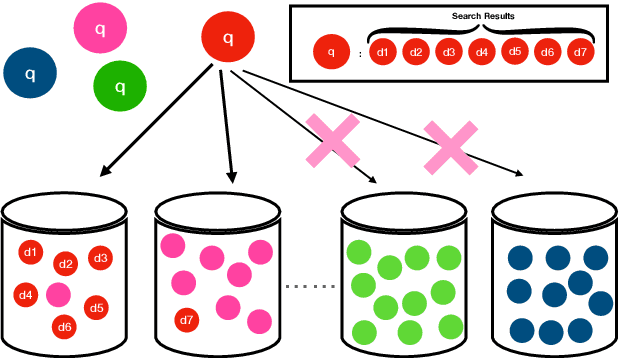
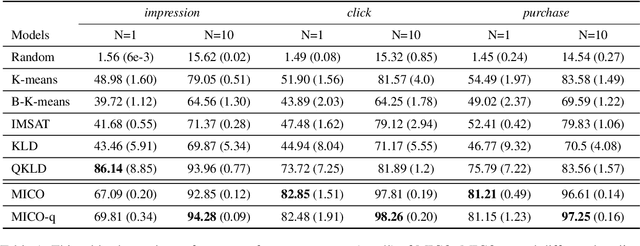
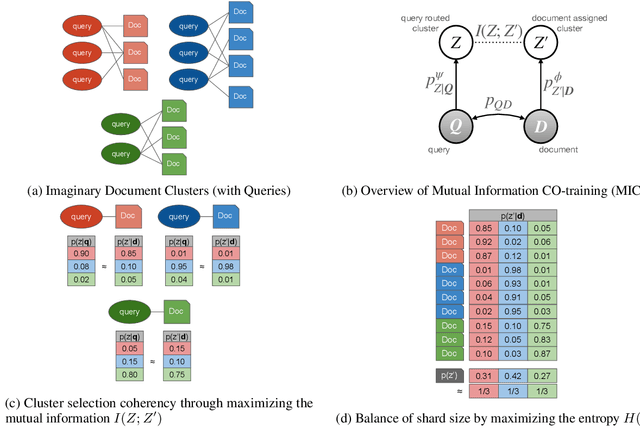
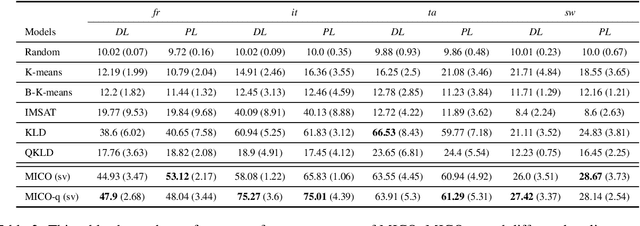
In contrast to traditional exhaustive search, selective search first clusters documents into several groups before all the documents are searched exhaustively by a query, to limit the search executed within one group or only a few groups. Selective search is designed to reduce the latency and computation in modern large-scale search systems. In this study, we propose MICO, a Mutual Information CO-training framework for selective search with minimal supervision using the search logs. After training, MICO does not only cluster the documents, but also routes unseen queries to the relevant clusters for efficient retrieval. In our empirical experiments, MICO significantly improves the performance on multiple metrics of selective search and outperforms a number of existing competitive baselines.
Efficient and effective training of language and graph neural network models
Jun 22, 2022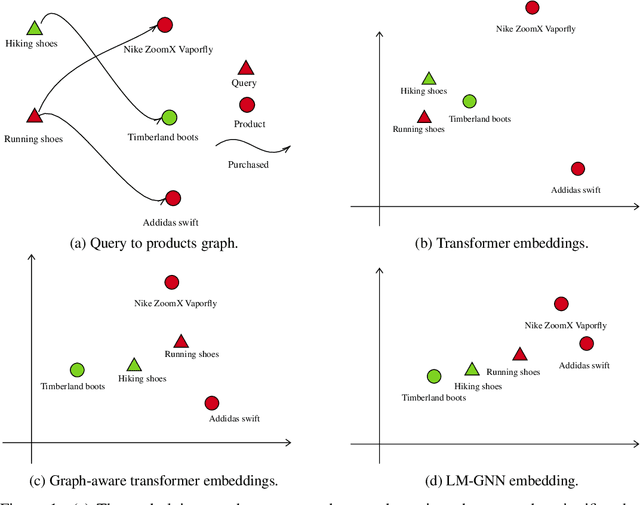
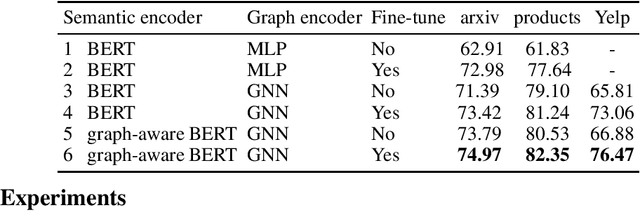
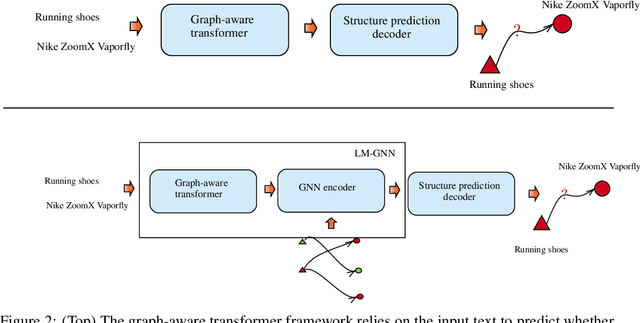
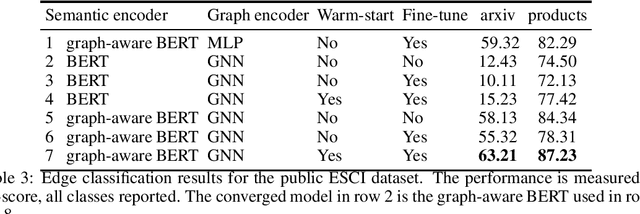
Can we combine heterogenous graph structure with text to learn high-quality semantic and behavioural representations? Graph neural networks (GNN)s encode numerical node attributes and graph structure to achieve impressive performance in a variety of supervised learning tasks. Current GNN approaches are challenged by textual features, which typically need to be encoded to a numerical vector before provided to the GNN that may incur some information loss. In this paper, we put forth an efficient and effective framework termed language model GNN (LM-GNN) to jointly train large-scale language models and graph neural networks. The effectiveness in our framework is achieved by applying stage-wise fine-tuning of the BERT model first with heterogenous graph information and then with a GNN model. Several system and design optimizations are proposed to enable scalable and efficient training. LM-GNN accommodates node and edge classification as well as link prediction tasks. We evaluate the LM-GNN framework in different datasets performance and showcase the effectiveness of the proposed approach. LM-GNN provides competitive results in an Amazon query-purchase-product application.
DynaMaR: Dynamic Prompt with Mask Token Representation
Jun 07, 2022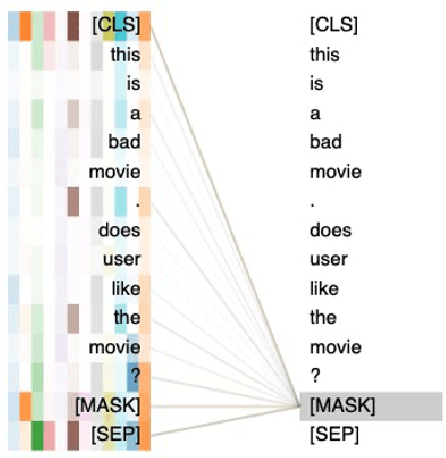
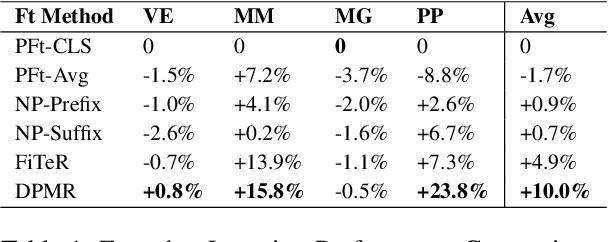
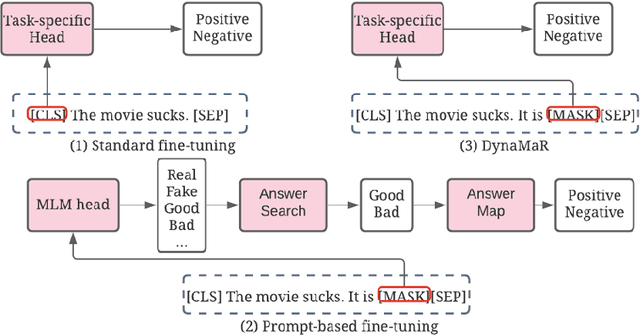
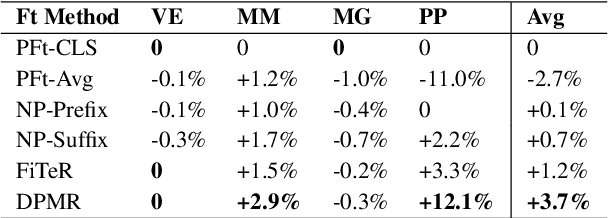
Recent research has shown that large language models pretrained using unsupervised approaches can achieve significant performance improvement on many downstream tasks. Typically when adapting these language models to downstream tasks, like a classification or regression task, we employ a fine-tuning paradigm in which the sentence representation from the language model is input to a task-specific head; the model is then fine-tuned end-to-end. However, with the emergence of models like GPT-3, prompt-based fine-tuning has been proven to be a successful approach for few-shot tasks. Inspired by this work, we study discrete prompt technologies in practice. There are two issues that arise with the standard prompt approach. First, it can overfit on the prompt template. Second, it requires manual effort to formulate the downstream task as a language model problem. In this paper, we propose an improvement to prompt-based fine-tuning that addresses these two issues. We refer to our approach as DynaMaR -- Dynamic Prompt with Mask Token Representation. Results show that DynaMaR can achieve an average improvement of 10% in few-shot settings and improvement of 3.7% in data-rich settings over the standard fine-tuning approach on four e-commerce applications.
Vision-Language Pre-Training with Triple Contrastive Learning
Mar 28, 2022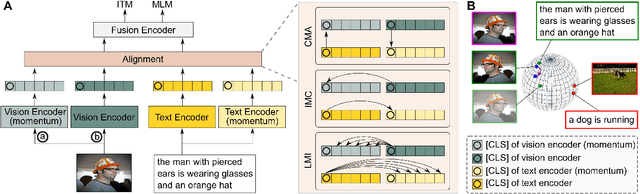

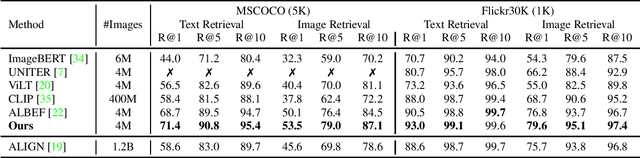
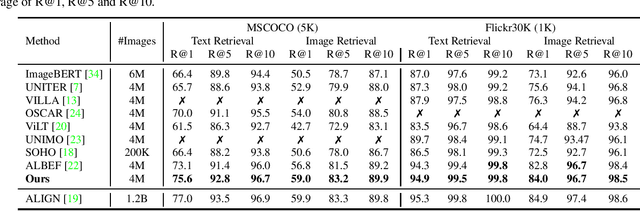
Vision-language representation learning largely benefits from image-text alignment through contrastive losses (e.g., InfoNCE loss). The success of this alignment strategy is attributed to its capability in maximizing the mutual information (MI) between an image and its matched text. However, simply performing cross-modal alignment (CMA) ignores data potential within each modality, which may result in degraded representations. For instance, although CMA-based models are able to map image-text pairs close together in the embedding space, they fail to ensure that similar inputs from the same modality stay close by. This problem can get even worse when the pre-training data is noisy. In this paper, we propose triple contrastive learning (TCL) for vision-language pre-training by leveraging both cross-modal and intra-modal self-supervision. Besides CMA, TCL introduces an intra-modal contrastive objective to provide complementary benefits in representation learning. To take advantage of localized and structural information from image and text input, TCL further maximizes the average MI between local regions of image/text and their global summary. To the best of our knowledge, ours is the first work that takes into account local structure information for multi-modality representation learning. Experimental evaluations show that our approach is competitive and achieves the new state of the art on various common down-stream vision-language tasks such as image-text retrieval and visual question answering.
Multi-modal Alignment using Representation Codebook
Mar 28, 2022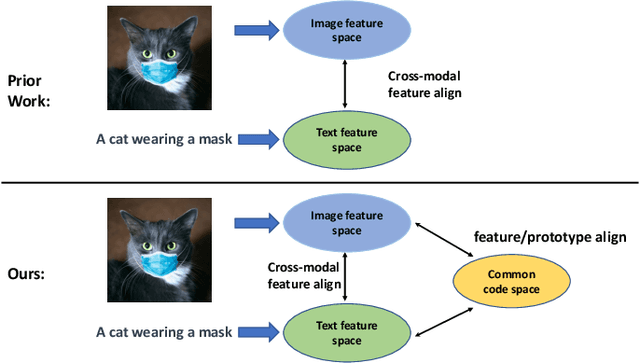
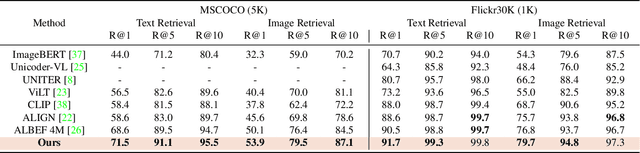
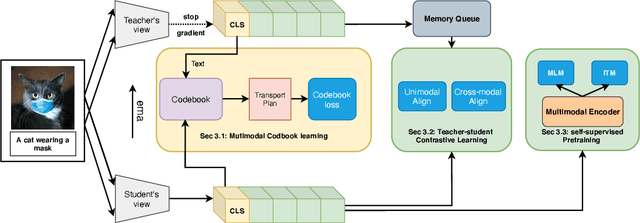
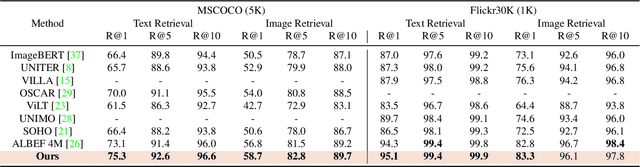
Aligning signals from different modalities is an important step in vision-language representation learning as it affects the performance of later stages such as cross-modality fusion. Since image and text typically reside in different regions of the feature space, directly aligning them at instance level is challenging especially when features are still evolving during training. In this paper, we propose to align at a higher and more stable level using cluster representation. Specifically, we treat image and text as two "views" of the same entity, and encode them into a joint vision-language coding space spanned by a dictionary of cluster centers (codebook). We contrast positive and negative samples via their cluster assignments while simultaneously optimizing the cluster centers. To further smooth out the learning process, we adopt a teacher-student distillation paradigm, where the momentum teacher of one view guides the student learning of the other. We evaluated our approach on common vision language benchmarks and obtain new SoTA on zero-shot cross modality retrieval while being competitive on various other transfer tasks.
Magic Pyramid: Accelerating Inference with Early Exiting and Token Pruning
Oct 30, 2021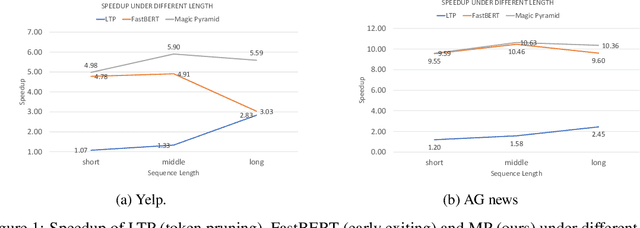
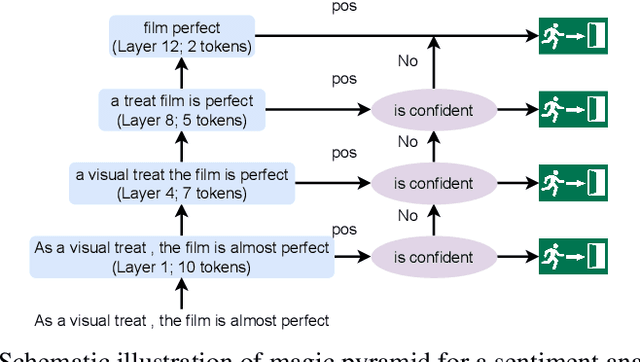
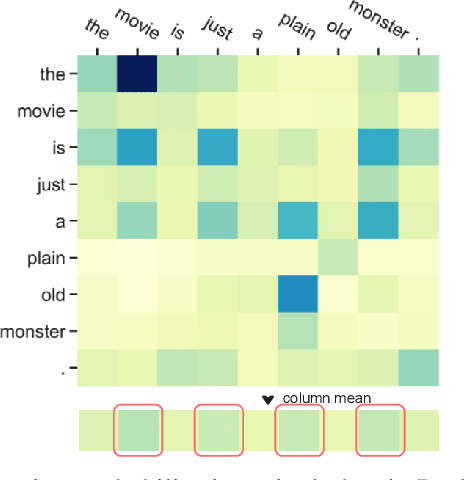
Pre-training and then fine-tuning large language models is commonly used to achieve state-of-the-art performance in natural language processing (NLP) tasks. However, most pre-trained models suffer from low inference speed. Deploying such large models to applications with latency constraints is challenging. In this work, we focus on accelerating the inference via conditional computations. To achieve this, we propose a novel idea, Magic Pyramid (MP), to reduce both width-wise and depth-wise computation via token pruning and early exiting for Transformer-based models, particularly BERT. The former manages to save the computation via removing non-salient tokens, while the latter can fulfill the computation reduction by terminating the inference early before reaching the final layer, if the exiting condition is met. Our empirical studies demonstrate that compared to previous state of arts, MP is not only able to achieve a speed-adjustable inference but also to surpass token pruning and early exiting by reducing up to 70% giga floating point operations (GFLOPs) with less than 0.5% accuracy drop. Token pruning and early exiting express distinctive preferences to sequences with different lengths. However, MP is capable of achieving an average of 8.06x speedup on two popular text classification tasks, regardless of the sizes of the inputs.
MLIM: Vision-and-Language Model Pre-training with Masked Language and Image Modeling
Sep 24, 2021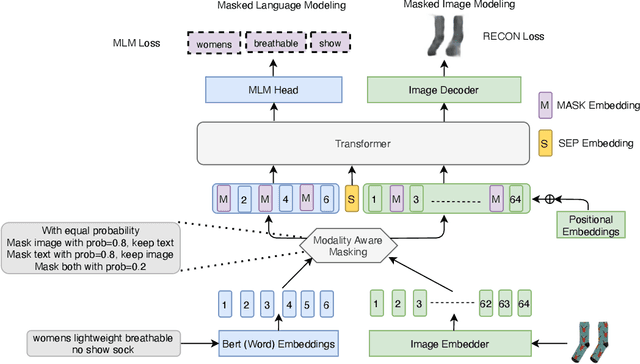
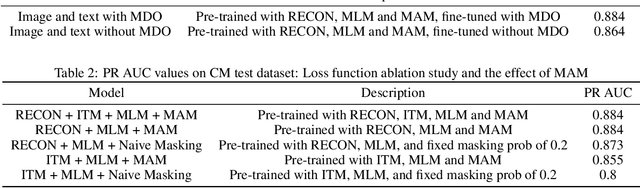
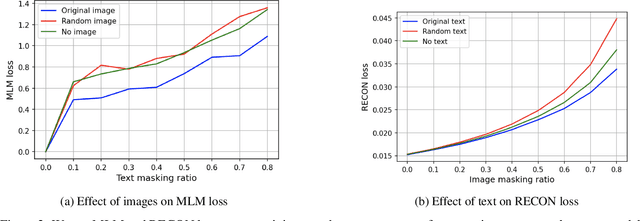
Vision-and-Language Pre-training (VLP) improves model performance for downstream tasks that require image and text inputs. Current VLP approaches differ on (i) model architecture (especially image embedders), (ii) loss functions, and (iii) masking policies. Image embedders are either deep models like ResNet or linear projections that directly feed image-pixels into the transformer. Typically, in addition to the Masked Language Modeling (MLM) loss, alignment-based objectives are used for cross-modality interaction, and RoI feature regression and classification tasks for Masked Image-Region Modeling (MIRM). Both alignment and MIRM objectives mostly do not have ground truth. Alignment-based objectives require pairings of image and text and heuristic objective functions. MIRM relies on object detectors. Masking policies either do not take advantage of multi-modality or are strictly coupled with alignments generated by other models. In this paper, we present Masked Language and Image Modeling (MLIM) for VLP. MLIM uses two loss functions: Masked Language Modeling (MLM) loss and image reconstruction (RECON) loss. We propose Modality Aware Masking (MAM) to boost cross-modality interaction and take advantage of MLM and RECON losses that separately capture text and image reconstruction quality. Using MLM + RECON tasks coupled with MAM, we present a simplified VLP methodology and show that it has better downstream task performance on a proprietary e-commerce multi-modal dataset.
Tiering as a Stochastic Submodular Optimization Problem
May 16, 2020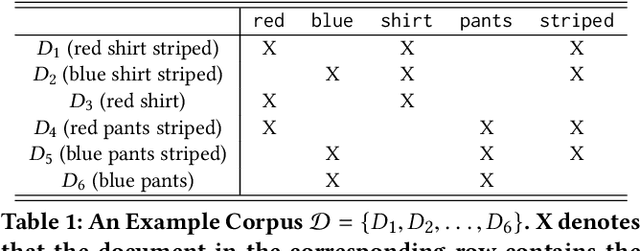
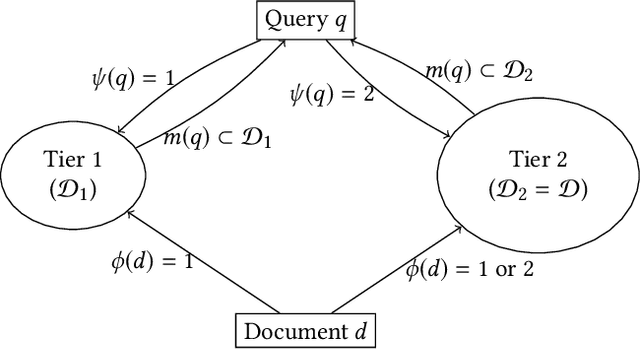
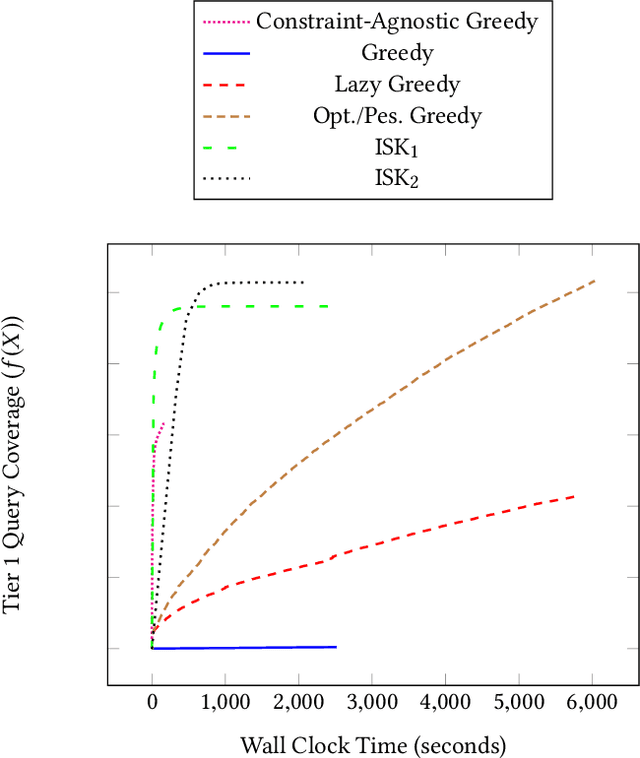
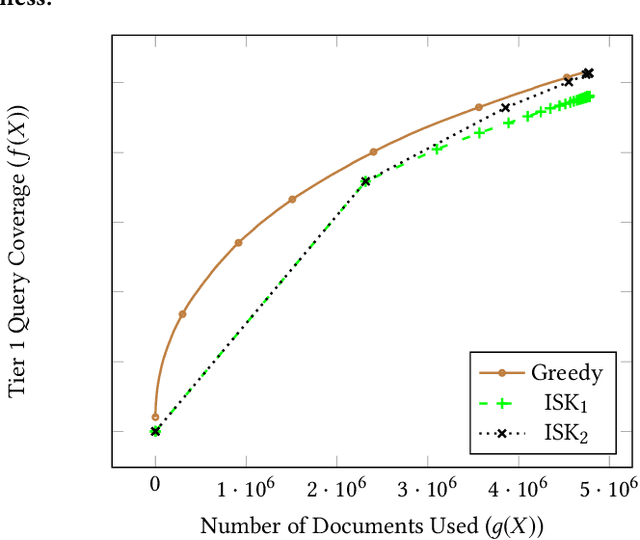
Tiering is an essential technique for building large-scale information retrieval systems. While the selection of documents for high priority tiers critically impacts the efficiency of tiering, past work focuses on optimizing it with respect to a static set of queries in the history, and generalizes poorly to the future traffic. Instead, we formulate the optimal tiering as a stochastic optimization problem, and follow the methodology of regularized empirical risk minimization to maximize the \emph{generalization performance} of the system. We also show that the optimization problem can be cast as a stochastic submodular optimization problem with a submodular knapsack constraint, and we develop efficient optimization algorithms by leveraging this connection.