 Add to Chrome
 Add to Firefox
 Add to Edge
A Unified Framework for Trajectory Prediction with Explicit Planning and Reaction Decomposition
Aug 06, 2026
Trajectory prediction has shifted toward structured formulations with explicit social modeling. However, existing methods inadequately distinguish the functional roles of social influence in trajectory planning. Observing that agents typically form motion plans by anticipating others' future behaviors before making local reactive adjustments, we identify social interactions as playing staged roles, namely planning precedes reaction. We propose INTraJ, a unified framework that decomposes social influence into two stages: a planning stage constructs reference trajectories using future social information, and a reaction stage recovers local adjustments from the residual between full-context prediction and the reference. INTraJ supports both multi-target and single-target paradigms. Extensive experiments on four standard benchmarks, including Argoverse 2, Argoverse 2-ped, ETH/UCY, and SDD, demonstrate consistent improvements, particularly in FDE and long-horizon consistency, with state-of-the-art performance achieved in several settings. INTraJ reframes trajectory prediction as a planning-driven two-stage process, validating that staged social modeling is critical for stable predictions. The code is publicly available at https://github.com/11isnotavailable/INTraJ.

NodeJEPA: Structure-Conditioned Latent Prediction for Node-Level Graph Self-Supervised Learning
Aug 05, 2026Self-supervised learning on graphs is largely shaped by contrastive methods that depend on carefully designed augmentations, and by generative methods that reconstruct node attributes in the input space. Both paradigms can entangle representations with low-level input statistics rather than with relational structure. Joint-embedding predictive architectures (JEPA) instead learn by predicting latent targets rather than reconstructing inputs. Recent work has explored this idea for graph-level representation learning, but how to design JEPA-style objectives for node-level tasks, and which structural signals the predictor should condition on, remains less clear. We present NodeJEPA, a joint-embedding predictive architecture for node-level graph self-supervised learning. NodeJEPA masks structure-aware k-hop ego-subgraphs and trains a context encoder to predict the latent representations of the masked nodes. These targets come from an EMA-updated target encoder with stop-gradient. A structure-conditioned predictor integrates spectral and centrality descriptors through cross-attention. Variance, covariance, and Laplacian spectral regularizers help stabilize the embedding geometry, and an optional curriculum gradually increases masking difficulty during training. Because prediction occurs in latent space, NodeJEPA does not rely on input reconstruction or hand-crafted graph augmentations. We evaluate NodeJEPA on standard node classification benchmarks under linear probing and fine-tuning protocols, and conduct ablations on masking, prediction, and regularization design choices. Our study offers a practical recipe for node-level JEPA-style latent prediction on graphs, and clarifies when structural conditioning helps representation learning. Code, configurations, and evaluation scripts are publicly available at https://github.com/OliverZ-dot/Node-Jepa.
CHM-Net: Center Heatmap-driven Macro-Micro Modeling Network for MRI-based Microbial Density Stratification
Jul 10, 2026Microbial density is clinically important for tumor assessment and treatment decision-making, and recent advances in deep learning suggest that it can be non-invasively inferred from multimodal MRI. In this work, MRI-based Microbial Density Stratification (MRI-MDS) is first investigated as a patient-level representation learning task, and Center Heatmap-driven Macro-micro modeling Network (CHM-Net) is introduced for this task. CHM-Net first establishes the link between imaging phenotypes and microbial states through center heatmap-guided small-lesion response localization. Building upon this, it constructs patient-level macro-micro evidence from localized heatmap responses for microbial density prediction. Experiments on the novel GBNPC 2026 dataset constructed for MRI-MDS demonstrate the effectiveness of CHM-Net, achieving superior performance over representative baselines with a 12.06% absolute ACC gain over the strongest competing result. Additionally, auxiliary validation on two 3D medical image datasets further verifies its robustness across volumetric medical image classification scenarios. The project is available at https://anonymous.4open.science/r/CHM-Net-942E/.
Boosting Single Positive Multi-label Classification with Generalized Robust Loss
May 06, 2024
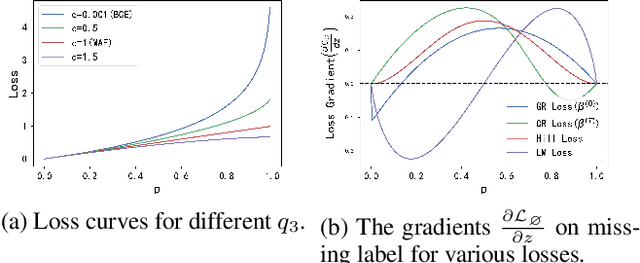


Multi-label learning (MLL) requires comprehensive multi-semantic annotations that is hard to fully obtain, thus often resulting in missing labels scenarios. In this paper, we investigate Single Positive Multi-label Learning (SPML), where each image is associated with merely one positive label. Existing SPML methods only focus on designing losses using mechanisms such as hard pseudo-labeling and robust losses, mostly leading to unacceptable false negatives. To address this issue, we first propose a generalized loss framework based on expected risk minimization to provide soft pseudo labels, and point out that the former losses can be seamlessly converted into our framework. In particular, we design a novel robust loss based on our framework, which enjoys flexible coordination between false positives and false negatives, and can additionally deal with the imbalance between positive and negative samples. Extensive experiments show that our approach can significantly improve SPML performance and outperform the vast majority of state-of-the-art methods on all the four benchmarks.
GSAE: an autoencoder with embedded gene-set nodes for genomics functional characterization
May 21, 2018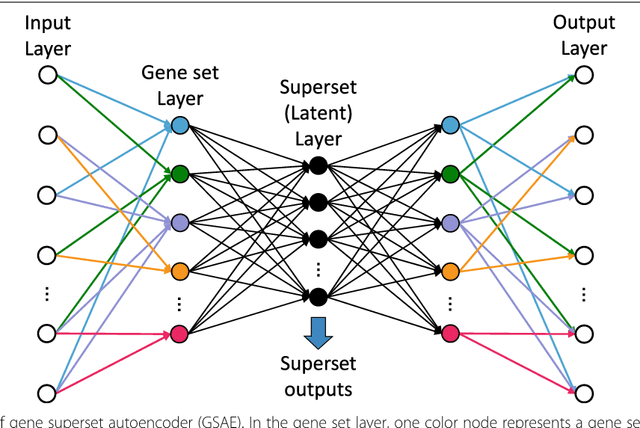
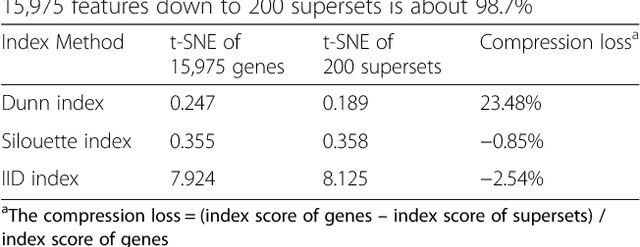
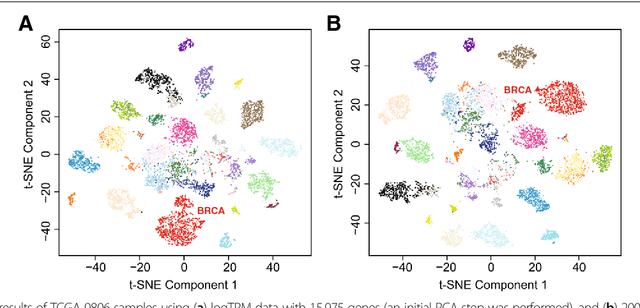
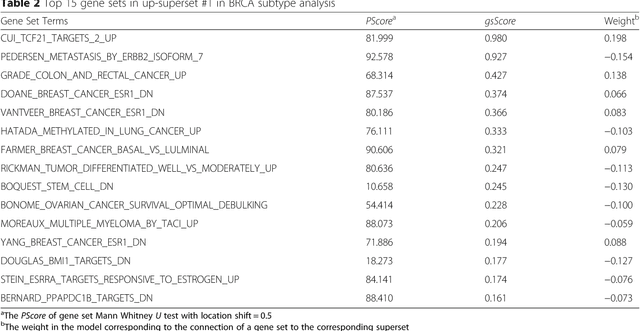
Bioinformatics tools have been developed to interpret gene expression data at the gene set level, and these gene set based analyses improve the biologists' capability to discover functional relevance of their experiment design. While elucidating gene set individually, inter gene sets association is rarely taken into consideration. Deep learning, an emerging machine learning technique in computational biology, can be used to generate an unbiased combination of gene set, and to determine the biological relevance and analysis consistency of these combining gene sets by leveraging large genomic data sets. In this study, we proposed a gene superset autoencoder (GSAE), a multi-layer autoencoder model with the incorporation of a priori defined gene sets that retain the crucial biological features in the latent layer. We introduced the concept of the gene superset, an unbiased combination of gene sets with weights trained by the autoencoder, where each node in the latent layer is a superset. Trained with genomic data from TCGA and evaluated with their accompanying clinical parameters, we showed gene supersets' ability of discriminating tumor subtypes and their prognostic capability. We further demonstrated the biological relevance of the top component gene sets in the significant supersets. Using autoencoder model and gene superset at its latent layer, we demonstrated that gene supersets retain sufficient biological information with respect to tumor subtypes and clinical prognostic significance. Superset also provides high reproducibility on survival analysis and accurate prediction for cancer subtypes.
Predicting drug response of tumors from integrated genomic profiles by deep neural networks
May 20, 2018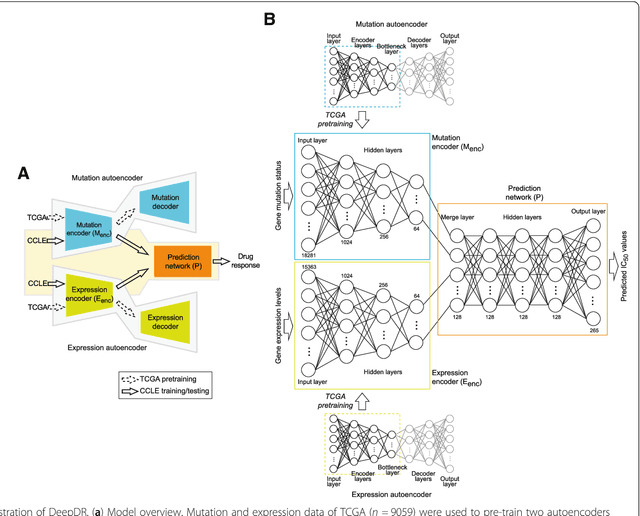

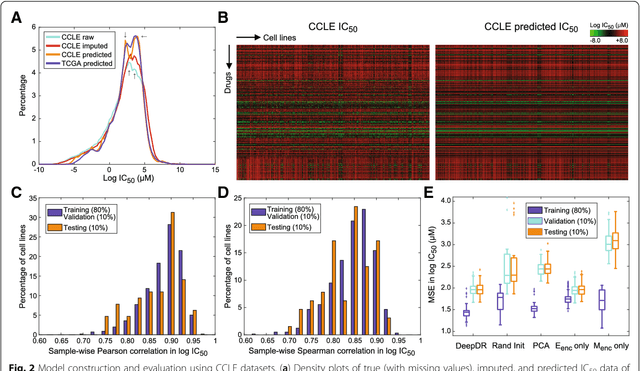
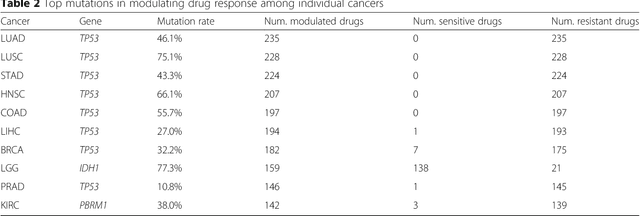
The study of high-throughput genomic profiles from a pharmacogenomics viewpoint has provided unprecedented insights into the oncogenic features modulating drug response. A recent screening of ~1,000 cancer cell lines to a collection of anti-cancer drugs illuminated the link between genotypes and vulnerability. However, due to essential differences between cell lines and tumors, the translation into predicting drug response in tumors remains challenging. Here we proposed a DNN model to predict drug response based on mutation and expression profiles of a cancer cell or a tumor. The model contains a mutation and an expression encoders pre-trained using a large pan-cancer dataset to abstract core representations of high-dimension data, followed by a drug response predictor network. Given a pair of mutation and expression profiles, the model predicts IC50 values of 265 drugs. We trained and tested the model on a dataset of 622 cancer cell lines and achieved an overall prediction performance of mean squared error at 1.96 (log-scale IC50 values). The performance was superior in prediction error or stability than two classical methods and four analog DNNs of our model. We then applied the model to predict drug response of 9,059 tumors of 33 cancer types. The model predicted both known, including EGFR inhibitors in non-small cell lung cancer and tamoxifen in ER+ breast cancer, and novel drug targets. The comprehensive analysis further revealed the molecular mechanisms underlying the resistance to a chemotherapeutic drug docetaxel in a pan-cancer setting and the anti-cancer potential of a novel agent, CX-5461, in treating gliomas and hematopoietic malignancies. Overall, our model and findings improve the prediction of drug response and the identification of novel therapeutic options.