 Add to Chrome
 Add to Firefox
 Add to Edge
LoViF 2026 Challenge on Human-oriented Semantic Image Quality Assessment: Methods and Results
Apr 13, 2026
This paper reviews the LoViF 2026 Challenge on Human-oriented Semantic Image Quality Assessment. This challenge aims to raise a new direction, i.e., how to evaluate the loss of semantic information from the human perspective, intending to promote the development of some new directions, like semantic coding, processing, and semantic-oriented optimization, etc. Unlike existing datasets of quality assessment, we form a dataset of human-oriented semantic quality assessment, termed the SeIQA dataset. This dataset is divided into three parts for this competition: (i) training data: 510 pairs of degraded images and their corresponding ground truth references; (ii) validation data: 80 pairs of degraded images and their corresponding ground-truth references; (iii) testing data: 160 pairs of degraded images and their corresponding ground-truth references. The primary objective of this challenge is to establish a new and powerful benchmark for human-oriented semantic image quality assessment. There are a total of 58 teams registered in this competition, and 6 teams submitted valid solutions and fact sheets for the final testing phase. These submissions achieved state-of-the-art (SOTA) performance on the SeIQA dataset.

AIM 2024 Challenge on Video Super-Resolution Quality Assessment: Methods and Results
Oct 05, 2024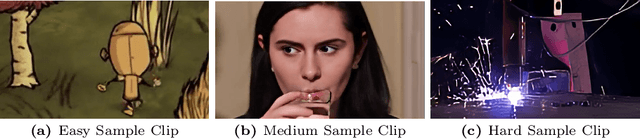
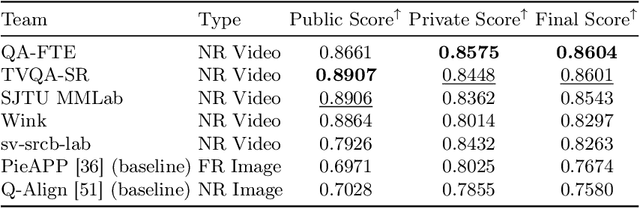
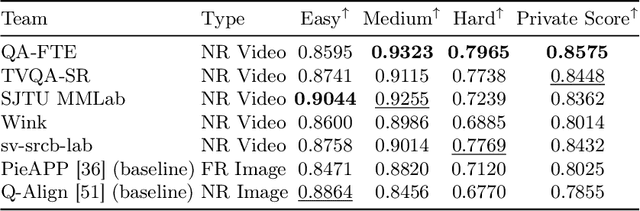
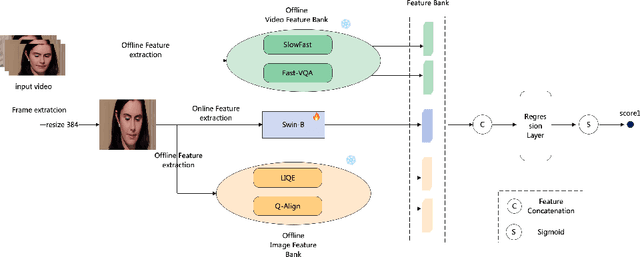
This paper presents the Video Super-Resolution (SR) Quality Assessment (QA) Challenge that was part of the Advances in Image Manipulation (AIM) workshop, held in conjunction with ECCV 2024. The task of this challenge was to develop an objective QA method for videos upscaled 2x and 4x by modern image- and video-SR algorithms. QA methods were evaluated by comparing their output with aggregate subjective scores collected from >150,000 pairwise votes obtained through crowd-sourced comparisons across 52 SR methods and 1124 upscaled videos. The goal was to advance the state-of-the-art in SR QA, which had proven to be a challenging problem with limited applicability of traditional QA methods. The challenge had 29 registered participants, and 5 teams had submitted their final results, all outperforming the current state-of-the-art. All data, including the private test subset, has been made publicly available on the challenge homepage at https://challenges.videoprocessing.ai/challenges/super-resolution-metrics-challenge.html