 Add to Chrome
 Add to Firefox
 Add to Edge
Structuring Sparsity: Block-Sparse Featurizers Capture Visual Concept Manifolds
Jun 23, 2026
What is the geometry of a visual percept? The most widely used protocols for decomposing neural network representations into interpretable parts treat concepts as isolated directions, yet recent work shows that concepts are often realized as geometric structures in low dimensional regions of activation space. We turn to the literature of Structured sparsity to close this gap, and show that block sparsity, which groups directions into blocks, is the prior matched to a generative model in which a representation is a sparse sum of low-dimensional manifolds: the modern, learned form of a classical idea in visual neuroscience, where a visual feature is carried by a coordinated group of neurons rather than a single tuned one. We implement three variants of block-sparse featurizers (BSFs) and, through a minimum-description-length analysis, show that all three describe activations more compactly than direction-based featurizers, with the recovered concepts typically two- to four-dimensional. We then use BSFs to (i) recontextualize prior work, showing that curve detectors in InceptionV1 actually read from a single continuous curve manifold, (ii) discover novel manifolds including shadows and lighting in DINOv3, and (iii) support interpretable control of image generation in diffusion models (SDXL) via manifold steering.

Evaluating Commercial AI Chatbots as News Intermediaries
May 21, 2026AI chatbots are rapidly shaping how people encounter the news, yet no prior study has systematically measured how accurately these systems, with their proprietary search integrations and retrieval-synthesis pipelines, handle emerging facts across languages and regions. We present a 14-day (February 9-22, 2026) evaluation of six AI chatbots (Gemini 3 Flash and Pro, Grok 4, Claude 4.5 Sonnet, GPT-5 and GPT-4o mini) on 2,100 factual questions derived from same-day BBC News reporting across six regional services (US & Canada, Arabic, Afrique, Hindi, Russian, Turkish). The best systems achieve over 90% multiple-choice accuracy on questions about events reported hours earlier. The same systems, however, lose 11-13% under free-response evaluation, and 16-17% across the cohort. We further characterize three failure patterns. First, every model achieves its lowest accuracy on Hindi (79% vs. 89-91% elsewhere) and citations indicate an Anglophone retrieval bias (e.g., models answering Hindi queries cite English Wikipedia more than any Hindi outlet). Second, retrieval, not reasoning, failures drive over 70% of all errors. When models retrieve a correct source, they often extract the correct answer; the problem is to land on the right source in the first place. Third, models achieving 88-96% accuracy on well-formed questions drop to 19-70% when questions contain subtle false premises, with the most vulnerable model accepting fabricated facts 64% of the time. We also identify a detection-accuracy paradox: the best false-premise detector ranks second in adversarial accuracy (abstention rate), while a weaker detector ranks first, showing that premise detection and answer recovery are partially independent capabilities. Overall, these suggest that high accuracy can mask systematic regional inequity, near-total dependence on retrieval infrastructure, and vulnerability to imperfect queries real users pose.
Bucketing the Good Apples: A Method for Diagnosing and Improving Causal Abstraction
May 04, 2026We present a method for diagnosing interpretation in neural networks by identifying an input subspace where a proposed interpretation is highly faithful. Our method is particularly useful for causal-abstraction-style interpretability, where a high-level causal hypothesis is evaluated by interchange interventions. Rather than treating interchange intervention accuracy as a single global summary, we refine this framework by partitioning the input space into well-interpreted and under-interpreted regions according to pairwise interchange-intervention behavior. This turns causal abstraction from a purely global evaluation into a more diagnostic tool: it not only measures whether an interpretation works, but also reveals where it works, where it fails, and what distinguishes the two cases. This diagnostic view also provides practical heuristics for improving interpretations. By analyzing the structure of the well-interpreted and under-interpreted regions, we can identify missing distinctions in a high-level hypothesis, discover previously unmodeled intermediate variables, and combine complementary partial interpretations into a stronger one. We instantiate this idea as a simple four-step recipe and show that it yields informative error analyses across multiple causal abstraction settings. In a toy logic task, recursively applying the recipe recovers a high-level hypothesis from scratch. More broadly, our results suggest that partitioning the input space is a useful step toward more precise, constructive, and scalable mechanistic interpretability.
Transcoder Adapters for Reasoning-Model Diffing
Feb 24, 2026While reasoning models are increasingly ubiquitous, the effects of reasoning training on a model's internal mechanisms remain poorly understood. In this work, we introduce transcoder adapters, a technique for learning an interpretable approximation of the difference in MLP computation before and after fine-tuning. We apply transcoder adapters to characterize the differences between Qwen2.5-Math-7B and its reasoning-distilled variant, DeepSeek-R1-Distill-Qwen-7B. Learned adapters are faithful to the target model's internal computation and next-token predictions. When evaluated on reasoning benchmarks, adapters match the reasoning model's response lengths and typically recover 50-90% of the accuracy gains from reasoning fine-tuning. Adapter features are sparsely activating and interpretable. When examining adapter features, we find that only ~8% have activating examples directly related to reasoning behaviors. We deeply study one such behavior -- the production of hesitation tokens (e.g., "wait"). Using attribution graphs, we trace hesitation to only ~2.4% of adapter features (5.6k total) performing one of two functions. These features are necessary and sufficient for producing hesitation tokens; removing them reduces response length, often without affecting accuracy. Overall, our results provide insight into reasoning training and suggest transcoder adapters may be useful for studying fine-tuning more broadly.
Internal Causal Mechanisms Robustly Predict Language Model Out-of-Distribution Behaviors
May 17, 2025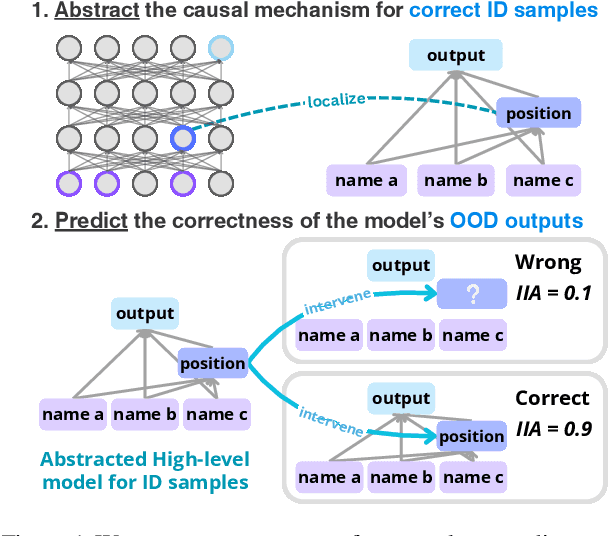
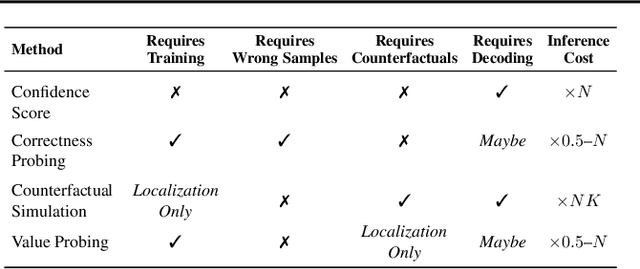
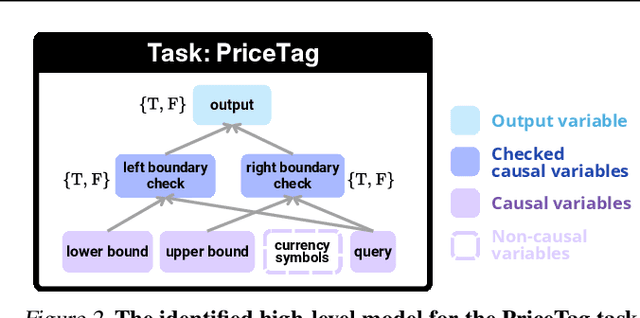
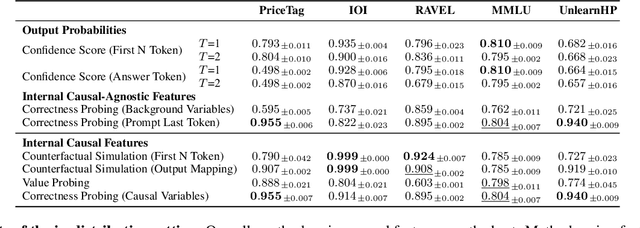
Interpretability research now offers a variety of techniques for identifying abstract internal mechanisms in neural networks. Can such techniques be used to predict how models will behave on out-of-distribution examples? In this work, we provide a positive answer to this question. Through a diverse set of language modeling tasks--including symbol manipulation, knowledge retrieval, and instruction following--we show that the most robust features for correctness prediction are those that play a distinctive causal role in the model's behavior. Specifically, we propose two methods that leverage causal mechanisms to predict the correctness of model outputs: counterfactual simulation (checking whether key causal variables are realized) and value probing (using the values of those variables to make predictions). Both achieve high AUC-ROC in distribution and outperform methods that rely on causal-agnostic features in out-of-distribution settings, where predicting model behaviors is more crucial. Our work thus highlights a novel and significant application for internal causal analysis of language models.
Modeling Discrimination with Causal Abstraction
Jan 14, 2025A person is directly racially discriminated against only if her race caused her worse treatment. This implies that race is an attribute sufficiently separable from other attributes to isolate its causal role. But race is embedded in a nexus of social factors that resist isolated treatment. If race is socially constructed, in what sense can it cause worse treatment? Some propose that the perception of race, rather than race itself, causes worse treatment. Others suggest that since causal models require modularity, i.e. the ability to isolate causal effects, attempts to causally model discrimination are misguided. This paper addresses the problem differently. We introduce a framework for reasoning about discrimination, in which race is a high-level abstraction of lower-level features. In this framework, race can be modeled as itself causing worse treatment. Modularity is ensured by allowing assumptions about social construction to be precisely and explicitly stated, via an alignment between race and its constituents. Such assumptions can then be subjected to normative and empirical challenges, which lead to different views of when discrimination occurs. By distinguishing constitutive and causal relations, the abstraction framework pinpoints disagreements in the current literature on modeling discrimination, while preserving a precise causal account of discrimination.
Belief in the Machine: Investigating Epistemological Blind Spots of Language Models
Oct 28, 2024As language models (LMs) become integral to fields like healthcare, law, and journalism, their ability to differentiate between fact, belief, and knowledge is essential for reliable decision-making. Failure to grasp these distinctions can lead to significant consequences in areas such as medical diagnosis, legal judgments, and dissemination of fake news. Despite this, current literature has largely focused on more complex issues such as theory of mind, overlooking more fundamental epistemic challenges. This study systematically evaluates the epistemic reasoning capabilities of modern LMs, including GPT-4, Claude-3, and Llama-3, using a new dataset, KaBLE, consisting of 13,000 questions across 13 tasks. Our results reveal key limitations. First, while LMs achieve 86% accuracy on factual scenarios, their performance drops significantly with false scenarios, particularly in belief-related tasks. Second, LMs struggle with recognizing and affirming personal beliefs, especially when those beliefs contradict factual data, which raises concerns for applications in healthcare and counseling, where engaging with a person's beliefs is critical. Third, we identify a salient bias in how LMs process first-person versus third-person beliefs, performing better on third-person tasks (80.7%) compared to first-person tasks (54.4%). Fourth, LMs lack a robust understanding of the factive nature of knowledge, namely, that knowledge inherently requires truth. Fifth, LMs rely on linguistic cues for fact-checking and sometimes bypass the deeper reasoning. These findings highlight significant concerns about current LMs' ability to reason about truth, belief, and knowledge while emphasizing the need for advancements in these areas before broad deployment in critical sectors.
A Reply to Makelov et al. 's "Interpretability Illusion" Arguments
Jan 23, 2024We respond to the recent paper by Makelov et al. (2023), which reviews subspace interchange intervention methods like distributed alignment search (DAS; Geiger et al. 2023) and claims that these methods potentially cause "interpretability illusions". We first review Makelov et al. (2023)'s technical notion of what an "interpretability illusion" is, and then we show that even intuitive and desirable explanations can qualify as illusions in this sense. As a result, their method of discovering "illusions" can reject explanations they consider "non-illusory". We then argue that the illusions Makelov et al. (2023) see in practice are artifacts of their training and evaluation paradigms. We close by emphasizing that, though we disagree with their core characterization, Makelov et al. (2023)'s examples and discussion have undoubtedly pushed the field of interpretability forward.
Comparing Causal Frameworks: Potential Outcomes, Structural Models, Graphs, and Abstractions
Jun 25, 2023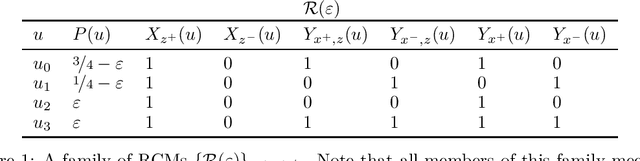
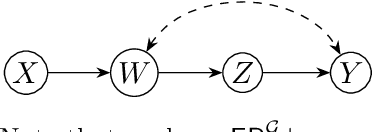
The aim of this paper is to make clear and precise the relationship between the Rubin causal model (RCM) and structural causal model (SCM) frameworks for causal inference. Adopting a neutral logical perspective, and drawing on previous work, we show what is required for an RCM to be representable by an SCM. A key result then shows that every RCM -- including those that violate algebraic principles implied by the SCM framework -- emerges as an abstraction of some representable RCM. Finally, we illustrate the power of this ameliorative perspective by pinpointing an important role for SCM principles in classic applications of RCMs; conversely, we offer a characterization of the algebraic constraints implied by a graph, helping to substantiate further comparisons between the two frameworks.
Finding Alignments Between Interpretable Causal Variables and Distributed Neural Representations
Mar 05, 2023Causal abstraction is a promising theoretical framework for explainable artificial intelligence that defines when an interpretable high-level causal model is a faithful simplification of a low-level deep learning system. However, existing causal abstraction methods have two major limitations: they require a brute-force search over alignments between the high-level model and the low-level one, and they presuppose that variables in the high-level model will align with disjoint sets of neurons in the low-level one. In this paper, we present distributed alignment search (DAS), which overcomes these limitations. In DAS, we find the alignment between high-level and low-level models using gradient descent rather than conducting a brute-force search, and we allow individual neurons to play multiple distinct roles by analyzing representations in non-standard bases-distributed representations. Our experiments show that DAS can discover internal structure that prior approaches miss. Overall, DAS removes previous obstacles to conducting causal abstraction analyses and allows us to find conceptual structure in trained neural nets.