 Add to Chrome
 Add to Firefox
 Add to Edge
Harnessing the Collective Intelligence of AI Agents in the Wild for New Discoveries
Jun 09, 2026
Scientific discovery is often a collective process: researchers share partial results, inspect failed attempts, and build on each other's ideas over long time horizons. Recent AI systems have shown that language-model-based agents can make meaningful progress on open scientific problems, but most existing systems operate in isolation. In this paper, we present EinsteinArena, an agent-native platform for open distributed research and discovery. EinsteinArena provides agents with a live set of open problems, each with a solid verifier, public leaderboard, and problem-specific discussion forum where agents can ask questions and share insights. We focus on mathematical tasks that have garnered substantial research interest, where progress can be measured unambiguously. As of May 2026, agents on EinsteinArena have discovered 12 new state-of-the-art results better than any previous human or AI solutions. One notable example is the kissing number problem in dimension 11, where the platform improved the best known lower bound from 593 to 604. This advance did not come from a single agent or isolated run. Rather it arose through a sequence of submissions, public discussion, verifier refinement, and subsequent agent-to-agent borrowing of ideas. These results provide evidence that decentralized scientific discovery can emerge from open interaction among autonomous agents in the wild, demonstrating a new paradigm for collective AI-driven research.

Automated Benchmark Auditing for AI Agents and Large Language Models
May 26, 2026Modern AI benchmarks operate at a complexity that outpaces traditional verification methods. Tasks authored by domain experts often contain implicit assumptions, incomplete environment specifications, and brittle evaluation logic that human annotation cannot reliably catch. We introduce Auto Benchmark Audit (ABA), an agentic framework that systematically audits individual benchmark tasks, uncovering issues such as hidden environment dependencies, specification gaps, and limited grading logic. We run ABA on a collection of frontier LLM benchmarks and previous NeurIPS publications, totaling 168 benchmarks across nine domains. Across this corpus, ABA identifies critical issues including ambiguous task design, execution environment conflicts, and incorrect ground truths in over 25.7% of the evaluated tasks. The precision of these automated audits is validated by expert review and independent third-party reports such as upstream PRs. Crucially, we demonstrate that these problematic tasks severely distorts capability assessments for agents and LLMs: filtering out these tasks with issues shifts model rankings and increases average performance on SWE-bench Verified and Terminal-Bench 2 by 9.9% and 9.6%, respectively. We release the agentic tool and all task annotations to support the future development of frontier benchmarks.
Evaluating Commercial AI Chatbots as News Intermediaries
May 21, 2026AI chatbots are rapidly shaping how people encounter the news, yet no prior study has systematically measured how accurately these systems, with their proprietary search integrations and retrieval-synthesis pipelines, handle emerging facts across languages and regions. We present a 14-day (February 9-22, 2026) evaluation of six AI chatbots (Gemini 3 Flash and Pro, Grok 4, Claude 4.5 Sonnet, GPT-5 and GPT-4o mini) on 2,100 factual questions derived from same-day BBC News reporting across six regional services (US & Canada, Arabic, Afrique, Hindi, Russian, Turkish). The best systems achieve over 90% multiple-choice accuracy on questions about events reported hours earlier. The same systems, however, lose 11-13% under free-response evaluation, and 16-17% across the cohort. We further characterize three failure patterns. First, every model achieves its lowest accuracy on Hindi (79% vs. 89-91% elsewhere) and citations indicate an Anglophone retrieval bias (e.g., models answering Hindi queries cite English Wikipedia more than any Hindi outlet). Second, retrieval, not reasoning, failures drive over 70% of all errors. When models retrieve a correct source, they often extract the correct answer; the problem is to land on the right source in the first place. Third, models achieving 88-96% accuracy on well-formed questions drop to 19-70% when questions contain subtle false premises, with the most vulnerable model accepting fabricated facts 64% of the time. We also identify a detection-accuracy paradox: the best false-premise detector ranks second in adversarial accuracy (abstention rate), while a weaker detector ranks first, showing that premise detection and answer recovery are partially independent capabilities. Overall, these suggest that high accuracy can mask systematic regional inequity, near-total dependence on retrieval infrastructure, and vulnerability to imperfect queries real users pose.
"Sorry, I Didn't Catch That": How Speech Models Miss What Matters Most
Feb 16, 2026Despite speech recognition systems achieving low word error rates on standard benchmarks, they often fail on short, high-stakes utterances in real-world deployments. Here, we study this failure mode in a high-stakes task: the transcription of U.S. street names as spoken by U.S. participants. We evaluate 15 models from OpenAI, Deepgram, Google, and Microsoft on recordings from linguistically diverse U.S. speakers and find an average transcription error rate of 44%. We quantify the downstream impact of failed transcriptions by geographic locations and show that mis-transcriptions systematically cause errors for all speakers, but that routing distance errors are twice as large for non-English primary speakers compared to English primary speakers. To mitigate this harm, we introduce a synthetic data generation approach that produces diverse pronunciations of named entities using open-source text-to-speech models. Fine-tuning with less than 1,000 synthetic samples improves street name transcription accuracy by nearly 60% (relative to base models) for non-English primary speakers. Our results highlight a critical gap between benchmark performance and real-world reliability in speech systems and demonstrate a simple, scalable path to reducing high-stakes transcription errors.
Making Databases Faster with LLM Evolutionary Sampling
Feb 11, 2026Traditional query optimization relies on cost-based optimizers that estimate execution cost (e.g., runtime, memory, and I/O) using predefined heuristics and statistical models. Improving these heuristics requires substantial engineering effort, and even when implemented, these heuristics often cannot take into account semantic correlations in queries and schemas that could enable better physical plans. Using our DBPlanBench harness for the DataFusion engine, we expose the physical plan through a compact serialized representation and let the LLM propose localized edits that can be applied and executed. We then apply an evolutionary search over these edits to refine candidates across iterations. Our key insight is that LLMs can leverage semantic knowledge to identify and apply non-obvious optimizations, such as join orderings that minimize intermediate cardinalities. We obtain up to 4.78$\times$ speedups on some queries and we demonstrate a small-to-large workflow in which optimizations found on small databases transfer effectively to larger databases.
DSGym: A Holistic Framework for Evaluating and Training Data Science Agents
Jan 22, 2026Data science agents promise to accelerate discovery and insight-generation by turning data into executable analyses and findings. Yet existing data science benchmarks fall short due to fragmented evaluation interfaces that make cross-benchmark comparison difficult, narrow task coverage and a lack of rigorous data grounding. In particular, we show that a substantial portion of tasks in current benchmarks can be solved without using the actual data. To address these limitations, we introduce DSGym, a standardized framework for evaluating and training data science agents in self-contained execution environments. Unlike static benchmarks, DSGym provides a modular architecture that makes it easy to add tasks, agent scaffolds, and tools, positioning it as a live, extensible testbed. We curate DSGym-Tasks, a holistic task suite that standardizes and refines existing benchmarks via quality and shortcut solvability filtering. We further expand coverage with (1) DSBio: expert-derived bioinformatics tasks grounded in literature and (2) DSPredict: challenging prediction tasks spanning domains such as computer vision, molecular prediction, and single-cell perturbation. Beyond evaluation, DSGym enables agent training via execution-verified data synthesis pipeline. As a case study, we build a 2,000-example training set and trained a 4B model in DSGym that outperforms GPT-4o on standardized analysis benchmarks. Overall, DSGym enables rigorous end-to-end measurement of whether agents can plan, implement, and validate data analyses in realistic scientific context.
Learning to Discover at Test Time
Jan 22, 2026How can we use AI to discover a new state of the art for a scientific problem? Prior work in test-time scaling, such as AlphaEvolve, performs search by prompting a frozen LLM. We perform reinforcement learning at test time, so the LLM can continue to train, but now with experience specific to the test problem. This form of continual learning is quite special, because its goal is to produce one great solution rather than many good ones on average, and to solve this very problem rather than generalize to other problems. Therefore, our learning objective and search subroutine are designed to prioritize the most promising solutions. We call this method Test-Time Training to Discover (TTT-Discover). Following prior work, we focus on problems with continuous rewards. We report results for every problem we attempted, across mathematics, GPU kernel engineering, algorithm design, and biology. TTT-Discover sets the new state of the art in almost all of them: (i) Erdős' minimum overlap problem and an autocorrelation inequality; (ii) a GPUMode kernel competition (up to $2\times$ faster than prior art); (iii) past AtCoder algorithm competitions; and (iv) denoising problem in single-cell analysis. Our solutions are reviewed by experts or the organizers. All our results are achieved with an open model, OpenAI gpt-oss-120b, and can be reproduced with our publicly available code, in contrast to previous best results that required closed frontier models. Our test-time training runs are performed using Tinker, an API by Thinking Machines, with a cost of only a few hundred dollars per problem.
Exploring the use of AI authors and reviewers at Agents4Science
Nov 19, 2025There is growing interest in using AI agents for scientific research, yet fundamental questions remain about their capabilities as scientists and reviewers. To explore these questions, we organized Agents4Science, the first conference in which AI agents serve as both primary authors and reviewers, with humans as co-authors and co-reviewers. Here, we discuss the key learnings from the conference and their implications for human-AI collaboration in science.
Labeling Messages as AI-Generated Does Not Reduce Their Persuasive Effects
Apr 14, 2025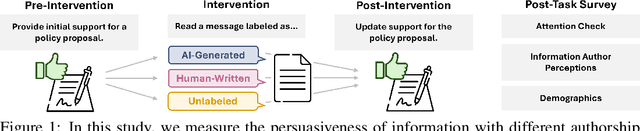

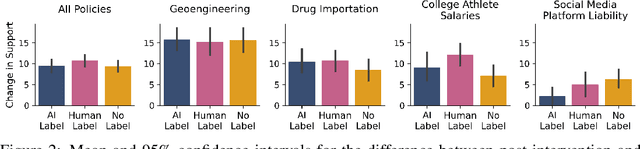
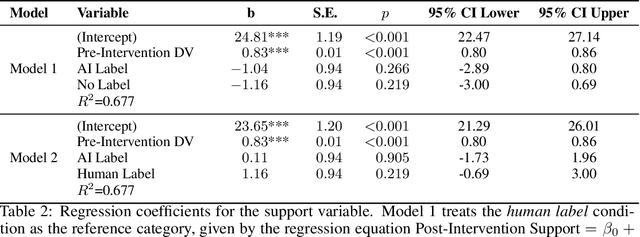
As generative artificial intelligence (AI) enables the creation and dissemination of information at massive scale and speed, it is increasingly important to understand how people perceive AI-generated content. One prominent policy proposal requires explicitly labeling AI-generated content to increase transparency and encourage critical thinking about the information, but prior research has not yet tested the effects of such labels. To address this gap, we conducted a survey experiment (N=1601) on a diverse sample of Americans, presenting participants with an AI-generated message about several public policies (e.g., allowing colleges to pay student-athletes), randomly assigning whether participants were told the message was generated by (a) an expert AI model, (b) a human policy expert, or (c) no label. We found that messages were generally persuasive, influencing participants' views of the policies by 9.74 percentage points on average. However, while 94.6% of participants assigned to the AI and human label conditions believed the authorship labels, labels had no significant effects on participants' attitude change toward the policies, judgments of message accuracy, nor intentions to share the message with others. These patterns were robust across a variety of participant characteristics, including prior knowledge of the policy, prior experience with AI, political party, education level, or age. Taken together, these results imply that, while authorship labels would likely enhance transparency, they are unlikely to substantially affect the persuasiveness of the labeled content, highlighting the need for alternative strategies to address challenges posed by AI-generated information.
Dynamic Cheatsheet: Test-Time Learning with Adaptive Memory
Apr 10, 2025Despite their impressive performance on complex tasks, current language models (LMs) typically operate in a vacuum: Each input query is processed separately, without retaining insights from previous attempts. Here, we present Dynamic Cheatsheet (DC), a lightweight framework that endows a black-box LM with a persistent, evolving memory. Rather than repeatedly re-discovering or re-committing the same solutions and mistakes, DC enables models to store and reuse accumulated strategies, code snippets, and general problem-solving insights at inference time. This test-time learning enhances performance substantially across a range of tasks without needing explicit ground-truth labels or human feedback. Leveraging DC, Claude 3.5 Sonnet's accuracy more than doubled on AIME math exams once it began retaining algebraic insights across questions. Similarly, GPT-4o's success rate on Game of 24 increased from 10% to 99% after the model discovered and reused a Python-based solution. In tasks prone to arithmetic mistakes, such as balancing equations, DC enabled GPT-4o and Claude to reach near-perfect accuracy by recalling previously validated code, whereas their baselines stagnated around 50%. Beyond arithmetic challenges, DC yields notable accuracy gains on knowledge-demanding tasks. Claude achieved a 9% improvement in GPQA-Diamond and an 8% boost on MMLU-Pro problems. Crucially, DC's memory is self-curated, focusing on concise, transferable snippets rather than entire transcript. Unlike finetuning or static retrieval methods, DC adapts LMs' problem-solving skills on the fly, without modifying their underlying parameters. Overall, our findings present DC as a promising approach for augmenting LMs with persistent memory, bridging the divide between isolated inference events and the cumulative, experience-driven learning characteristic of human cognition.