 Add to Chrome
 Add to Firefox
 Add to Edge
PuYun-LDM: A Latent Diffusion Model for High-Resolution Ensemble Weather Forecasts
Feb 13, 2026
Latent diffusion models (LDMs) suffer from limited diffusability in high-resolution (<=0.25°) ensemble weather forecasting, where diffusability characterizes how easily a latent data distribution can be modeled by a diffusion process. Unlike natural image fields, meteorological fields lack task-agnostic foundation models and explicit semantic structures, making VFM-based regularization inapplicable. Moreover, existing frequency-based approaches impose identical spectral regularization across channels under a homogeneity assumption, which leads to uneven regularization strength under the inter-variable spectral heterogeneity in multivariate meteorological data. To address these challenges, we propose a 3D Masked AutoEncoder (3D-MAE) that encodes weather-state evolution features as an additional conditioning for the diffusion model, together with a Variable-Aware Masked Frequency Modeling (VA-MFM) strategy that adaptively selects thresholds based on the spectral energy distribution of each variable. Together, we propose PuYun-LDM, which enhances latent diffusability and achieves superior performance to ENS at short lead times while remaining comparable to ENS at longer horizons. PuYun-LDM generates a 15-day global forecast with a 6-hour temporal resolution in five minutes on a single NVIDIA H200 GPU, while ensemble forecasts can be efficiently produced in parallel.

PuYun: Medium-Range Global Weather Forecasting Using Large Kernel Attention Convolutional Networks
Sep 01, 2024

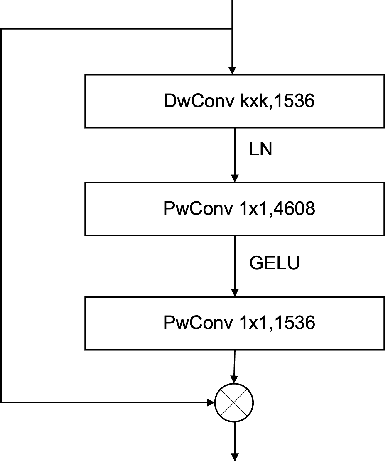
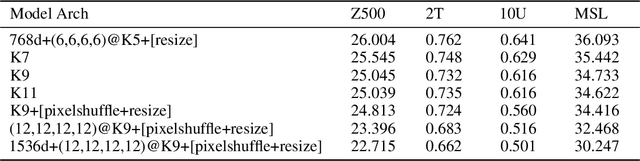
Accurate weather forecasting is essential for understanding and mitigating weather-related impacts. In this paper, we present PuYun, an autoregressive cascade model that leverages large kernel attention convolutional networks. The model's design inherently supports extended weather prediction horizons while broadening the effective receptive field. The integration of large kernel attention mechanisms within the convolutional layers enhances the model's capacity to capture fine-grained spatial details, thereby improving its predictive accuracy for meteorological phenomena. We introduce PuYun, comprising PuYun-Short for 0-5 day forecasts and PuYun-Medium for 5-10 day predictions. This approach enhances the accuracy of 10-day weather forecasting. Through evaluation, we demonstrate that PuYun-Short alone surpasses the performance of both GraphCast and FuXi-Short in generating accurate 10-day forecasts. Specifically, on the 10th day, PuYun-Short reduces the RMSE for Z500 to 720 $m^2/s^2$, compared to 732 $m^2/s^2$ for GraphCast and 740 $m^2/s^2$ for FuXi-Short. Additionally, the RMSE for T2M is reduced to 2.60 K, compared to 2.63 K for GraphCast and 2.65 K for FuXi-Short. Furthermore, when employing a cascaded approach by integrating PuYun-Short and PuYun-Medium, our method achieves superior results compared to the combined performance of FuXi-Short and FuXi-Medium. On the 10th day, the RMSE for Z500 is further reduced to 638 $m^2/s^2$, compared to 641 $m^2/s^2$ for FuXi. These findings underscore the effectiveness of our model ensemble in advancing medium-range weather prediction. Our training code and model will be open-sourced.
Perceptual Extreme Super Resolution Network with Receptive Field Block
May 26, 2020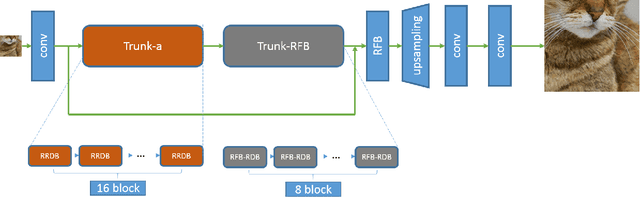
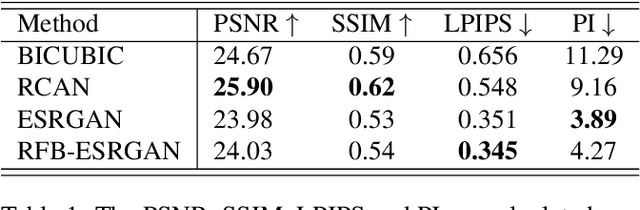
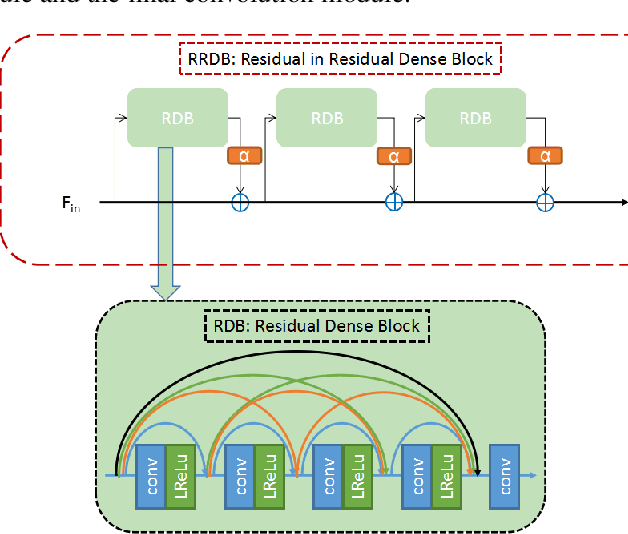
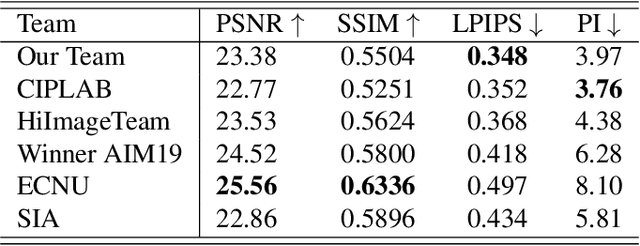
Perceptual Extreme Super-Resolution for single image is extremely difficult, because the texture details of different images vary greatly. To tackle this difficulty, we develop a super resolution network with receptive field block based on Enhanced SRGAN. We call our network RFB-ESRGAN. The key contributions are listed as follows. First, for the purpose of extracting multi-scale information and enhance the feature discriminability, we applied receptive field block (RFB) to super resolution. RFB has achieved competitive results in object detection and classification. Second, instead of using large convolution kernels in multi-scale receptive field block, several small kernels are used in RFB, which makes us be able to extract detailed features and reduce the computation complexity. Third, we alternately use different upsampling methods in the upsampling stage to reduce the high computation complexity and still remain satisfactory performance. Fourth, we use the ensemble of 10 models of different iteration to improve the robustness of model and reduce the noise introduced by each individual model. Our experimental results show the superior performance of RFB-ESRGAN. According to the preliminary results of NTIRE 2020 Perceptual Extreme Super-Resolution Challenge, our solution ranks first among all the participants.
NTIRE 2020 Challenge on Perceptual Extreme Super-Resolution: Methods and Results
May 03, 2020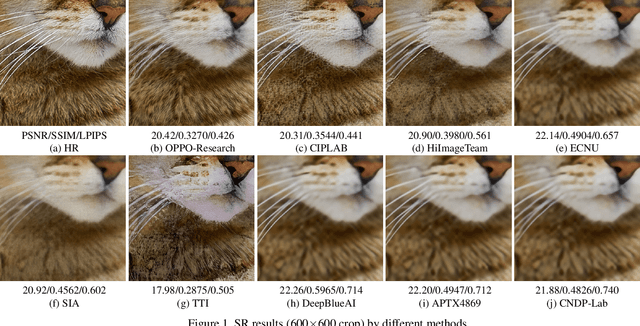
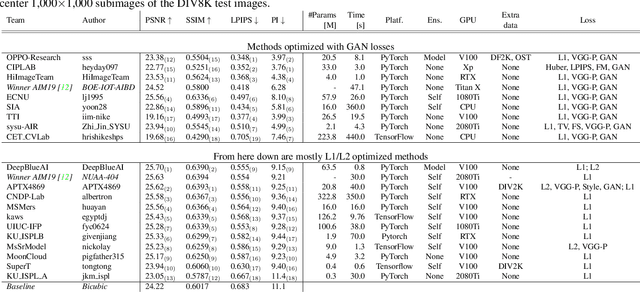
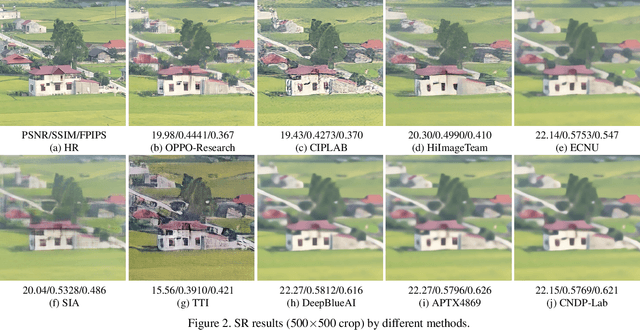
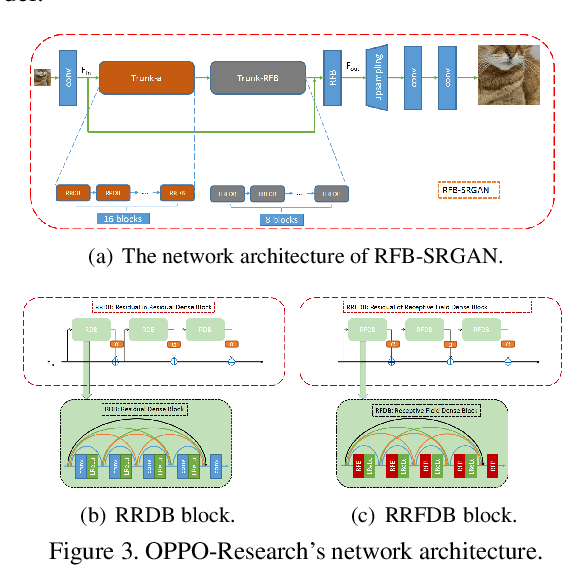
This paper reviews the NTIRE 2020 challenge on perceptual extreme super-resolution with focus on proposed solutions and results. The challenge task was to super-resolve an input image with a magnification factor 16 based on a set of prior examples of low and corresponding high resolution images. The goal is to obtain a network design capable to produce high resolution results with the best perceptual quality and similar to the ground truth. The track had 280 registered participants, and 19 teams submitted the final results. They gauge the state-of-the-art in single image super-resolution.