 Add to Chrome
 Add to Firefox
 Add to Edge
What to Remove, What to Preserve: Dual-Ambiguity Rectification for All-in-One Image Restoration
Jul 30, 2026
All-in-one image restoration aims to handle diverse degradations within a unified framework. Existing methods commonly encode heterogeneous degradation conditions in a shared latent space, where degradation-related cues and scene content can remain entangled. We characterize the resulting challenge as dual ambiguity: semantic ambiguity in channel-wise modulation and spatial ambiguity in restoration responses, which can lead to content corruption and residual artifacts. To mitigate this issue, we propose DAR-Net, a Dual-Ambiguity Rectification Network for all-in-one image restoration. DAR-Net first introduces a Degradation Archetype Representation (DAR) module to construct a structured degradation state through simplex-constrained archetype mixture modeling. Based on this state, a Semantic Ambiguity Rectification (SeAR) module generates degradation-aware prompts to improve channel-wise conditioning in the decoder. A Spatial Ambiguity Rectification (SpAR) module further regularizes degradation-aware and complementary features toward orthogonal response subspaces, reducing spatial interference between removal and preservation cues. Extensive experiments on standard all-in-one restoration benchmarks show that DAR-Net achieves the best overall performance under both three-degradation and five-degradation settings, improving the average PSNR over the strongest competitor by 0.14 dB and 0.34 dB, respectively; it additionally shows superior performance on CDD-11 and WeatherBench.

LA-RL: Label-Aware Self-Reflection for Reinforcement Learning in Information Extraction
Jul 26, 2026Large language models show strong promise for information extraction (IE), but existing reflection-based correction methods are often misaligned with structured extraction outputs. Free-form self-reflection can flag an error, yet it rarely identifies whether the failure is a missing span, wrong label, boundary mismatch, invalid relation type, or reversed argument order. We introduce LA-RL (Label-Aware Reflective Reinforcement Learning), an outcome-supervised framework that guides IE self-correction with task-grounded diagnostic labels. A single backbone first predicts an extraction, diagnoses task-specific error labels, and then revises its output conditioned on the diagnosis. Training starts from diagnostic data labeled by an annotation model for cold-start supervised fine-tuning and proceeds through two GRPO stages that reward final extraction quality, format validity, and first-pass correctness, without a process reward model. Experiments on named entity recognition, relation extraction, and event extraction show consistent same-backbone gains over SFT, including 6.83 average F1 on SciER relation extraction, about 20 F1 on out-of-distribution relation extraction, and 14.80 trigger F1 plus 17.50 argument F1 on DuEE1.0. Ablations show that reflection structure is task-sensitive: stronger constraints benefit relation extraction, whereas named entity recognition needs less restrictive correction under domain shift.
LC-ICL: Label-Guided Contrastive In-Context Learning for Robust Information Extraction
Jun 28, 2026There has been increasing interest in exploring the capabilities of advanced large language models (LLMs) in the field of information extraction (IE), specifically focusing on tasks related to named entity recognition (NER) and relation extraction (RE).Although researchers are exploring the use of few-shot information extraction through in-context learning with LLMs, they tend to focus only on using correct or positive examples for demonstration, neglecting the potential value of incorporating incorrect or negative examples into the learning process.In this paper, we present LC-ICL a novel few-shot technique that leverages both correct and incorrect sample constructions to create in-context learning demonstrations. This approach enhances the ability of LLMs to extract entities and relations by combining positive samples with negative samples annotated by error-cause labels. These labels expose more detailed error features in erroneous examples, enabling the model to understand why similar predictions fail and avoid repeating such errors during inference.Specifically, our proposed method taps into the inherent contextual information and valuable information in hard negative samples and the nearest positive neighbors to the test and then applies the in-context learning demonstrations based on LLMs. Our experiments on various datasets indicate that LC-ICL outperforms previous few-shot in-context learning methods, delivering substantial enhancements in performance across a broad spectrum of related tasks. These improvements are noteworthy, showcasing the versatility of our approach in diverse scenarios.
ParkGaussian: Surround-view 3D Gaussian Splatting for Autonomous Parking
Jan 04, 2026Parking is a critical task for autonomous driving systems (ADS), with unique challenges in crowded parking slots and GPS-denied environments. However, existing works focus on 2D parking slot perception, mapping, and localization, 3D reconstruction remains underexplored, which is crucial for capturing complex spatial geometry in parking scenarios. Naively improving the visual quality of reconstructed parking scenes does not directly benefit autonomous parking, as the key entry point for parking is the slots perception module. To address these limitations, we curate the first benchmark named ParkRecon3D, specifically designed for parking scene reconstruction. It includes sensor data from four surround-view fisheye cameras with calibrated extrinsics and dense parking slot annotations. We then propose ParkGaussian, the first framework that integrates 3D Gaussian Splatting (3DGS) for parking scene reconstruction. To further improve the alignment between reconstruction and downstream parking slot detection, we introduce a slot-aware reconstruction strategy that leverages existing parking perception methods to enhance the synthesis quality of slot regions. Experiments on ParkRecon3D demonstrate that ParkGaussian achieves state-of-the-art reconstruction quality and better preserves perception consistency for downstream tasks. The code and dataset will be released at: https://github.com/wm-research/ParkGaussian
ExEBench: Benchmarking Foundation Models on Extreme Earth Events
May 13, 2025Our planet is facing increasingly frequent extreme events, which pose major risks to human lives and ecosystems. Recent advances in machine learning (ML), especially with foundation models (FMs) trained on extensive datasets, excel in extracting features and show promise in disaster management. Nevertheless, these models often inherit biases from training data, challenging their performance over extreme values. To explore the reliability of FM in the context of extreme events, we introduce \textbf{ExE}Bench (\textbf{Ex}treme \textbf{E}arth Benchmark), a collection of seven extreme event categories across floods, wildfires, storms, tropical cyclones, extreme precipitation, heatwaves, and cold waves. The dataset features global coverage, varying data volumes, and diverse data sources with different spatial, temporal, and spectral characteristics. To broaden the real-world impact of FMs, we include multiple challenging ML tasks that are closely aligned with operational needs in extreme events detection, monitoring, and forecasting. ExEBench aims to (1) assess FM generalizability across diverse, high-impact tasks and domains, (2) promote the development of novel ML methods that benefit disaster management, and (3) offer a platform for analyzing the interactions and cascading effects of extreme events to advance our understanding of Earth system, especially under the climate change expected in the decades to come. The dataset and code are public https://github.com/zhaoshan2/EarthExtreme-Bench.
MOSABench: Multi-Object Sentiment Analysis Benchmark for Evaluating Multimodal Large Language Models Understanding of Complex Image
Nov 25, 2024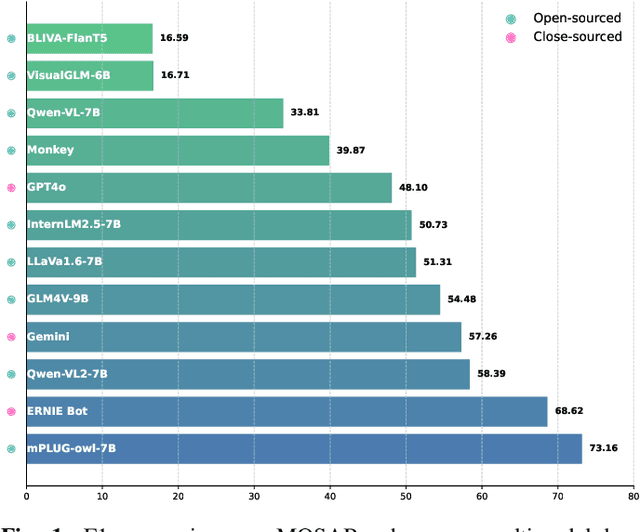

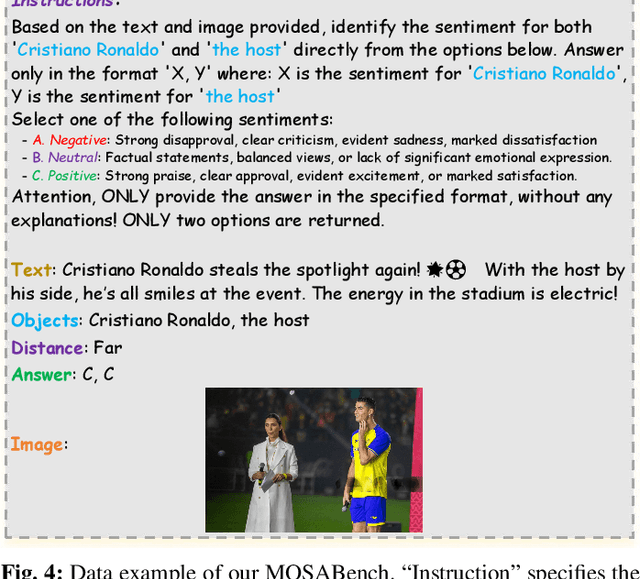
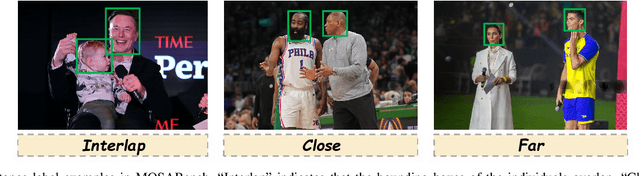
Multimodal large language models (MLLMs) have shown remarkable progress in high-level semantic tasks such as visual question answering, image captioning, and emotion recognition. However, despite advancements, there remains a lack of standardized benchmarks for evaluating MLLMs performance in multi-object sentiment analysis, a key task in semantic understanding. To address this gap, we introduce MOSABench, a novel evaluation dataset designed specifically for multi-object sentiment analysis. MOSABench includes approximately 1,000 images with multiple objects, requiring MLLMs to independently assess the sentiment of each object, thereby reflecting real-world complexities. Key innovations in MOSABench include distance-based target annotation, post-processing for evaluation to standardize outputs, and an improved scoring mechanism. Our experiments reveal notable limitations in current MLLMs: while some models, like mPLUG-owl and Qwen-VL2, demonstrate effective attention to sentiment-relevant features, others exhibit scattered focus and performance declines, especially as the spatial distance between objects increases. This research underscores the need for MLLMs to enhance accuracy in complex, multi-object sentiment analysis tasks and establishes MOSABench as a foundational tool for advancing sentiment analysis capabilities in MLLMs.
Beyond Grid Data: Exploring Graph Neural Networks for Earth Observation
Nov 05, 2024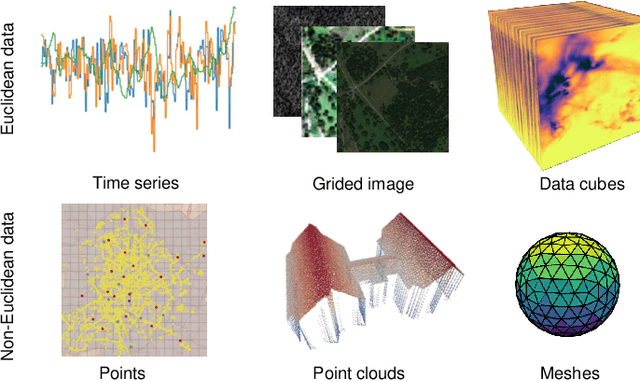
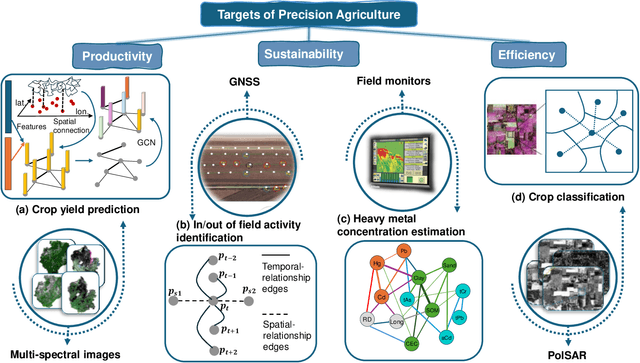
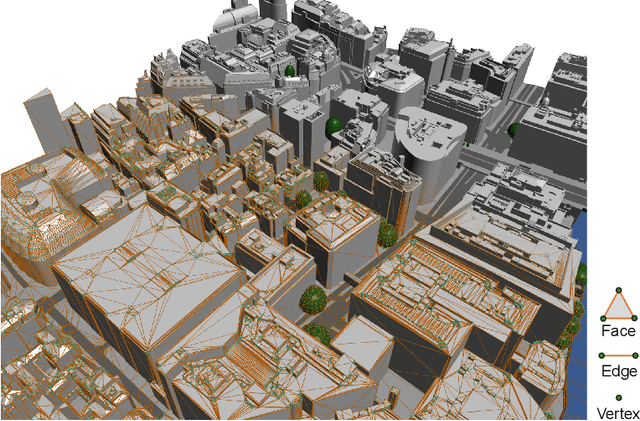
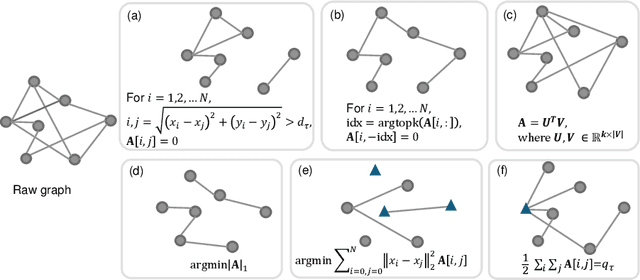
Earth Observation (EO) data analysis has been significantly revolutionized by deep learning (DL), with applications typically limited to grid-like data structures. Graph Neural Networks (GNNs) emerge as an important innovation, propelling DL into the non-Euclidean domain. Naturally, GNNs can effectively tackle the challenges posed by diverse modalities, multiple sensors, and the heterogeneous nature of EO data. To introduce GNNs in the related domains, our review begins by offering fundamental knowledge on GNNs. Then, we summarize the generic problems in EO, to which GNNs can offer potential solutions. Following this, we explore a broad spectrum of GNNs' applications to scientific problems in Earth systems, covering areas such as weather and climate analysis, disaster management, air quality monitoring, agriculture, land cover classification, hydrological process modeling, and urban modeling. The rationale behind adopting GNNs in these fields is explained, alongside methodologies for organizing graphs and designing favorable architectures for various tasks. Furthermore, we highlight methodological challenges of implementing GNNs in these domains and possible solutions that could guide future research. While acknowledging that GNNs are not a universal solution, we conclude the paper by comparing them with other popular architectures like transformers and analyzing their potential synergies.
PTA: Enhancing Multimodal Sentiment Analysis through Pipelined Prediction and Translation-based Alignment
May 23, 2024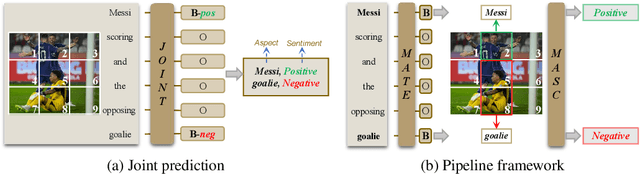
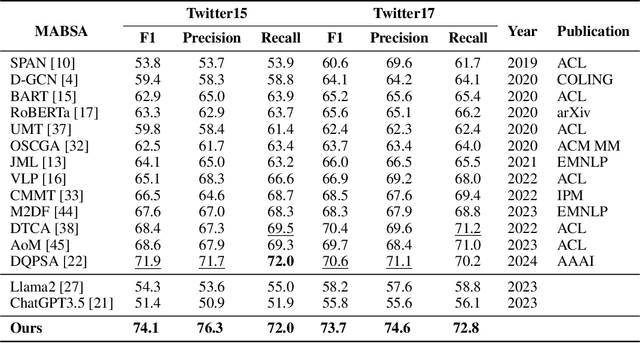

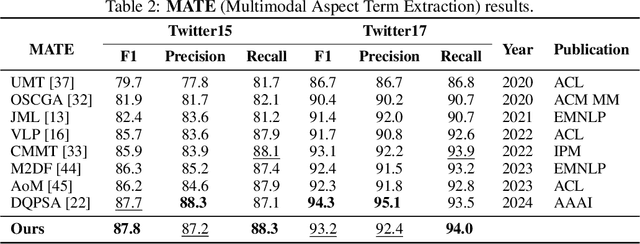
Multimodal aspect-based sentiment analysis (MABSA) aims to understand opinions in a granular manner, advancing human-computer interaction and other fields. Traditionally, MABSA methods use a joint prediction approach to identify aspects and sentiments simultaneously. However, we argue that joint models are not always superior. Our analysis shows that joint models struggle to align relevant text tokens with image patches, leading to misalignment and ineffective image utilization. In contrast, a pipeline framework first identifies aspects through MATE (Multimodal Aspect Term Extraction) and then aligns these aspects with image patches for sentiment classification (MASC: Multimodal Aspect-Oriented Sentiment Classification). This method is better suited for multimodal scenarios where effective image use is crucial. We present three key observations: (a) MATE and MASC have different feature requirements, with MATE focusing on token-level features and MASC on sequence-level features; (b) the aspect identified by MATE is crucial for effective image utilization; and (c) images play a trivial role in previous MABSA methods due to high noise. Based on these observations, we propose a pipeline framework that first predicts the aspect and then uses translation-based alignment (TBA) to enhance multimodal semantic consistency for better image utilization. Our method achieves state-of-the-art (SOTA) performance on widely used MABSA datasets Twitter-15 and Twitter-17. This demonstrates the effectiveness of the pipeline approach and its potential to provide valuable insights for future MABSA research. For reproducibility, the code and checkpoint will be released.
DWE+: Dual-Way Matching Enhanced Framework for Multimodal Entity Linking
Apr 07, 2024Multimodal entity linking (MEL) aims to utilize multimodal information (usually textual and visual information) to link ambiguous mentions to unambiguous entities in knowledge base. Current methods facing main issues: (1)treating the entire image as input may contain redundant information. (2)the insufficient utilization of entity-related information, such as attributes in images. (3)semantic inconsistency between the entity in knowledge base and its representation. To this end, we propose DWE+ for multimodal entity linking. DWE+ could capture finer semantics and dynamically maintain semantic consistency with entities. This is achieved by three aspects: (a)we introduce a method for extracting fine-grained image features by partitioning the image into multiple local objects. Then, hierarchical contrastive learning is used to further align semantics between coarse-grained information(text and image) and fine-grained (mention and visual objects). (b)we explore ways to extract visual attributes from images to enhance fusion feature such as facial features and identity. (c)we leverage Wikipedia and ChatGPT to capture the entity representation, achieving semantic enrichment from both static and dynamic perspectives, which better reflects the real-world entity semantics. Experiments on Wikimel, Richpedia, and Wikidiverse datasets demonstrate the effectiveness of DWE+ in improving MEL performance. Specifically, we optimize these datasets and achieve state-of-the-art performance on the enhanced datasets. The code and enhanced datasets are released on https://github.com/season1blue/DWET
Causal Graph Neural Networks for Wildfire Danger Prediction
Mar 13, 2024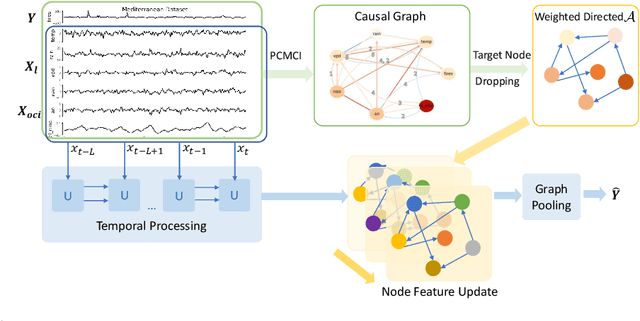
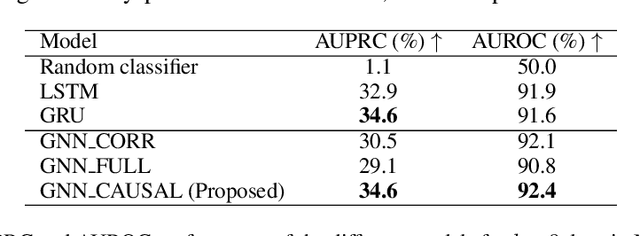
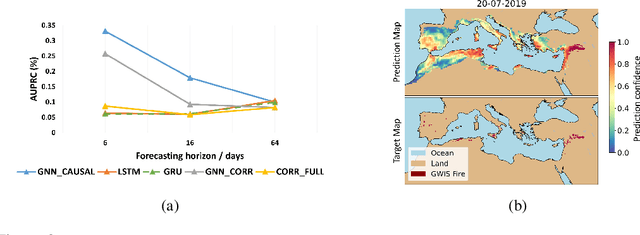
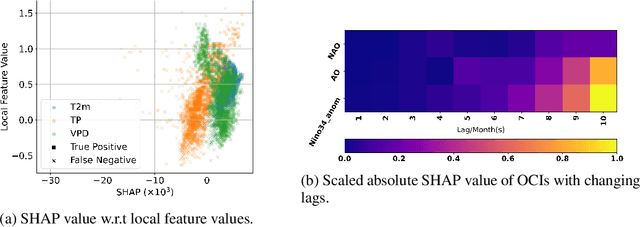
Wildfire forecasting is notoriously hard due to the complex interplay of different factors such as weather conditions, vegetation types and human activities. Deep learning models show promise in dealing with this complexity by learning directly from data. However, to inform critical decision making, we argue that we need models that are right for the right reasons; that is, the implicit rules learned should be grounded by the underlying processes driving wildfires. In that direction, we propose integrating causality with Graph Neural Networks (GNNs) that explicitly model the causal mechanism among complex variables via graph learning. The causal adjacency matrix considers the synergistic effect among variables and removes the spurious links from highly correlated impacts. Our methodology's effectiveness is demonstrated through superior performance forecasting wildfire patterns in the European boreal and mediterranean biome. The gain is especially prominent in a highly imbalanced dataset, showcasing an enhanced robustness of the model to adapt to regime shifts in functional relationships. Furthermore, SHAP values from our trained model further enhance our understanding of the model's inner workings.