 Add to Chrome
 Add to Firefox
 Add to Edge
ParaICL: Towards Robust Parallel In-Context Learning
Mar 31, 2024
Large language models (LLMs) have become the norm in natural language processing (NLP), excelling in few-shot in-context learning (ICL) with their remarkable abilities. Nonetheless, the success of ICL largely hinges on the choice of few-shot demonstration examples, making the selection process increasingly crucial. Existing methods have delved into optimizing the quantity and semantic similarity of these examples to improve ICL performances. However, our preliminary experiments indicate that the effectiveness of ICL is limited by the length of the input context. Moreover, varying combinations of few-shot demonstration examples can significantly boost accuracy across different test samples. To address this, we propose a novel method named parallel in-context learning (ParaICL) that effectively utilizes all demonstration examples without exceeding the manageable input context length. ParaICL employs parallel batching to distribute demonstration examples into different batches according to the semantic similarities of the questions in the demonstrations to the test question. It then computes normalized batch semantic scores for each batch. A weighted average semantic objective, constrained by adaptive plausibility, is applied to select the most appropriate tokens. Through extensive experiments, we validate the effectiveness of ParaICL and conduct ablation studies to underscore its design rationale. We further demonstrate that ParaICL can seamlessly integrate with existing methods.

How Much are LLMs Contaminated? A Comprehensive Survey and the LLMSanitize Library
Mar 31, 2024With the rise of Large Language Models (LLMs) in recent years, new opportunities are emerging, but also new challenges, and contamination is quickly becoming critical. Business applications and fundraising in AI have reached a scale at which a few percentage points gained on popular question-answering benchmarks could translate into dozens of millions of dollars, placing high pressure on model integrity. At the same time, it is becoming harder and harder to keep track of the data that LLMs have seen; if not impossible with closed-source models like GPT-4 and Claude-3 not divulging any information on the training set. As a result, contamination becomes a critical issue: LLMs' performance may not be reliable anymore, as the high performance may be at least partly due to their previous exposure to the data. This limitation jeopardizes the entire progress in the field of NLP, yet, there remains a lack of methods on how to efficiently address contamination, or a clear consensus on prevention, mitigation and classification of contamination. In this paper, we survey all recent work on contamination with LLMs, and help the community track contamination levels of LLMs by releasing an open-source Python library named LLMSanitize implementing major contamination detection algorithms, which link is: https://github.com/ntunlp/LLMSanitize.
From Pixels to Insights: A Survey on Automatic Chart Understanding in the Era of Large Foundation Models
Mar 25, 2024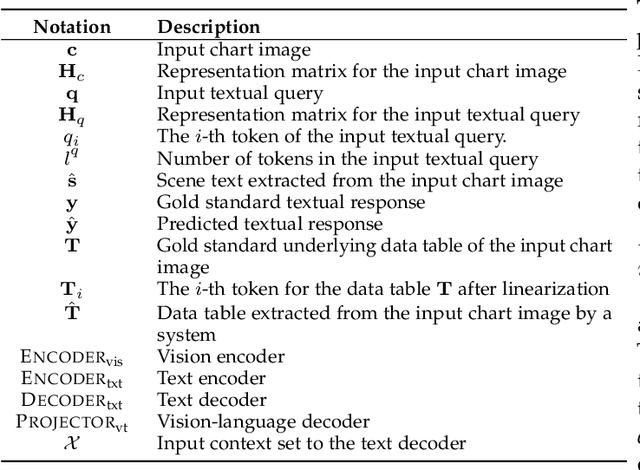
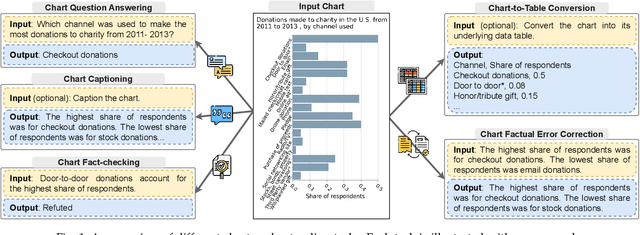
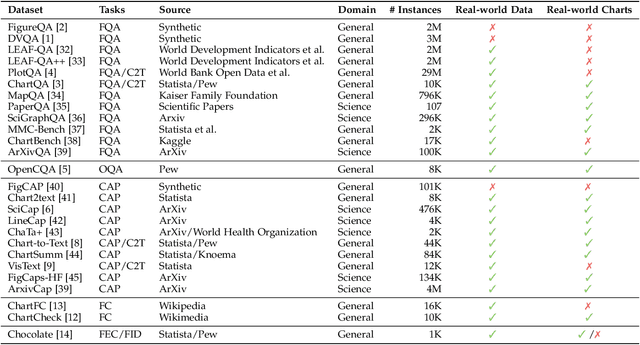
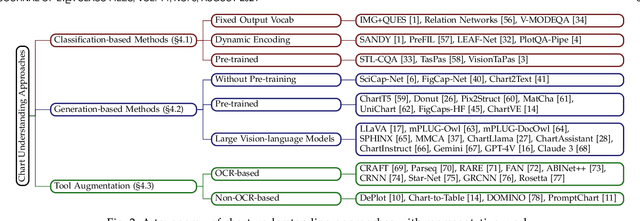
Data visualization in the form of charts plays a pivotal role in data analysis, offering critical insights and aiding in informed decision-making. Automatic chart understanding has witnessed significant advancements with the rise of large foundation models in recent years. Foundation models, such as large language models, have revolutionized various natural language processing tasks and are increasingly being applied to chart understanding tasks. This survey paper provides a comprehensive overview of the recent developments, challenges, and future directions in chart understanding within the context of these foundation models. We review fundamental building blocks crucial for studying chart understanding tasks. Additionally, we explore various tasks and their evaluation metrics and sources of both charts and textual inputs. Various modeling strategies are then examined, encompassing both classification-based and generation-based approaches, along with tool augmentation techniques that enhance chart understanding performance. Furthermore, we discuss the state-of-the-art performance of each task and discuss how we can improve the performance. Challenges and future directions are addressed, highlighting the importance of several topics, such as domain-specific charts, lack of efforts in developing evaluation metrics, and agent-oriented settings. This survey paper serves as a comprehensive resource for researchers and practitioners in the fields of natural language processing, computer vision, and data analysis, providing valuable insights and directions for future research in chart understanding leveraging large foundation models. The studies mentioned in this paper, along with emerging new research, will be continually updated at: https://github.com/khuangaf/Awesome-Chart-Understanding.
ChartInstruct: Instruction Tuning for Chart Comprehension and Reasoning
Mar 14, 2024Charts provide visual representations of data and are widely used for analyzing information, addressing queries, and conveying insights to others. Various chart-related downstream tasks have emerged recently, such as question-answering and summarization. A common strategy to solve these tasks is to fine-tune various models originally trained on vision tasks language. However, such task-specific models are not capable of solving a wide range of chart-related tasks, constraining their real-world applicability. To overcome these challenges, we introduce ChartInstruct: a novel chart-specific vision-language Instruction-following dataset comprising 191K instructions generated with 71K charts. We then present two distinct systems for instruction tuning on such datasets: (1) an end-to-end model that connects a vision encoder for chart understanding with a LLM; and (2) a pipeline model that employs a two-step approach to extract chart data tables and input them into the LLM. In experiments on four downstream tasks, we first show the effectiveness of our model--achieving a new set of state-of-the-art results. Further evaluation shows that our instruction-tuning approach supports a wide array of real-world chart comprehension and reasoning scenarios, thereby expanding the scope and applicability of our models to new kinds of tasks.
Data Augmentation using LLMs: Data Perspectives, Learning Paradigms and Challenges
Mar 05, 2024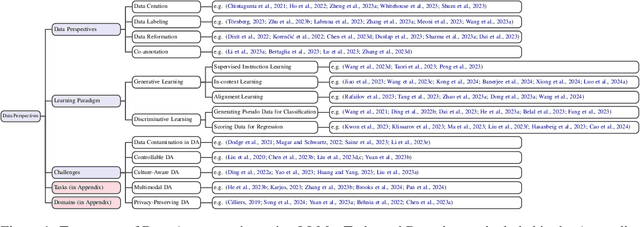
In the rapidly evolving field of machine learning (ML), data augmentation (DA) has emerged as a pivotal technique for enhancing model performance by diversifying training examples without the need for additional data collection. This survey explores the transformative impact of Large Language Models (LLMs) on DA, particularly addressing the unique challenges and opportunities they present in the context of natural language processing (NLP) and beyond. From a data perspective and a learning perspective, we examine various strategies that utilize Large Language Models for data augmentation, including a novel exploration of learning paradigms where LLM-generated data is used for further training. Additionally, this paper delineates the primary challenges faced in this domain, ranging from controllable data augmentation to multi modal data augmentation. This survey highlights the paradigm shift introduced by LLMs in DA, aims to serve as a foundational guide for researchers and practitioners in this field.
Learning Planning-based Reasoning by Trajectories Collection and Process Reward Synthesizing
Feb 01, 2024Large Language Models (LLMs) have demonstrated significant potential in handling complex reasoning tasks through step-by-step rationale generation. However, recent studies have raised concerns regarding the hallucination and flaws in their reasoning process. Substantial efforts are being made to improve the reliability and faithfulness of the generated rationales. Some approaches model reasoning as planning, while others focus on annotating for process supervision. Nevertheless, the planning-based search process often results in high latency due to the frequent assessment of intermediate reasoning states and the extensive exploration space. Additionally, supervising the reasoning process with human annotation is costly and challenging to scale for LLM training. To address these issues, in this paper, we propose a framework to learn planning-based reasoning through direct preference optimization (DPO) on collected trajectories, which are ranked according to synthesized process rewards. Our results on challenging logical reasoning benchmarks demonstrate the effectiveness of our learning framework, showing that our 7B model can surpass the strong counterparts like GPT-3.5-Turbo.
BootPIG: Bootstrapping Zero-shot Personalized Image Generation Capabilities in Pretrained Diffusion Models
Jan 25, 2024
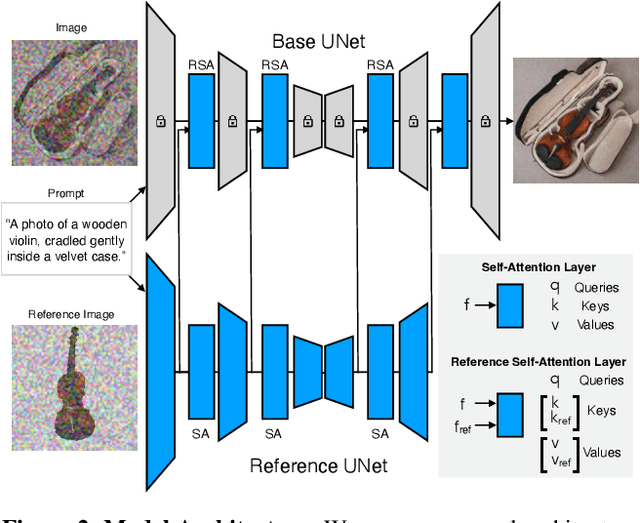

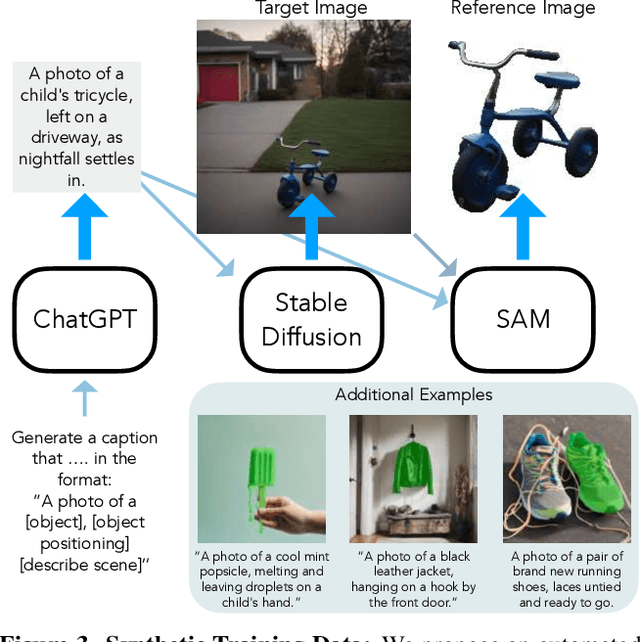
Recent text-to-image generation models have demonstrated incredible success in generating images that faithfully follow input prompts. However, the requirement of using words to describe a desired concept provides limited control over the appearance of the generated concepts. In this work, we address this shortcoming by proposing an approach to enable personalization capabilities in existing text-to-image diffusion models. We propose a novel architecture (BootPIG) that allows a user to provide reference images of an object in order to guide the appearance of a concept in the generated images. The proposed BootPIG architecture makes minimal modifications to a pretrained text-to-image diffusion model and utilizes a separate UNet model to steer the generations toward the desired appearance. We introduce a training procedure that allows us to bootstrap personalization capabilities in the BootPIG architecture using data generated from pretrained text-to-image models, LLM chat agents, and image segmentation models. In contrast to existing methods that require several days of pretraining, the BootPIG architecture can be trained in approximately 1 hour. Experiments on the DreamBooth dataset demonstrate that BootPIG outperforms existing zero-shot methods while being comparable with test-time finetuning approaches. Through a user study, we validate the preference for BootPIG generations over existing methods both in maintaining fidelity to the reference object's appearance and aligning with textual prompts.
Improving In-context Learning via Bidirectional Alignment
Dec 28, 2023


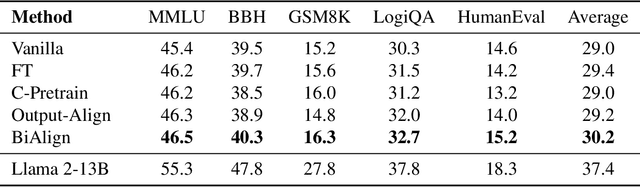
Large language models (LLMs) have shown impressive few-shot generalization on many tasks via in-context learning (ICL). Despite their success in showing such emergent abilities, the scale and complexity of larger models also lead to unprecedentedly high computational demands and deployment challenges. In reaction, researchers explore transferring the powerful capabilities of larger models to more efficient and compact models by typically aligning the output of smaller models with that of larger models. Existing methods either train smaller models on the generated outputs of larger models or to imitate their token-level probability distributions. However, these distillation methods pay little to no attention to the input part, which also plays a crucial role in ICL. Based on the finding that the performance of ICL is highly sensitive to the selection of demonstration examples, we propose Bidirectional Alignment (BiAlign) to fully leverage the models' preferences for ICL examples to improve the ICL abilities of smaller models. Specifically, we introduce the alignment of input preferences between smaller and larger models by incorporating a novel ranking loss, in addition to aligning the token-level output distribution. With extensive experiments and analysis, we demonstrate that BiAlign can consistently outperform existing baselines on a variety of tasks including language understanding, reasoning, and coding.
Do LLMs Work on Charts? Designing Few-Shot Prompts for Chart Question Answering and Summarization
Dec 17, 2023A number of tasks have been proposed recently to facilitate easy access to charts such as chart QA and summarization. The dominant paradigm to solve these tasks has been to fine-tune a pretrained model on the task data. However, this approach is not only expensive but also not generalizable to unseen tasks. On the other hand, large language models (LLMs) have shown impressive generalization capabilities to unseen tasks with zero- or few-shot prompting. However, their application to chart-related tasks is not trivial as these tasks typically involve considering not only the underlying data but also the visual features in the chart image. We propose PromptChart, a multimodal few-shot prompting framework with LLMs for chart-related applications. By analyzing the tasks carefully, we have come up with a set of prompting guidelines for each task to elicit the best few-shot performance from LLMs. We further propose a strategy to inject visual information into the prompts. Our experiments on three different chart-related information consumption tasks show that with properly designed prompts LLMs can excel on the benchmarks, achieving state-of-the-art.
ChatGPT's One-year Anniversary: Are Open-Source Large Language Models Catching up?
Dec 05, 2023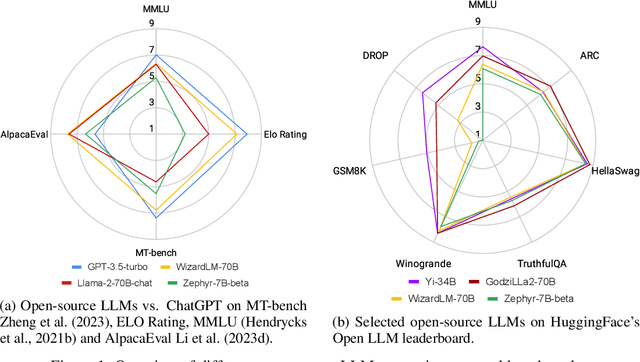
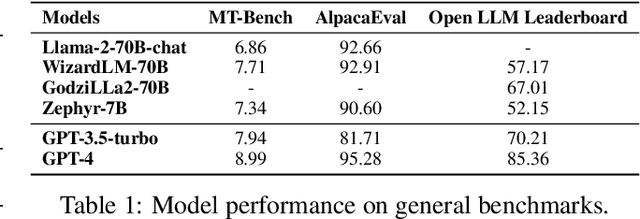
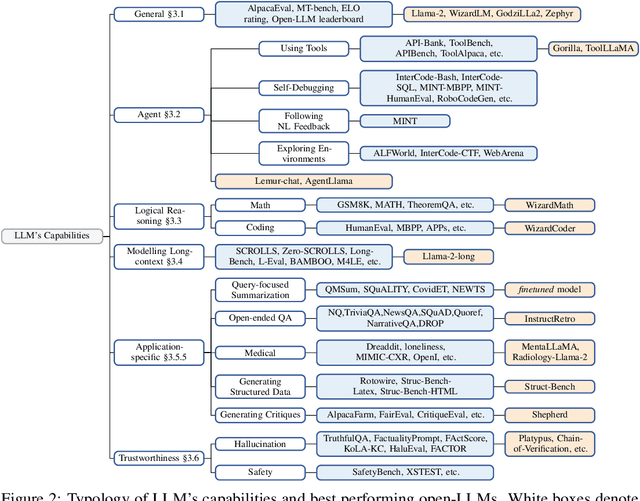
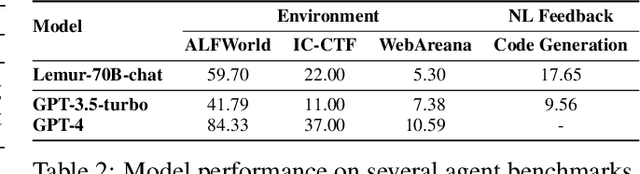
Upon its release in late 2022, ChatGPT has brought a seismic shift in the entire landscape of AI, both in research and commerce. Through instruction-tuning a large language model (LLM) with supervised fine-tuning and reinforcement learning from human feedback, it showed that a model could answer human questions and follow instructions on a broad panel of tasks. Following this success, interests in LLMs have intensified, with new LLMs flourishing at frequent interval across academia and industry, including many start-ups focused on LLMs. While closed-source LLMs (e.g., OpenAI's GPT, Anthropic's Claude) generally outperform their open-source counterparts, the progress on the latter has been rapid with claims of achieving parity or even better on certain tasks. This has crucial implications not only on research but also on business. In this work, on the first anniversary of ChatGPT, we provide an exhaustive overview of this success, surveying all tasks where an open-source LLM has claimed to be on par or better than ChatGPT.