 Add to Chrome
 Add to Firefox
 Add to Edge
MCDGLN: Masked Connection-based Dynamic Graph Learning Network for Autism Spectrum Disorder
Sep 10, 2024
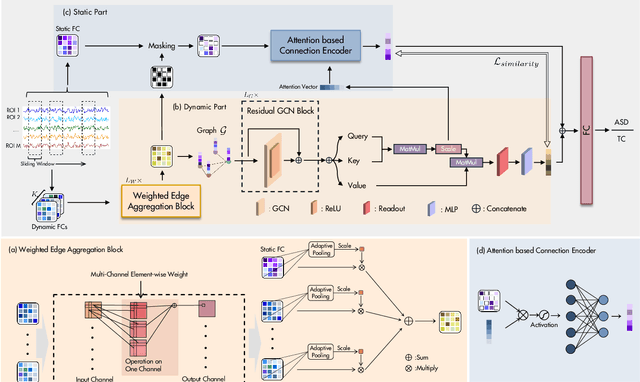
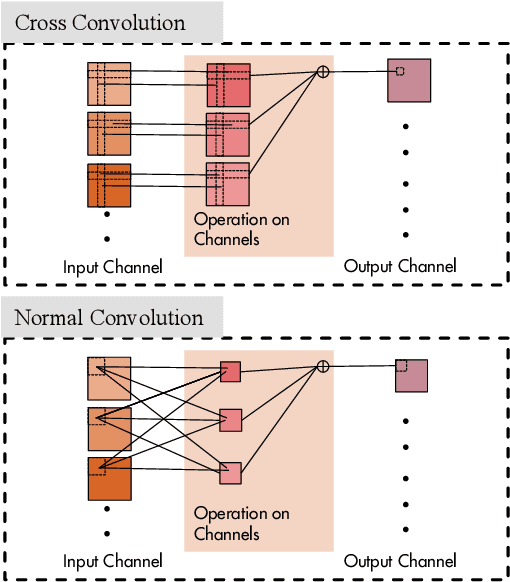


Autism Spectrum Disorder (ASD) is a neurodevelopmental disorder characterized by complex physiological processes. Previous research has predominantly focused on static cerebral interactions, often neglecting the brain's dynamic nature and the challenges posed by network noise. To address these gaps, we introduce the Masked Connection-based Dynamic Graph Learning Network (MCDGLN). Our approach first segments BOLD signals using sliding temporal windows to capture dynamic brain characteristics. We then employ a specialized weighted edge aggregation (WEA) module, which uses the cross convolution with channel-wise element-wise convolutional kernel, to integrate dynamic functional connectivity and to isolating task-relevant connections. This is followed by topological feature extraction via a hierarchical graph convolutional network (HGCN), with key attributes highlighted by a self-attention module. Crucially, we refine static functional connections using a customized task-specific mask, reducing noise and pruning irrelevant links. The attention-based connection encoder (ACE) then enhances critical connections and compresses static features. The combined features are subsequently used for classification. Applied to the Autism Brain Imaging Data Exchange I (ABIDE I) dataset, our framework achieves a 73.3\% classification accuracy between ASD and Typical Control (TC) groups among 1,035 subjects. The pivotal roles of WEA and ACE in refining connectivity and enhancing classification accuracy underscore their importance in capturing ASD-specific features, offering new insights into the disorder.

Deep Learning for Video Anomaly Detection: A Review
Sep 09, 2024Video anomaly detection (VAD) aims to discover behaviors or events deviating from the normality in videos. As a long-standing task in the field of computer vision, VAD has witnessed much good progress. In the era of deep learning, with the explosion of architectures of continuously growing capability and capacity, a great variety of deep learning based methods are constantly emerging for the VAD task, greatly improving the generalization ability of detection algorithms and broadening the application scenarios. Therefore, such a multitude of methods and a large body of literature make a comprehensive survey a pressing necessity. In this paper, we present an extensive and comprehensive research review, covering the spectrum of five different categories, namely, semi-supervised, weakly supervised, fully supervised, unsupervised and open-set supervised VAD, and we also delve into the latest VAD works based on pre-trained large models, remedying the limitations of past reviews in terms of only focusing on semi-supervised VAD and small model based methods. For the VAD task with different levels of supervision, we construct a well-organized taxonomy, profoundly discuss the characteristics of different types of methods, and show their performance comparisons. In addition, this review involves the public datasets, open-source codes, and evaluation metrics covering all the aforementioned VAD tasks. Finally, we provide several important research directions for the VAD community.
OneEdit: A Neural-Symbolic Collaboratively Knowledge Editing System
Sep 09, 2024


Knowledge representation has been a central aim of AI since its inception. Symbolic Knowledge Graphs (KGs) and neural Large Language Models (LLMs) can both represent knowledge. KGs provide highly accurate and explicit knowledge representation, but face scalability issue; while LLMs offer expansive coverage of knowledge, but incur significant training costs and struggle with precise and reliable knowledge manipulation. To this end, we introduce OneEdit, a neural-symbolic prototype system for collaborative knowledge editing using natural language, which facilitates easy-to-use knowledge management with KG and LLM. OneEdit consists of three modules: 1) The Interpreter serves for user interaction with natural language; 2) The Controller manages editing requests from various users, leveraging the KG with rollbacks to handle knowledge conflicts and prevent toxic knowledge attacks; 3) The Editor utilizes the knowledge from the Controller to edit KG and LLM. We conduct experiments on two new datasets with KGs which demonstrate that OneEdit can achieve superior performance.
Goal-Reaching Policy Learning from Non-Expert Observations via Effective Subgoal Guidance
Sep 06, 2024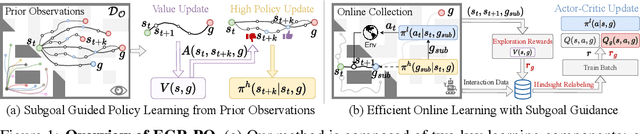
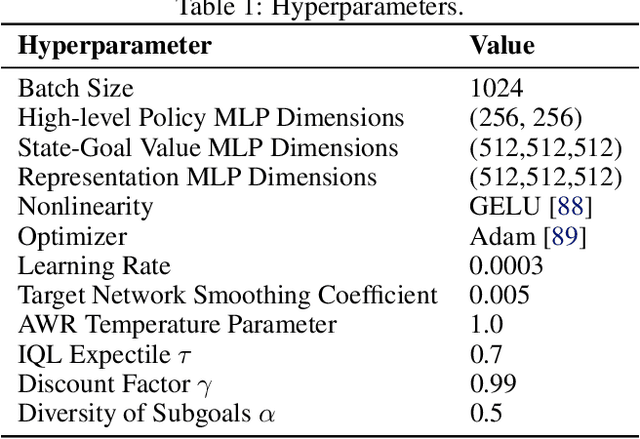
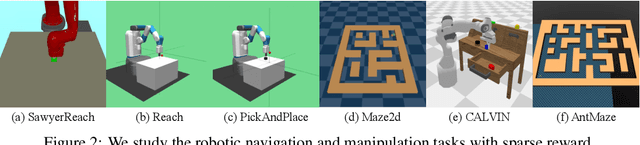
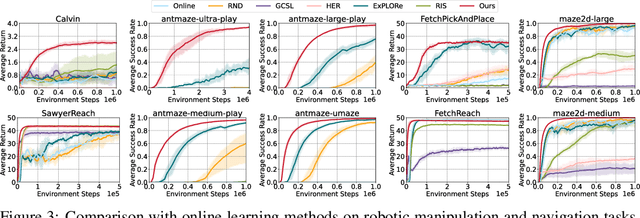
In this work, we address the challenging problem of long-horizon goal-reaching policy learning from non-expert, action-free observation data. Unlike fully labeled expert data, our data is more accessible and avoids the costly process of action labeling. Additionally, compared to online learning, which often involves aimless exploration, our data provides useful guidance for more efficient exploration. To achieve our goal, we propose a novel subgoal guidance learning strategy. The motivation behind this strategy is that long-horizon goals offer limited guidance for efficient exploration and accurate state transition. We develop a diffusion strategy-based high-level policy to generate reasonable subgoals as waypoints, preferring states that more easily lead to the final goal. Additionally, we learn state-goal value functions to encourage efficient subgoal reaching. These two components naturally integrate into the off-policy actor-critic framework, enabling efficient goal attainment through informative exploration. We evaluate our method on complex robotic navigation and manipulation tasks, demonstrating a significant performance advantage over existing methods. Our ablation study further shows that our method is robust to observation data with various corruptions.
Diffusion Models Learn Low-Dimensional Distributions via Subspace Clustering
Sep 04, 2024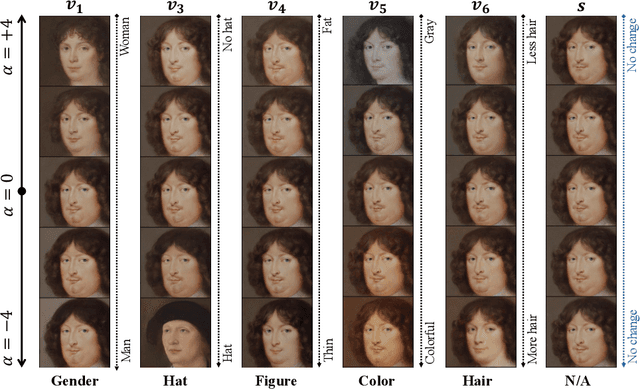
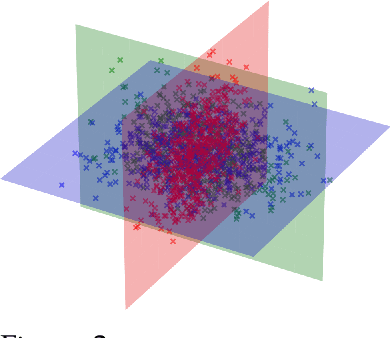


Recent empirical studies have demonstrated that diffusion models can effectively learn the image distribution and generate new samples. Remarkably, these models can achieve this even with a small number of training samples despite a large image dimension, circumventing the curse of dimensionality. In this work, we provide theoretical insights into this phenomenon by leveraging key empirical observations: (i) the low intrinsic dimensionality of image data, (ii) a union of manifold structure of image data, and (iii) the low-rank property of the denoising autoencoder in trained diffusion models. These observations motivate us to assume the underlying data distribution of image data as a mixture of low-rank Gaussians and to parameterize the denoising autoencoder as a low-rank model according to the score function of the assumed distribution. With these setups, we rigorously show that optimizing the training loss of diffusion models is equivalent to solving the canonical subspace clustering problem over the training samples. Based on this equivalence, we further show that the minimal number of samples required to learn the underlying distribution scales linearly with the intrinsic dimensions under the above data and model assumptions. This insight sheds light on why diffusion models can break the curse of dimensionality and exhibit the phase transition in learning distributions. Moreover, we empirically establish a correspondence between the subspaces and the semantic representations of image data, facilitating image editing. We validate these results with corroborated experimental results on both simulated distributions and image datasets.
Exploring Low-Dimensional Subspaces in Diffusion Models for Controllable Image Editing
Sep 04, 2024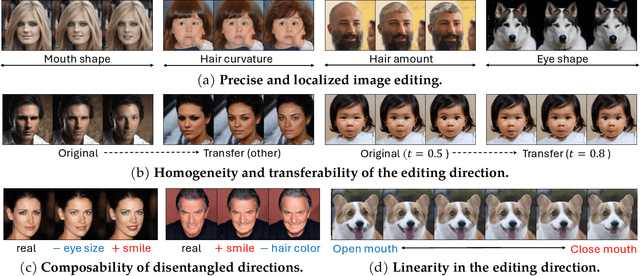
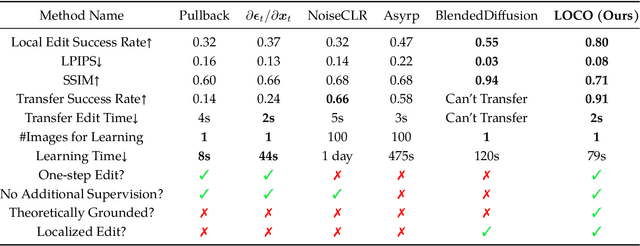
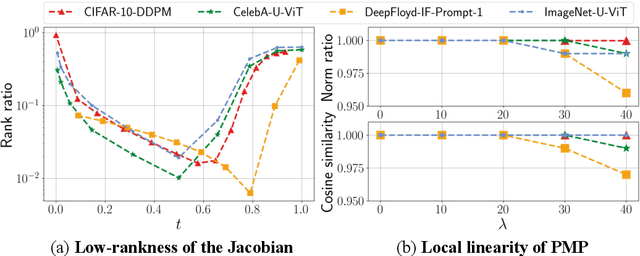
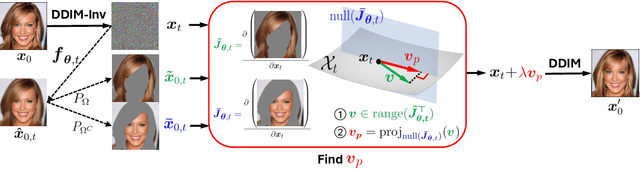
Recently, diffusion models have emerged as a powerful class of generative models. Despite their success, there is still limited understanding of their semantic spaces. This makes it challenging to achieve precise and disentangled image generation without additional training, especially in an unsupervised way. In this work, we improve the understanding of their semantic spaces from intriguing observations: among a certain range of noise levels, (1) the learned posterior mean predictor (PMP) in the diffusion model is locally linear, and (2) the singular vectors of its Jacobian lie in low-dimensional semantic subspaces. We provide a solid theoretical basis to justify the linearity and low-rankness in the PMP. These insights allow us to propose an unsupervised, single-step, training-free LOw-rank COntrollable image editing (LOCO Edit) method for precise local editing in diffusion models. LOCO Edit identified editing directions with nice properties: homogeneity, transferability, composability, and linearity. These properties of LOCO Edit benefit greatly from the low-dimensional semantic subspace. Our method can further be extended to unsupervised or text-supervised editing in various text-to-image diffusion models (T-LOCO Edit). Finally, extensive empirical experiments demonstrate the effectiveness and efficiency of LOCO Edit. The codes will be released at https://github.com/ChicyChen/LOCO-Edit.
Platypus: A Generalized Specialist Model for Reading Text in Various Forms
Aug 27, 2024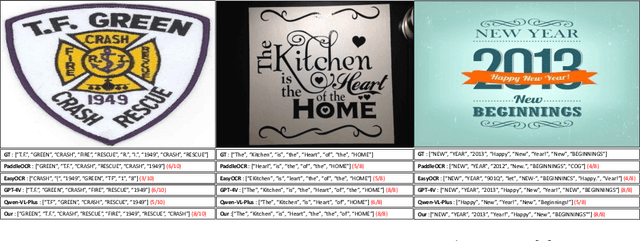
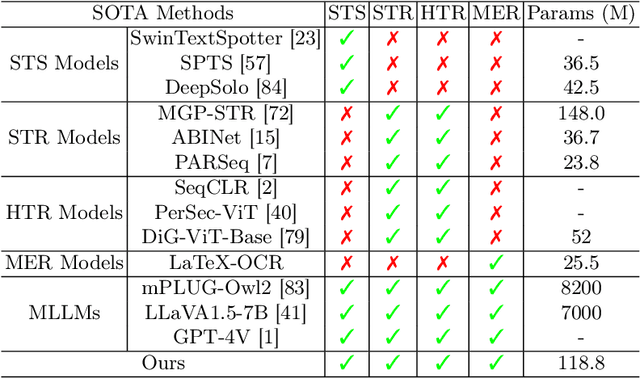
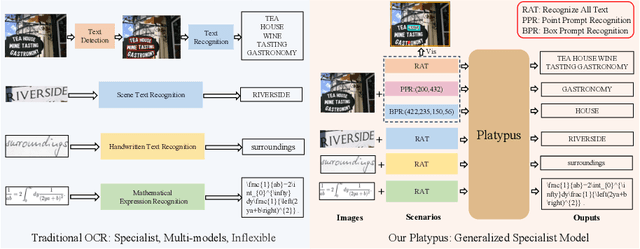
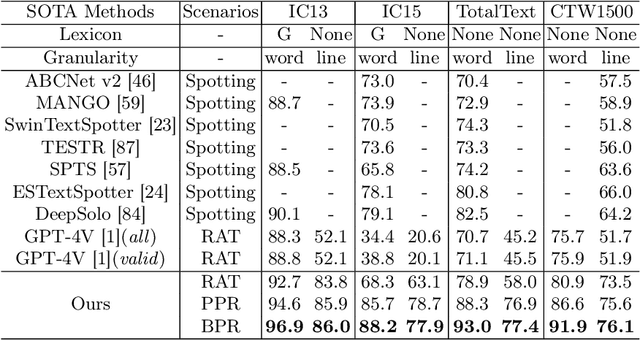
Reading text from images (either natural scenes or documents) has been a long-standing research topic for decades, due to the high technical challenge and wide application range. Previously, individual specialist models are developed to tackle the sub-tasks of text reading (e.g., scene text recognition, handwritten text recognition and mathematical expression recognition). However, such specialist models usually cannot effectively generalize across different sub-tasks. Recently, generalist models (such as GPT-4V), trained on tremendous data in a unified way, have shown enormous potential in reading text in various scenarios, but with the drawbacks of limited accuracy and low efficiency. In this work, we propose Platypus, a generalized specialist model for text reading. Specifically, Platypus combines the best of both worlds: being able to recognize text of various forms with a single unified architecture, while achieving excellent accuracy and high efficiency. To better exploit the advantage of Platypus, we also construct a text reading dataset (called Worms), the images of which are curated from previous datasets and partially re-labeled. Experiments on standard benchmarks demonstrate the effectiveness and superiority of the proposed Platypus model. Model and data will be made publicly available at https://github.com/AlibabaResearch/AdvancedLiterateMachinery/tree/main/OCR/Platypus.
Sequential-Scanning Dual-Energy CT Imaging Using High Temporal Resolution Image Reconstruction and Error-Compensated Material Basis Image Generation
Aug 27, 2024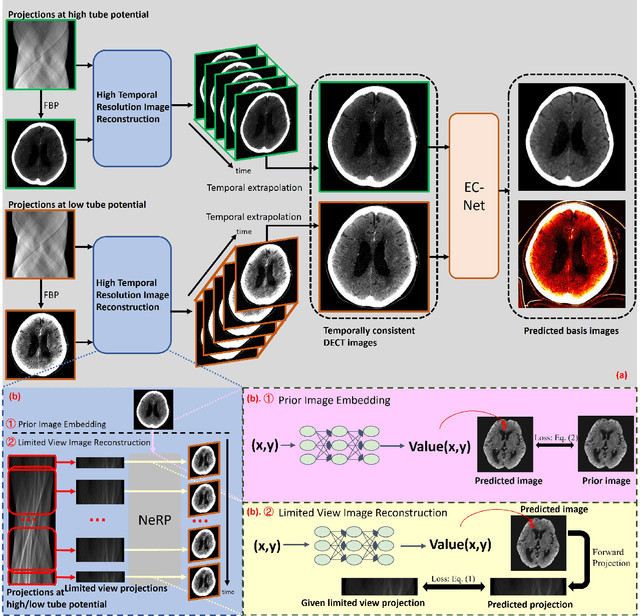
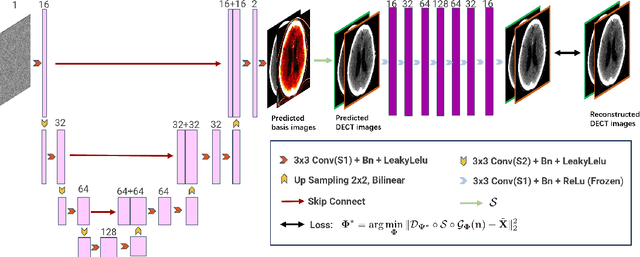
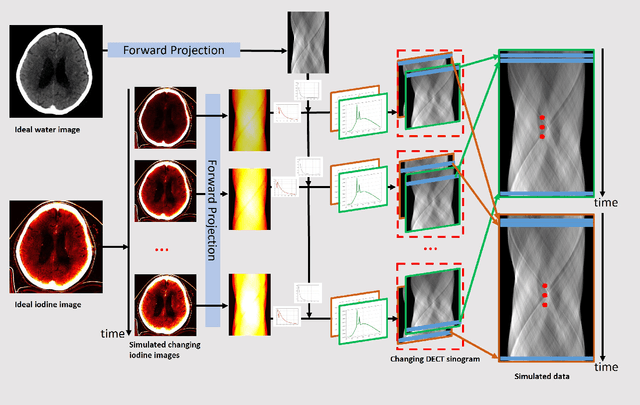
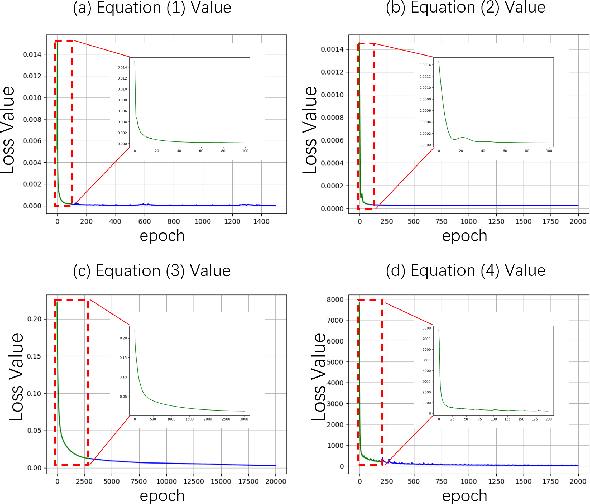
Dual-energy computed tomography (DECT) has been widely used to obtain quantitative elemental composition of imaged subjects for personalized and precise medical diagnosis. Compared with DECT leveraging advanced X-ray source and/or detector technologies, the use of the sequential-scanning data acquisition scheme to implement DECT may make a broader impact on clinical practice because this scheme requires no specialized hardware designs and can be directly implemented into conventional CT systems. However, since the concentration of iodinated contrast agent in the imaged subject varies over time, sequentially scanned data sets acquired at two tube potentials are temporally inconsistent. As existing material basis image reconstruction approaches assume that the data sets acquired at two tube potentials are temporally consistent, the violation of this assumption results in inaccurate quantification of material concentration. In this work, we developed sequential-scanning DECT imaging using high temporal resolution image reconstruction and error-compensated material basis image generation, ACCELERATION in short, to address the technical challenge induced by temporal inconsistency of sequentially scanned data sets and improve quantification accuracy of material concentration in sequential-scanning DECT. ACCELERATION has been validated and evaluated using numerical simulation data sets generated from clinical human subject exams and experimental human subject studies. Results demonstrated the improvement of quantification accuracy and image quality using ACCELERATION.
Enhancing Adaptive Deep Networks for Image Classification via Uncertainty-aware Decision Fusion
Aug 25, 2024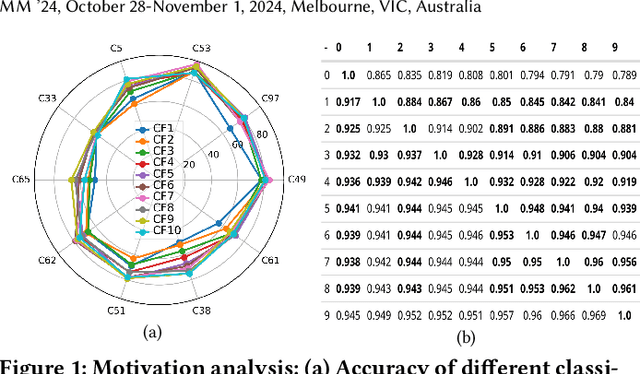
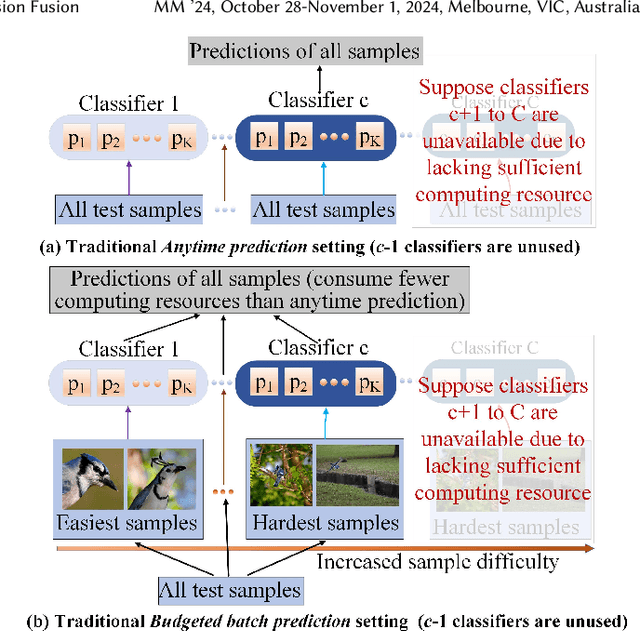
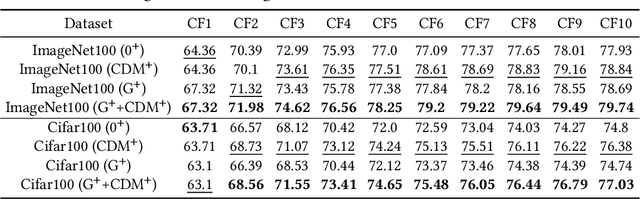
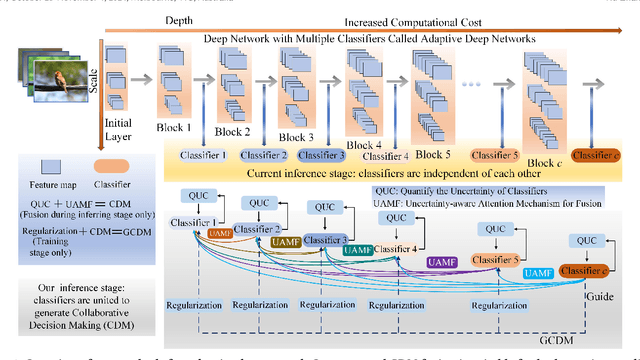
Handling varying computational resources is a critical issue in modern AI applications. Adaptive deep networks, featuring the dynamic employment of multiple classifier heads among different layers, have been proposed to address classification tasks under varying computing resources. Existing approaches typically utilize the last classifier supported by the available resources for inference, as they believe that the last classifier always performs better across all classes. However, our findings indicate that earlier classifier heads can outperform the last head for certain classes. Based on this observation, we introduce the Collaborative Decision Making (CDM) module, which fuses the multiple classifier heads to enhance the inference performance of adaptive deep networks. CDM incorporates an uncertainty-aware fusion method based on evidential deep learning (EDL), that utilizes the reliability (uncertainty values) from the first c-1 classifiers to improve the c-th classifier' accuracy. We also design a balance term that reduces fusion saturation and unfairness issues caused by EDL constraints to improve the fusion quality of CDM. Finally, a regularized training strategy that uses the last classifier to guide the learning process of early classifiers is proposed to further enhance the CDM module's effect, called the Guided Collaborative Decision Making (GCDM) framework. The experimental evaluation demonstrates the effectiveness of our approaches. Results on ImageNet datasets show CDM and GCDM obtain 0.4% to 2.8% accuracy improvement (under varying computing resources) on popular adaptive networks. The code is available at the link https://github.com/Meteor-Stars/GCDM_AdaptiveNet.
Weakly Supervised Video Anomaly Detection and Localization with Spatio-Temporal Prompts
Aug 13, 2024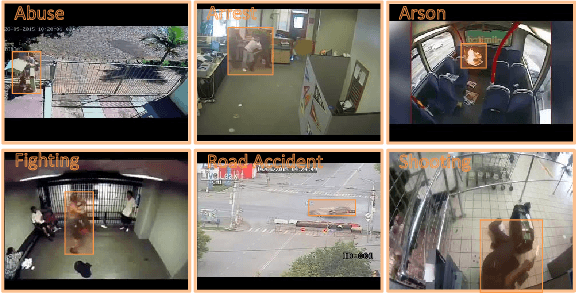
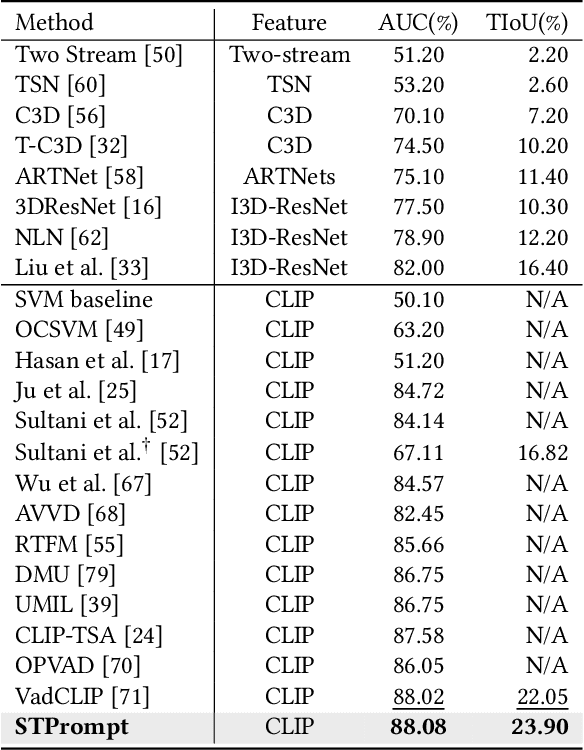


Current weakly supervised video anomaly detection (WSVAD) task aims to achieve frame-level anomalous event detection with only coarse video-level annotations available. Existing works typically involve extracting global features from full-resolution video frames and training frame-level classifiers to detect anomalies in the temporal dimension. However, most anomalous events tend to occur in localized spatial regions rather than the entire video frames, which implies existing frame-level feature based works may be misled by the dominant background information and lack the interpretation of the detected anomalies. To address this dilemma, this paper introduces a novel method called STPrompt that learns spatio-temporal prompt embeddings for weakly supervised video anomaly detection and localization (WSVADL) based on pre-trained vision-language models (VLMs). Our proposed method employs a two-stream network structure, with one stream focusing on the temporal dimension and the other primarily on the spatial dimension. By leveraging the learned knowledge from pre-trained VLMs and incorporating natural motion priors from raw videos, our model learns prompt embeddings that are aligned with spatio-temporal regions of videos (e.g., patches of individual frames) for identify specific local regions of anomalies, enabling accurate video anomaly detection while mitigating the influence of background information. Without relying on detailed spatio-temporal annotations or auxiliary object detection/tracking, our method achieves state-of-the-art performance on three public benchmarks for the WSVADL task.