 Add to Chrome
 Add to Firefox
 Add to Edge
Information Dynamics of Language Communication
Jun 29, 2026
Quantifying how meaning propagates through communicative exchanges remains underdeveloped in computational linguistics. Here we introduce an information-theoretic framework that quantifies the directed flow of semantic content between interlocutors and decomposes multi-source contributions into redundant, unique, and synergistic components. Our approach leverages large language models as probabilistic estimators of natural language to compute two measures: semantic transfer entropy (STE), which captures directed predictive influence between speakers, and semantic partial information decomposition (SPID), which resolves how multiple sources jointly shape a target's language. Across four experiments we show that the framework detects reduced information flow in cognitively rigid dialogue, captures the dominant role of persuaders in shaping discourse, distinguishes high- from low-quality psychotherapy by the directionality of therapist-client information exchange, and reveals synergistic premise contributions in argumentative essays. This framework opens new avenues for studying information dynamics in digital discourse, pedagogical interactions, clinical dialogues, and any domain in which the structure of linguistic exchange is of research relevance.

Directional Confusions Reveal Divergent Inductive Biases Through Rate-Distortion Geometry in Human and Machine Vision
Apr 23, 2026Humans and modern vision models can reach similar classification accuracy while making systematically different kinds of mistakes - differing not in how often they err, but in who gets mistaken for whom, and in which direction. We show that these directional confusions reveal distinct inductive biases that are invisible to accuracy alone. Using matched human and deep vision model responses on a natural-image categorization task under 12 perturbation types, we quantify asymmetry in confusion matrices and link it to generalization geometry through a Rate-Distortion (RD) framework, summarized by three geometric signatures (slope (beta), curvature (kappa)) and efficiency (AUC). We find that humans exhibit broad but weak asymmetries, whereas deep vision models show sparser, stronger directional collapses. Robustness training reduces global asymmetry but fails to recover the human-like breadth-strength profile of graded similarity. Mechanistic simulations further show that different asymmetry organizations shift the RD frontier in opposite directions, even when matched for performance. Together, these results position directional confusions and RD geometry as compact, interpretable signatures of inductive bias under distribution shift.
From Data Statistics to Feature Geometry: How Correlations Shape Superposition
Mar 10, 2026A central idea in mechanistic interpretability is that neural networks represent more features than they have dimensions, arranging them in superposition to form an over-complete basis. This framing has been influential, motivating dictionary learning approaches such as sparse autoencoders. However, superposition has mostly been studied in idealized settings where features are sparse and uncorrelated. In these settings, superposition is typically understood as introducing interference that must be minimized geometrically and filtered out by non-linearities such as ReLUs, yielding local structures like regular polytopes. We show that this account is incomplete for realistic data by introducing Bag-of-Words Superposition (BOWS), a controlled setting to encode binary bag-of-words representations of internet text in superposition. Using BOWS, we find that when features are correlated, interference can be constructive rather than just noise to be filtered out. This is achieved by arranging features according to their co-activation patterns, making interference between active features constructive, while still using ReLUs to avoid false positives. We show that this kind of arrangement is more prevalent in models trained with weight decay and naturally gives rise to semantic clusters and cyclical structures which have been observed in real language models yet were not explained by the standard picture of superposition. Code for this paper can be found at https://github.com/LucasPrietoAl/correlations-feature-geometry.
Rate-Distortion Signatures of Generalization and Information Trade-offs
Mar 02, 2026Generalization to novel visual conditions remains a central challenge for both human and machine vision, yet standard robustness metrics offer limited insight into how systems trade accuracy for robustness. We introduce a rate-distortion-theoretic framework that treats stimulus-response behavior as an effective communication channel, derives rate-distortion (RD) frontiers from confusion matrices, and summarizes each system with two interpretable geometric signatures - slope ($β$) and curvature ($κ$) - which capture the marginal cost and abruptness of accuracy-robustness trade-offs. Applying this framework to human psychophysics and 18 deep vision models under controlled image perturbations, we compare generalization geometry across model architectures and training regimes. We find that both biological and artificial systems follow a common lossy-compression principle but occupy systematically different regions of RD space. In particular, humans exhibit smoother, more flexible trade-offs, whereas modern deep networks operate in steeper and more brittle regimes even at matched accuracy. Across training regimes, robustness training induces systematic but dissociable shifts in beta/kappa, revealing cases where improved robustness or accuracy does not translate into more human-like generalization geometry. These results demonstrate that RD geometry provides a compact, model-agnostic lens for comparing generalization behavior across systems beyond standard accuracy-based metrics.
A Brain-like Synergistic Core in LLMs Drives Behaviour and Learning
Jan 11, 2026The independent evolution of intelligence in biological and artificial systems offers a unique opportunity to identify its fundamental computational principles. Here we show that large language models spontaneously develop synergistic cores -- components where information integration exceeds individual parts -- remarkably similar to those in the human brain. Using principles of information decomposition across multiple LLM model families and architectures, we find that areas in middle layers exhibit synergistic processing while early and late layers rely on redundancy, mirroring the informational organisation in biological brains. This organisation emerges through learning and is absent in randomly initialised networks. Crucially, ablating synergistic components causes disproportionate behavioural changes and performance loss, aligning with theoretical predictions about the fragility of synergy. Moreover, fine-tuning synergistic regions through reinforcement learning yields significantly greater performance gains than training redundant components, yet supervised fine-tuning shows no such advantage. This convergence suggests that synergistic information processing is a fundamental property of intelligence, providing targets for principled model design and testable predictions for biological intelligence.
On the Identifiability of Regime-Switching Models with Multi-Lag Dependencies
Jan 06, 2026Identifiability is central to the interpretability of deep latent variable models, ensuring parameterisations are uniquely determined by the data-generating distribution. However, it remains underexplored for deep regime-switching time series. We develop a general theoretical framework for multi-lag Regime-Switching Models (RSMs), encompassing Markov Switching Models (MSMs) and Switching Dynamical Systems (SDSs). For MSMs, we formulate the model as a temporally structured finite mixture and prove identifiability of both the number of regimes and the multi-lag transitions in a nonlinear-Gaussian setting. For SDSs, we establish identifiability of the latent variables up to permutation and scaling via temporal structure, which in turn yields conditions for identifiability of regime-dependent latent causal graphs (up to regime/node permutations). Our results hold in a fully unsupervised setting through architectural and noise assumptions that are directly enforceable via neural network design. We complement the theory with a flexible variational estimator that satisfies the assumptions and validate the results on synthetic benchmarks. Across real-world datasets from neuroscience, finance, and climate, identifiability leads to more trustworthy interpretability analysis, which is crucial for scientific discovery.
Shannon invariants: A scalable approach to information decomposition
Apr 22, 2025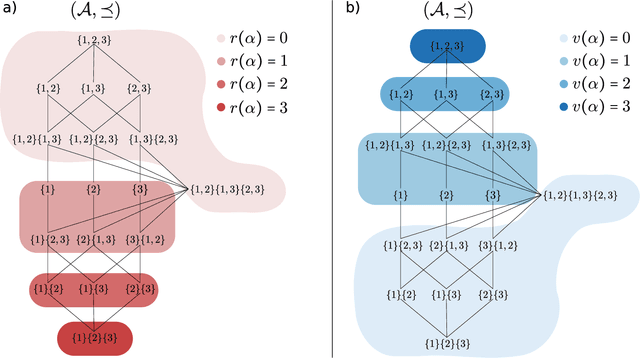
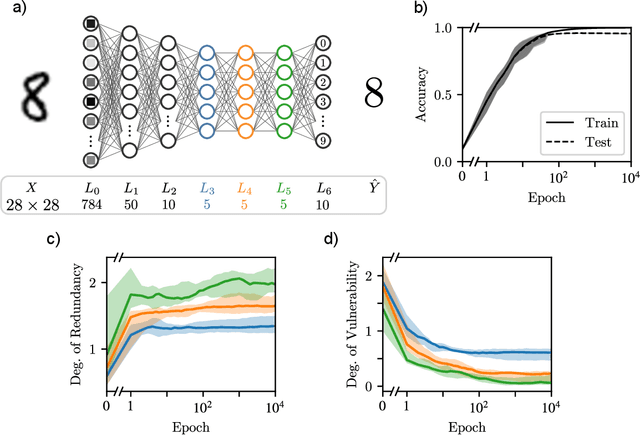
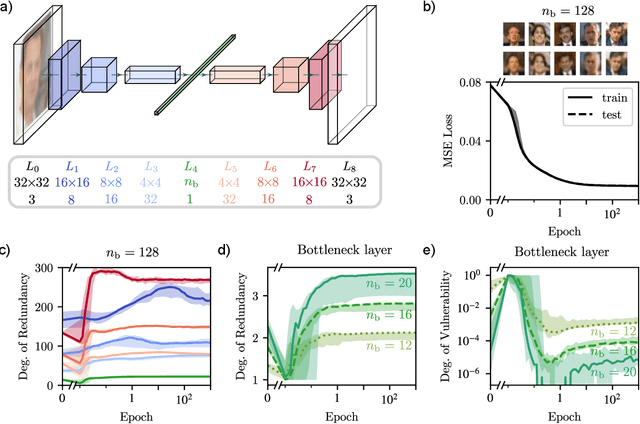
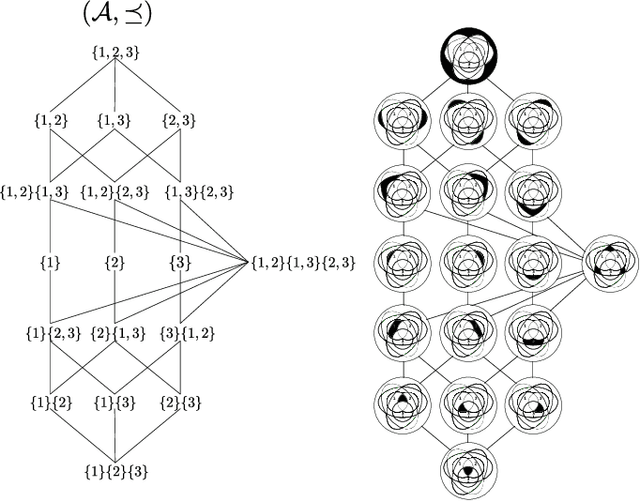
Distributed systems, such as biological and artificial neural networks, process information via complex interactions engaging multiple subsystems, resulting in high-order patterns with distinct properties across scales. Investigating how these systems process information remains challenging due to difficulties in defining appropriate multivariate metrics and ensuring their scalability to large systems. To address these challenges, we introduce a novel framework based on what we call "Shannon invariants" -- quantities that capture essential properties of high-order information processing in a way that depends only on the definition of entropy and can be efficiently calculated for large systems. Our theoretical results demonstrate how Shannon invariants can be used to resolve long-standing ambiguities regarding the interpretation of widely used multivariate information-theoretic measures. Moreover, our practical results reveal distinctive information-processing signatures of various deep learning architectures across layers, which lead to new insights into how these systems process information and how this evolves during training. Overall, our framework resolves fundamental limitations in analyzing high-order phenomena and offers broad opportunities for theoretical developments and empirical analyses.
Grokking at the Edge of Numerical Stability
Jan 08, 2025Grokking, the sudden generalization that occurs after prolonged overfitting, is a surprising phenomenon challenging our understanding of deep learning. Although significant progress has been made in understanding grokking, the reasons behind the delayed generalization and its dependence on regularization remain unclear. In this work, we argue that without regularization, grokking tasks push models to the edge of numerical stability, introducing floating point errors in the Softmax function, which we refer to as Softmax Collapse (SC). We demonstrate that SC prevents grokking and that mitigating SC enables grokking without regularization. Investigating the root cause of SC, we find that beyond the point of overfitting, the gradients strongly align with what we call the na\"ive loss minimization (NLM) direction. This component of the gradient does not alter the model's predictions but decreases the loss by scaling the logits, typically by scaling the weights along their current direction. We show that this scaling of the logits explains the delay in generalization characteristic of grokking and eventually leads to SC, halting further learning. To validate our hypotheses, we introduce two key contributions that address the challenges in grokking tasks: StableMax, a new activation function that prevents SC and enables grokking without regularization, and $\perp$Grad, a training algorithm that promotes quick generalization in grokking tasks by preventing NLM altogether. These contributions provide new insights into grokking, elucidating its delayed generalization, reliance on regularization, and the effectiveness of existing grokking-inducing methods. Code for this paper is available at https://github.com/LucasPrietoAl/grokking-at-the-edge-of-numerical-stability.
From Lazy to Rich: Exact Learning Dynamics in Deep Linear Networks
Sep 22, 2024
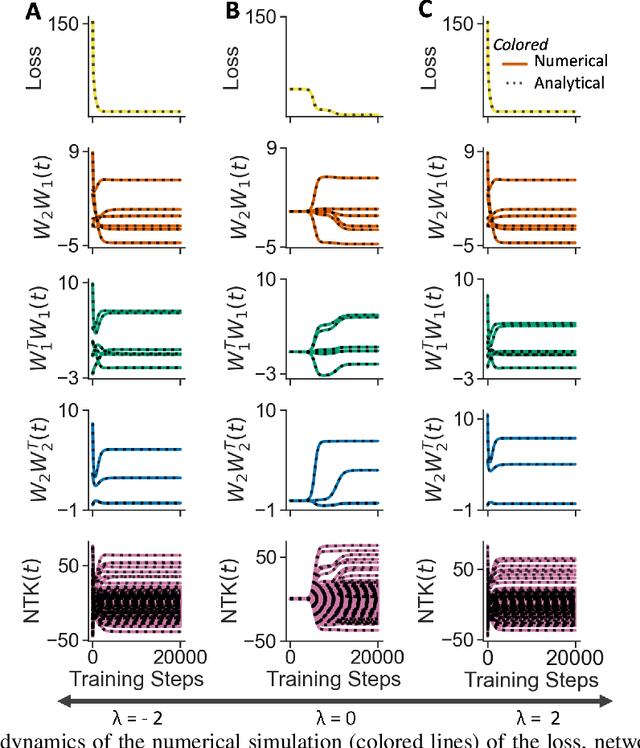
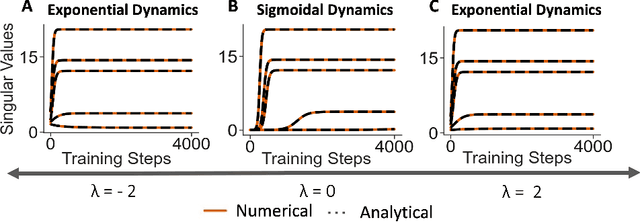
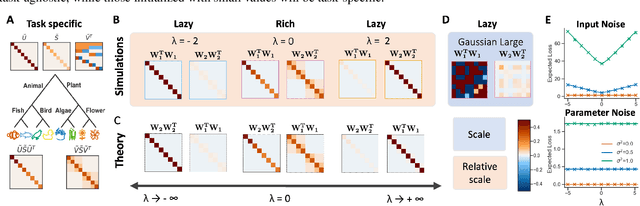
Biological and artificial neural networks develop internal representations that enable them to perform complex tasks. In artificial networks, the effectiveness of these models relies on their ability to build task specific representation, a process influenced by interactions among datasets, architectures, initialization strategies, and optimization algorithms. Prior studies highlight that different initializations can place networks in either a lazy regime, where representations remain static, or a rich/feature learning regime, where representations evolve dynamically. Here, we examine how initialization influences learning dynamics in deep linear neural networks, deriving exact solutions for lambda-balanced initializations-defined by the relative scale of weights across layers. These solutions capture the evolution of representations and the Neural Tangent Kernel across the spectrum from the rich to the lazy regimes. Our findings deepen the theoretical understanding of the impact of weight initialization on learning regimes, with implications for continual learning, reversal learning, and transfer learning, relevant to both neuroscience and practical applications.
Identifying Nonstationary Causal Structures with High-Order Markov Switching Models
Jun 25, 2024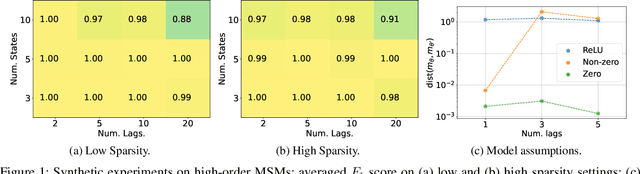
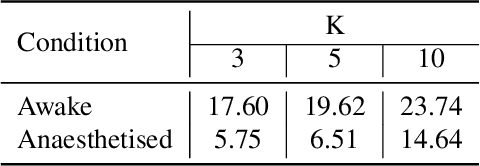
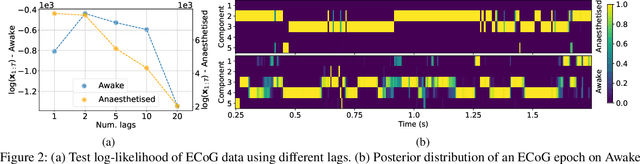
Causal discovery in time series is a rapidly evolving field with a wide variety of applications in other areas such as climate science and neuroscience. Traditional approaches assume a stationary causal graph, which can be adapted to nonstationary time series with time-dependent effects or heterogeneous noise. In this work we address nonstationarity via regime-dependent causal structures. We first establish identifiability for high-order Markov Switching Models, which provide the foundations for identifiable regime-dependent causal discovery. Our empirical studies demonstrate the scalability of our proposed approach for high-order regime-dependent structure estimation, and we illustrate its applicability on brain activity data.