 Add to Chrome
 Add to Firefox
 Add to Edge
Domain-Division based Progressive Learning for Source-Free Domain Adaptation
Jul 31, 2026
With growing privacy and portability concerns, source-free domain adaptation requires only a source pre-trained model and an unlabeled target domain, allowing for effective adaptation to the target data. Most existing self-training methods focus on selecting and exploiting samples with reliable predictions, often neglecting others. Inspired by the finding that deep models learn clean samples faster than noisy ones, we propose a domain-division based progressive learning method named DPL. Specifically, our approach consists of two alternating stages, each beginning with the division of the target domain into easy-to-adapt and hard-to-adapt subdomains based on adaptation difficulty, followed by neighborhood-based pseudo label assignment. In stage one, we enhance classification accuracy through uncertainty-aware self-training and alignment of corresponding classes between subdomains. Stage two then applies tailored learning strategies to each subdomain, starting with consistency learning on the easy-to-adapt samples and progressing to utilizing local structural information for the more challenging ones, thereby mining the intrinsic properties of the target data. Extensive experiments on several widely used benchmarks validate the effectiveness of our approach, demonstrating superior performance compared to state-of-the-art methods. Our code is available at https://github.com/iamjingli/DPL.
* Accepted by IEEE Transactions on Multimedia 2025

LFM: Leveraging Foundation Models for Source-Free Universal Domain Adaptation
Jul 20, 2026Source-free universal domain adaptation (SF-UniDA) adapts a pre-trained source model to an unlabeled target domain under both covariate and label shifts, without access to source data. However, existing SF-UniDA methods rely on inefficient techniques such as threshold tuning and clustering. Foundation models (FMs), known for their generalization and zero-shot capabilities, remain underexplored in SF-UniDA. In this paper, we propose a framework that leverages foundation models (LFM) for SF-UniDA. We use a vision-language model (VLM) to compute similarities between target samples and text labels, including those for unknown classes generated by prompting a large language model. The label shift type is determined by analyzing the coefficient of variation of a similarity-based sample-level score. Unknown samples are identified using a binary Gaussian mixture model fitted to another similarity-based metric. Under a consensus strategy, the pseudo-labels generated by the VLM are refined by the target model initialized with the pre-trained source model, integrating knowledge from both the source domain and foundation models. Finally, these refined pseudo-labels are used to train the target model. Extensive experiments across all possible label shifts and multiple benchmarks demonstrate the effectiveness and superiority of our proposed LFM framework. Our code is available at https://github.com/iamjingli/LFM.
DaV-Gen: End-to-End Generative Retrieval via Draft-and-Verify
Jul 09, 2026Mainstream industrial information retrieval systems (e.g., search and recommendation) are usually built upon Multi-Stage Cascade Architectures (MCAs), which balance effectiveness and efficiency through a coarse-to-fine ``retrieval-ranking'' pipeline. However, the optimization objectives across different stages are substantially inconsistent, propagating or even amplifying the early-stage errors that ultimately degrade the quality of final results. While emerging end-to-end generative models offer a potential solution by unifying the pipeline, their online serving performance is severely hindered by the auto-regressive process inherited from the standard decoder-only structure. To bridge this gap, we introduce \textbf{DaV-Gen}, a novel unified solution designed to fundamentally refactor the paradigm for both search and recommendation via a ``Draft-and-Verify'' mechanism. Inspired by the process used by speculative decoding, our framework redesigns the generation task into two synergistic operations within a single model. During training, the model is concurrently optimized for both candidate drafting and fine-grained verification. This is achieved by a composite loss function that jointly trains the model on two distinct but related objectives: 1) a contrastive loss that structures the embedding space for efficient drafting, and 2) a fusion loss that combines generative likelihood with vector similarity to produce a superior verification score. This integrated training strategy equips the model with dual capabilities. At inference time, it first performs highly efficient vector-based drafting to generate a candidate set, and then verifies these candidates using the more powerful fused scoring function, thereby achieving both the speed of sparse drafting and the precision of advanced generative models within a unified, end-to-end architecture.
STRIDE-ED: A Strategy-Grounded Stepwise Reasoning Framework for Empathetic Dialogue Systems
Apr 08, 2026Empathetic dialogue requires not only recognizing a user's emotional state but also making strategy-aware, context-sensitive decisions throughout response generation. However, the lack of a comprehensive empathy strategy framework, explicit task-aligned multi-stage reasoning, and high-quality strategy-aware data fundamentally limits existing approaches, preventing them from effectively modeling empathetic dialogue as a complex, multi-stage cognitive and decision-making process. To address these challenges, we propose STRIDE-ED, a STRategy-grounded, Interpretable, and DEep reasoning framework that models Empathetic Dialogue through structured, strategy-conditioned reasoning. To support effective learning, we develop a strategy-aware data refinement pipeline integrating LLM-based annotation, multi-model consistency-weighted evaluation, and dynamic sampling to construct high-quality training data aligned with empathetic strategies. Furthermore, we adopt a two-stage training paradigm that combines supervised fine-tuning with multi-objective reinforcement learning to better align model behaviors with target emotions, empathetic strategies, and response formats. Extensive experiments demonstrate that STRIDE-ED generalizes across diverse open-source LLMs and consistently outperforms existing methods on both automatic metrics and human evaluations.
O-ConNet: Geometry-Aware End-to-End Inference of Over-Constrained Spatial Mechanisms
Apr 02, 2026Deep learning has shown strong potential for scientific discovery, but its ability to model macroscopic rigid-body kinematic constraints remains underexplored. We study this problem on spatial over-constrained mechanisms and propose O-ConNet, an end-to-end framework that infers mechanism structural parameters from only three sparse reachable points while reconstructing the full motion trajectory, without explicitly solving constraint equations during inference. On a self-constructed Bennett 4R dataset of 42,860 valid samples, O-ConNet achieves Param-MAE 0.276 +/- 0.077 and Traj-MAE 0.145 +/- 0.018 (mean +/- std over 10 runs), outperforming the strongest sequence baseline (LSTM-Seq2Seq) by 65.1 percent and 88.2 percent, respectively. These results suggest that end-to-end learning can capture closed-loop geometric structure and provide a practical route for inverse design of spatial over-constrained mechanisms under extremely sparse observations.
Toward Temporal Causal Representation Learning with Tensor Decomposition
Jul 18, 2025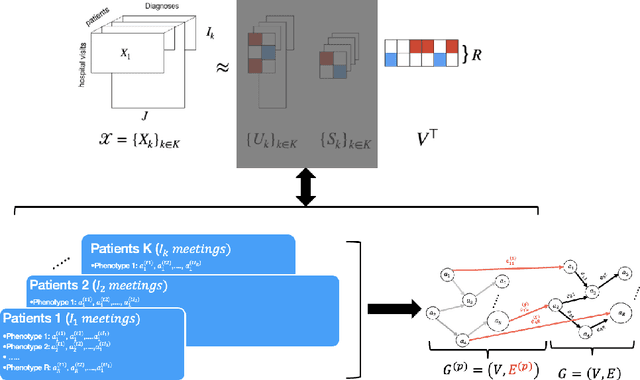
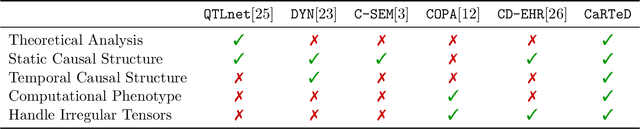
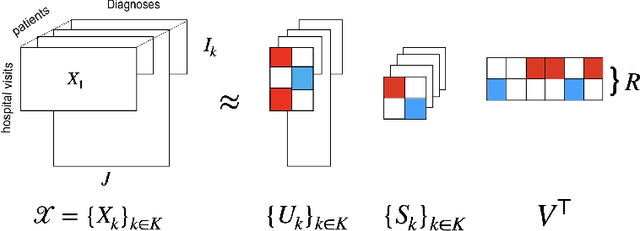
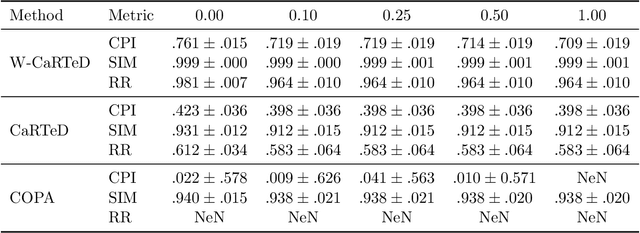
Temporal causal representation learning is a powerful tool for uncovering complex patterns in observational studies, which are often represented as low-dimensional time series. However, in many real-world applications, data are high-dimensional with varying input lengths and naturally take the form of irregular tensors. To analyze such data, irregular tensor decomposition is critical for extracting meaningful clusters that capture essential information. In this paper, we focus on modeling causal representation learning based on the transformed information. First, we present a novel causal formulation for a set of latent clusters. We then propose CaRTeD, a joint learning framework that integrates temporal causal representation learning with irregular tensor decomposition. Notably, our framework provides a blueprint for downstream tasks using the learned tensor factors, such as modeling latent structures and extracting causal information, and offers a more flexible regularization design to enhance tensor decomposition. Theoretically, we show that our algorithm converges to a stationary point. More importantly, our results fill the gap in theoretical guarantees for the convergence of state-of-the-art irregular tensor decomposition. Experimental results on synthetic and real-world electronic health record (EHR) datasets (MIMIC-III), with extensive benchmarks from both phenotyping and network recovery perspectives, demonstrate that our proposed method outperforms state-of-the-art techniques and enhances the explainability of causal representations.
Association between nutritional factors, inflammatory biomarkers and cancer types: an analysis of NHANES data using machine learning
Apr 18, 2025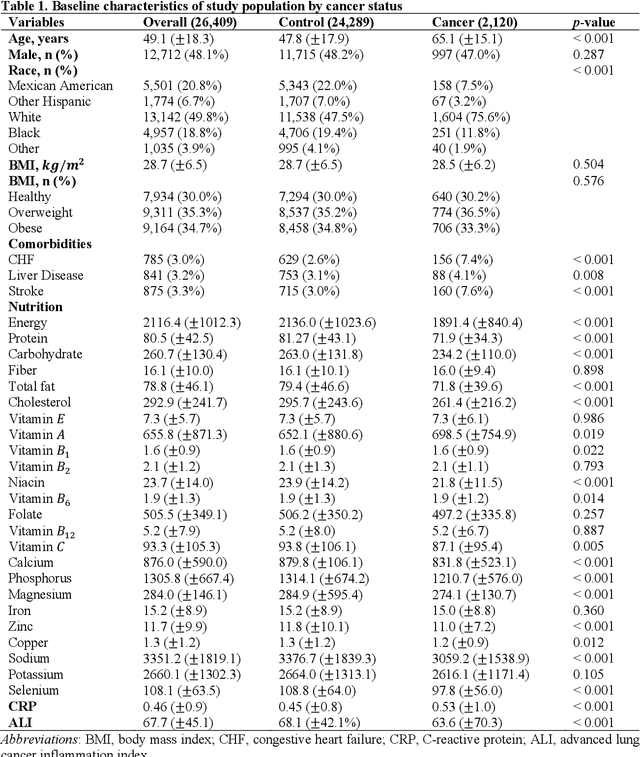
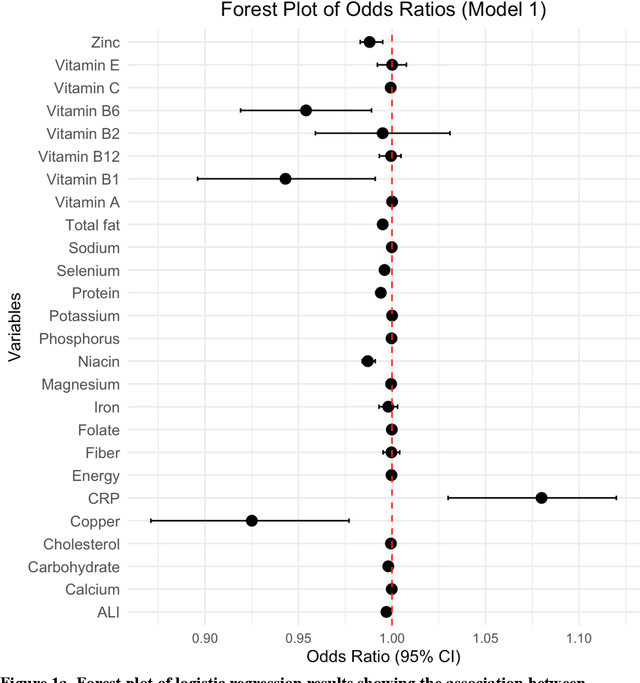
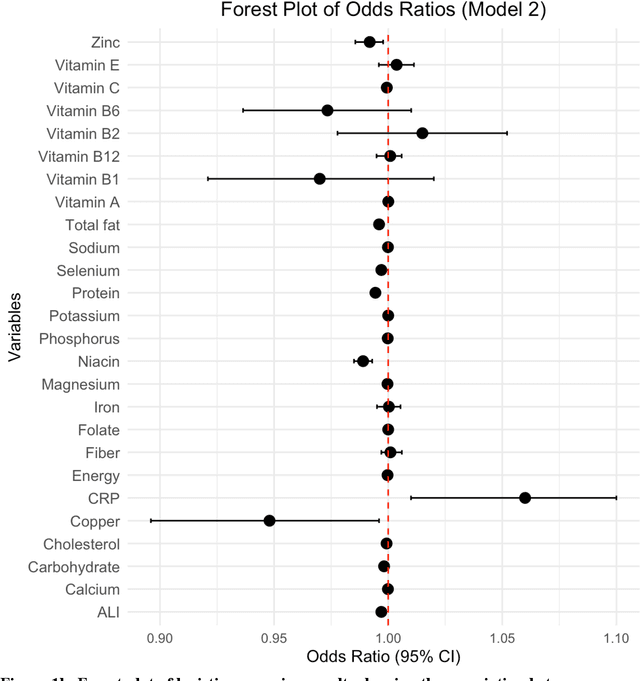

Background. Diet and inflammation are critical factors influencing cancer risk. However, the combined impact of nutritional status and inflammatory biomarkers on cancer status and type, using machine learning (ML), remains underexplored. Objectives. This study investigates the association between nutritional factors, inflammatory biomarkers, and cancer status, and whether these relationships differ across cancer types using National Health and Nutrition Examination Survey (NHANES) data. Methods. We analyzed 24 macro- and micronutrients, C-reactive protein (CRP), and the advanced lung cancer inflammation index (ALI) in 26,409 NHANES participants (2,120 with cancer). Multivariable logistic regression assessed associations with cancer prevalence. We also examined whether these features differed across the five most common cancer types. To evaluate predictive value, we applied three ML models - Logistic Regression, Random Forest, and XGBoost - on the full feature set. Results. The cohort's mean age was 49.1 years; 34.7% were obese. Comorbidities such as anemia and liver conditions, along with nutritional factors like protein and several vitamins, were key predictors of cancer status. Among the models, Random Forest performed best, achieving an accuracy of 0.72. Conclusions. Higher-quality nutritional intake and lower levels of inflammation may offer protective effects against cancer. These findings highlight the potential of combining nutritional and inflammatory markers with ML to inform cancer prevention strategies.
Selective Complementary Feature Fusion and Modal Feature Compression Interaction for Brain Tumor Segmentation
Mar 20, 2025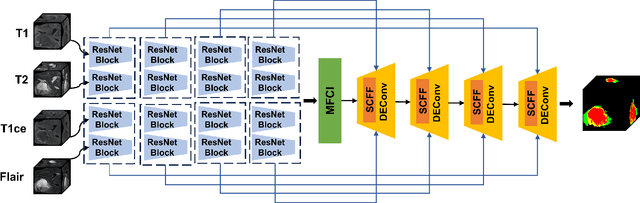

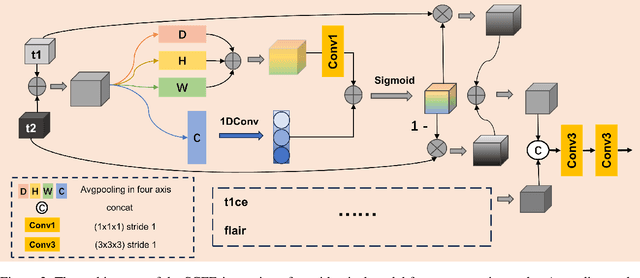
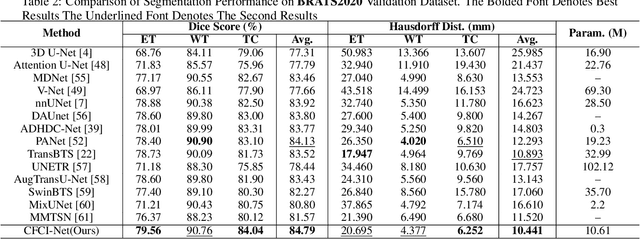
Efficient modal feature fusion strategy is the key to achieve accurate segmentation of brain glioma. However, due to the specificity of different MRI modes, it is difficult to carry out cross-modal fusion with large differences in modal features, resulting in the model ignoring rich feature information. On the other hand, the problem of multi-modal feature redundancy interaction occurs in parallel networks due to the proliferation of feature dimensions, further increase the difficulty of multi-modal feature fusion at the bottom end. In order to solve the above problems, we propose a noval complementary feature compression interaction network (CFCI-Net), which realizes the complementary fusion and compression interaction of multi-modal feature information with an efficient mode fusion strategy. Firstly, we propose a selective complementary feature fusion (SCFF) module, which adaptively fuses rich cross-modal feature information by complementary soft selection weights. Secondly, a modal feature compression interaction (MFCI) transformer is proposed to deal with the multi-mode fusion redundancy problem when the feature dimension surges. The MFCI transformer is composed of modal feature compression (MFC) and modal feature interaction (MFI) to realize redundancy feature compression and multi-mode feature interactive learning. %In MFI, we propose a hierarchical interactive attention mechanism based on multi-head attention. Evaluations on the BraTS2019 and BraTS2020 datasets demonstrate that CFCI-Net achieves superior results compared to state-of-the-art models. Code: https://github.com/CDmm0/CFCI-Net
Advancing Multi-Party Dialogue Systems with Speaker-ware Contrastive Learning
Jan 20, 2025
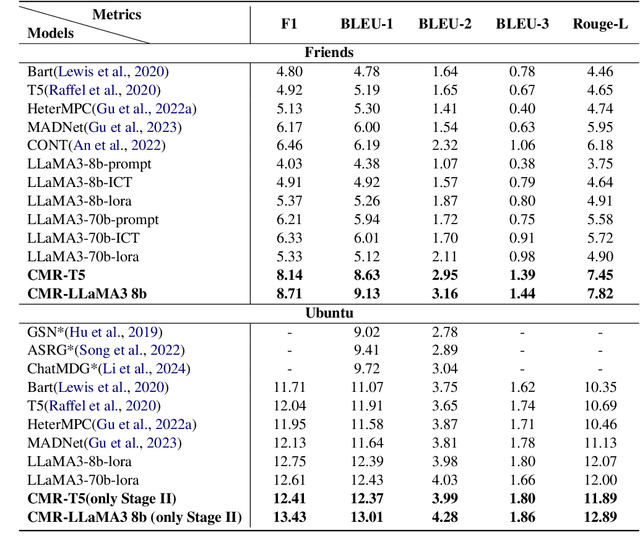

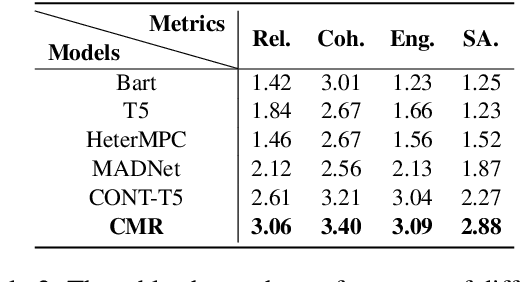
Dialogue response generation has made significant progress, but most research has focused on dyadic dialogue. In contrast, multi-party dialogues involve more participants, each potentially discussing different topics, making the task more complex. Current methods often rely on graph neural networks to model dialogue context, which helps capture the structural dynamics of multi-party conversations. However, these methods are heavily dependent on intricate graph structures and dataset annotations, and they often overlook the distinct speaking styles of participants. To address these challenges, we propose CMR, a Contrastive learning-based Multi-party dialogue Response generation model. CMR uses self-supervised contrastive learning to better distinguish "who says what." Additionally, by comparing speakers within the same conversation, the model captures differences in speaking styles and thematic transitions. To the best of our knowledge, this is the first approach to apply contrastive learning in multi-party dialogue generation. Experimental results show that CMR significantly outperforms state-of-the-art models in multi-party dialogue response tasks.
Can xLLMs Understand the Structure of Dialog? Exploring Multilingual Response Generation in Complex Scenarios
Jan 20, 2025Multilingual research has garnered increasing attention, especially in the domain of dialogue systems. The rapid advancements in large language models (LLMs) have fueled the demand for high-performing multilingual models. However, two major challenges persist: the scarcity of high-quality multilingual datasets and the limited complexity of existing datasets in capturing realistic dialogue scenarios. To address these gaps, we introduce XMP, a high-quality parallel Multilingual dataset sourced from Multi-party Podcast dialogues. Each sample in the dataset features at least three participants discussing a wide range of topics, including society, culture, politics, and entertainment.Through extensive experiments, we uncover significant limitations in previously recognized multilingual capabilities of LLMs when applied to such complex dialogue scenarios. For instance, the widely accepted multilingual complementary ability of LLMs is notably impacted. By conducting further experiments, we explore the mechanisms of LLMs in multilingual environments from multiple perspectives, shedding new light on their performance in real-world, diverse conversational contexts.