 Add to Chrome
 Add to Firefox
 Add to Edge
Adaptive Sampling for Automated Post-Disaster Rapid Damage Assessment via Level-Set Cost-Aware Bayesian Optimization
Aug 03, 2026
Natural disasters frequently inflict severe damage to the built environment, which demands a rapid, reliable, and cost-effective damage assessment for emergency response. However, traditional methods for post-disaster damage assessment often rely on static, labor-intensive data collection strategies that can be prohibitively expensive and struggle to adapt to dynamic post-disaster conditions. In this study, we propose a cost-aware Bayesian optimization framework combined with level-set estimation that continuously guides autonomous data collectors, e.g., an unmanned aerial vehicle (UAV), toward the most informative regions. By dynamically updating damage estimates across different geographic zones, our approach systematically reduces uncertainty while minimizing operational costs. The proposed framework is first validated using a controlled synthetic toy study, demonstrating the agent's ability to efficiently trace damage boundaries, recover the underlying damage map, and rapidly reduce predictive uncertainty. Furthermore, the approach is evaluated using high-fidelity disaster data generated by the Regional Resilience Determination (R2D) software. The results of the algorithm provide accurate and timely damage estimates that support informative and fast emergency response.

Toward Temporal Causal Representation Learning with Tensor Decomposition
Jul 18, 2025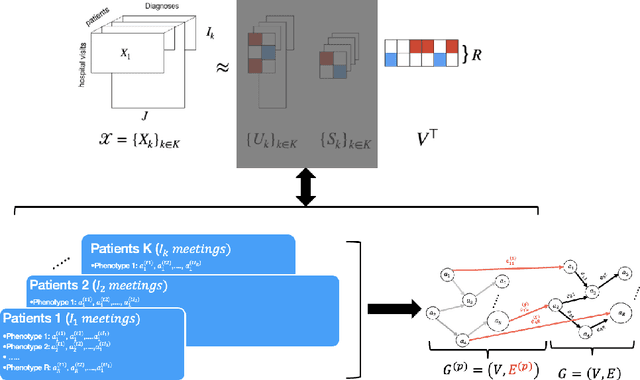
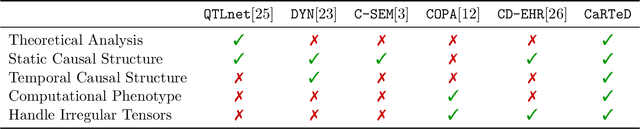
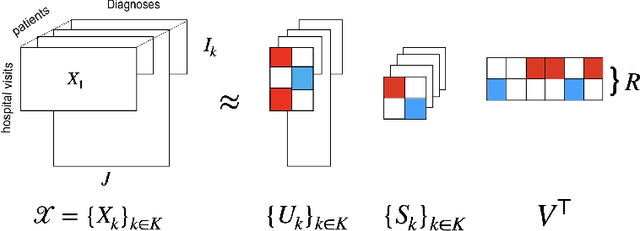
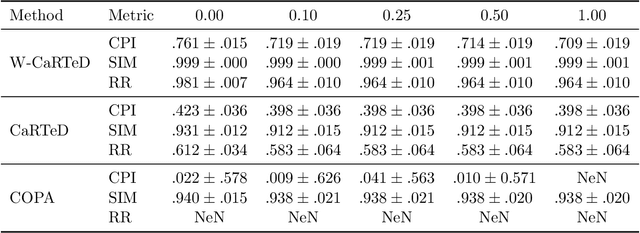
Temporal causal representation learning is a powerful tool for uncovering complex patterns in observational studies, which are often represented as low-dimensional time series. However, in many real-world applications, data are high-dimensional with varying input lengths and naturally take the form of irregular tensors. To analyze such data, irregular tensor decomposition is critical for extracting meaningful clusters that capture essential information. In this paper, we focus on modeling causal representation learning based on the transformed information. First, we present a novel causal formulation for a set of latent clusters. We then propose CaRTeD, a joint learning framework that integrates temporal causal representation learning with irregular tensor decomposition. Notably, our framework provides a blueprint for downstream tasks using the learned tensor factors, such as modeling latent structures and extracting causal information, and offers a more flexible regularization design to enhance tensor decomposition. Theoretically, we show that our algorithm converges to a stationary point. More importantly, our results fill the gap in theoretical guarantees for the convergence of state-of-the-art irregular tensor decomposition. Experimental results on synthetic and real-world electronic health record (EHR) datasets (MIMIC-III), with extensive benchmarks from both phenotyping and network recovery perspectives, demonstrate that our proposed method outperforms state-of-the-art techniques and enhances the explainability of causal representations.