 Add to Chrome
 Add to Firefox
 Add to Edge
Emergent Communication Protocol Learning for Task Offloading in Industrial Internet of Things
Jan 23, 2024
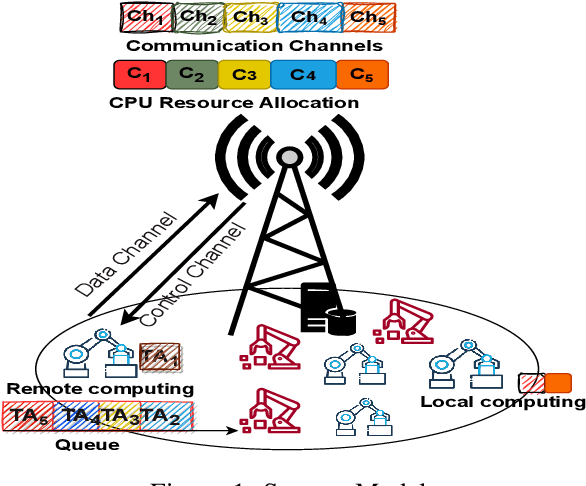
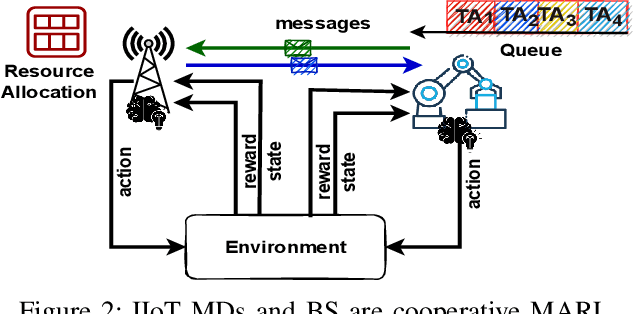
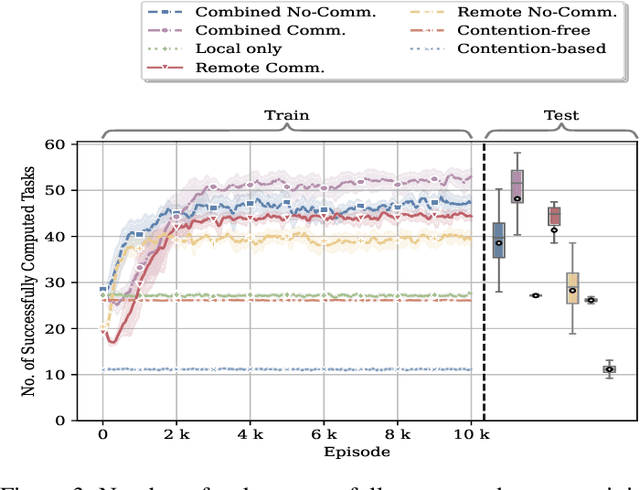
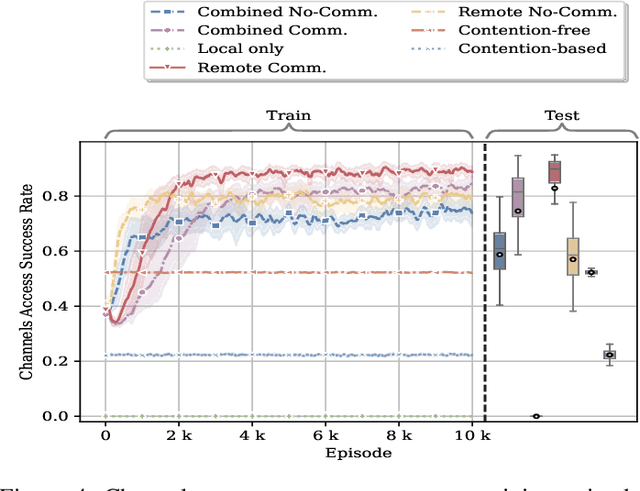
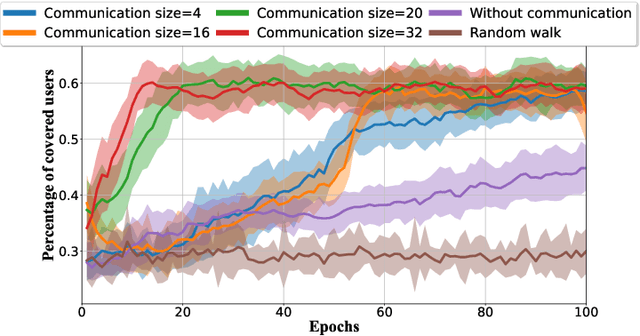
In this paper, we leverage a multi-agent reinforcement learning (MARL) framework to jointly learn a computation offloading decision and multichannel access policy with corresponding signaling. Specifically, the base station and industrial Internet of Things mobile devices are reinforcement learning agents that need to cooperate to execute their computation tasks within a deadline constraint. We adopt an emergent communication protocol learning framework to solve this problem. The numerical results illustrate the effectiveness of emergent communication in improving the channel access success rate and the number of successfully computed tasks compared to contention-based, contention-free, and no-communication approaches. Moreover, the proposed task offloading policy outperforms remote and local computation baselines.

Multi-Objective Optimization in STAR-RIS-Aided SWIPT with RSMA via Meta-Learning
Jan 15, 2024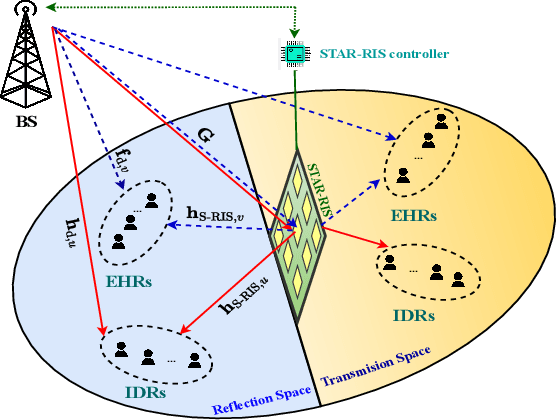
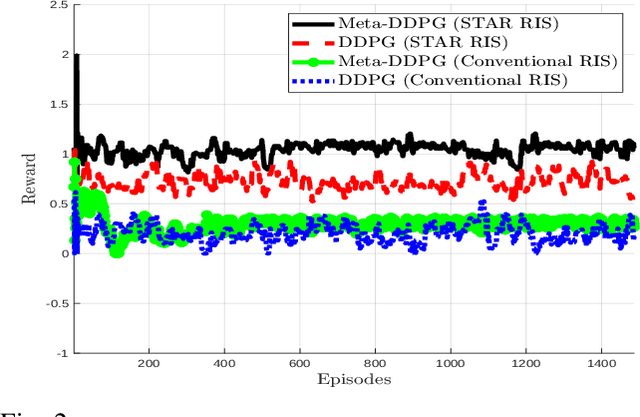
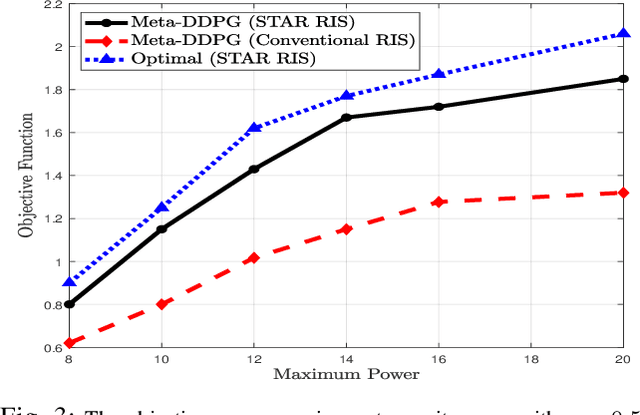
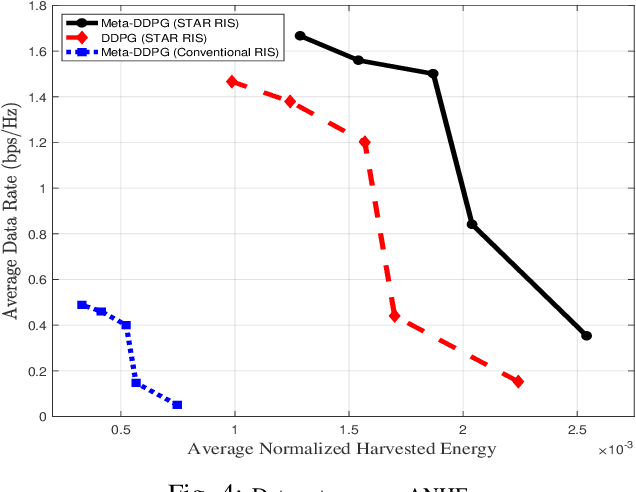
Simultaneously transmitting and reflecting reconfigurable intelligent surface (STAR-RIS) is a cutting-edge concept for the sixth-generation (6G) wireless networks. In this letter, we propose a novel system that incorporates STAR-RIS with simultaneous wireless information and power transfer (SWIPT) using rate splitting multiple access (RSMA). The proposed system facilitates communication from a multi-antenna base station (BS) to single-antenna users in a downlink transmission. The BS concurrently sends energy and information signals to multiple energy harvesting receivers (EHRs) and information data receivers (IDRs) with the support of a deployed STAR-RIS. Furthermore, a multi-objective optimization is introduced to strike a balance between users' sum rate and the total harvested energy. To achieve this, an optimization problem is formulated to optimize the energy/information beamforming vectors at the BS, the phase shifts at the STAR-RIS, and the common message rate. Subsequently, we employ a meta deep deterministic policy gradient (Meta-DDPG) approach to solve the complex problem. Simulation results validate that the proposed algorithm significantly enhances both data rate and harvested energy in comparison to conventional DDPG.
Balancing Energy Efficiency and Distributional Robustness in Over-the-Air Federated Learning
Dec 22, 2023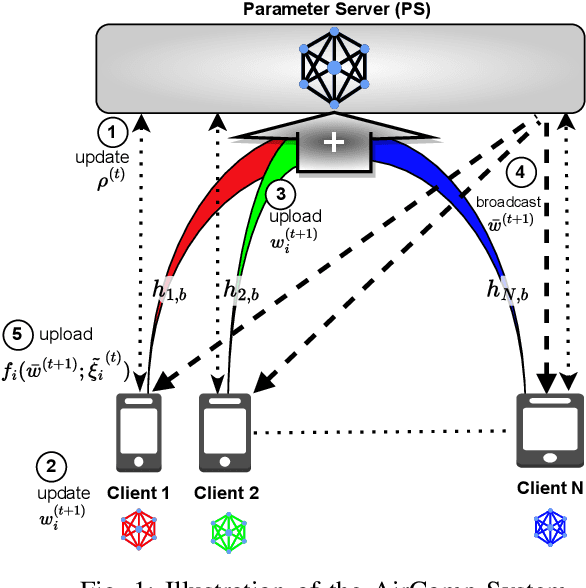

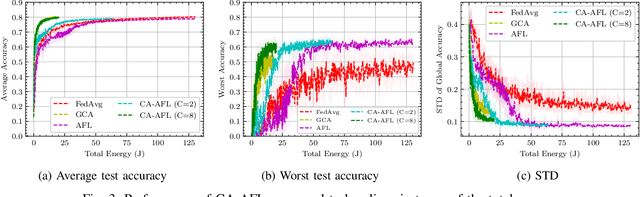
The growing number of wireless edge devices has magnified challenges concerning energy, bandwidth, latency, and data heterogeneity. These challenges have become bottlenecks for distributed learning. To address these issues, this paper presents a novel approach that ensures energy efficiency for distributionally robust federated learning (FL) with over air computation (AirComp). In this context, to effectively balance robustness with energy efficiency, we introduce a novel client selection method that integrates two complementary insights: a deterministic one that is designed for energy efficiency, and a probabilistic one designed for distributional robustness. Simulation results underscore the efficacy of the proposed algorithm, revealing its superior performance compared to baselines from both robustness and energy efficiency perspectives, achieving more than 3-fold energy savings compared to the considered baselines.
Deep Learning-Enabled Text Semantic Communication under Interference: An Empirical Study
Oct 30, 2023At the confluence of 6G, deep learning (DL), and natural language processing (NLP), DL-enabled text semantic communication (SemCom) has emerged as a 6G enabler by promising to minimize bandwidth consumption, transmission delay, and power usage. Among text SemCom techniques, \textit{DeepSC} is a popular scheme that leverages advancements in DL and NLP to reliably transmit semantic information in low signal-to-noise ratio (SNR) regimes. To understand the fundamental limits of such a transmission paradigm, our recently developed theory \cite{Getu'23_Performance_Limits} predicted the performance limits of DeepSC under radio frequency interference (RFI). Although these limits were corroborated by simulations, trained deep networks can defy classical statistical wisdom, and hence extensive computer experiments are needed to validate our theory. Accordingly, this empirical work follows concerning the training and testing of DeepSC using the proceedings of the European Parliament (Europarl) dataset. Employing training, validation, and testing sets \textit{tokenized and vectorized} from Europarl, we train the DeepSC architecture in Keras 2.9 with TensorFlow 2.9 as a backend and test it under Gaussian multi-interferer RFI received over Rayleigh fading channels. Validating our theory, the testing results corroborate that DeepSC produces semantically irrelevant sentences as the number of Gaussian RFI emitters gets very large. Therefore, a fundamental 6G design paradigm for \textit{interference-resistant and robust SemCom} (IR$^2$ SemCom) is needed.
Towards Semantic Communication Protocols for 6G: From Protocol Learning to Language-Oriented Approaches
Oct 14, 2023
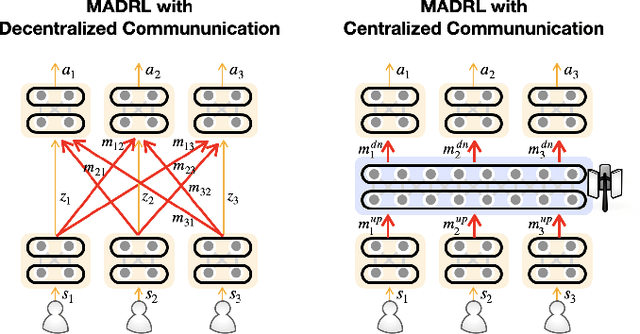


The forthcoming 6G systems are expected to address a wide range of non-stationary tasks. This poses challenges to traditional medium access control (MAC) protocols that are static and predefined. In response, data-driven MAC protocols have recently emerged, offering ability to tailor their signaling messages for specific tasks. This article presents a novel categorization of these data-driven MAC protocols into three levels: Level 1 MAC. task-oriented neural protocols constructed using multi-agent deep reinforcement learning (MADRL); Level 2 MAC. neural network-oriented symbolic protocols developed by converting Level 1 MAC outputs into explicit symbols; and Level 3 MAC. language-oriented semantic protocols harnessing large language models (LLMs) and generative models. With this categorization, we aim to explore the opportunities and challenges of each level by delving into their foundational techniques. Drawing from information theory and associated principles as well as selected case studies, this study provides insights into the trajectory of data-driven MAC protocols and sheds light on future research directions.
Semantics Alignment via Split Learning for Resilient Multi-User Semantic Communication
Oct 13, 2023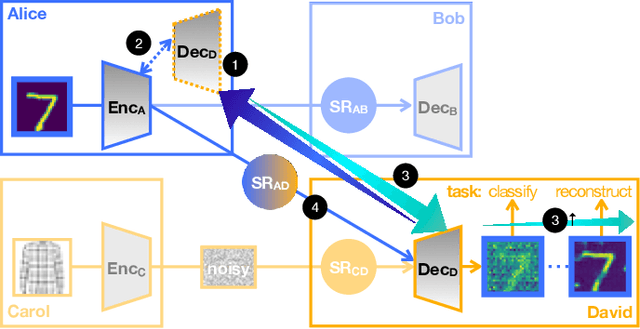
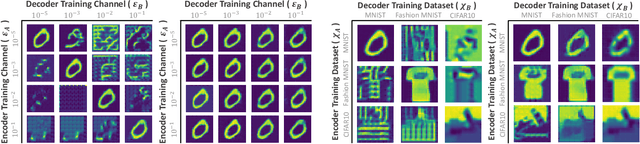
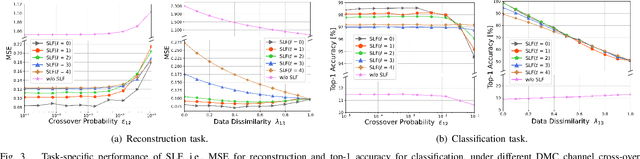
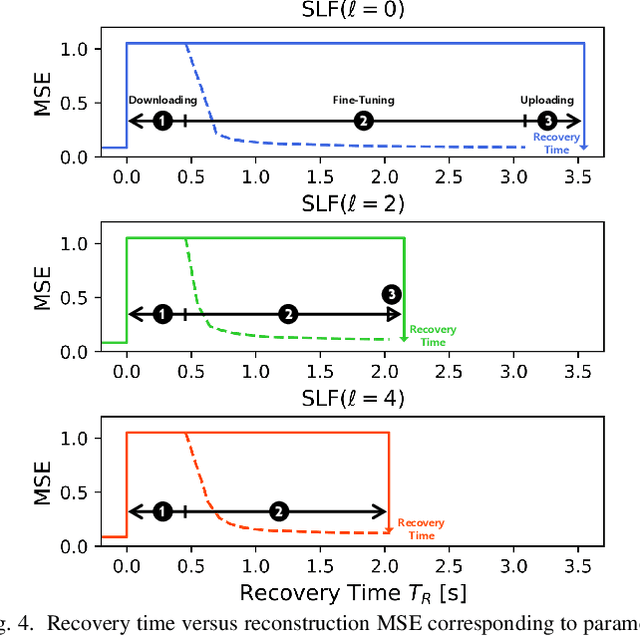
Recent studies on semantic communication commonly rely on neural network (NN) based transceivers such as deep joint source and channel coding (DeepJSCC). Unlike traditional transceivers, these neural transceivers are trainable using actual source data and channels, enabling them to extract and communicate semantics. On the flip side, each neural transceiver is inherently biased towards specific source data and channels, making different transceivers difficult to understand intended semantics, particularly upon their initial encounter. To align semantics over multiple neural transceivers, we propose a distributed learning based solution, which leverages split learning (SL) and partial NN fine-tuning techniques. In this method, referred to as SL with layer freezing (SLF), each encoder downloads a misaligned decoder, and locally fine-tunes a fraction of these encoder-decoder NN layers. By adjusting this fraction, SLF controls computing and communication costs. Simulation results confirm the effectiveness of SLF in aligning semantics under different source data and channel dissimilarities, in terms of classification accuracy, reconstruction errors, and recovery time for comprehending intended semantics from misalignment.
Deep Reinforcement Learning Algorithms for Hybrid V2X Communication: A Benchmarking Study
Oct 04, 2023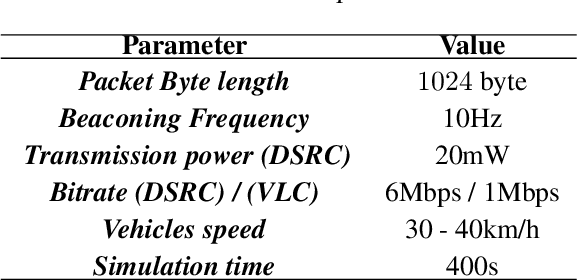
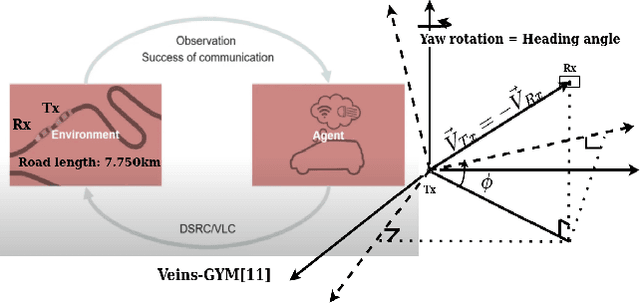
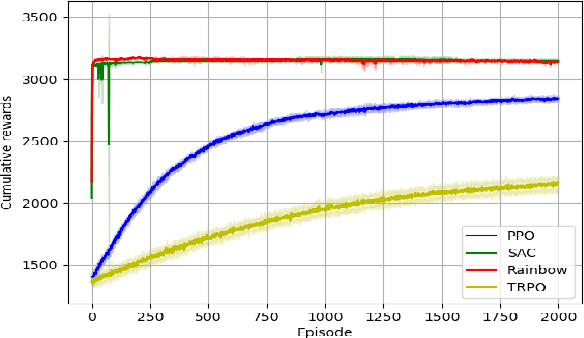
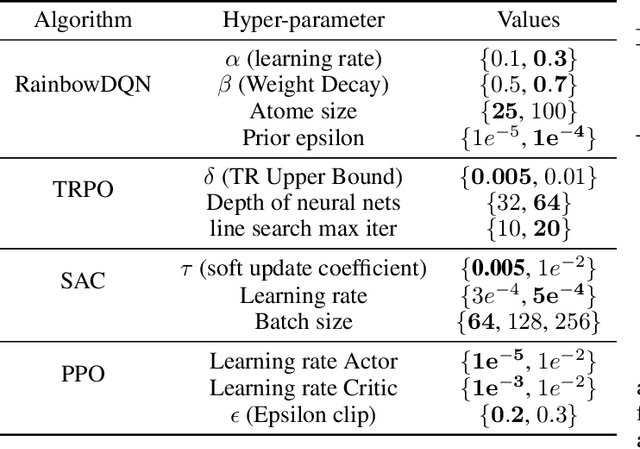
In today's era, autonomous vehicles demand a safety level on par with aircraft. Taking a cue from the aerospace industry, which relies on redundancy to achieve high reliability, the automotive sector can also leverage this concept by building redundancy in V2X (Vehicle-to-Everything) technologies. Given the current lack of reliable V2X technologies, this idea is particularly promising. By deploying multiple RATs (Radio Access Technologies) in parallel, the ongoing debate over the standard technology for future vehicles can be put to rest. However, coordinating multiple communication technologies is a complex task due to dynamic, time-varying channels and varying traffic conditions. This paper addresses the vertical handover problem in V2X using Deep Reinforcement Learning (DRL) algorithms. The goal is to assist vehicles in selecting the most appropriate V2X technology (DSRC/V-VLC) in a serpentine environment. The results show that the benchmarked algorithms outperform the current state-of-the-art approaches in terms of redundancy and usage rate of V-VLC headlights. This result is a significant reduction in communication costs while maintaining a high level of reliability. These results provide strong evidence for integrating advanced DRL decision mechanisms into the architecture as a promising approach to solving the vertical handover problem in V2X.
Language-Oriented Communication with Semantic Coding and Knowledge Distillation for Text-to-Image Generation
Sep 20, 2023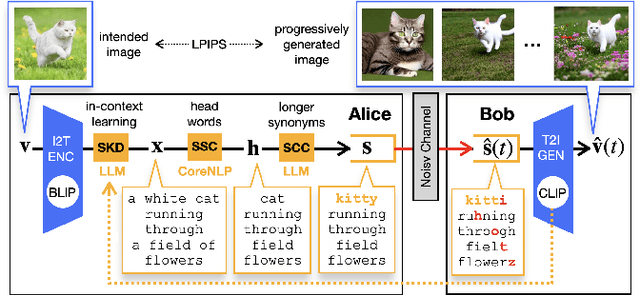

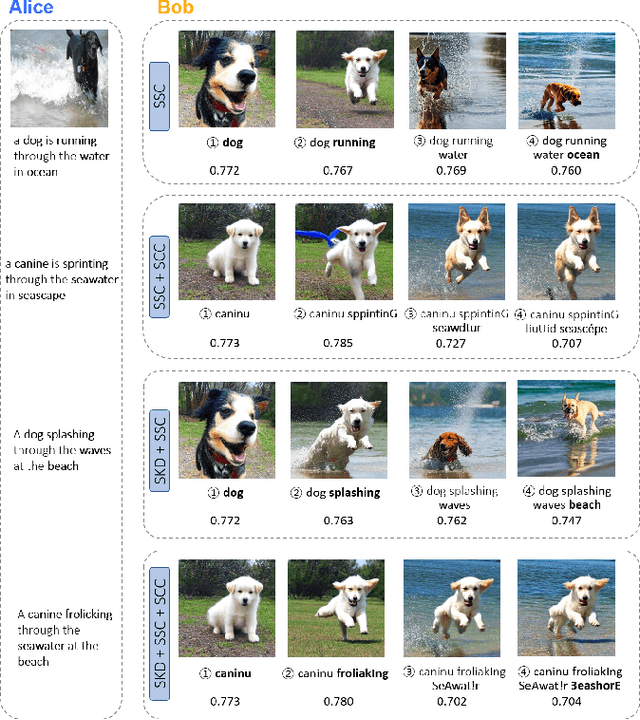
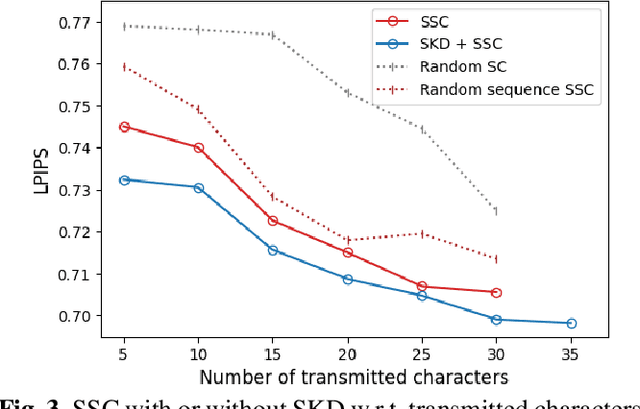
By integrating recent advances in large language models (LLMs) and generative models into the emerging semantic communication (SC) paradigm, in this article we put forward to a novel framework of language-oriented semantic communication (LSC). In LSC, machines communicate using human language messages that can be interpreted and manipulated via natural language processing (NLP) techniques for SC efficiency. To demonstrate LSC's potential, we introduce three innovative algorithms: 1) semantic source coding (SSC) which compresses a text prompt into its key head words capturing the prompt's syntactic essence while maintaining their appearance order to keep the prompt's context; 2) semantic channel coding (SCC) that improves robustness against errors by substituting head words with their lenghthier synonyms; and 3) semantic knowledge distillation (SKD) that produces listener-customized prompts via in-context learning the listener's language style. In a communication task for progressive text-to-image generation, the proposed methods achieve higher perceptual similarities with fewer transmissions while enhancing robustness in noisy communication channels.
Emergent Communication in Multi-Agent Reinforcement Learning for Future Wireless Networks
Sep 12, 2023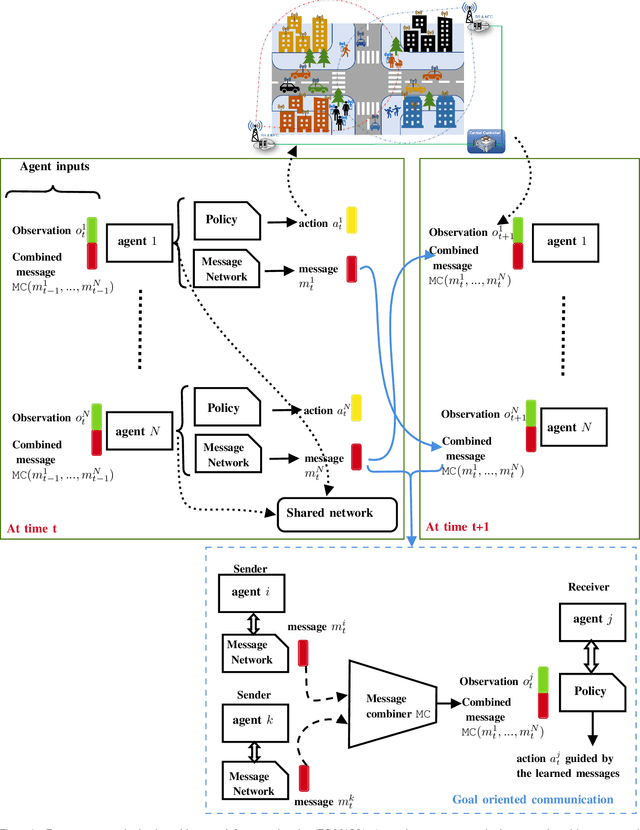
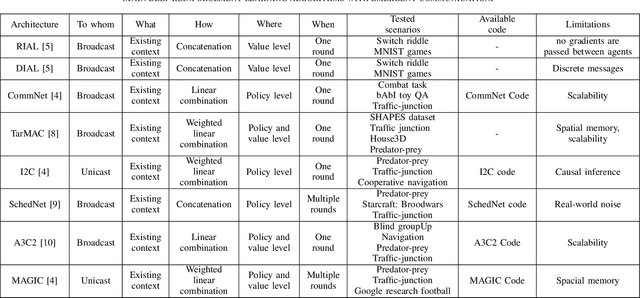
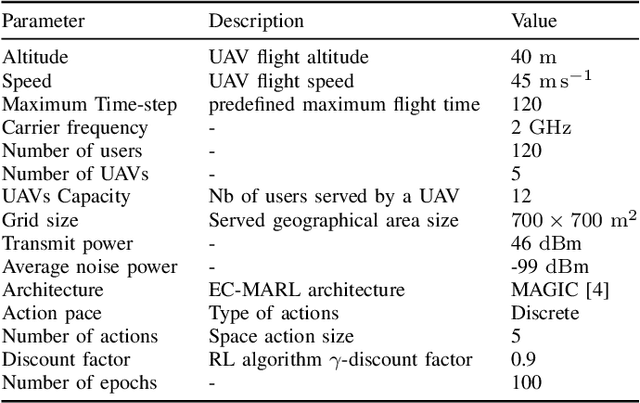
In different wireless network scenarios, multiple network entities need to cooperate in order to achieve a common task with minimum delay and energy consumption. Future wireless networks mandate exchanging high dimensional data in dynamic and uncertain environments, therefore implementing communication control tasks becomes challenging and highly complex. Multi-agent reinforcement learning with emergent communication (EC-MARL) is a promising solution to address high dimensional continuous control problems with partially observable states in a cooperative fashion where agents build an emergent communication protocol to solve complex tasks. This paper articulates the importance of EC-MARL within the context of future 6G wireless networks, which imbues autonomous decision-making capabilities into network entities to solve complex tasks such as autonomous driving, robot navigation, flying base stations network planning, and smart city applications. An overview of EC-MARL algorithms and their design criteria are provided while presenting use cases and research opportunities on this emerging topic.
Joint Semantic-Native Communication and Inference via Minimal Simplicial Structures
Aug 31, 2023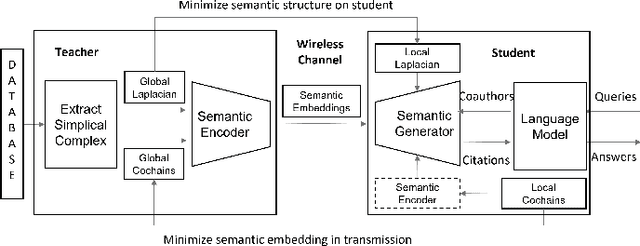
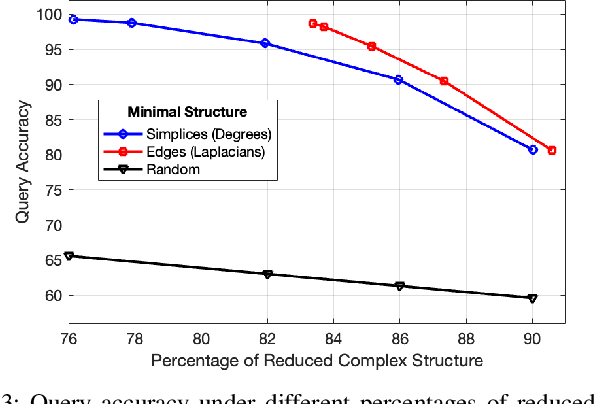
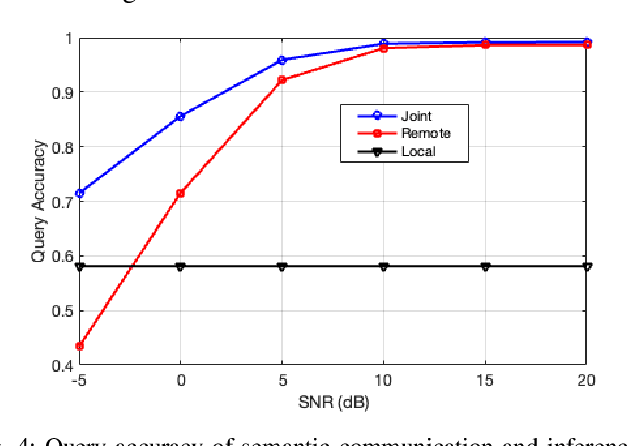
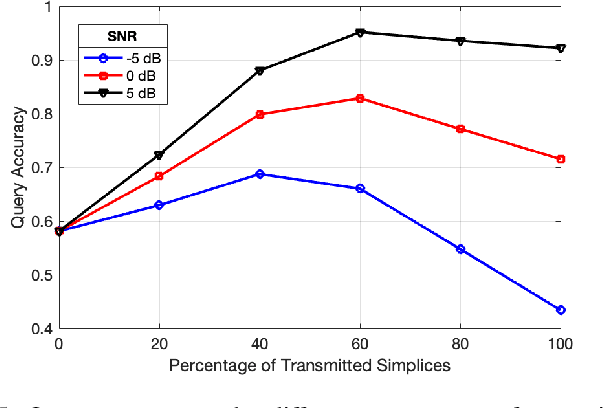
In this work, we study the problem of semantic communication and inference, in which a student agent (i.e. mobile device) queries a teacher agent (i.e. cloud sever) to generate higher-order data semantics living in a simplicial complex. Specifically, the teacher first maps its data into a k-order simplicial complex and learns its high-order correlations. For effective communication and inference, the teacher seeks minimally sufficient and invariant semantic structures prior to conveying information. These minimal simplicial structures are found via judiciously removing simplices selected by the Hodge Laplacians without compromising the inference query accuracy. Subsequently, the student locally runs its own set of queries based on a masked simplicial convolutional autoencoder (SCAE) leveraging both local and remote teacher's knowledge. Numerical results corroborate the effectiveness of the proposed approach in terms of improving inference query accuracy under different channel conditions and simplicial structures. Experiments on a coauthorship dataset show that removing simplices by ranking the Laplacian values yields a 85% reduction in payload size without sacrificing accuracy. Joint semantic communication and inference by masked SCAE improves query accuracy by 25% compared to local student based query and 15% compared to remote teacher based query. Finally, incorporating channel semantics is shown to effectively improve inference accuracy, notably at low SNR values.