 Add to Chrome
 Add to Firefox
 Add to Edge
SigmaScale: LLM Compression with SVD-based Low-Rank Decomposition and Learned Scaling Matrices
Jun 05, 2026
We present SigmaScale, a method for learning auxiliary scaling matrices $S$ to aid truncated Singular Value Decomposition (SVD) based Large Language Model (LLM) compression. Instead of deriving scaling matrices analytically, SigmaScale optimizes two sets of vectors that define diagonal row and column scaling transformations under an activation-aware compression loss. We show that learned scaling lowers the effective intrinsic rank of weight matrices, as reflected by reductions in effective-rank entropy, and that this reduction is strongly correlated with compression loss. Experiments on Llama 3.1 8B Instruct and Qwen3-8B show that SigmaScale is competitive with closely related state-of-the-art SVD-based compression methods across perplexity and zero-shot benchmarks. By using learned activation-aware transformations, SigmaScale explores a more flexible route to low-rank LLM compression by adapting to the structure of individual model weights. The advantage observed in specific tasks makes our approach a valid option for applications requiring a reduced LLM-inference computing cost.

Model-Agnostic Signal Discovery with Machine Learning: Bridging the Gap Between Theory and Practice
May 29, 2026Searches for new phenomena in complex scientific data are predominantly model-dependent, optimized for specific hypotheses, and therefore limited in their coverage of the space of possible signals. Recently, new AI-based model-agnostic search strategies, many of which have been pioneered in high-energy physics, have been proposed which provide a complementary paradigm, prioritizing broad exploration over tailored analyses. These techniques offer an opportunity to enhance the overall discovery potential of modern experiments, especially in regimes where theoretical guidance is scarce. In this document, we review the conceptual framework behind the main classes of AI-based model-agnostic strategies. We discuss the potential pitfalls of these methods, and strategies for their validation and interpretation. We aim for this document to serve as a useful reference both for practitioners and for researchers interested in learning more about these model-agnostic search strategies.
Learning to Validate Generative Models: a Goodness-of-Fit Approach
Nov 12, 2025Generative models are increasingly central to scientific workflows, yet their systematic use and interpretation require a proper understanding of their limitations through rigorous validation. Classic approaches struggle with scalability, statistical power, or interpretability when applied to high-dimensional data, making it difficult to certify the reliability of these models in realistic, high-dimensional scientific settings. Here, we propose the use of the New Physics Learning Machine (NPLM), a learning based approach to goodness-of-fit testing inspired by the Neyman-Pearson construction, to test generative networks trained on high-dimensional scientific data. We demonstrate the performance of NPLM for validation in two benchmark cases: generative models trained on mixtures of Gaussian models with increasing dimensionality, and a public end-to-end generator for the Large Hadron Collider called FlashSim, trained on jet data, typical in the field of high-energy physics. We demonstrate that the NPLM can serve as a powerful validation method while also providing a means to diagnose sub-optimally modeled regions of the data.
An Efficient Permutation-Based Kernel Two-Sample Test
Feb 19, 2025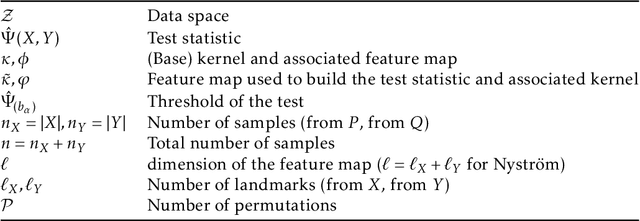
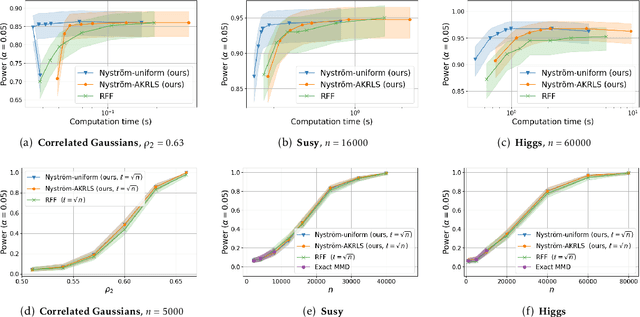
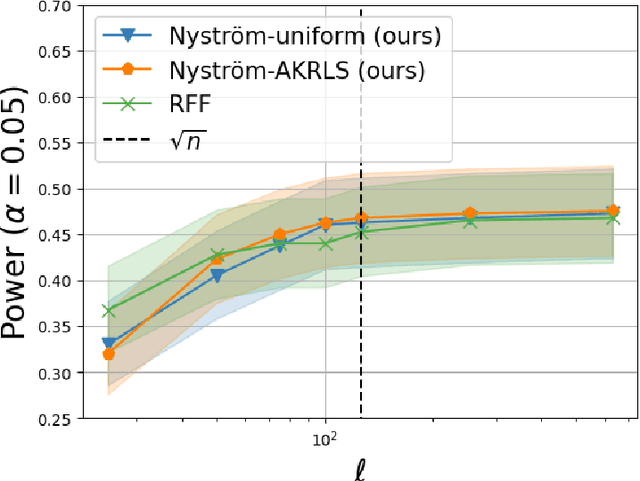
Two-sample hypothesis testing-determining whether two sets of data are drawn from the same distribution-is a fundamental problem in statistics and machine learning with broad scientific applications. In the context of nonparametric testing, maximum mean discrepancy (MMD) has gained popularity as a test statistic due to its flexibility and strong theoretical foundations. However, its use in large-scale scenarios is plagued by high computational costs. In this work, we use a Nystr\"om approximation of the MMD to design a computationally efficient and practical testing algorithm while preserving statistical guarantees. Our main result is a finite-sample bound on the power of the proposed test for distributions that are sufficiently separated with respect to the MMD. The derived separation rate matches the known minimax optimal rate in this setting. We support our findings with a series of numerical experiments, emphasizing realistic scientific data.
CaloChallenge 2022: A Community Challenge for Fast Calorimeter Simulation
Oct 28, 2024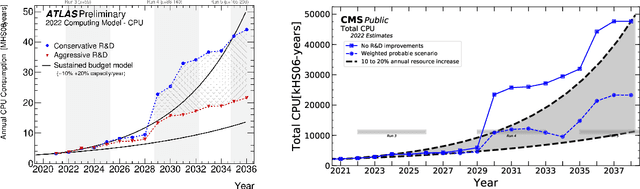
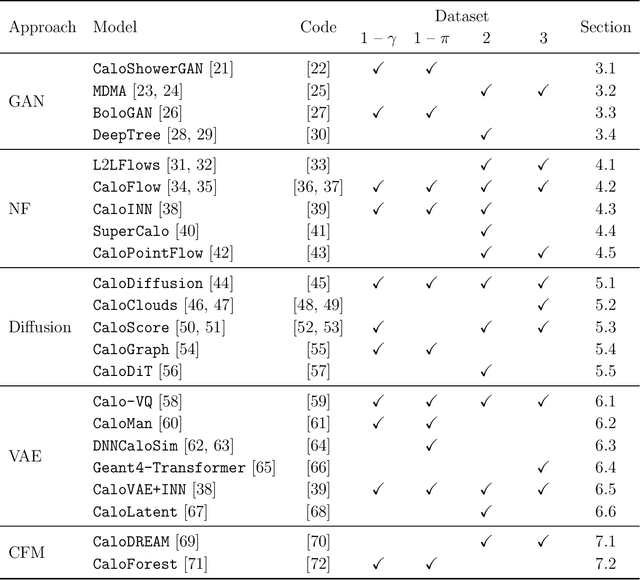
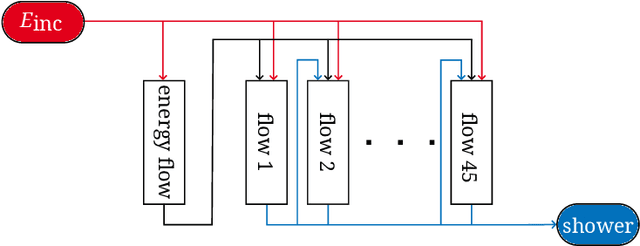
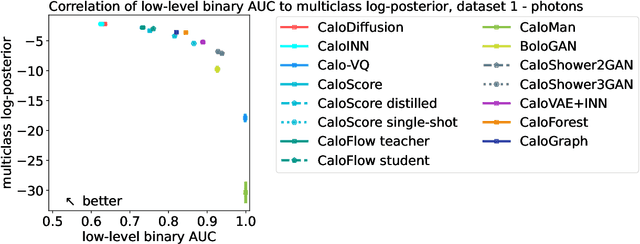
We present the results of the "Fast Calorimeter Simulation Challenge 2022" - the CaloChallenge. We study state-of-the-art generative models on four calorimeter shower datasets of increasing dimensionality, ranging from a few hundred voxels to a few tens of thousand voxels. The 31 individual submissions span a wide range of current popular generative architectures, including Variational AutoEncoders (VAEs), Generative Adversarial Networks (GANs), Normalizing Flows, Diffusion models, and models based on Conditional Flow Matching. We compare all submissions in terms of quality of generated calorimeter showers, as well as shower generation time and model size. To assess the quality we use a broad range of different metrics including differences in 1-dimensional histograms of observables, KPD/FPD scores, AUCs of binary classifiers, and the log-posterior of a multiclass classifier. The results of the CaloChallenge provide the most complete and comprehensive survey of cutting-edge approaches to calorimeter fast simulation to date. In addition, our work provides a uniquely detailed perspective on the important problem of how to evaluate generative models. As such, the results presented here should be applicable for other domains that use generative AI and require fast and faithful generation of samples in a large phase space.
Refereeing the Referees: Evaluating Two-Sample Tests for Validating Generators in Precision Sciences
Sep 24, 2024
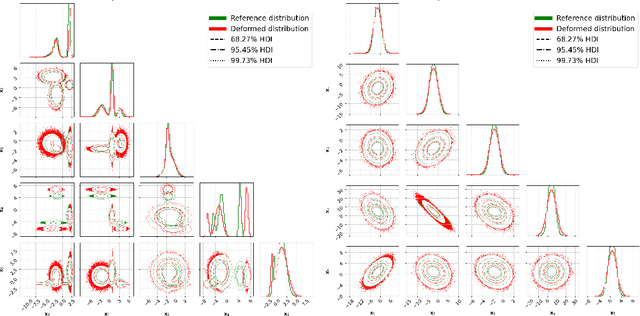
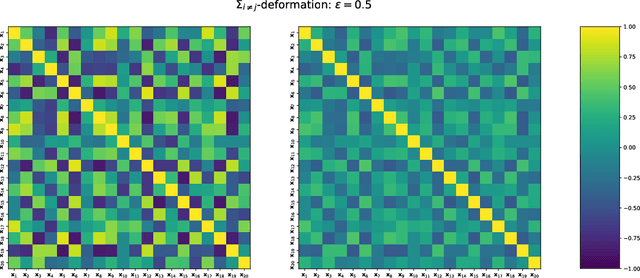
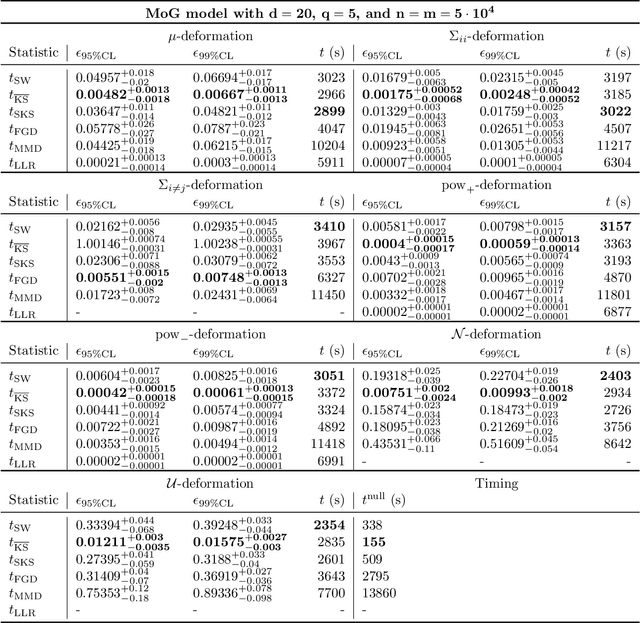
We propose a robust methodology to evaluate the performance and computational efficiency of non-parametric two-sample tests, specifically designed for high-dimensional generative models in scientific applications such as in particle physics. The study focuses on tests built from univariate integral probability measures: the sliced Wasserstein distance and the mean of the Kolmogorov-Smirnov statistics, already discussed in the literature, and the novel sliced Kolmogorov-Smirnov statistic. These metrics can be evaluated in parallel, allowing for fast and reliable estimates of their distribution under the null hypothesis. We also compare these metrics with the recently proposed unbiased Fr\'echet Gaussian Distance and the unbiased quadratic Maximum Mean Discrepancy, computed with a quartic polynomial kernel. We evaluate the proposed tests on various distributions, focusing on their sensitivity to deformations parameterized by a single parameter $\epsilon$. Our experiments include correlated Gaussians and mixtures of Gaussians in 5, 20, and 100 dimensions, and a particle physics dataset of gluon jets from the JetNet dataset, considering both jet- and particle-level features. Our results demonstrate that one-dimensional-based tests provide a level of sensitivity comparable to other multivariate metrics, but with significantly lower computational cost, making them ideal for evaluating generative models in high-dimensional settings. This methodology offers an efficient, standardized tool for model comparison and can serve as a benchmark for more advanced tests, including machine-learning-based approaches.
Multiple testing for signal-agnostic searches of new physics with machine learning
Aug 22, 2024In this work, we address the question of how to enhance signal-agnostic searches by leveraging multiple testing strategies. Specifically, we consider hypothesis tests relying on machine learning, where model selection can introduce a bias towards specific families of new physics signals. We show that it is beneficial to combine different tests, characterised by distinct choices of hyperparameters, and that performances comparable to the best available test are generally achieved while providing a more uniform response to various types of anomalies. Focusing on the New Physics Learning Machine, a methodology to perform a signal-agnostic likelihood-ratio test, we explore a number of approaches to multiple testing, such as combining p-values and aggregating test statistics.
Goodness of fit by Neyman-Pearson testing
May 23, 2023
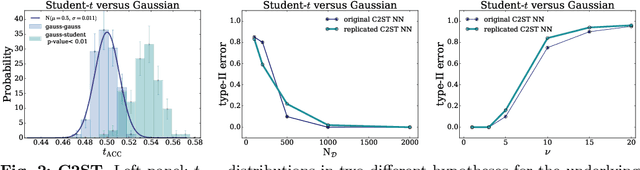


The Neyman-Pearson strategy for hypothesis testing can be employed for goodness of fit if the alternative hypothesis $\rm H_1$ is generic enough not to introduce a significant bias while at the same time avoiding overfitting. A practical implementation of this idea (dubbed NPLM) has been developed in the context of high energy physics, targeting the detection in collider data of new physical effects not foreseen by the Standard Model. In this paper we initiate a comparison of this methodology with other approaches to goodness of fit, and in particular with classifier-based strategies that share strong similarities with NPLM. NPLM emerges from our comparison as more sensitive to small departures of the data from the expected distribution and not biased towards detecting specific types of anomalies while being blind to others. These features make it more suited for agnostic searches for new physics at collider experiments. Its deployment in other contexts should be investigated.
Fast kernel methods for Data Quality Monitoring as a goodness-of-fit test
Mar 09, 2023We here propose a machine learning approach for monitoring particle detectors in real-time. The goal is to assess the compatibility of incoming experimental data with a reference dataset, characterising the data behaviour under normal circumstances, via a likelihood-ratio hypothesis test. The model is based on a modern implementation of kernel methods, nonparametric algorithms that can learn any continuous function given enough data. The resulting approach is efficient and agnostic to the type of anomaly that may be present in the data. Our study demonstrates the effectiveness of this strategy on multivariate data from drift tube chamber muon detectors.
On the curse of dimensionality for Normalizing Flows
Feb 23, 2023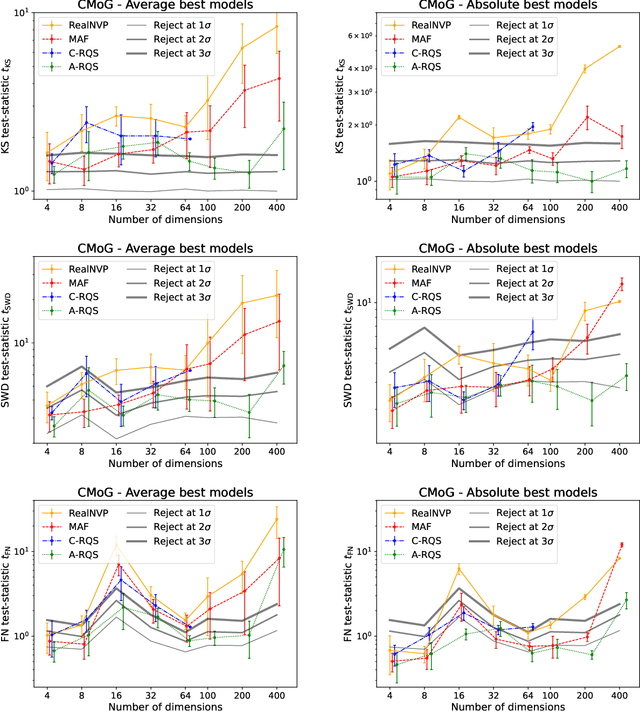
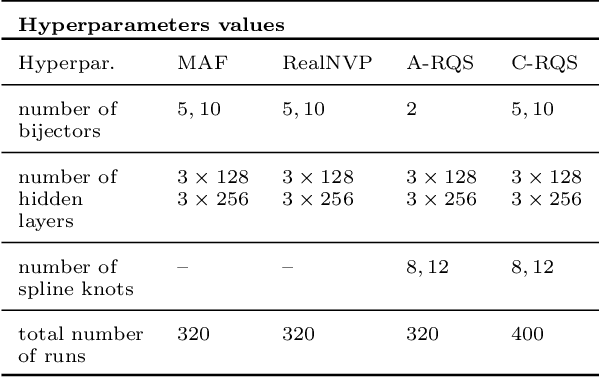
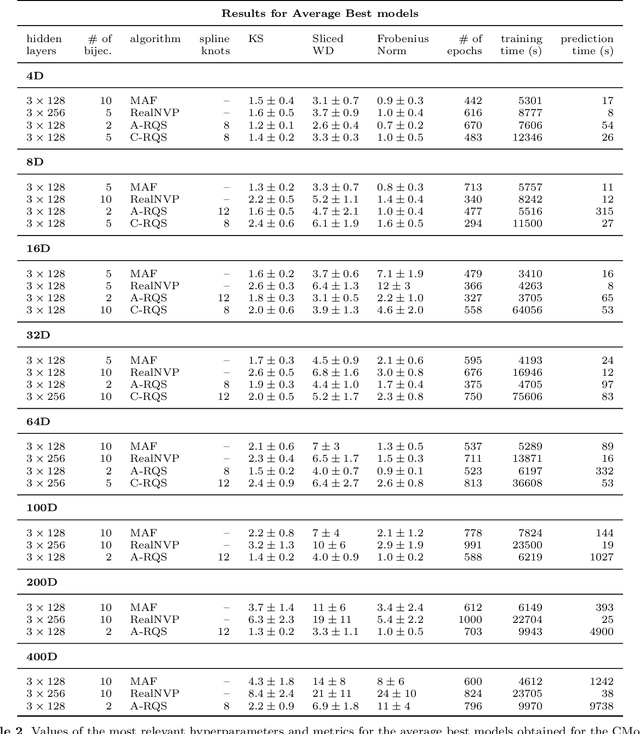
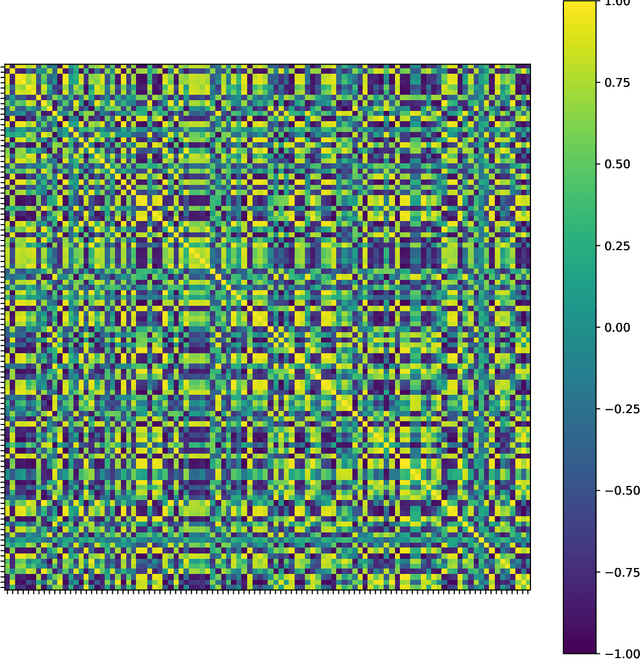
Normalizing Flows have emerged as a powerful brand of generative models, as they not only allow for efficient sampling of complicated target distributions, but also deliver density estimation by construction. We propose here an in-depth comparison of coupling and autoregressive flows, both of the affine and rational quadratic spline type, considering four different architectures: Real-valued Non-Volume Preserving (RealNVP), Masked Autoregressive Flow (MAF), Coupling Rational Quadratic Spline (C-RQS), and Autoregressive Rational Quadratic Spline (A-RQS). We focus on different target distributions of increasing complexity with dimensionality ranging from 4 to 1000. The performances are discussed in terms of different figures of merit: the one-dimensional Wasserstein distance, the one-dimensional Kolmogorov-Smirnov test, the Frobenius norm of the difference between correlation matrices, and the training time. Our results indicate that the A-RQS algorithm stands out both in terms of accuracy and training speed. Nonetheless, all the algorithms are generally able, without much fine-tuning, to learn complex distributions with limited training data and in a reasonable time, of the order of hours on a Tesla V100 GPU. The only exception is the C-RQS, which takes significantly longer to train, and does not always provide good accuracy. All algorithms have been implemented using TensorFlow2 and TensorFlow Probability and made available on GitHub.