 Add to Chrome
 Add to Firefox
 Add to Edge
Metaphor-Induced Algorithmic Steering: Cross-Domain Procedural Transfer in LLM Code Generation
Jul 30, 2026
Large language models benefit from elements in natural language, such as metaphors and analogies in training data and inference input to achieve generalisability across different domains. However, these language elements may also lead to unwanted behaviors when metaphorical expressions implicitly transfer inappropriate procedural patterns into new tasks. In this paper, we show that metaphorical instructions can induce analogical transfer of procedural mechanisms, thus steering code-generation models towards less efficient algorithms. We refer to this metaphor-induced effect as metaphorical algorithmic steering: a skill that is benign and plausible within its source domain transfers an abstract procedural schema into a programming task, causing the model to favor exhaustive search, full scans, or repeated reconstruction without explicitly mentioning the target algorithm. More broadly, this suggests that code-generation models can carry procedures that are appropriate in a task's background domain into the task's programming problem, where they can lead to unwanted outcomes. To study this phenomenon, we develop MASC (Metaphorical Algorithmic Steering for Code Generation), a framework that iteratively metaphorizes and refines benign skills to elicit low-efficiency code while remaining benign and task-relevant. Beyond behavioral evaluation, we study whether this phenomenon is detectable and mechanistically reflected in model representations. Our method achieves high detection rates for metaphorical skills and less-efficient implementations. We also find that metaphorical skills induce a hidden-state shift towards lower-efficiency procedural behavior prototypes. These results suggest that metaphorical algorithmic steering operates through the transfer of procedural patterns associated with metaphorical source scenarios rather than surface level metaphorical language alone.

Semantic Search At LinkedIn
Feb 07, 2026Semantic search with large language models (LLMs) enables retrieval by meaning rather than keyword overlap, but scaling it requires major inference efficiency advances. We present LinkedIn's LLM-based semantic search framework for AI Job Search and AI People Search, combining an LLM relevance judge, embedding-based retrieval, and a compact Small Language Model trained via multi-teacher distillation to jointly optimize relevance and engagement. A prefill-oriented inference architecture co-designed with model pruning, context compression, and text-embedding hybrid interactions boosts ranking throughput by over 75x under a fixed latency constraint while preserving near-teacher-level NDCG, enabling one of the first production LLM-based ranking systems with efficiency comparable to traditional approaches and delivering significant gains in quality and user engagement.
LFD: Layer Fused Decoding to Exploit External Knowledge in Retrieval-Augmented Generation
Aug 27, 2025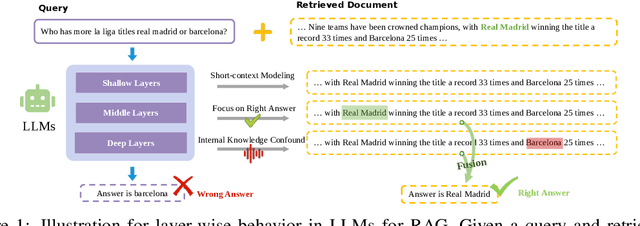
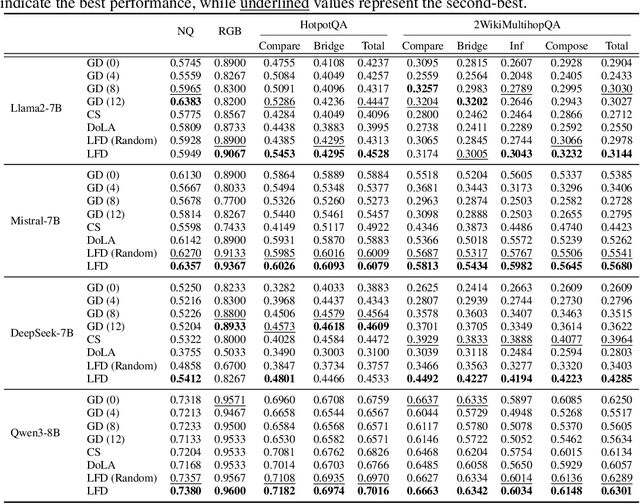
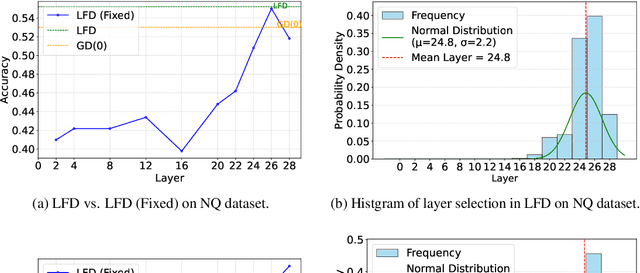

Retrieval-augmented generation (RAG) incorporates external knowledge into large language models (LLMs), improving their adaptability to downstream tasks and enabling information updates. Surprisingly, recent empirical evidence demonstrates that injecting noise into retrieved relevant documents paradoxically facilitates exploitation of external knowledge and improves generation quality. Although counterintuitive and challenging to apply in practice, this phenomenon enables granular control and rigorous analysis of how LLMs integrate external knowledge. Therefore, in this paper, we intervene on noise injection and establish a layer-specific functional demarcation within the LLM: shallow layers specialize in local context modeling, intermediate layers focus on integrating long-range external factual knowledge, and deeper layers primarily rely on parametric internal knowledge. Building on this insight, we propose Layer Fused Decoding (LFD), a simple decoding strategy that directly combines representations from an intermediate layer with final-layer decoding outputs to fully exploit the external factual knowledge. To identify the optimal intermediate layer, we introduce an internal knowledge score (IKS) criterion that selects the layer with the lowest IKS value in the latter half of layers. Experimental results across multiple benchmarks demonstrate that LFD helps RAG systems more effectively surface retrieved context knowledge with minimal cost.
Flow Matching based Sequential Recommender Model
May 22, 2025Generative models, particularly diffusion model, have emerged as powerful tools for sequential recommendation. However, accurately modeling user preferences remains challenging due to the noise perturbations inherent in the forward and reverse processes of diffusion-based methods. Towards this end, this study introduces FMRec, a Flow Matching based model that employs a straight flow trajectory and a modified loss tailored for the recommendation task. Additionally, from the diffusion-model perspective, we integrate a reconstruction loss to improve robustness against noise perturbations, thereby retaining user preferences during the forward process. In the reverse process, we employ a deterministic reverse sampler, specifically an ODE-based updating function, to eliminate unnecessary randomness, thereby ensuring that the generated recommendations closely align with user needs. Extensive evaluations on four benchmark datasets reveal that FMRec achieves an average improvement of 6.53% over state-of-the-art methods. The replication code is available at https://github.com/FengLiu-1/FMRec.
A Taxonomy of AgentOps for Enabling Observability of Foundation Model based Agents
Nov 08, 2024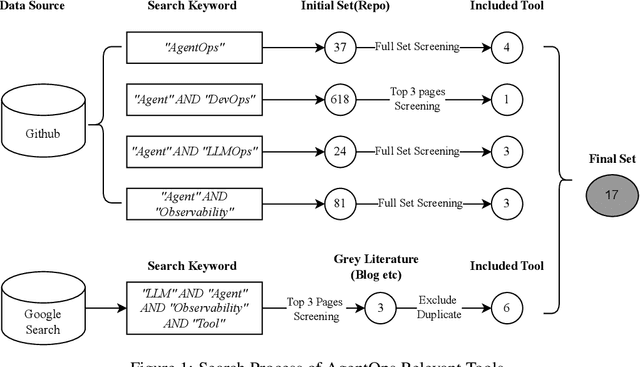
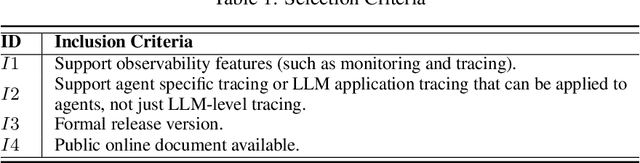

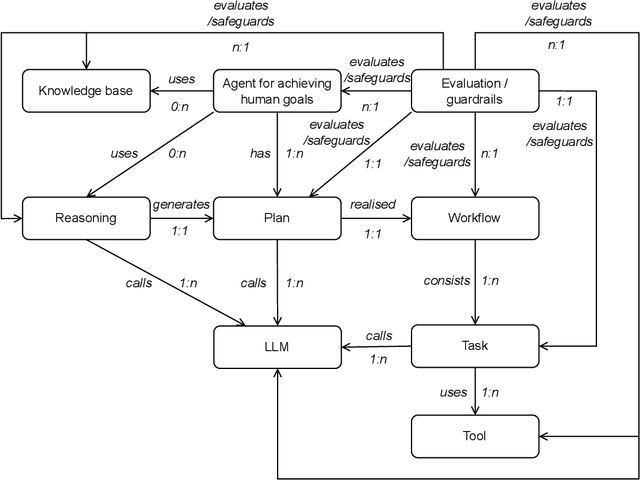
The ever-improving quality of LLMs has fueled the growth of a diverse range of downstream tasks, leading to an increased demand for AI automation and a burgeoning interest in developing foundation model (FM)-based autonomous agents. As AI agent systems tackle more complex tasks and evolve, they involve a wider range of stakeholders, including agent users, agentic system developers and deployers, and AI model developers. These systems also integrate multiple components such as AI agent workflows, RAG pipelines, prompt management, agent capabilities, and observability features. In this case, obtaining reliable outputs and answers from these agents remains challenging, necessitating a dependable execution process and end-to-end observability solutions. To build reliable AI agents and LLM applications, it is essential to shift towards designing AgentOps platforms that ensure observability and traceability across the entire development-to-production life-cycle. To this end, we conducted a rapid review and identified relevant AgentOps tools from the agentic ecosystem. Based on this review, we provide an overview of the essential features of AgentOps and propose a comprehensive overview of observability data/traceable artifacts across the agent production life-cycle. Our findings provide a systematic overview of the current AgentOps landscape, emphasizing the critical role of observability/traceability in enhancing the reliability of autonomous agent systems.