 Add to Chrome
 Add to Firefox
 Add to Edge
Learning Generation Orders for Masked Discrete Diffusion Models via Variational Inference
Feb 27, 2026
Masked discrete diffusion models (MDMs) are a promising new approach to generative modelling, offering the ability for parallel token generation and therefore greater efficiency than autoregressive counterparts. However, achieving an optimal balance between parallel generation and sample quality remains an open problem. Current approaches primarily address this issue through fixed, heuristic parallel sampling methods. There exist some recent learning based approaches to this problem, but its formulation from the perspective of variational inference remains underexplored. In this work, we propose a variational inference framework for learning parallel generation orders for MDMs. As part of our method, we propose a parameterisation for the approximate posterior of generation orders which facilitates parallelism and efficient sampling during training. Using this method, we conduct preliminary experiments on the GSM8K dataset, where our method performs competitively against heuristic sampling strategies in the regime of highly parallel generation. For example, our method achieves 33.1\% accuracy with an average of only only 4 generation steps, compared to 23.7-29.0\% accuracy achieved by standard competitor methods in the same number of steps. We believe further experiments and analysis of the method will yield valuable insights into the problem of parallel generation with MDMs.

Merlin: Enabling Machine Learning-Ready HPC Ensembles
Dec 05, 2019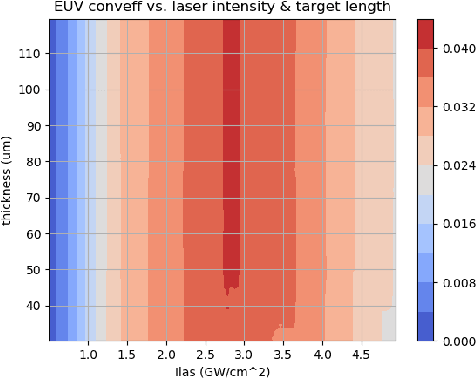
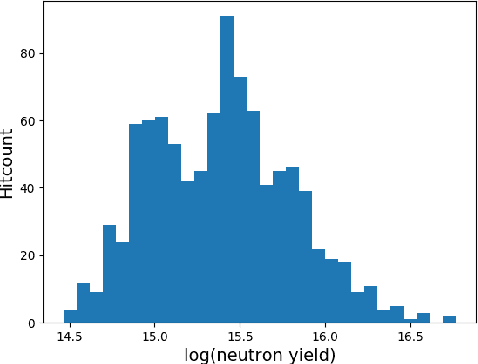
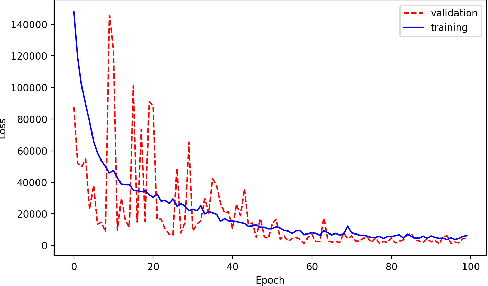
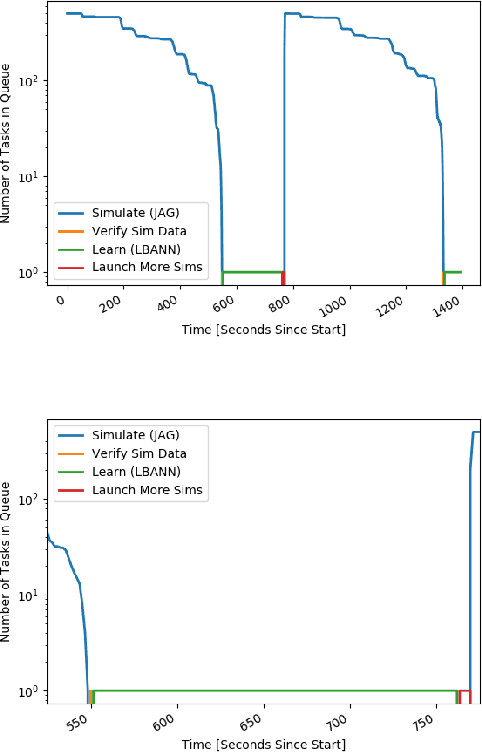
With the growing complexity of computational and experimental facilities, many scientific researchers are turning to machine learning (ML) techniques to analyze large scale ensemble data. With complexities such as multi-component workflows, heterogeneous machine architectures, parallel file systems, and batch scheduling, care must be taken to facilitate this analysis in a high performance computing (HPC) environment. In this paper, we present Merlin, a workflow framework to enable large ML-friendly ensembles of scientific HPC simulations. By augmenting traditional HPC with distributed compute technologies, Merlin aims to lower the barrier for scientific subject matter experts to incorporate ML into their analysis. In addition to its design and some examples, we describe how Merlin was deployed on the Sierra Supercomputer at Lawrence Livermore National Laboratory to create an unprecedented benchmark inertial confinement fusion dataset of approximately 100 million individual simulations and over 24 terabytes of multi-modal physics-based scalar, vector and hyperspectral image data.