 Add to Chrome
 Add to Firefox
 Add to Edge
Teaching Language Models to Check Grounded Claim Factuality with Human Test-Taking Strategies
May 28, 2026
Grounded claim factuality checking is important for large language model (LLM) applications such as retrieval-augmented generation, as it helps users assess the correctness of generated outputs. Existing metrics using entailment classifiers require dataset-specific threshold tuning, while LLM-based approaches often use direct prompting, which underutilises the reasoning capabilities of LLMs. We address this by formulating grounded claim factuality checking as a true/false reading comprehension task and prompting LLMs with explicit test-taking strategies for efficient reasoning. Our method reduces token usage by over 80% compared to unguided open-ended reasoning, and achieves competitive performance to more expensive alternatives across two factuality benchmarks, setting a new state of the art on one. To further reduce inference cost, we train small language models (SLMs) to replace LLMs in the checking pipeline. Using supervised fine-tuning (SFT) and a self-revision mechanism, the SLMs learn to improve their factuality judgements. Experimental results show that the resulting SLMs perform on par with strong baselines, combining low inference costs with generating supporting rationales to support interpretability. Code and datasets will be released upon acceptance.

Optimising Factual Consistency in Summarisation via Preference Learning from Multiple Imperfect Metrics
May 26, 2026Reinforcement learning with evaluation metrics as rewards is widely used to enhance specific capabilities of language models. However, for tasks such as factually consistent summarisation, existing metrics remain underdeveloped, limiting their effectiveness as signals for shaping model behaviour.While individual factuality metrics are unreliable, their combination can more effectively capture diverse factual errors. We leverage this insight to introduce an automated training pipeline that improves factual consistency in summaries by aggregating scores from different weak metrics. Our approach avoids the need for complex reward shaping by mapping scores to preferences and filtering out cases with high disagreement between metrics. For each source document, we generate lexically similar summary pairs by varying decoding strategies, enabling the model to learn from factual differences caused by subtle lexical differences. This approach constructs a high-quality preference dataset using only source documents.Experiments demonstrate consistent factuality gains across models, ranging from early encoder-decoder architectures to modern large language models, with smaller models reaching comparable factuality to larger ones.
Assessing VLM-Driven Semantic-Affordance Inference for Non-Humanoid Robot Morphologies
Apr 21, 2026Vision-language models (VLMs) have demonstrated remarkable capabilities in understanding human-object interactions, but their application to robotic systems with non-humanoid morphologies remains largely unexplored. This work investigates whether VLMs can effectively infer affordances for robots with fundamentally different embodiments than humans, addressing a critical gap in the deployment of these models for diverse robotic applications. We introduce a novel hybrid dataset that combines annotated real-world robotic affordance-object relations with VLM-generated synthetic scenarios, and perform an empirical analysis of VLM performance across multiple object categories and robot morphologies, revealing significant variations in affordance inference capabilities. Our experiments demonstrate that while VLMs show promising generalisation to non-humanoid robot forms, their performance is notably inconsistent across different object domains. Critically, we identify a consistent pattern of low false positive rates but high false negative rates across all morphologies and object categories, indicating that VLMs tend toward conservative affordance predictions. Our analysis reveals that this pattern is particularly pronounced for novel tool use scenarios and unconventional object manipulations, suggesting that effective integration of VLMs in robotic systems requires complementary approaches to mitigate over-conservative behaviour while preserving the inherent safety benefits of low false positive rates.
Learning Generation Orders for Masked Discrete Diffusion Models via Variational Inference
Feb 27, 2026Masked discrete diffusion models (MDMs) are a promising new approach to generative modelling, offering the ability for parallel token generation and therefore greater efficiency than autoregressive counterparts. However, achieving an optimal balance between parallel generation and sample quality remains an open problem. Current approaches primarily address this issue through fixed, heuristic parallel sampling methods. There exist some recent learning based approaches to this problem, but its formulation from the perspective of variational inference remains underexplored. In this work, we propose a variational inference framework for learning parallel generation orders for MDMs. As part of our method, we propose a parameterisation for the approximate posterior of generation orders which facilitates parallelism and efficient sampling during training. Using this method, we conduct preliminary experiments on the GSM8K dataset, where our method performs competitively against heuristic sampling strategies in the regime of highly parallel generation. For example, our method achieves 33.1\% accuracy with an average of only only 4 generation steps, compared to 23.7-29.0\% accuracy achieved by standard competitor methods in the same number of steps. We believe further experiments and analysis of the method will yield valuable insights into the problem of parallel generation with MDMs.
LEMON: Local Explanations via Modality-aware OptimizatioN
Feb 02, 2026Multimodal models are ubiquitous, yet existing explainability methods are often single-modal, architecture-dependent, or too computationally expensive to run at scale. We introduce LEMON (Local Explanations via Modality-aware OptimizatioN), a model-agnostic framework for local explanations of multimodal predictions. LEMON fits a single modality-aware surrogate with group-structured sparsity to produce unified explanations that disentangle modality-level contributions and feature-level attributions. The approach treats the predictor as a black box and is computationally efficient, requiring relatively few forward passes while remaining faithful under repeated perturbations. We evaluate LEMON on vision-language question answering and a clinical prediction task with image, text, and tabular inputs, comparing against representative multimodal baselines. Across backbones, LEMON achieves competitive deletion-based faithfulness while reducing black-box evaluations by 35-67 times and runtime by 2-8 times compared to strong multimodal baselines.
KnowEEG: Explainable Knowledge Driven EEG Classification
May 01, 2025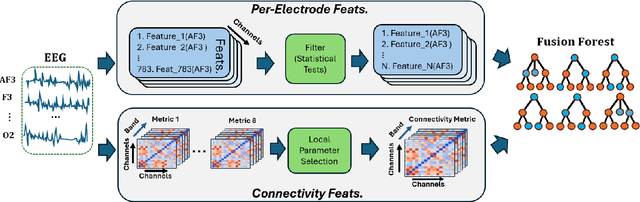
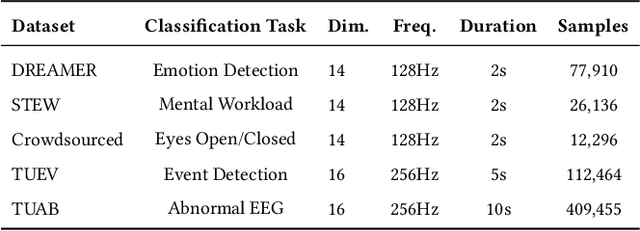
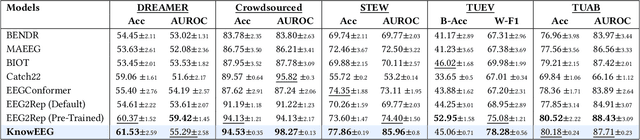
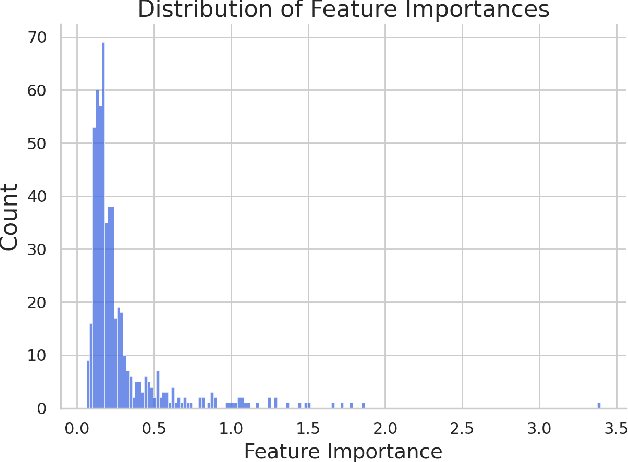
Electroencephalography (EEG) is a method of recording brain activity that shows significant promise in applications ranging from disease classification to emotion detection and brain-computer interfaces. Recent advances in deep learning have improved EEG classification performance yet model explainability remains an issue. To address this key limitation of explainability we introduce KnowEEG; a novel explainable machine learning approach for EEG classification. KnowEEG extracts a comprehensive set of per-electrode features, filters them using statistical tests, and integrates between-electrode connectivity statistics. These features are then input to our modified Random Forest model (Fusion Forest) that balances per electrode statistics with between electrode connectivity features in growing the trees of the forest. By incorporating knowledge from both the generalized time-series and EEG-specific domains, KnowEEG achieves performance comparable to or exceeding state-of-the-art deep learning models across five different classification tasks: emotion detection, mental workload classification, eyes open/closed detection, abnormal EEG classification, and event detection. In addition to high performance, KnowEEG provides inherent explainability through feature importance scores for understandable features. We demonstrate by example on the eyes closed/open classification task that this explainability can be used to discover knowledge about the classes. This discovered knowledge for eyes open/closed classification was proven to be correct by current neuroscience literature. Therefore, the impact of KnowEEG will be significant for domains where EEG explainability is critical such as healthcare.
Prototype-enhanced prediction in graph neural networks for climate applications
Apr 24, 2025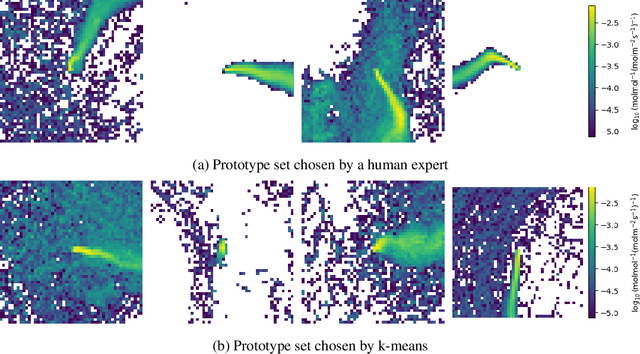
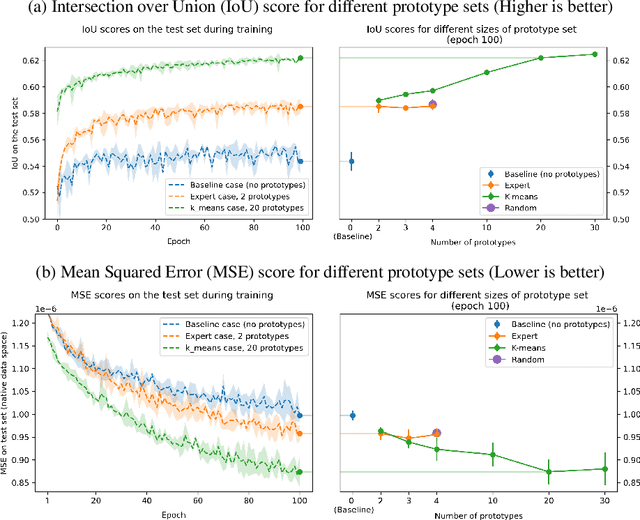
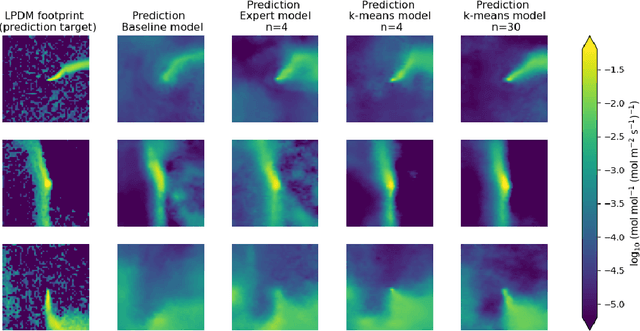
Data-driven emulators are increasingly being used to learn and emulate physics-based simulations, reducing computational expense and run time. Here, we present a structured way to improve the quality of these high-dimensional emulated outputs, through the use of prototypes: an approximation of the emulator's output passed as an input, which informs the model and leads to better predictions. We demonstrate our approach to emulate atmospheric dispersion, key for greenhouse gas emissions monitoring, by comparing a baseline model to models trained using prototypes as an additional input. The prototype models achieve better performance, even with few prototypes and even if they are chosen at random, but we show that choosing the prototypes through data-driven methods (k-means) can lead to almost 10\% increased performance in some metrics.
Explainable AI for Classifying UTI Risk Groups Using a Real-World Linked EHR and Pathology Lab Dataset
Nov 26, 2024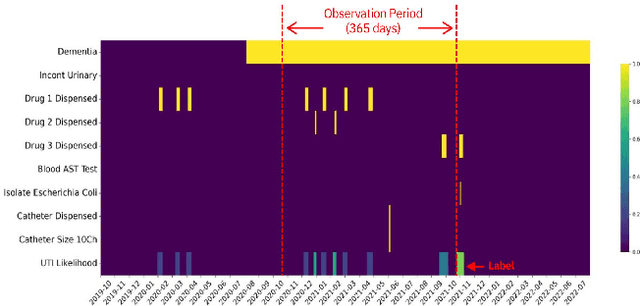
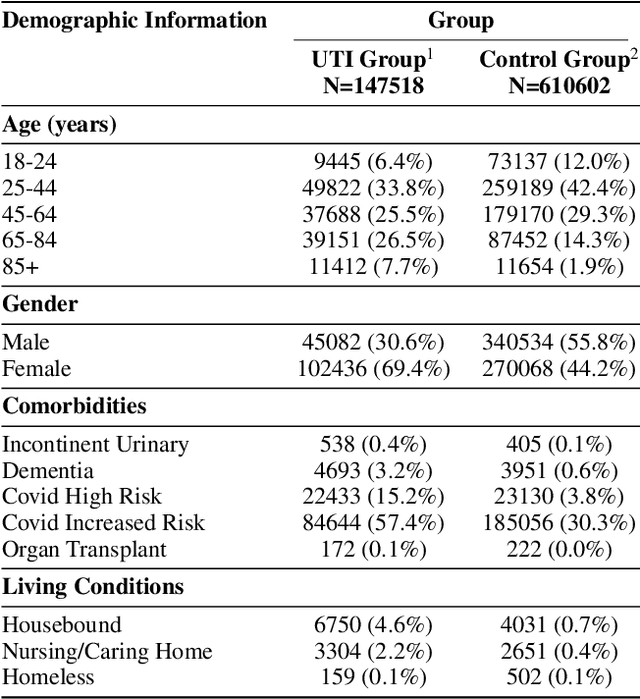
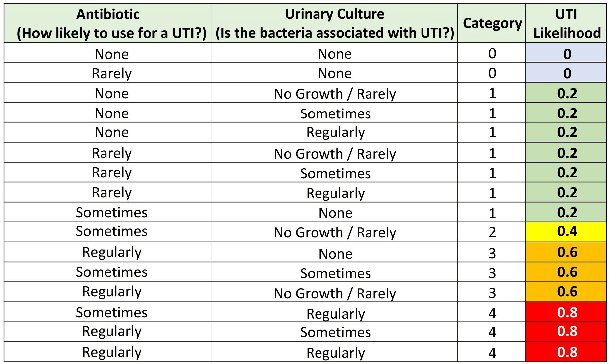
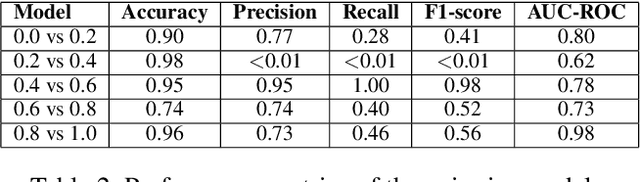
The use of machine learning and AI on electronic health records (EHRs) holds substantial potential for clinical insight. However, this approach faces significant challenges due to data heterogeneity, sparsity, temporal misalignment, and limited labeled outcomes. In this context, we leverage a linked EHR dataset of approximately one million de-identified individuals from Bristol, North Somerset, and South Gloucestershire, UK, to characterize urinary tract infections (UTIs) and develop predictive models focused on data quality, fairness and transparency. A comprehensive data pre-processing and curation pipeline transforms the raw EHR data into a structured format suitable for AI modeling. Given the limited availability and biases of ground truth UTI outcomes, we introduce a UTI risk estimation framework informed by clinical expertise to estimate UTI risk across individual patient timelines. Using this framework, we built pairwise XGBoost models to differentiate UTI risk categories with explainable AI techniques to identify key predictors while ensuring interpretability. Our findings reveal differences in clinical and demographic factors across risk groups, offering insights into UTI risk stratification and progression. This study demonstrates the added value of AI-driven insights into UTI clinical decision-making while prioritizing interpretability, transparency, and fairness, underscoring the importance of sound data practices in advancing health outcomes.
Exploring the Requirements of Clinicians for Explainable AI Decision Support Systems in Intensive Care
Nov 18, 2024There is a growing need to understand how digital systems can support clinical decision-making, particularly as artificial intelligence (AI) models become increasingly complex and less human-interpretable. This complexity raises concerns about trustworthiness, impacting safe and effective adoption of such technologies. Improved understanding of decision-making processes and requirements for explanations coming from decision support tools is a vital component in providing effective explainable solutions. This is particularly relevant in the data-intensive, fast-paced environments of intensive care units (ICUs). To explore these issues, group interviews were conducted with seven ICU clinicians, representing various roles and experience levels. Thematic analysis revealed three core themes: (T1) ICU decision-making relies on a wide range of factors, (T2) the complexity of patient state is challenging for shared decision-making, and (T3) requirements and capabilities of AI decision support systems. We include design recommendations from clinical input, providing insights to inform future AI systems for intensive care.
The Effect of Perceptual Metrics on Music Representation Learning for Genre Classification
Sep 25, 2024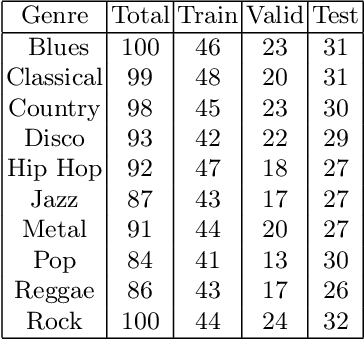
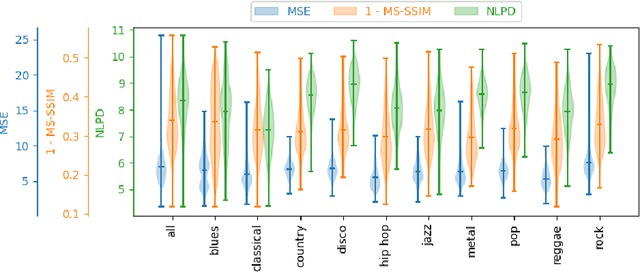
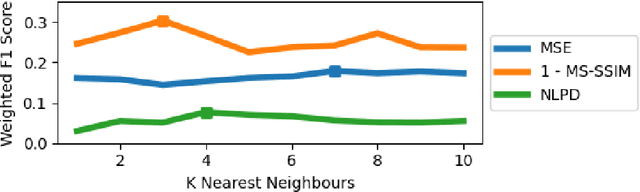
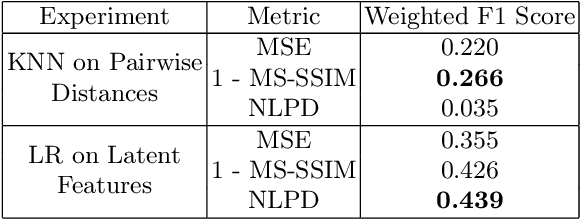
The subjective quality of natural signals can be approximated with objective perceptual metrics. Designed to approximate the perceptual behaviour of human observers, perceptual metrics often reflect structures found in natural signals and neurological pathways. Models trained with perceptual metrics as loss functions can capture perceptually meaningful features from the structures held within these metrics. We demonstrate that using features extracted from autoencoders trained with perceptual losses can improve performance on music understanding tasks, i.e. genre classification, over using these metrics directly as distances when learning a classifier. This result suggests improved generalisation to novel signals when using perceptual metrics as loss functions for representation learning.