 Add to Chrome
 Add to Firefox
 Add to Edge
HyperAgent4POI: Dynamic Semantic Message Passing on Multi-Agent Hypergraphs for Missing-Modality Recommendation
Aug 03, 2026
Next Point-of-Interest (POI) recommendation benefits from textual and visual content that describes venue semantics, yet such content is often incomplete in real-world services. Missing modalities weaken POI representations and reduce the semantic evidence available for ranking. The resulting representations also provide unreliable evidence for modeling higher-order user--POI interactions. We propose HyperAgent4POI, which uses Dynamic Semantic Message Passing (DSMP) to perform modality completion and soft incidence refinement within each hypergraph layer. Persistent node agents share a frozen Llama backbone and use role-specific adapters to produce node-to-hyperedge messages. Semantic hyperedge motifs formed from these messages guide soft incidence scoring and modality completion. Final node representations are cached for online ranking without LLM calls. Experiments on three real-world LBSN datasets show consistent ranking gains over 15 baselines across modality-missing rates, while cached inference provides practical online efficiency. Under a 60% modality-missing rate, HyperAgent4POI improves NDCG@20 over the strongest baseline by 8.2% on average across the three datasets.

Edge-Based QoS-Aware Adaptive Task Placement: A Closed-Loop Control in Multi-Robot Systems
May 30, 2026Multi-robot systems (MRS) increasingly offload compute-intensive perception tasks to edge nodes to meet strict time-sensitive Quality-of-Service (QoS) constraints. However, static task orchestration on a shared edge node can severely degrade QoS due to network latency, jitter, and edge-resource contention. We present a pilot edge-centric MRS testbed using Raspberry Pi nodes to evaluate a camera-to-manipulator pipeline under three modes: local execution, static offloading, and a QoS-aware Adaptive Task Placement (ATP) controller. ATP scores candidate placements using a multi-metric cost (normalized latency, CPU utilization, and switching overhead) over two-second control windows. The closed-loop visual servoing testbed is instrumented with sub-millisecond clock synchronization, network emulation, and detailed monitoring of multiple metrics across nodes to capture realistic jitter. Experimental results under compute-stress and network-fault scenarios show that static edge offloading reduces on-board CPU load but amplifies tail latency and deadline misses. In contrast, the QoS-aware ATP controller, by switching task placement based on measured latency and utilization thresholds, consistently lowers deadline violations and tail latency. Overall, the results position ATP as a practical edge-side control primitive for MRS and concrete design guidelines for Cloud-Edge Robotics deployments within the broader cloud-fog automation, while motivating QoS-aware multi-objective workload orchestration for industrial cyber-physical systems.
A Four-Tier Communication Architecture and Sim-to-Real Validation of a Graphical Open-Source Platform for Robotic Engineering Education
May 30, 2026The persistent challenge in scaling authentic manipulator education within university laboratories is a structural dichotomy: commercial digital twins are often cost-prohibitive and rigidly scripted, whereas open-source robotics middleware (ROS) imposes steep technical and syntax barriers for novices. To resolve this logistical and educational friction, this Work-in-Progress (WiP) paper proposes a scalable four-tier communication architecture tailored for sustainable robotic curricula. Rather than focusing on software application design, our study examines the underlying data exchange mechanisms required to bridge visual conceptual environments with physical robotic endpoints, utilizing the Graphical Open-Source Platform (GOSP) as a foundational instantiation. This WiP details the framework's technical integration of 3D visual armature modeling with a robust ROS middleware backend, emphasizing the serialization, routing, and encapsulation of intricate communication routines. Preliminary sim-to-real validation using multi-axis spatial trajectories confirms that encapsulating these communication pipelines provides a sufficient fidelity hardware-agnostic pathway. By bridging virtual design and physical execution, this architectural blueprint offers a viable infrastructure for engineering education.
Meta-Modal Agent: Sequential Evidence Routing for Missing-Modality Candidate Reranking
May 24, 2026Missing modalities cause severe failures in multimodal recommender systems. User histories, item text, and visual evidence are frequently absent during cold-start scenarios, exactly when recommendation quality matters most. Existing approaches recover absent signals through imputation, feature propagation, or generative reconstruction, but these strategies can inject unsupported evidence when the surviving signals are weak. We introduce the Meta-Modal Agent (MMA), a large language model based candidate-pool reranker that treats missingness as a sequential evidence-routing problem. MMA is trained with balanced missingness-task reinforcement learning over masked-modality episodes and is evaluated in two variants: MMA-Auto, which uses only automated text, image, and graph tools, and MMA-Interactive, which additionally permits clarification questions grounded in surviving modalities as an upper-bound diagnostic. MMA operates after a first-stage retriever has produced a candidate pool; it scores those candidates rather than retrieving items from the full catalog. Final reranking fuses MMA scores with first-stage retrieval scores selected on validation data. Our evaluation is organized around four evidence checks required for a robust missing-modality claim: oracle-free one-observed-modality availability (OOMA) robustness, per-modality OOMA breakdowns, fixed-pool full-catalog reranking, and a deterministic-router mechanism control. MMA-Auto improves target-positive OOMA NDCG@10 by 4.0% and fixed-pool full-catalog reranking NDCG@10 by 12.7% over the strongest non-interactive baseline. RuleRouter-Fuse, which uses the same tools and fusion rule without learned policy updates, underperforms MMA-Auto, supporting learned routing beyond deterministic tool fusion. MMA-Interactive adds a 4.1% upper-bound gain when clarification is available.
DAG-Based QoS-Aware Dynamic Task Placement for Networked Multi-Stage Control Pipelines
May 19, 2026Current Physical AI (PAI) relies heavily on closed-loop visual-servoing pipelines, whose perception and planning stages may become computationally intensive onboard due to complex models embedded on robots. In practice, offloading the perception task to on-site edges statically is inappropriate for latency-sensitive, precise industrial settings over a standardized industrial network. This emphasizes the importance of Control-Communication-Computing (3C) co-design in industrial automation: monolithic local execution saturates AI-accelerated machine and robot hardware, while static edge offloading exposes the control loop to network jitter. Existing adaptive task placement (ATP) controllers can partially address the gap by relocating a single pipeline stage on binary threshold rules, without a multi-stage model and an explicit cost on placement switching. In this Work-in-Progress (WiP) paper, we propose a directed acyclic graph (DAG) based quality-of-service (QoS)-aware dynamic task placement (DTP) framework for sensing-perception-planning-control pipelines in networked robotics. This pipeline is formalized as a DAG with task-level and node-level attributes for compute cost, communication delay, and feasible placement sets; over a small interpretable candidate set (fully local, static offload, hybrid), a window-based cost function combines tail end-to-end latency, deadline violation rate, hardware utilization, and a Hamming-distance switching penalty, and a DTP algorithm with hysteresis and a minimum dwell-time bounds placement chatter. Our WiP paper presents the theoretical framework, a structured qualitative analysis, and a two-phase simulation plus hardware-in-the-loop validation roadmap.
A Structure-Agnostic Co-Tuning Framework for LLMs and SLMs in Cloud-Edge Systems
Nov 12, 2025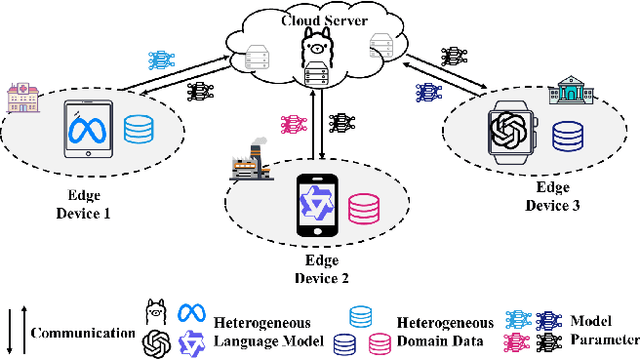
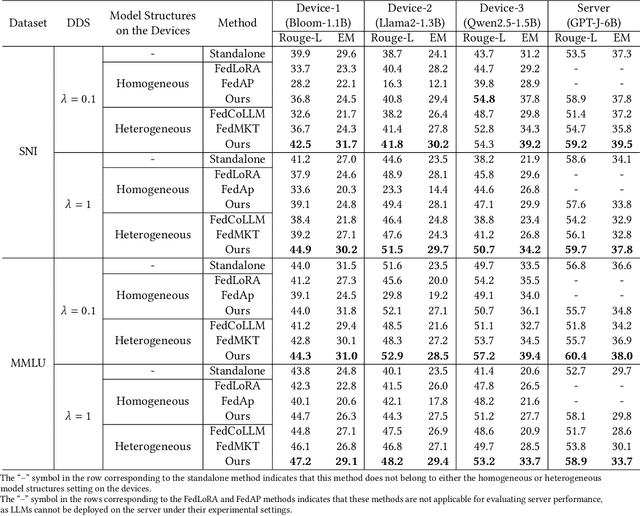
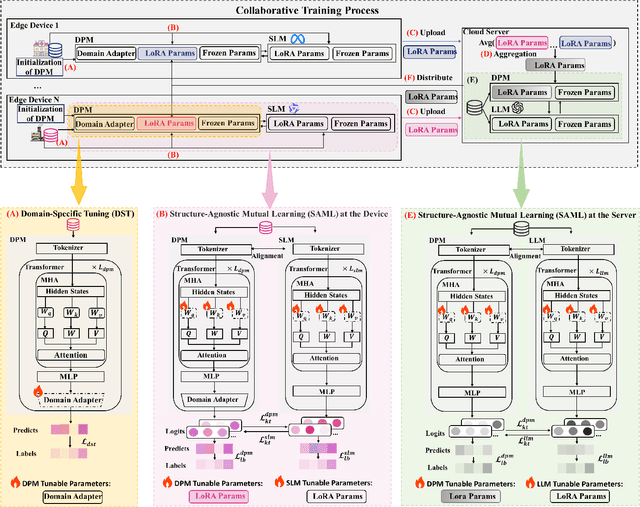
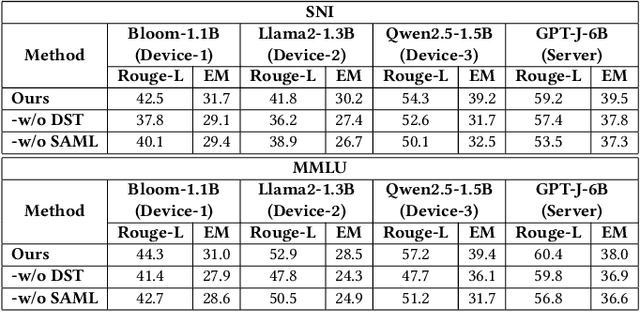
The surge in intelligent applications driven by large language models (LLMs) has made it increasingly difficult for bandwidth-limited cloud servers to process extensive LLM workloads in real time without compromising user data privacy. To solve these problems, recent research has focused on constructing cloud-edge consortia that integrate server-based LLM with small language models (SLMs) on mobile edge devices. Furthermore, designing collaborative training mechanisms within such consortia to enhance inference performance has emerged as a promising research direction. However, the cross-domain deployment of SLMs, coupled with structural heterogeneity in SLMs architectures, poses significant challenges to enhancing model performance. To this end, we propose Co-PLMs, a novel co-tuning framework for collaborative training of large and small language models, which integrates the process of structure-agnostic mutual learning to realize knowledge exchange between the heterogeneous language models. This framework employs distilled proxy models (DPMs) as bridges to enable collaborative training between the heterogeneous server-based LLM and on-device SLMs, while preserving the domain-specific insights of each device. The experimental results show that Co-PLMs outperform state-of-the-art methods, achieving average increases of 5.38% in Rouge-L and 4.88% in EM.
A Semi-Supervised Federated Learning Framework with Hierarchical Clustering Aggregation for Heterogeneous Satellite Networks
Jul 30, 2025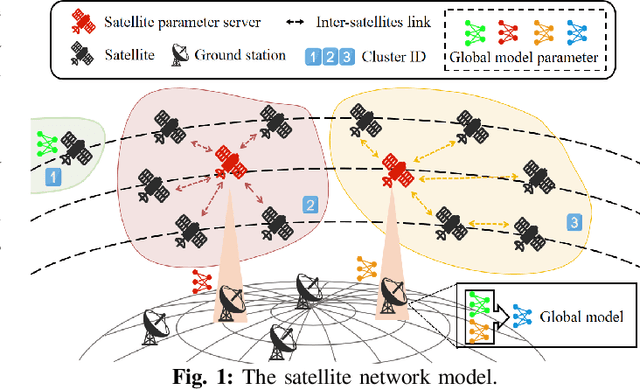
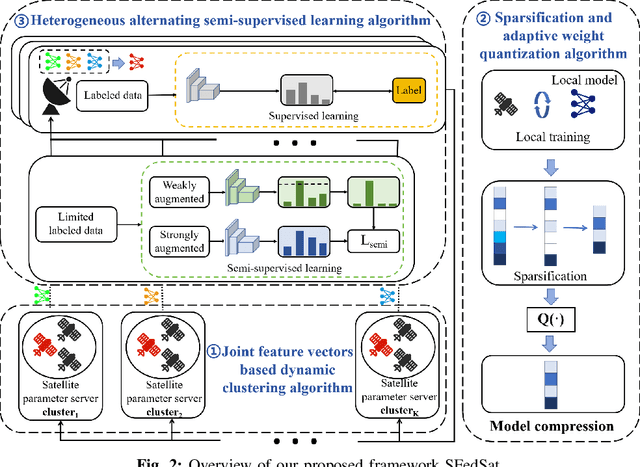
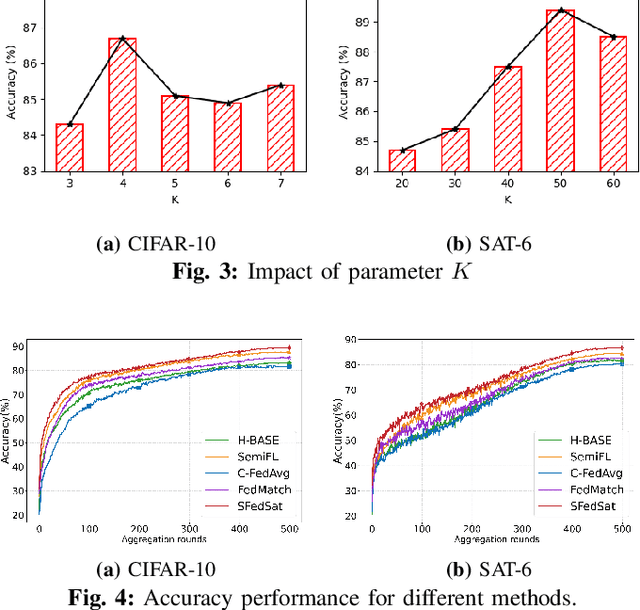

Low Earth Orbit (LEO) satellites are emerging as key components of 6G networks, with many already deployed to support large-scale Earth observation and sensing related tasks. Federated Learning (FL) presents a promising paradigm for enabling distributed intelligence in these resource-constrained and dynamic environments. However, achieving reliable convergence, while minimizing both processing time and energy consumption, remains a substantial challenge, particularly in heterogeneous and partially unlabeled satellite networks. To address this challenge, we propose a novel semi-supervised federated learning framework tailored for LEO satellite networks with hierarchical clustering aggregation. To further reduce communication overhead, we integrate sparsification and adaptive weight quantization techniques. In addition, we divide the FL clustering into two stages: satellite cluster aggregation stage and Ground Stations (GSs) aggregation stage. The supervised learning at GSs guides selected Parameter Server (PS) satellites, which in turn support fully unlabeled satellites during the federated training process. Extensive experiments conducted on a satellite network testbed demonstrate that our proposal can significantly reduce processing time (up to 3x) and energy consumption (up to 4x) compared to other comparative methods while maintaining model accuracy.
HyperMAN: Hypergraph-enhanced Meta-learning Adaptive Network for Next POI Recommendation
Mar 27, 2025Next Point-of-Interest (POI) recommendation aims to predict users' next locations by leveraging historical check-in sequences. Although existing methods have shown promising results, they often struggle to capture complex high-order relationships and effectively adapt to diverse user behaviors, particularly when addressing the cold-start issue. To address these challenges, we propose Hypergraph-enhanced Meta-learning Adaptive Network (HyperMAN), a novel framework that integrates heterogeneous hypergraph modeling with a difficulty-aware meta-learning mechanism for next POI recommendation. Specifically, three types of heterogeneous hyperedges are designed to capture high-order relationships: user visit behaviors at specific times (Temporal behavioral hyperedge), spatial correlations among POIs (spatial functional hyperedge), and user long-term preferences (user preference hyperedge). Furthermore, a diversity-aware meta-learning mechanism is introduced to dynamically adjust learning strategies, considering users behavioral diversity. Extensive experiments on real-world datasets demonstrate that HyperMAN achieves superior performance, effectively addressing cold start challenges and significantly enhancing recommendation accuracy.
GRL-Prompt: Towards Knowledge Graph based Prompt Optimization via Reinforcement Learning
Nov 19, 2024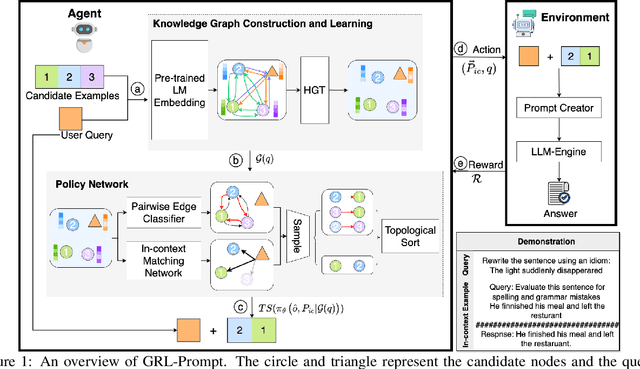
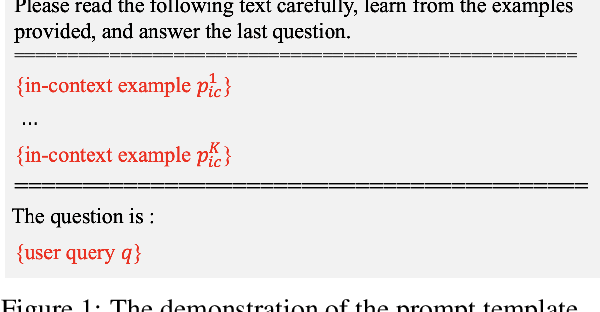
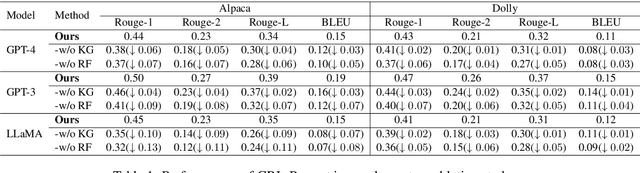
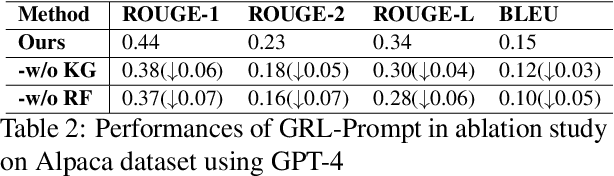
Large language models (LLMs) have demonstrated impressive success in a wide range of natural language processing (NLP) tasks due to their extensive general knowledge of the world. Recent works discovered that the performance of LLMs is heavily dependent on the input prompt. However, prompt engineering is usually done manually in a trial-and-error fashion, which can be labor-intensive and challenging in order to find the optimal prompts. To address these problems and unleash the utmost potential of LLMs, we propose a novel LLMs-agnostic framework for prompt optimization, namely GRL-Prompt, which aims to automatically construct optimal prompts via reinforcement learning (RL) in an end-to-end manner. To provide structured action/state representation for optimizing prompts, we construct a knowledge graph (KG) that better encodes the correlation between the user query and candidate in-context examples. Furthermore, a policy network is formulated to generate the optimal action by selecting a set of in-context examples in a rewardable order to construct the prompt. Additionally, the embedding-based reward shaping is utilized to stabilize the RL training process. The experimental results show that GRL-Prompt outperforms recent state-of-the-art methods, achieving an average increase of 0.10 in ROUGE-1, 0.07 in ROUGE-2, 0.07 in ROUGE-L, and 0.05 in BLEU.
Leveraging Auxiliary Task Relevance for Enhanced Industrial Fault Diagnosis through Curriculum Meta-learning
Oct 27, 2024The accurate diagnosis of machine breakdowns is crucial for maintaining operational safety in smart manufacturing. Despite the promise shown by deep learning in automating fault identification, the scarcity of labeled training data, particularly for equipment failure instances, poses a significant challenge. This limitation hampers the development of robust classification models. Existing methods like model-agnostic meta-learning (MAML) do not adequately address variable working conditions, affecting knowledge transfer. To address these challenges, a Related Task Aware Curriculum Meta-learning (RT-ACM) enhanced fault diagnosis framework is proposed in this paper, inspired by human cognitive learning processes. RT-ACM improves training by considering the relevance of auxiliary working conditions, adhering to the principle of ``paying more attention to more relevant knowledge", and focusing on ``easier first, harder later" curriculum sampling. This approach aids the meta-learner in achieving a superior convergence state. Extensive experiments on two real-world datasets demonstrate the superiority of RT-ACM framework.