 Add to Chrome
 Add to Firefox
 Add to Edge
Guiding LLM Post-training Data Engineering with Model Internals from Sparse Autoencoders
May 26, 2026
Model internals encode rich information about how a large language model (LLM) processes its training data; however, post-training data engineering largely relies on external signals and ignores rich intrinsic signals lying in model internals. We propose SAERL, a data engineering framework for LLM reinforcement learning (RL). It models three intrinsic data properties: diversity, difficulty, and quality, using model internals extracted with Sparse Autoencoder (SAE), an advanced mechanistic interpretability tool. Each property grounds a concrete data engineering operation: SAE-space clustering with moderate batch mixing for batch diversity control, a difficulty proxy for easy-to-hard curriculum ordering, and a quality probe for data filtering. SAERL improves average accuracy by 3.00% over vanilla GRPO and reaches target accuracy with 20% fewer training steps on Qwen2.5-Math-1.5B, with consistent gains across model scales and RL algorithms. Experiments show that SAE transfers effectively across model families and scales, serving as a lightweight and reusable data engineering tool. These results demonstrate that model internals are a powerful and practical source of signals for post-training data engineering.

Instance-level Visual Active Tracking with Occlusion-Aware Planning
Apr 23, 2026Visual Active Tracking (VAT) aims to control cameras to follow a target in 3D space, which is critical for applications like drone navigation and security surveillance. However, it faces two key bottlenecks in real-world deployment: confusion from visually similar distractors caused by insufficient instance-level discrimination and severe failure under occlusions due to the absence of active planning. To address these, we propose OA-VAT, a unified pipeline with three complementary modules. First, a training-free Instance-Aware Offline Prototype Initialization aggregates multi-view augmented features via DINOv3 to construct discriminative instance prototypes, mitigating distractor confusion. Second, an Online Prototype Enhancement Tracker enhances prototypes online and integrates a confidence-aware Kalman filter for stable tracking under appearance and motion changes. Third, an Occlusion-Aware Trajectory Planner, trained on our new Planning-20k dataset, uses conditional diffusion to generate obstacle-avoiding paths for occlusion recovery. Experiments demonstrate OA-VAT achieves 0.93 average SR on UnrealCV (+2.2% vs. SOTA TrackVLA), 90.8% average CAR on real-world datasets (+12.1% vs. SOTA GC-VAT), and 81.6% TSR on a DJI Tello drone. Running at 35 FPS on an RTX 3090, it delivers robust, real-time performance for practical deployment.
Training-Free Test-Time Contrastive Learning for Large Language Models
Apr 15, 2026Large language models (LLMs) demonstrate strong reasoning capabilities, but their performance often degrades under distribution shift. Existing test-time adaptation (TTA) methods rely on gradient-based updates that require white-box access and need substantial overhead, while training-free alternatives are either static or depend on external guidance. In this paper, we propose Training-Free Test-Time Contrastive Learning TF-TTCL, a training-free adaptation framework that enables a frozen LLM to improve online by distilling supervision from its own inference experiences. Specifically, TF-TTCL implements a dynamic "Explore-Reflect-Steer" loop through three core modules: 1) Semantic Query Augmentation first diversifies problem views via multi-agent role-playing to generate different reasoning trajectories; 2) Contrastive Experience Distillation then captures the semantic gap between superior and inferior trajectories, distilling them into explicit textual rules; and 3) Contextual Rule Retrieval finally activates these stored rules during inference to dynamically steer the frozen LLM toward robust reasoning patterns while avoiding observed errors. Extensive experiments on closed-ended reasoning tasks and open-ended evaluation tasks demonstrate that TF-TTCL consistently outperforms strong zero-shot baselines and representative TTA methods under online evaluation. Code is available at https://github.com/KevinSCUTer/TF-TTCL.
Precedent-Informed Reasoning: Mitigating Overthinking in Large Reasoning Models via Test-Time Precedent Learning
Feb 16, 2026Reasoning in Large Language Models (LLMs) often suffers from inefficient long chain-of-thought traces with redundant self-exploration and validation, which inflate computational costs and even degrade performance. Inspired by human reasoning patterns where people solve new problems by leveraging past related cases to constrain search spaces and reduce trial-and-error, we propose Precedent Informed Reasoning (PIR) transforming LRMs'reasoning paradigm from exhaustive self-exploration to guided learning from precedents. PIR addresses two key challenges: what precedents to adopt and how to utilize them. First, Adaptive Precedent Selection (APS) constructs, for each question and LRM, a compact set of precedents that are both semantically related and informative for the model. It ranks examples by a joint score with semantic similarity and model perplexity, then adapts the amount of precedents to maximize perplexity reduction. Second, Test-time Experience Internalization (TEI) is treated as the test-time learning on precedent-informed instruction, updating lightweight adapters to internalize solution patterns and use them as a prior during subsequent reasoning. Experiments across mathematical reasoning, scientific QA, and code generation demonstrate that PIR consistently shortens reasoning traces while maintaining or improving final accuracy across LLMs, yielding outstanding accuracy-efficiency trade-offs.
Beyond Model Scaling: Test-Time Intervention for Efficient Deep Reasoning
Jan 16, 2026Large Reasoning Models (LRMs) excel at multi-step reasoning but often suffer from inefficient reasoning processes like overthinking and overshoot, where excessive or misdirected reasoning increases computational cost and degrades performance. Existing efficient reasoning methods operate in a closed-loop manner, lacking mechanisms for external intervention to guide the reasoning process. To address this, we propose Think-with-Me, a novel test-time interactive reasoning paradigm that introduces external feedback intervention into the reasoning process. Our key insights are that transitional conjunctions serve as natural points for intervention, signaling phases of self-validation or exploration and using transitional words appropriately to prolong the reasoning enhances performance, while excessive use affects performance. Building on these insights, Think-with-Me pauses reasoning at these points for external feedback, adaptively extending or terminating reasoning to reduce redundancy while preserving accuracy. The feedback is generated via a multi-criteria evaluation (rationality and completeness) and comes from either human or LLM proxies. We train the target model using Group Relative Policy Optimization (GRPO) to adapt to this interactive mode. Experiments show that Think-with-Me achieves a superior balance between accuracy and reasoning length under limited context windows. On AIME24, Think-with-Me outperforms QwQ-32B by 7.19% in accuracy while reducing average reasoning length by 81% under an 8K window. The paradigm also benefits security and creative tasks.
Beyond Fast and Slow: Cognitive-Inspired Elastic Reasoning for Large Language Models
Dec 17, 2025Large language models (LLMs) have demonstrated impressive performance across various language tasks. However, existing LLM reasoning strategies mainly rely on the LLM itself with fast or slow mode (like o1 thinking) and thus struggle to balance reasoning efficiency and accuracy across queries of varying difficulties. In this paper, we propose Cognitive-Inspired Elastic Reasoning (CogER), a framework inspired by human hierarchical reasoning that dynamically selects the most suitable reasoning strategy for each query. Specifically, CogER first assesses the complexity of incoming queries and assigns them to one of several predefined levels, each corresponding to a tailored processing strategy, thereby addressing the challenge of unobservable query difficulty. To achieve automatic strategy selection, we model the process as a Markov Decision Process and train a CogER-Agent using reinforcement learning. The agent is guided by a reward function that balances solution quality and computational cost, ensuring resource-efficient reasoning. Moreover, for queries requiring external tools, we introduce Cognitive Tool-Assisted Reasoning, which enables the LLM to autonomously invoke external tools within its chain-of-thought. Extensive experiments demonstrate that CogER outperforms state-of-the-art Test-Time scaling methods, achieving at least a 13% relative improvement in average exact match on In-Domain tasks and an 8% relative gain on Out-of-Domain tasks.
Continual Knowledge Adaptation for Reinforcement Learning
Oct 22, 2025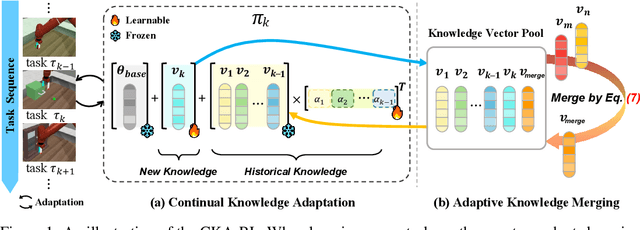
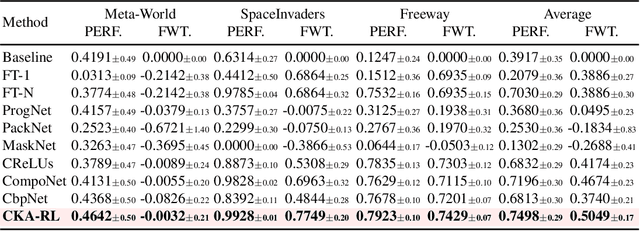
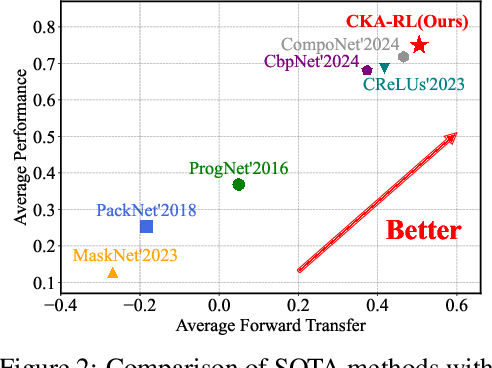
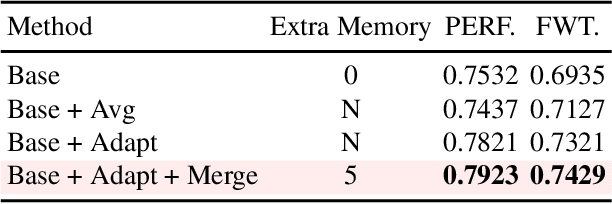
Reinforcement Learning enables agents to learn optimal behaviors through interactions with environments. However, real-world environments are typically non-stationary, requiring agents to continuously adapt to new tasks and changing conditions. Although Continual Reinforcement Learning facilitates learning across multiple tasks, existing methods often suffer from catastrophic forgetting and inefficient knowledge utilization. To address these challenges, we propose Continual Knowledge Adaptation for Reinforcement Learning (CKA-RL), which enables the accumulation and effective utilization of historical knowledge. Specifically, we introduce a Continual Knowledge Adaptation strategy, which involves maintaining a task-specific knowledge vector pool and dynamically using historical knowledge to adapt the agent to new tasks. This process mitigates catastrophic forgetting and enables efficient knowledge transfer across tasks by preserving and adapting critical model parameters. Additionally, we propose an Adaptive Knowledge Merging mechanism that combines similar knowledge vectors to address scalability challenges, reducing memory requirements while ensuring the retention of essential knowledge. Experiments on three benchmarks demonstrate that the proposed CKA-RL outperforms state-of-the-art methods, achieving an improvement of 4.20% in overall performance and 8.02% in forward transfer. The source code is available at https://github.com/Fhujinwu/CKA-RL.
Test-Time Learning for Large Language Models
May 27, 2025
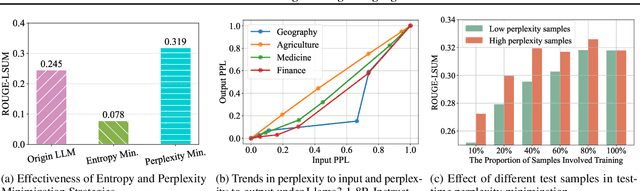
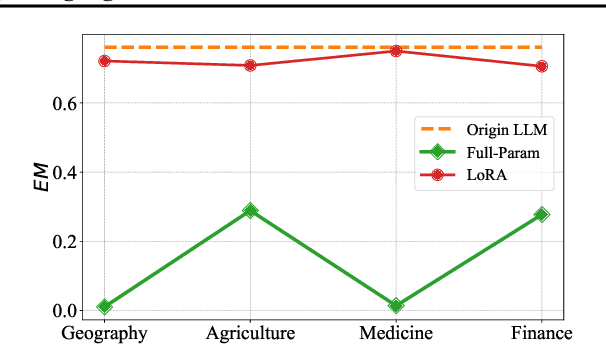
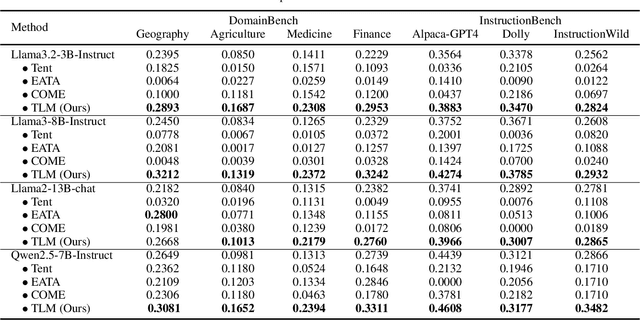
While Large Language Models (LLMs) have exhibited remarkable emergent capabilities through extensive pre-training, they still face critical limitations in generalizing to specialized domains and handling diverse linguistic variations, known as distribution shifts. In this paper, we propose a Test-Time Learning (TTL) paradigm for LLMs, namely TLM, which dynamically adapts LLMs to target domains using only unlabeled test data during testing. Specifically, we first provide empirical evidence and theoretical insights to reveal that more accurate predictions from LLMs can be achieved by minimizing the input perplexity of the unlabeled test data. Based on this insight, we formulate the Test-Time Learning process of LLMs as input perplexity minimization, enabling self-supervised enhancement of LLM performance. Furthermore, we observe that high-perplexity samples tend to be more informative for model optimization. Accordingly, we introduce a Sample Efficient Learning Strategy that actively selects and emphasizes these high-perplexity samples for test-time updates. Lastly, to mitigate catastrophic forgetting and ensure adaptation stability, we adopt Low-Rank Adaptation (LoRA) instead of full-parameter optimization, which allows lightweight model updates while preserving more original knowledge from the model. We introduce the AdaptEval benchmark for TTL and demonstrate through experiments that TLM improves performance by at least 20% compared to original LLMs on domain knowledge adaptation.
Enhancing User-Oriented Proactivity in Open-Domain Dialogues with Critic Guidance
May 18, 2025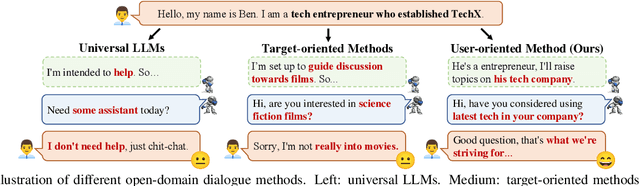
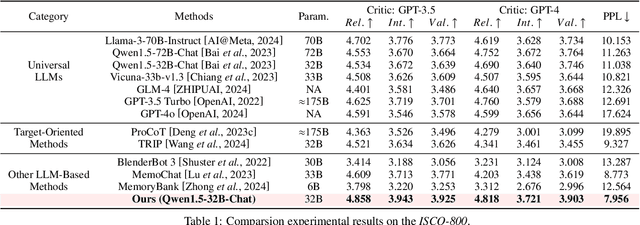
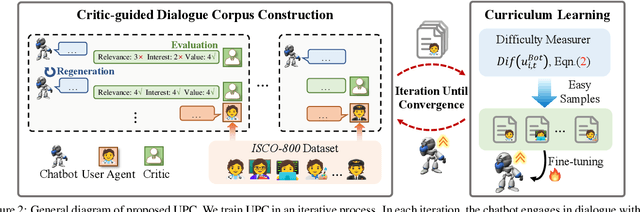
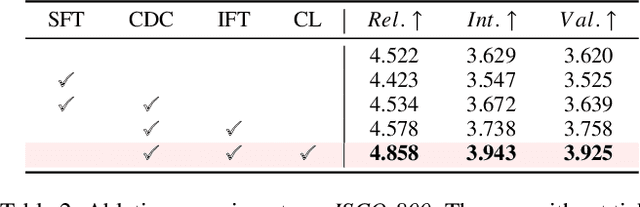
Open-domain dialogue systems aim to generate natural and engaging conversations, providing significant practical value in real applications such as social robotics and personal assistants. The advent of large language models (LLMs) has greatly advanced this field by improving context understanding and conversational fluency. However, existing LLM-based dialogue systems often fall short in proactively understanding the user's chatting preferences and guiding conversations toward user-centered topics. This lack of user-oriented proactivity can lead users to feel unappreciated, reducing their satisfaction and willingness to continue the conversation in human-computer interactions. To address this issue, we propose a User-oriented Proactive Chatbot (UPC) to enhance the user-oriented proactivity. Specifically, we first construct a critic to evaluate this proactivity inspired by the LLM-as-a-judge strategy. Given the scarcity of high-quality training data, we then employ the critic to guide dialogues between the chatbot and user agents, generating a corpus with enhanced user-oriented proactivity. To ensure the diversity of the user backgrounds, we introduce the ISCO-800, a diverse user background dataset for constructing user agents. Moreover, considering the communication difficulty varies among users, we propose an iterative curriculum learning method that trains the chatbot from easy-to-communicate users to more challenging ones, thereby gradually enhancing its performance. Experiments demonstrate that our proposed training method is applicable to different LLMs, improving user-oriented proactivity and attractiveness in open-domain dialogues.
Dynamic Compressing Prompts for Efficient Inference of Large Language Models
Apr 15, 2025Large Language Models (LLMs) have shown outstanding performance across a variety of tasks, partly due to advanced prompting techniques. However, these techniques often require lengthy prompts, which increase computational costs and can hinder performance because of the limited context windows of LLMs. While prompt compression is a straightforward solution, existing methods confront the challenges of retaining essential information, adapting to context changes, and remaining effective across different tasks. To tackle these issues, we propose a task-agnostic method called Dynamic Compressing Prompts (LLM-DCP). Our method reduces the number of prompt tokens while aiming to preserve the performance as much as possible. We model prompt compression as a Markov Decision Process (MDP), enabling the DCP-Agent to sequentially remove redundant tokens by adapting to dynamic contexts and retaining crucial content. We develop a reward function for training the DCP-Agent that balances the compression rate, the quality of the LLM output, and the retention of key information. This allows for prompt token reduction without needing an external black-box LLM. Inspired by the progressive difficulty adjustment in curriculum learning, we introduce a Hierarchical Prompt Compression (HPC) training strategy that gradually increases the compression difficulty, enabling the DCP-Agent to learn an effective compression method that maintains information integrity. Experiments demonstrate that our method outperforms state-of-the-art techniques, especially at higher compression rates. The code for our approach will be available at https://github.com/Fhujinwu/DCP.